
Market Report · July 20, 2026

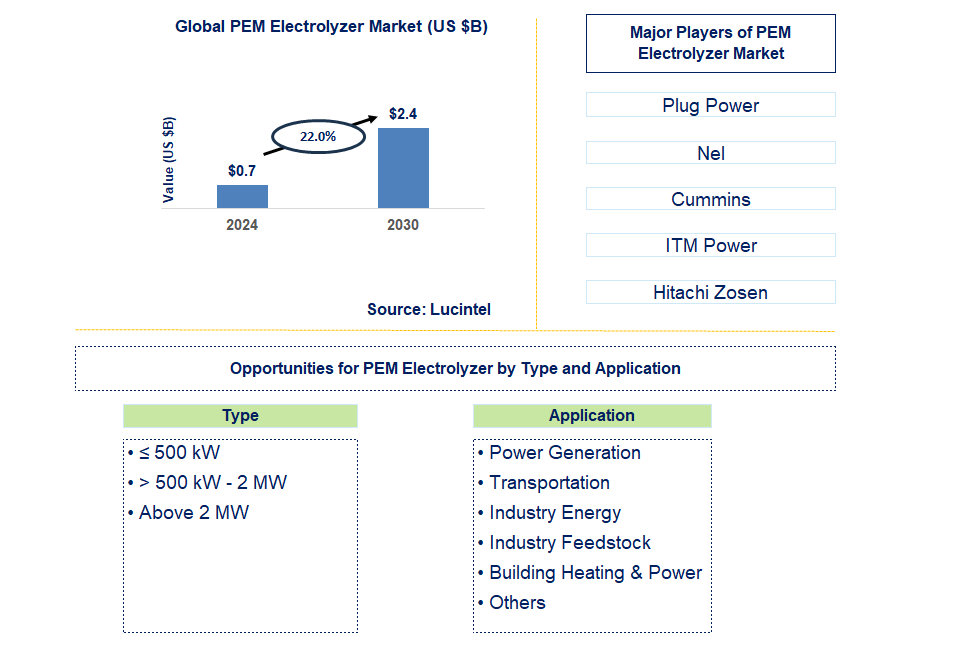
Key data points: The market size in 2030 = $2.4 billion, growth forecast = 22.0% annually for the next 6 years. Scroll below to get more insights. This market report covers trends, opportunities, and forecasts in the global pem electrolyzer market to 2030 by type (≤ 500 kW, > 500 kW - 2 MW, and above 2 MW), application (power generation, transportation, industry energy, industry feedstock, building heating & power, and others), and region (North America, Europe, Asia Pacific, and the Rest of the World)
We'll send your sample report shortly.
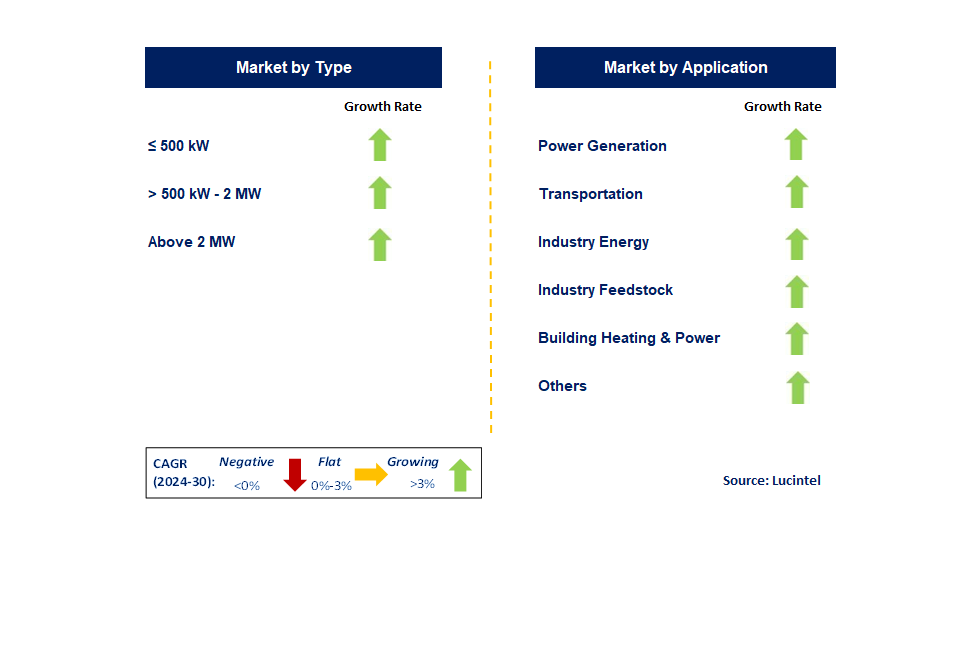
• Lucintel forecasts that, within the type category, above 2 MW is expected to witness highest growth over the forecast period.
• In terms of region, APAC is expected to witness highest growth over the forecast period due to expanding number of domestic and commercial spaces in the region. Gain valuable insights for your business decisions with our comprehensive 150+ page report.
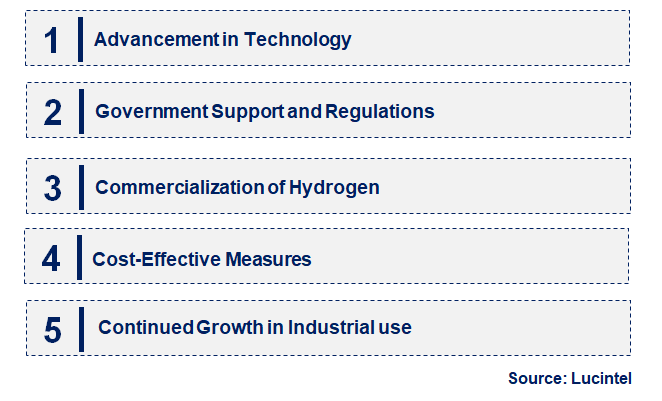
• Advancement in Technology: Progress is evident due to the continuous developments in the efficiency and robustness of PEM electrolyzers. Such advancements entail new materials for the membranes and catalysts, as well as better system designs that increase efficiency and lower costs.
• Government Support and Regulations: The adoption of PEM electrolyzer devices has increased due to more government support and related attractive policies. The market is being spurred by subsidies, incentives, and regulations that seek to lower carbon emissions and create a disruptive hydrogen economy.
• Commercialization of Hydrogen: The commercialization of PEM electrolyzers and their compatibility with intermittent renewable energy sources is becoming a new trend. This enhances the sustainability of hydrogen production and supports the global clean energy initiative.
• Cost-Effective Measures: Strategies aimed at lowering the costs of PEM electrolyzers mainly focus on increasing production volume, improving production techniques, and utilizing inexpensive materials. There will be a shift in strategies where hydrogen will be produced at lower costs compared to other forms of energy.
• Continued Growth in Industrial Use: An increasing number of PEM electrolyzer systems are being utilized in chemical and steel production processes as intermediate devices. The wide range of potential applications of PEM technology is driving development in industries that require pure hydrogen. Various evolving factors, such as technological developments, supportive government policies, integration of renewable energy, cost-reduction strategies, and penetration into industrial applications, are slowly changing the trends observed in the PEM electrolyzer market. These trends are fueling growth and driving innovations that position PEM electrolyzers as one of the pillars of the hydrogen economy in the coming years.
• Advanced Membrane Technologies: Gradually, membrane technology is improving the efficiency and durability of PEM electrolyzers. Material trends and design modifications are focused on extending efficiency and reducing deterioration.
• Scaling Up Production: There is a notable increase in the production capacities of companies to satisfy the increasing demand for PEM electrolyzers. This development is also anticipated to reduce production costs by leveraging economies of scale, thereby making hydrogen cheaper.
• Increased Government Support: A significant portion of the economies indicates that governments in major markets are providing substantial backing in terms of funding and policies. This includes both research grants and the provision of incentives for hydrogen initiatives, along with other regulatory policies that promote market expansion.
• Integration with Renewable Energy Systems: There is growing interest in linking PEM electrolyzers with renewable sources of energy. Such integration facilitates the production of green hydrogen, thereby addressing sustainability concerns and promoting the positive effects of hydrogen energy.
• New Industrial Applications: New applications for PEM electrolyzers are being explored in industries, including the chemical and steel industries. These applications are fueling demand and illustrating the versatility of PEM technology. Recent developments in the PEM electrolyzer market, such as improvements in membrane technologies, increases in output volume, greater government support, integration with renewable energy systems, and new industry trends, are all growth drivers. These factors are improving the effectiveness and cost-efficiency of PEM electrolyzer expansion in the hydrogen energy marketplace.
• Renewable Energy Integration: The integration of PEM electrolyzers with renewable resources, including wind and solar, has significant potential for growth. This integration fosters green hydrogen synthesis and improves the sustainability of energy systems.
• Hydrogen Fuel Cell Vehicles: The involvement of PEM electrolyzers in hydrogen production for fuel cell vehicles is gaining traction in the market. As the number of vehicles that run on hydrogen as a fuel source continues to grow, so does the demand for effective electrolyzer systems.
• Industrial Hydrogen Production: PEM electrolyzers present opportunities for growth in industrial markets where high-purity hydrogen is needed. These include industries such as chemicals and steel, where hydrogen is used during certain processes.
• Residential and Commercial Energy Systems: PEM electrolyzers may find applications in residential and commercial energy systems by providing clean hydrogen to fuel cells and energy storage systems. This application facilitates the production and consumption of energy in a decentralized manner.
• Hydrogen Export and Infrastructure Development: Strategies for hydrogen production and export market development can provide additional opportunities for manufacturers of PEM electrolyzer systems. The market for electrolyzer systems may benefit from the creation of hydrogen refueling stations and export terminals. The key areas for strategic growth in the PEM electrolyzer market are the integration of renewable energy, hydrogen fuel cell vehicles, industrial hydrogen production, energy systems for residential and commercial applications, and hydrogen export market infrastructure. These opportunities present excellent chances for companies to grow their market share and participate in the hydrogen economy.
• Technological Advancements: The growth of the market is propelled by developments in PEM electrolyzer technology regarding effective membranes and catalysts. Increasing efficiency and cost-effectiveness make PEM electrolyzers more appealing for hydrogen production.
• Government Incentives and Policies: Supportive government policies and incentives, such as subsidies and grants, are driving the market towards the use of PEM electrolyzers. Supportive policies and investments aimed at promoting hydrogen technologies and projects are enabling development in the market.
• Increasing Needs for Clean Energy: The increasing demand for clean and green energy has led people to explore PEM electrolyzers. Hydrogen carriers fit well within the climate strategies being undertaken because they emit no carbon.
• Cost Reduction Efforts: Policies aimed at increasing the production of PEM electrolyzers through mass production and technological advancements are making the cost of hydrogen less expensive. It is envisioned that reducing costs could lead to wider adoption of the technology.
• Industrial and Transportation Applications: In particular, the increasing utilization of PEM electrolyzers and hydrogen fuel cell vehicles for industrial applications is contributing to the growth of the market. The diverse application range of PEM technology makes it suitable for different areas of high consumption. Challenges in the PEM electrolyzer market are:
• High Production Costs: The price of PEM electrolyzer systems' initial structures is rather high, which could be considered one of the factors preventing penetration into the market. It is indeed true that, when taken separately, the diluted costs decrease will be a significant issue for the market.
• Regulatory and Certification Requirements: Due to the nature of the processes, the certification process may be long and difficult. Nothing is more critical for entering and growing within the market than meeting standards for safety and performance.
• Technology Scalability: It is technically and economically challenging to scale PEM electrolyzer assembly technology to a level suitable for end-use hydrogen generation systems. The ability to scale in the market while ensuring effectiveness remains fundamental to the growth of the market.
• Supply Chain and Material Availability: Issues related to supply chain management or the availability of certain strategic materials may limit production and increase costs. To maintain stable production, it is essential to ensure that reliable sources of the vital core parts are in place.
• Market Competition: There are various contenders within the PEM electrolyzer market, as each player endeavors to capture a share of the market. For companies, the challenge is how to integrate differentiated products and technologies while also managing competition. The presence of market drivers such as advancements in technology, government subsidies, and an increasing appetite for clean energy will impact the PEM electrolyzer market. On the other hand, challenges such as high manufacturing costs, regulatory compliance, and technological scalability shape the market. Understanding all these drivers and challenges is key to maneuvering within the market, and concomitant growth can even be attained.
• Plug Power
• Nel
• Cummins
• ITM Power
• Hitachi Zosen
• Elogen
• Siemens Energy
• Ningbo Vet Energy Technology
• Green Hydrogen Systems
• Haldor Topsøe
• ≤ 500 kW
• > 500 kW - 2 MW
• Above 2 MW
• Power Generation
• Transportation
• Industry Energy
• Industry Feedstock
• Building Heating & Power
• Others
• North America
• Europe
• Asia Pacific
• The Rest of the World
• The United States: The recent shifts in the PEM electrolyzer market in the U.S. are characterized by large investments from the government and industry to improve performance and decrease prices. Faced with the growing need for hydrogen, the Department of Energy has issued several calls for projects aimed at increasing electrolysis performance and the life cycle of electrolyzers. Major developments include the installation of large-scale PEM electrolyzer systems and growing partnerships between technology providers and the electricity sector. There is also a growing emphasis on using PEM electrolyzers in conjunction with renewable energy technologies such as wind and solar energy.
• China: China has made rapid strides in the PEM electrolyzer market, targeting the nation’s strategies on clean energy and the hydrogen economy. More recent events include the introduction of significant government subsidies and incentives to expand hydrogen production technologies. The Chinese market is more concerned with performance improvement as well as cost reduction of electrolyzers through technology and mass production. PEM electrolyzers are being promoted for use in industries and transportation, specialist areas that would also advance China’s carbon neutrality aspirations.
• Germany: Germany maintains its position as the leading market for PEM electrolyzers due to its commitment to the shift to a hydrogen economy. Other developments include investments in research and development, especially in how to improve the operation of the electrolyzer and its compatibility with renewable energy sources. The implementation of a hydrogen strategy in Germany, which includes funding for the development of infrastructure and pilot projects, is spurring the development of PEM electrolyzer technology. In addition, some German companies are focusing on expanding production capacities to meet increasing demand.
• India: The market for PEM electrolyzers in India is also on the rise as part of the country’s strategy to diversify its energy needs in the renewable energy sector. Recent developments include collaborations between the public and private sectors to enhance the production and use of hydrogen. Due to domestic fabrication and technology enhancement, India is concentrating more on the cost and efficiency of PEM electrolyzers. The growing demand for the electrification of industrial applications is also leading to a growing focus on synthesizing advanced technologies necessary for achieving energy targets.
• Japan: Japan is expanding rapidly in the PEM electrolyzer business by aiming to incorporate more hydrogen technologies into existing energy frameworks. Recent developments include a shift in strategy towards more efficient ammonia electrolyzers and cost-effective technology development. As noted in Japan’s hydrogen roadmap, PEM electrolyzers form an integral part of realizing the national energy and climate change aspirations. The country is also exploring new possibilities in hydrogen use by integrating PEM electrolyzers in transport and industrial sectors.
• Plug Power
• Nel
• Cummins
• ITM Power
• Hitachi Zosen
• Elogen
• Siemens Energy
• Ningbo Vet Energy Technology
• Green Hydrogen Systems
• Haldor Topsøe Q6. Which PEM electrolyzer market segment will be the largest in future? Answer: Lucintel forecasts that above 2 MW is expected to witness highest growth over the forecast period. Q7. In PEM electrolyzer market, which region is expected to be the largest in next 5 years? Answer: APAC is expected to witness highest growth over the forecast period due to expanding number of domestic and commercial spaces in the region. Q.8 Do we receive customization in this report? Answer: Yes, Lucintel provides 10% customization without any additional cost.


Choose a license that fits your team. Instant PDF delivery.
Prices exclude taxes. Instant delivery. Custom licensing available on request.
Market Report · July 20, 2026
Market Report · July 20, 2026
Market Report · July 20, 2026
Trusted partner for strategic intelligence and business growth


Receive a complimentary market analysis tailored to your industry. Our analysts will identify key growth opportunities and competitive dynamics specific to your business.

Market size, growth rate, and key trend analysis for your specific sector.

Top competitor positioning and market share analysis.

Strategic recommendations backed by data-driven insights.
Get curated market intelligence and competitive moves straight to your inbox.
By subscribing, you agree to receive our monthly insights. Unsubscribe anytime.
Receive a complimentary market analysis tailored to your industry. Our analysts will identify key growth opportunities and competitive dynamics specific to your business.
Market size, growth rate, and key trend analysis for your specific sector.
Top competitor positioning and market share analysis.
Strategic recommendations backed by data-driven insights.
Get curated market intelligence, emerging trends, and competitive moves straight to your inbox each month.
By subscribing, you agree to receive our monthly insights. Unsubscribe anytime.
We'll send your sample report shortly.