
Market Report · July 16, 2026

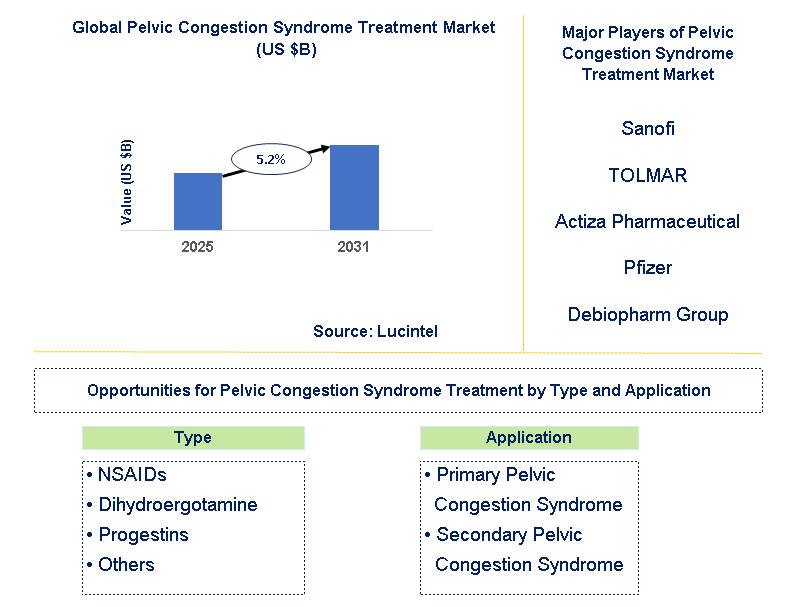
Key data points: The growth forecast = 5.2% annually for the next 7 years. Scroll below to get more insights. This market report covers trends, opportunities and forecasts in pelvic congestion syndrome treatment market to 2031 by type (NSAIDs, dihydroergotamine, progestins, and others), application (primary pelvic congestion syndrome and secondary pelvic congestion syndrome), and region (North America, Europe, Asia Pacific, and the Rest of the World)
We'll send your sample report shortly.
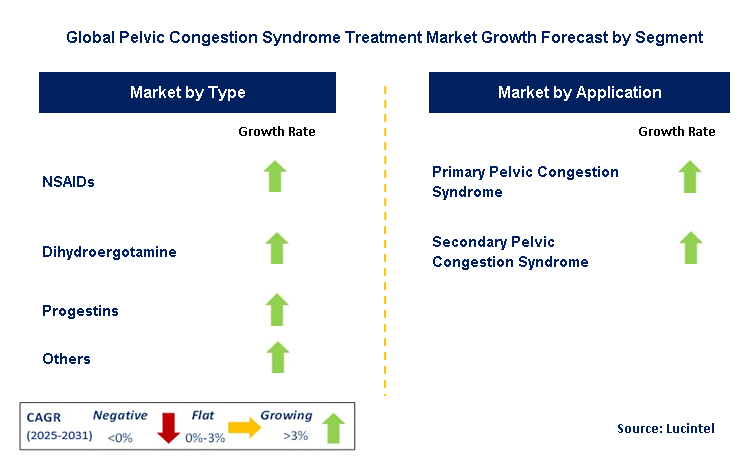
• Lucintel forecasts that, within the type category, NSAID is expected to witness the highest growth over the forecast period.
• Within the application category, primary pelvic congestion syndrome is expected to witness the highest growth.
• In terms of region, North America is expected to witness the highest growth over the forecast period. Gain valuable insights for your business decisions with our comprehensive 150+ page report. Sample figures with some insights are shown below.
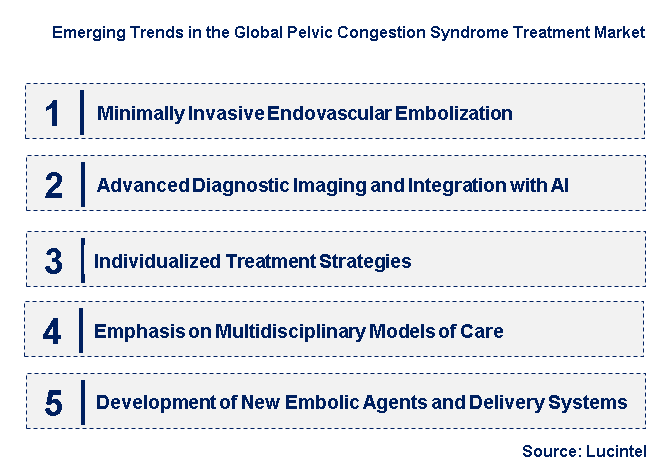
• Minimally Invasive Endovascular Embolization: This trend revolves around the growing use and development of endovascular embolization procedures, wherein coils, sclerosants, or other embolic agents are introduced through a catheter to close incompetent pelvic veins. This treatment provides a minimally invasive option compared to surgery. Its effect is important, giving patients shorter recovery times, less pain, and fewer complications than open surgical techniques, which has it as the gold standard for treatment of PCS in most centers and behind market expansion.
• Advanced Diagnostic Imaging and Integration with AI: There is increasing dependence upon advanced imaging modalities like pelvic MRI with venography, CT venography, and transvaginal ultrasound with Doppler for better and earlier diagnosis of PCS. Trends in the offing are the integration of artificial intelligence for computerized analysis of such images. The benefit is enhanced diagnostic accuracy that enables earlier venous reflux detection and individualized treatment regimens, lessening diagnostic delays and improving treatment success rates.
• Individualized Treatment Strategies: The trend is toward very individualized treatment protocols that are tailored to the individual's anatomical variation of pelvic venous insufficiency, symptom severity, and personal preference. This involves selection of the best embolic agent or agents and possibly lifestyle modification. The effect is improved patient outcomes through highly individualized treatment approaches designed to their specific condition, which may result in enhanced symptom relief and reduced recurrence, and thereby improve patient satisfaction.
• Emphasis on Multidisciplinary Models of Care: The advantage of a multidisciplinary approach in PCS diagnosis and management including gynecologists, interventional radiologists, pain specialists, and physical therapists is increasingly recognized. It guarantees thorough patient assessment and treatment. The effect is holistic patient care of the vascular and related pain elements of PCS with resultant enhanced long-term symptom relief and quality of life for the patient.
• Development of New Embolic Agents and Delivery Systems: Research continues to develop next generations of embolic agents that are more effective, with less non-target embolization, and superior long-term patency. Advances in catheter and microcatheter technology are also allowing for greater precision in delivery. The effect is improved procedural safety and efficacy with reduced risk of complications and more predictable and longer-lasting results for patients treated by embolization. These new trends are deeply transforming the market for treating pelvic congestion syndrome by becoming less invasive, more accurate, and more individualized in their treatment approaches. The focus on cutting-edge diagnostics, interdisciplinary care, and ongoing innovation in embolic agents is fueling better patient outcomes and widening the availability of effective PCS management.
• Pelvic Vein Embolization Techniques: There has been a dramatic improvement in the PVE techniques, and pelvic vein embolization is now regarded as a first-line procedure. This involves enhanced catheter maneuverability, clearer knowledge of coil deployment methods, and the simultaneous application of coils with liquid sclerosants to achieve better occlusion. The effect is greater success rates in occluding incompetent veins, decreased rates of symptom recurrence, and better safety profiles, rendering PVE a more dependably and desirable therapeutic intervention.
• Enhanced Diagnostic Protocols and Tools: Recent developments include the standardization of diagnostic algorithms incorporating advanced imaging modalities such as pelvic MRI with contrast venography, computed tomography (CT) venography, and intravascular ultrasound (IVUS). These tools provide clearer anatomical and hemodynamic information. The impact is improved accuracy in diagnosing PCS, differentiation from other causes of chronic pelvic pain, and more precise targeting of the affected veins for treatment, reducing diagnostic delays.
• Development of Patient-Specific Embolic Agents: Embolic agent innovation has expanded the pool of choices available, including various coil types (e.g., bare platinum, fibered), liquid sclerosants, and adhesive materials. Some innovations emphasize agents designed to work in a particular vessel size or flow pattern. The effect is that the interventional radiologist can choose the best agent for each patient's individual venous anatomy and reflux pattern, resulting in maximal outcomes and reducing possible side effects.
• Heightened Awareness and Education Campaigns: Patient advocacy associations and healthcare professional societies have initiated major campaigns to heighten awareness of PCS among the general medical community, obstetricians, and the public. This is in an effort to decrease misdiagnosis and delayed referral. The effect is earlier diagnosis and specialist referral, allowing timely intervention before the condition becomes progressively disabling, thereby enhancing long-term prognosis and quality of life for the patient.
• Emphasis on Post-Procedure Pain Management and Care: Advances now highlight in-depth post-procedure care, such as individualized pain management regimens and follow-up to observe symptom resolution and recurrence. This entails non-pharmacologic interventions and physical therapy. The effect is enhanced patient recovery process, enhanced management of post-embolization pain, and long-term sustained symptom relief, with positive effects on overall patient satisfaction and the treatment's long-term success. These are the most important developments, and they are collectively shaping the market for pelvic congestion syndrome treatment by making minimally invasive embolization a strong, efficient therapy, enhancing diagnostic accuracy, and encouraging complete patient care. The market is shifting towards more sophisticated, convenient, and patient-friendly treatments for PCS.
• Interventional Radiology Clinics/Ambulatory Surgical Centers (ASCs): With the trend towards minimally invasive endovascular treatments such as pelvic vein embolization, specialized interventional radiology clinics and ASCs are key growth opportunities. Such facilities provide economical, outpatient settings for procedures versus traditional hospitals. Capital investment in equipment, staff training, and referral networks for these centers represents a viable opportunity, as they meet patient demands for convenient and effective care.
• Diagnostic Imaging Centers (Advanced Venography): Since accurate diagnosis is critical to PCS, there is a large potential in upgrading and marketing superior diagnostic imaging services, notably specialized venography (e.g., dynamic CT or MRI venography). Specialization in detection of the subtle markers of pelvic venous reflux can be done in these centers. Referral physician partnerships and provision of complete diagnostic packages will boost growth by enhancing early and accurate detection of PCS cases.
• Pharmacologic Adjuncts and Pain Management: While embolization is central, there is an opportunity to develop and sell pharmaceutical adjuncts that can be used with interventional therapy or treat remaining pain. This may include new vagotonic, non-steroidal anti-inflammatory drugs (NSAIDs) that are specifically designed for chronic pelvic pain, or indeed hormonal therapies. This use goes toward fulfilling a pressing need for comprehensive pain management pre, intra, and post-interventional treatment, which will improve overall patient comfort.
• Patient Education and Advocacy Platforms: As PCS tends to be underdiagnosed, one of the key growth opportunities is to create extensive patient education resources, online platforms, and support groups. Such initiatives increase awareness, offer credible information, and enable patients to approach relevant diagnosis and treatment. Businesses facilitating or creating such platforms can create brand loyalty and indirectly drive demand for their treatment options by widening the patient funnel.
• R&D of New Embolic Agents: The ongoing search for newer, better, and less expensive embolic agents and delivery systems is a very attractive growth opportunity. This can be done by investing in R&D for new coils with better thrombogenicity, biocompatible liquid sclerosants, or even absorbable agents. This can result in better long-term outcomes, fewer complications, and possibly enable larger numbers of patients to be treated. These strategic growth prospects are significantly influencing the market for the treatment of pelvic congestion syndrome by promoting specialization, encouraging partnerships within the healthcare ecosystem, and highlighting a more comprehensive patient care approach. By targeting these applications, stakeholders can improve diagnostics, maximize treatment outcomes, and ultimately increase market reach.
• Sanofi
• TOLMAR
• Actiza Pharmaceutical
• Pfizer
• Debiopharm Group
• AbbVie
• AstraZeneca
• Novartis
• Indivior
• Johnson and Johnson
• NSAIDs
• Dihydroergotamine
• Progestins
• Others
• Primary Pelvic Congestion Syndrome
• Secondary Pelvic Congestion Syndrome
• North America
• Europe
• Asia Pacific
• The Rest of the World
• United States: The US market reflects a strong focus on minimally invasive endovascular procedures, specifically ovarian vein embolization (OVE). There is growing use of newer imaging methods such as pelvic MRI and specialty venography for better diagnosis. The latest trends involve the application of different embolic agents, such as coils, sclerosants, and glues, and an emphasis on the optimization of techniques to ensure fewer recurrences and better outcomes for the patient. Greater awareness drives among physicians and patients are also leading to more timely diagnosis and treatment.
• China: China's PCS treatment market is growing at a rapid pace, fueled by the immense number of females in the country and enhancing access to specialized medical facilities. Although traditional medical management continues to be common, there is a distinct movement toward the acceptance of minimally invasive endovascular methods. Investment in interventional radiology departments and training in associated procedures is on the rise. Efforts to standardize diagnostic protocols are also visible in the market so that more uniform identification and treatment of PCS cases are possible nationwide.
• Germany: The PCS treatment market in Germany focuses on evidence-based treatments and high-quality patient outcomes. Endovascular embolization is common practice, with continued clinical debate and research over the best treatment algorithms and long-term success. The market is supported by sophisticated medical device manufacturing and a well-developed healthcare system capable of accommodating thorough diagnostic workups. Emphasis is placed on patient safety and recurrence rate reduction through vigilant procedural techniques.
• India: India's market for PCS treatment remains to be developed but has immense growth prospects. Urbanization, increased awareness of chronic pelvic pain among the female population, and enhanced healthcare infrastructure are fueling demand for specialty treatment. Access to sophisticated interventional radiology centers can still remain limited in certain pockets, yet an increasing inclination towards embracing minimally invasive techniques such as OVE exists. Cost-effectiveness is again a major consideration, and this finds expression in a blend of sophisticated and cost-effective approaches.
• Japan: Japan's PCS treatment market is dominated by a high level of precision, concern for patient safety, and introduction of new medical technology. There is continuous research into improving embolization methods and creating new embolic agents. The market is facilitated by high-quality medical care and the desire for procedures that are less burdensome to the patient and associated with shorter periods of recovery. There is also a focus on precise diagnostic imaging to allow correct identification of the venous reflux prior to intervention.


• Sanofi
• TOLMAR
• Actiza Pharmaceutical
• Pfizer
• Debiopharm Group
• AbbVie
• AstraZeneca
• Novartis
• Indivior
• Johnson and Johnson Q5. Which pelvic congestion syndrome treatment market segment will be the largest in future? Answer: Lucintel forecasts that, within the type category, NSAID is expected to witness the highest growth over the forecast period. Q6. In pelvic congestion syndrome treatment market, which region is expected to be the largest in next 5 years? Answer: In terms of region, North America is expected to witness the highest growth over the forecast period. Q7. Do we receive customization in this report? Answer: Yes, Lucintel provides 10% customization without any additional cost.


Choose a license that fits your team. Instant PDF delivery.
Prices exclude taxes. Instant delivery. Custom licensing available on request.
Market Report · July 16, 2026
Market Report · July 15, 2026
Market Report · July 15, 2026
Trusted partner for strategic intelligence and business growth


Receive a complimentary market analysis tailored to your industry. Our analysts will identify key growth opportunities and competitive dynamics specific to your business.

Market size, growth rate, and key trend analysis for your specific sector.

Top competitor positioning and market share analysis.

Strategic recommendations backed by data-driven insights.
Get curated market intelligence and competitive moves straight to your inbox.
By subscribing, you agree to receive our monthly insights. Unsubscribe anytime.
Receive a complimentary market analysis tailored to your industry. Our analysts will identify key growth opportunities and competitive dynamics specific to your business.
Market size, growth rate, and key trend analysis for your specific sector.
Top competitor positioning and market share analysis.
Strategic recommendations backed by data-driven insights.
Get curated market intelligence, emerging trends, and competitive moves straight to your inbox each month.
By subscribing, you agree to receive our monthly insights. Unsubscribe anytime.
We'll send your sample report shortly.