
Market Report · July 15, 2026

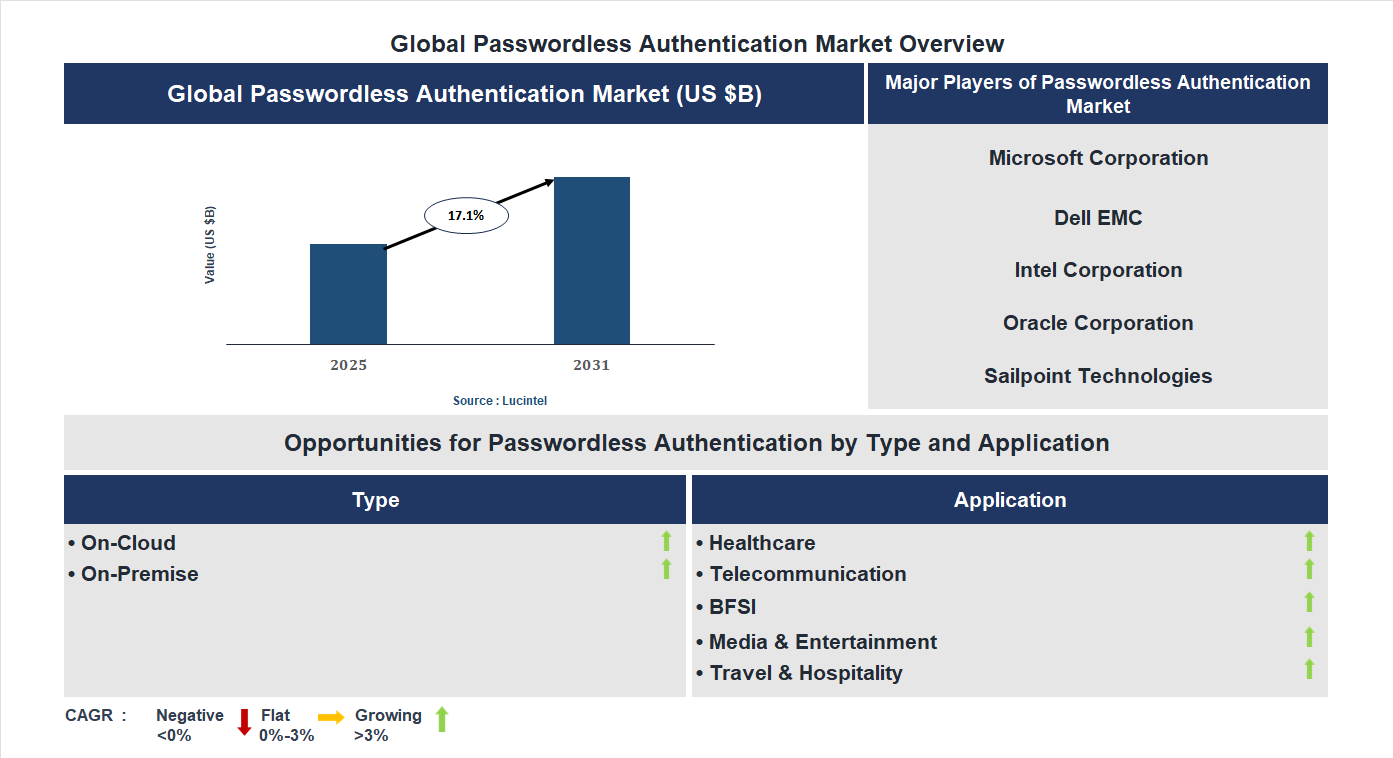
Key data points: The growth forecast = 17.1% annually for the next 7 years. Scroll below to get more insights. This market report covers trends, opportunities and forecasts in passwordless authentication market to 2031 by type (on-cloud and on-premise), application (healthcare, telecommunication, BFSI, media & entertainment, and travel & hospitality), and region (North America, Europe, Asia Pacific, and the Rest of the World)
We'll send your sample report shortly.
• Lucintel forecasts that, within the type category, on-cloud is expected to witness higher growth over the forecast period.
• Within the application category, BFSI is expected to witness the highest growth.
• In terms of region, APAC is expected to witness the highest growth over the forecast period. Gain valuable insights for your business decisions with our comprehensive 150+ page report. Sample figures with some insights are shown below.
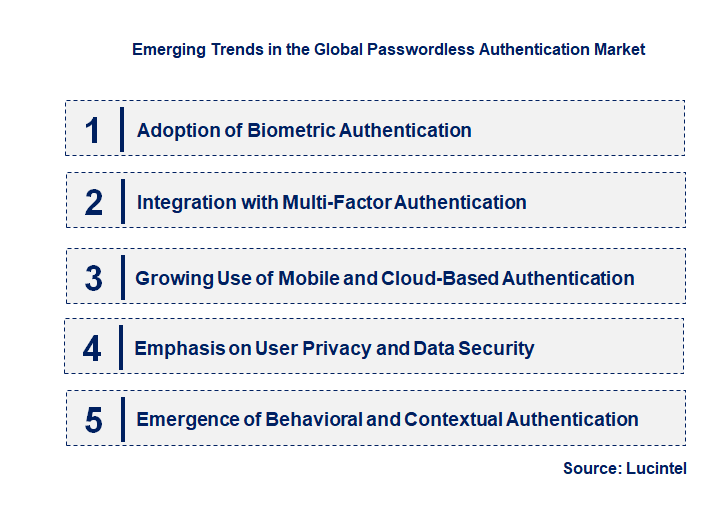
• Adoption of Biometric Authentication: The rise of biometric methods such as fingerprint, facial recognition, and iris scans is revolutionizing security. These technologies offer high accuracy and convenience, reducing reliance on traditional passwords. As biometric sensors become more affordable and integrated into devices, organizations increasingly implement biometric authentication to enhance security and user experience. This trend also addresses issues of password fatigue and phishing attacks, making access more secure and user-friendly.
• Integration with Multi-Factor Authentication (MFA): Passwordless solutions are often combined with MFA to strengthen security. Multi-factor approaches incorporate biometrics, device recognition, and behavioral analytics, providing layered protection. This integration ensures that even if one factor is compromised, additional layers prevent unauthorized access. The market is witnessing a shift towards seamless MFA experiences that do not compromise user convenience, thereby increasing adoption across industries such as banking, healthcare, and retail.
• Growing Use of Mobile and Cloud-Based Authentication: The proliferation of smartphones and cloud services is driving the demand for mobile-first passwordless solutions. These platforms enable users to authenticate securely via mobile apps, push notifications, or QR codes, facilitating remote and on-the-go access. Cloud-based authentication offers scalability, ease of deployment, and centralized management, making it attractive for enterprises seeking flexible security options. This trend is expanding the reach of passwordless authentication beyond traditional environments to support remote work and digital transformation initiatives.
• Emphasis on User Privacy and Data Security: As biometric and behavioral data are sensitive, there is a growing focus on privacy regulations and data security standards. Companies are investing in secure storage, encryption, and anonymization techniques to protect user data. Compliance with GDPR, CCPA, and other regulations is becoming a critical factor influencing product development and deployment. This trend underscores the importance of building trust and ensuring that authentication methods are both secure and privacy-preserving.
• Emergence of Behavioral and Contextual Authentication: Advanced analytics and AI enable authentication based on user behavior, device context, and location. These systems analyze patterns such as typing speed, device usage, and geolocation to verify identities passively. Behavioral and contextual authentication reduce friction by providing continuous, transparent security without explicit user input. This approach enhances security while maintaining a seamless user experience, making it increasingly popular in financial services, e-commerce, and enterprise environments. In summary, these trends are collectively reshaping the passwordless authentication market by making security more intuitive, scalable, and privacy-conscious. They are driving innovation, increasing adoption across sectors, and setting new standards for digital identity verification. As these developments continue, the market is poised for significant growth, with a focus on delivering secure, user-centric authentication solutions that meet evolving cyber threats and regulatory demands.
• Adoption of Biometric Technologies: The integration of biometric authentication methods such as fingerprint, facial recognition, and iris scans has surged, providing highly secure and user-friendly access solutions. This development reduces fraud risks and enhances user convenience, encouraging widespread adoption across banking, healthcare, and retail sectors.
• Rise of FIDO2 and WebAuthn Standards: The implementation of FIDO2 and WebAuthn standards has standardized passwordless authentication protocols, promoting interoperability and security. These standards facilitate easier integration for developers and improve user trust, accelerating market growth and adoption.
• Increased Investment in AI and Machine Learning: AI-driven authentication systems are being developed to analyze behavioral patterns and detect anomalies in real-time. This advancement enhances security by preventing unauthorized access and reduces false positives, making passwordless solutions more reliable and appealing.
• Growing Regulatory Support and Data Privacy Laws: Governments and regulatory bodies are introducing frameworks that favor secure authentication methods, encouraging organizations to adopt passwordless solutions. Compliance with data privacy laws also boosts consumer confidence and drives market expansion.
• Expansion of Multi-Factor Authentication (MFA) Ecosystems: The integration of multiple authentication factors, such as biometrics, device recognition, and contextual data, is creating more robust security frameworks. This development offers layered protection, increasing trust among users and organizations, and broadening market applications. In summary, these developments are significantly transforming the passwordless authentication market by enhancing security, improving user experience, and fostering regulatory support. The market is poised for rapid growth as these innovations become mainstream, leading to widespread adoption across various industries and increased emphasis on secure, seamless access solutions.
• Banking and Financial Services: Enhanced Security and User Experience : Banks are adopting passwordless authentication to prevent fraud and improve customer onboarding, leading to increased trust and reduced operational costs.
• Healthcare Sector: Secure Patient Data Access : Healthcare providers are implementing passwordless solutions to ensure secure, quick access to sensitive patient information, complying with regulations and improving patient care.
• Retail Industry: Streamlined Customer Interactions : Retailers are utilizing passwordless methods for faster, frictionless checkout processes and personalized experiences, boosting customer satisfaction and loyalty.
• Enterprise Sector: Improved Security and Productivity : Enterprises are deploying passwordless authentication to secure internal systems, reduce password-related IT support, and enhance employee productivity.
• Government and Public Sector: Strengthened Identity Verification : Governments are adopting passwordless solutions for secure citizen services, reducing identity theft risks and streamlining access to public resources. In summary, these growth opportunities are significantly impacting the passwordless authentication market by driving adoption across diverse sectors. They enhance security, improve user experiences, and reduce operational costs, fostering innovation and expanding market reach. As organizations prioritize security and convenience, the market is poised for sustained growth and technological advancement.
• Technological Innovation: The rapid development of biometric authentication, token-based systems, and multi-factor authentication enhances security and user convenience. These innovations reduce reliance on traditional passwords, decreasing vulnerability to cyberattacks. As technology becomes more accessible and affordable, organizations across sectors adopt these solutions to meet security standards and improve user experience. The integration of AI and machine learning further refines authentication processes, making them more adaptive and resilient against emerging threats. This continuous innovation fuels market growth by providing more robust, scalable, and user-friendly options for secure access management.
• Increasing Cybersecurity Threats: The rising frequency and sophistication of cyberattacks, including data breaches and identity theft, compel organizations to adopt stronger authentication methods. Passwordless solutions offer enhanced security by eliminating weak or reused passwords, which are common attack vectors. As cyber threats evolve, the demand for advanced authentication methods that can effectively prevent unauthorized access grows. This heightened threat landscape accelerates the adoption of passwordless systems across industries such as banking, healthcare, and government, driving market expansion and encouraging vendors to develop more secure and innovative solutions.
• Regulatory and Compliance Requirements: Governments and industry bodies are implementing stringent data protection and cybersecurity regulations, such as GDPR and CCPA, which mandate secure authentication practices. Organizations are compelled to adopt passwordless solutions to ensure compliance, avoid penalties, and protect customer data. These regulations also promote transparency and accountability in data handling, encouraging the deployment of advanced authentication technologies. As compliance becomes a critical business priority, the market for passwordless authentication solutions expands, with vendors tailoring offerings to meet diverse regulatory standards and industry-specific requirements.
• Cost Efficiency and User Experience: Passwordless authentication reduces operational costs associated with password management, reset requests, and security breaches. It also enhances user experience by providing seamless, quick, and secure access to digital services. Organizations recognize that improved user satisfaction can lead to higher engagement and loyalty. The cost savings and improved customer experience drive organizations to implement passwordless solutions, especially in high-volume environments like e-commerce and enterprise portals. This focus on efficiency and user-centric design propels market growth as businesses seek to optimize security without compromising convenience.
• Growing Adoption of Cloud and Mobile Technologies: The proliferation of cloud computing and mobile devices necessitates flexible, scalable, and secure authentication methods. Passwordless solutions are well-suited for cloud environments, enabling remote and mobile access without compromising security. The increasing reliance on mobile apps and cloud services accelerates demand for frictionless authentication methods that can be integrated seamlessly across platforms. Vendors are developing mobile-friendly and cloud-compatible passwordless solutions, which further expand market reach. This technological shift supports the widespread adoption of passwordless authentication, fostering market expansion in digital transformation initiatives. The challenges facing this Market include:
• Technological Complexity and Integration Issues: Implementing passwordless authentication solutions often involves complex integration with existing IT infrastructure and legacy systems. Organizations may face difficulties in ensuring compatibility, scalability, and seamless operation across diverse platforms. The technical expertise required can be a barrier, especially for small and medium-sized enterprises lacking specialized resources. Additionally, managing multiple authentication methods and maintaining system interoperability can increase operational complexity and costs. These challenges may slow adoption rates and hinder the widespread deployment of passwordless solutions, requiring vendors to develop more adaptable and user-friendly offerings.
• User Acceptance and Behavioral Barriers: Despite the security benefits, some users may resist transitioning from traditional passwords to new authentication methods due to unfamiliarity or perceived inconvenience. Concerns about privacy, biometric data security, and device dependency can also hinder acceptance. Organizations need to invest in user education and ensure that solutions are intuitive to encourage adoption. Resistance from users can delay implementation and reduce the overall effectiveness of passwordless systems, posing a significant challenge for market growth and requiring strategic change management.
• Rapidly Evolving Cyber Threats: Cybercriminals continuously develop new attack techniques targeting authentication systems, including biometric spoofing and device hacking. Passwordless solutions must stay ahead of these threats through constant innovation and rigorous security measures. The evolving threat landscape demands ongoing investment in research and development, which can increase costs for vendors and users. Failure to adapt quickly can result in vulnerabilities, undermining trust and hindering market expansion. Addressing these threats requires a proactive approach to security, making it a persistent challenge for the industry. In summary, the passwordless authentication market is driven by technological advancements, increasing cybersecurity threats, regulatory pressures, cost and user experience benefits, and the adoption of cloud and mobile technologies. However, challenges such as technological complexity, user resistance, and evolving cyber threats pose significant hurdles. These factors collectively influence the pace and direction of market growth. While opportunities for innovation and expansion are substantial, overcoming these challenges will be crucial for sustained success. The markets future depends on balancing technological progress with effective change management and security resilience.
• Microsoft Corporation
• Dell EMC
• Intel Corporation
• Oracle Corporation
• Sailpoint Technologies
• Ping Identity Corporation
• Centrify Corporation
• NetIQ Corporation
• Amazon
• On-Cloud
• On-Premise
• Healthcare
• Telecommunication
• BFSI
• Media & Entertainment
• Travel & Hospitality
• North America
• Europe
• Asia Pacific
• The Rest of the World
• United States: United States, the market is witnessing rapid adoption of biometric authentication and multi-factor solutions, driven by major tech companies and financial institutions. Innovations in mobile authentication and increased regulatory focus on data security are propelling growth.
• China: China is experiencing accelerated deployment of biometric and facial recognition technologies, supported by government initiatives to enhance digital infrastructure and security. The market is expanding with local tech giants investing heavily in passwordless solutions.
• Germany: Germany emphasizes compliance with strict data privacy regulations like GDPR, leading to increased adoption of secure, privacy-preserving authentication methods. The market is characterized by collaborations between tech firms and financial institutions to develop robust solutions.
• India: India is witnessing a surge in digital payments and banking services, fueling demand for passwordless authentication. The government’s push for digital inclusion and initiatives like Digital India are fostering innovation and adoption of biometric and mobile-based authentication methods.
• Japan: Japan is focusing on integrating biometric authentication into consumer electronics and banking sectors. The market is driven by technological advancements in fingerprint and facial recognition, along with a strong emphasis on security and user convenience.


• Microsoft Corporation
• Dell EMC
• Intel Corporation
• Oracle Corporation
• Sailpoint Technologies
• Ping Identity Corporation
• Centrify Corporation
• NetIQ Corporation
• Amazon Q5. Which passwordless authentication market segment will be the largest in future? Answer: Lucintel forecasts that, within the type category, on-cloud is expected to witness higher growth over the forecast period. Q6. In passwordless authentication market, which region is expected to be the largest in next 5 years? Answer: In terms of region, APAC is expected to witness the highest growth over the forecast period. Q7. Do we receive customization in this report? Answer: Yes, Lucintel provides 10% customization without any additional cost.


Choose a license that fits your team. Instant PDF delivery.
Prices exclude taxes. Instant delivery. Custom licensing available on request.
Market Report · July 15, 2026
Market Report · June 26, 2026
Market Report · June 24, 2026
Trusted partner for strategic intelligence and business growth


Receive a complimentary market analysis tailored to your industry. Our analysts will identify key growth opportunities and competitive dynamics specific to your business.

Market size, growth rate, and key trend analysis for your specific sector.

Top competitor positioning and market share analysis.

Strategic recommendations backed by data-driven insights.
Get curated market intelligence and competitive moves straight to your inbox.
By subscribing, you agree to receive our monthly insights. Unsubscribe anytime.
Receive a complimentary market analysis tailored to your industry. Our analysts will identify key growth opportunities and competitive dynamics specific to your business.
Market size, growth rate, and key trend analysis for your specific sector.
Top competitor positioning and market share analysis.
Strategic recommendations backed by data-driven insights.
Get curated market intelligence, emerging trends, and competitive moves straight to your inbox each month.
By subscribing, you agree to receive our monthly insights. Unsubscribe anytime.
We'll send your sample report shortly.