
Market Report · May 18, 2026

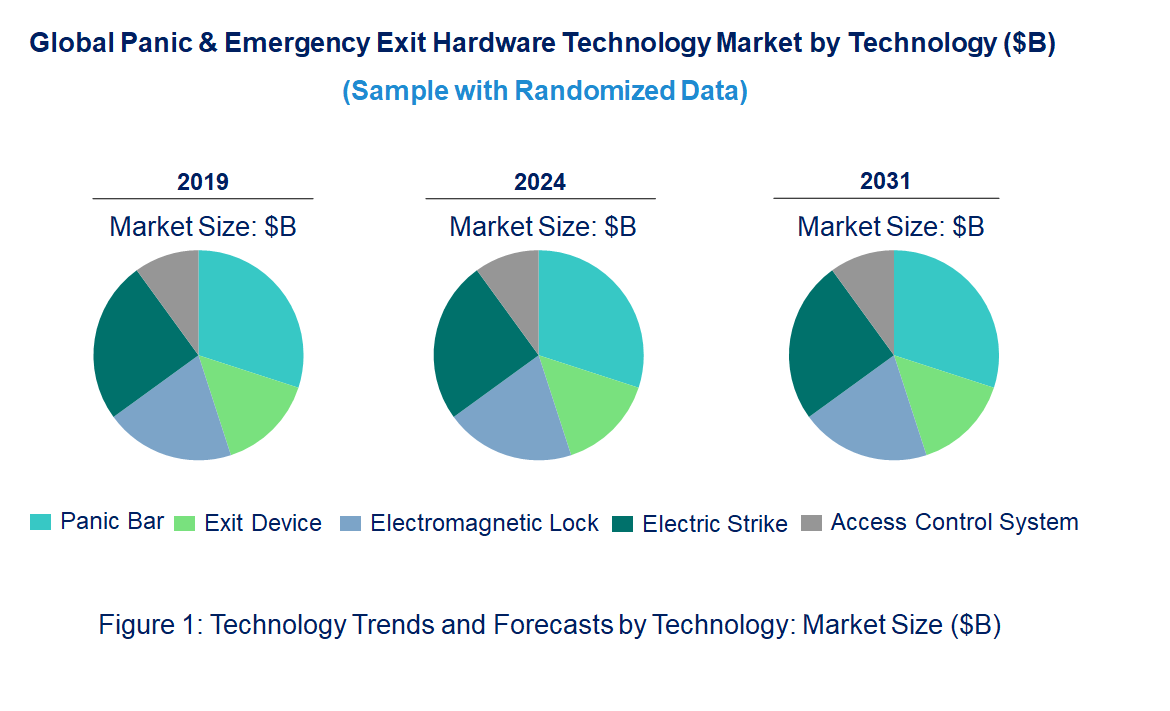
This market report covers trends, opportunities, and forecasts in the global panic & emergency exit hardware market to 2031 by technology (panic bar, exit device, electromagnetic lock, electric strike, and access control system), end use (commercial buildings, residential building, industrial building, and government building), and region (North America, Europe, Asia Pacific, and the Rest of the World)
We'll send your sample report shortly.

• Smart Exit Hardware with IoT Integration: Modern panic hardware is incorporating IoT sensors and connectivity, enabling real-time monitoring of door status, usage, and maintenance needs. This improves security management and ensures emergency exits remain operational during critical situations.
• Enhanced Accessibility Features: Designs are evolving to meet diverse accessibility standards, including easier-to-operate mechanisms for people with disabilities and compliance with ADA (Americans with Disabilities Act) guidelines. This inclusivity enhances safety for all building occupants.
• Advanced Materials and Durability: Use of corrosion-resistant alloys, fire-resistant coatings, and impact-resistant composites is increasing, extending product lifespan and ensuring functionality under harsh environmental conditions and emergencies.
• Integration with Building Security Systems: Emergency exit hardware is increasingly linked with broader security infrastructure, such as alarms, access control, and surveillance systems. This synchronization enhances overall building safety and coordinated emergency response.
• Modular and Customizable Solutions: Manufacturers are offering modular hardware components that can be customized for different door types, sizes, and architectural aesthetics, providing flexibility while maintaining strict safety compliance. These emerging trends are transforming the panic and emergency exit hardware market by improving safety, accessibility, and integration with smart building technologies. As a result, buildings are becoming safer and more compliant with evolving regulations, while offering enhanced user experience and operational efficiency.
• Allegion: Allegion has introduced the Von Duprin 70 Series exit devices, setting new standards in security and design. These devices offer enhanced performance and aesthetics, catering to modern building requirements.
• ASSA ABLOY: ASSA ABLOY launched a new range of panic and emergency exit hardware for aluminum doors, featuring push bar, push pad, and touch bar devices. These products are certified to EN 1125 and EN 179 standards, ensuring compliance and safety in various building applications.
• Dormakaba: Dormakaba has developed advanced panic and emergency exit hardware solutions, focusing on integrating security features with user-friendly designs. Their products aim to enhance building safety while ensuring ease of use during emergencies.
• ISEO: ISEO introduced the Push Infilare touch-bar for panic locks, certified according to the EN1125 European standard. This device is designed for fire-resistant doors and features an AntiGerm antibacterial treatment, promoting hygiene and safety.
• SALTO Systems: SALTO Systems has expanded its range of electronic locking solutions, integrating advanced access control technologies into panic and emergency exit hardware. Their systems offer enhanced security and flexibility for modern building infrastructures.
• ANTIPANIC: ANTIPANIC has focused on developing high-quality panic and emergency exit hardware, emphasizing durability and compliance with international safety standards. Their products are designed to meet the rigorous demands of various building types.
• Fapim SpA: Fapim SpA has introduced innovative panic and emergency exit hardware solutions, incorporating modern design elements and materials. Their products aim to provide reliable safety features while complementing contemporary architectural aesthetics. These developments reflect a concerted effort by industry leaders to enhance the functionality, safety, and compliance of panic and emergency exit hardware. By integrating advanced technologies and adhering to stringent standards, these innovations are shaping the future of building safety.
• Growing Safety Regulations: Governments worldwide are enforcing stringent fire and safety codes, mandating the installation of certified panic hardware. This drives demand for compliant, reliable emergency exit solutions that enhance occupant safety.
• Urbanization and Infrastructure Development: Rapid construction of commercial and residential buildings globally fuels the need for advanced panic and emergency exit hardware to manage safe evacuations during emergencies.
• Technological Advancements: Innovations such as antibacterial coatings, electronic locking integration, and smart access control enhance hardware functionality, making systems more efficient and appealing to end-users.
• Rising Awareness of Workplace Safety: Corporations are increasingly prioritizing employee safety and regulatory compliance, boosting demand for upgraded emergency exit hardware in offices and industrial sites.
• Retrofit and Renovation Projects: Aging infrastructure requires modernization, creating opportunities for upgrading outdated panic hardware with modern, code-compliant solutions. Challenges:
• High Initial Investment: Upgrading or installing advanced panic and emergency exit systems often involves substantial upfront costs, limiting adoption, especially in budget-sensitive projects.
• Integration Complexities: Incorporating new hardware into existing building designs and systems can be technically challenging, requiring specialized expertise and increasing project timelines.
• Regulatory Variability: Diverse and evolving safety standards across regions complicate compliance efforts for manufacturers and end-users. The panic and emergency exit hardware market is driven by regulatory demands, urban growth, and technological progress, though cost and integration challenges remain. These factors collectively push innovation and modernization, fostering safer built environments and boosting market expansion.
• Allegion
• ASSA ABLOY
• Dormakaba
• ISEO
• SALTO Systems
• ANTIPANIC
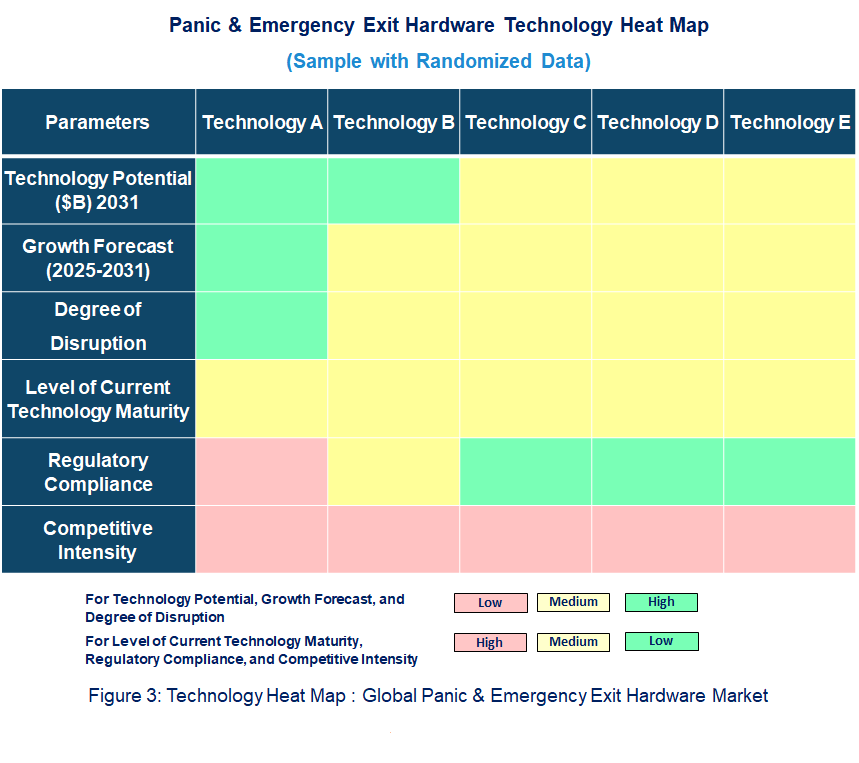
• Technology Readiness by Technology Type: Panic bars and mechanical exit devices are fully mature, widely adopted, and compliant with global safety standards, offering reliable manual egress solutions. Electromagnetic locks are also mature, commonly used in commercial buildings, though dependent on power supply and proper fail-safe configuration. Electric strikes are moderately mature, providing a good blend of physical security and electronic control, with increasing use in retrofitting older systems. Access control systems range from moderately to highly mature depending on integration level, with cloud-based and mobile-enabled systems advancing rapidly in readiness and functionality. Competitive levels are highest in access control systems due to innovation pace and user demand for smart features. Electromagnetic and electric strike markets also face active competition as they bridge traditional and digital security. Regulatory compliance is critical across all types, particularly in fire-rated environments and accessibility requirements. Key applications include school campuses (panic bars), office buildings (electromagnetic locks), hospitals (electric strikes), and smart facilities (access control systems), where reliable and secure emergency egress is essential.
• Competitive Intensity and Regulatory Compliance: The panic & emergency exit hardware market faces moderate to high competitive intensity as traditional hardware companies compete with smart security solution providers. Panic bars and exit devices are commoditized, leading to competition on durability, compliance, and price. Electromagnetic locks and electric strikes see stronger innovation, competing on power efficiency, tamper resistance, and integration capabilities. Access control systems face intense competition from tech firms and integrators offering advanced connectivity, analytics, and cloud-based features. Regulatory compliance is non-negotiable, governed by stringent building and fire codes (e.g., NFPA, UL 305, EN 1125) that demand fail-safe operation and accessibility. Compliance is most stringent for electromagnetic locks and access control systems due to their reliance on power and potential for malfunction. Products must also meet ADA and local egress standards. This landscape forces vendors to balance innovation with reliability and regulatory adherence, intensifying the need for certified, user-centric solutions.
• Disruption Potential by Technology Type: The panic & emergency exit hardware market is undergoing a transformation driven by advanced technologies like panic bars, exit devices, electromagnetic locks, electric strikes, and integrated access control systems. Panic bars and exit devices, though longstanding solutions, are evolving with smart sensors and durable materials for improved safety and compliance. Electromagnetic locks disrupt traditional mechanical locking with fail-safe designs, enabling seamless egress during power failure or fire events. Electric strikes offer flexible access control integration and are replacing traditional latches with programmable features. Access control systems, particularly when integrated with IoT and mobile authentication, enable centralized monitoring and remote access, significantly enhancing building security and emergency response. These technologies collectively enhance occupant safety, streamline evacuation procedures, and support smart building infrastructure. The disruption lies in their ability to merge life safety with real-time security, automation, and data analytics. As buildings get smarter, these hardware components play a critical role in ensuring compliant, efficient, and secure emergency egress.
• Panic Bar
• Exit Device
• Electromagnetic Lock
• Electric Strike
• Access Control System
• Commercial Buildings
• Residential Building
• Industrial Building
• Government Building
• North America
• Europe
• Asia Pacific
• The Rest of the World
• Latest Developments and Innovations in the Panic & Emergency Exit Hardware Technologies
• Companies / Ecosystems
• Strategic Opportunities by Technology Type


Choose a license that fits your team. Instant PDF delivery.
Prices exclude taxes. Instant delivery. Custom licensing available on request.
Market Report · May 18, 2026
Market Report · May 18, 2026
Market Report · May 18, 2026
Trusted partner for strategic intelligence and business growth


Receive a complimentary market analysis tailored to your industry. Our analysts will identify key growth opportunities and competitive dynamics specific to your business.

Market size, growth rate, and key trend analysis for your specific sector.

Top competitor positioning and market share analysis.

Strategic recommendations backed by data-driven insights.
Get curated market intelligence and competitive moves straight to your inbox.
By subscribing, you agree to receive our monthly insights. Unsubscribe anytime.
Receive a complimentary market analysis tailored to your industry. Our analysts will identify key growth opportunities and competitive dynamics specific to your business.
Market size, growth rate, and key trend analysis for your specific sector.
Top competitor positioning and market share analysis.
Strategic recommendations backed by data-driven insights.
Get curated market intelligence, emerging trends, and competitive moves straight to your inbox each month.
By subscribing, you agree to receive our monthly insights. Unsubscribe anytime.
We'll send your sample report shortly.