
Market Report · July 24, 2026

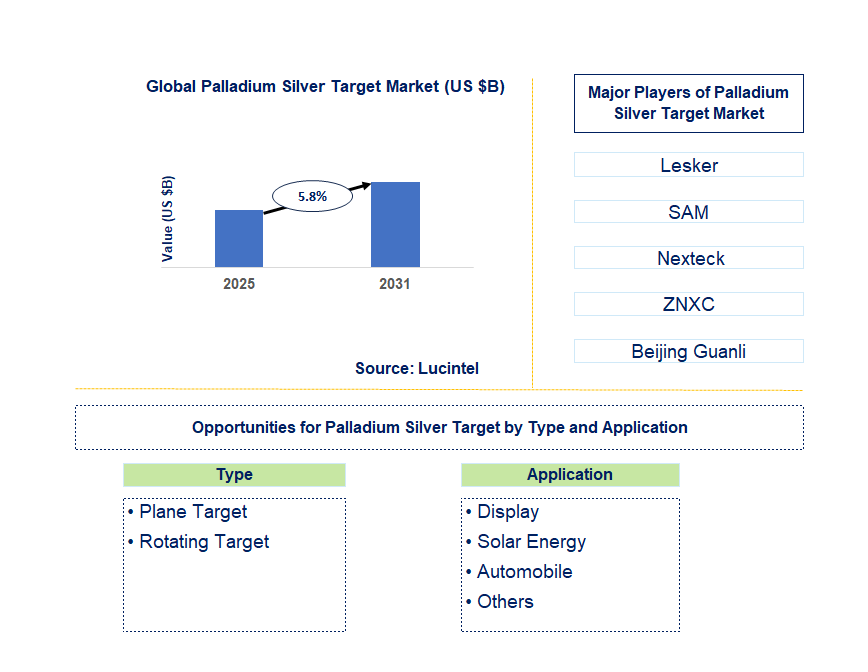
Key data points: The growth forecast = 5.8% annually for the next 7 years. Scroll below to get more insights. This market report covers Trends, opportunity and forecast in palladium silver target market to 2031 by type (plane target and rotating target), application (display, solar energy, automobile, and others), and region (North America, Europe, Asia Pacific, and the Rest of the World)
We'll send your sample report shortly.
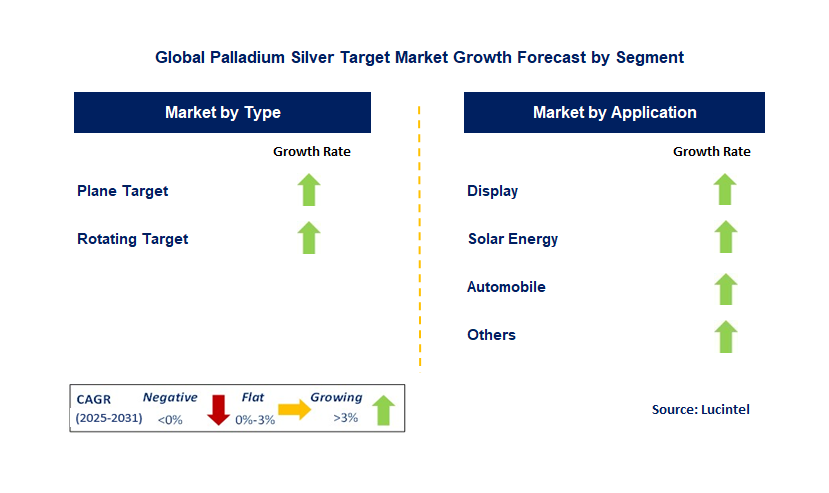
• Lucintel forecasts that, within the type category, rotating target is expected to witness higher growth over the forecast period due to their use in large area and high-throughput PVD systems.
• Within the application category, display is expected to witness the highest growth due to fast-growing electronics & display industry.
• In terms of region, APAC is expected to witness the highest growth over the forecast period. Gain valuable insights for your business decisions with our comprehensive 150+ page report. Sample figures with some insights are shown below.
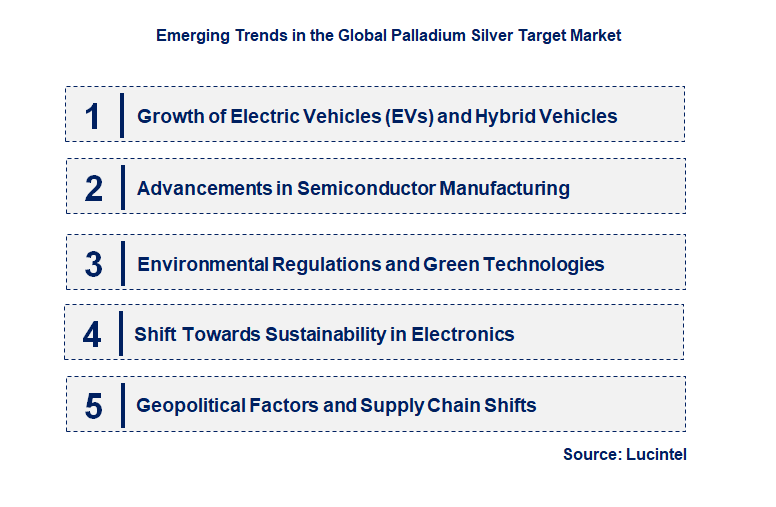
• Growth of Electric Vehicles (EVs) and Hybrid Vehicles: The rise of electric and hybrid vehicles is one of the most significant trends reshaping the palladium silver target market. While EVs require fewer catalytic converters, the continued dominance of hybrid vehicles means that demand for palladium remains high. As automakers shift towards more sustainable vehicle options, the need for palladium in hybrid catalytic converters will continue to drive demand. This transition creates opportunities for manufacturers to cater to a growing eco-conscious consumer base while maintaining the need for palladium in legacy vehicle models.
• Advancements in Semiconductor Manufacturing: As semiconductor manufacturing continues to advance, the demand for palladium targets in semiconductor production is increasing. Palladium is used in various electronic components, and with the global push towards smaller, faster, and more efficient devices, palladium is becoming an essential material. The expansion of semiconductor production in regions like the U.S. and Asia is likely to further boost demand. This trend is crucial as the semiconductor industry plays a pivotal role in numerous sectors, including telecommunications, computing, and consumer electronics.
• Environmental Regulations and Green Technologies: Stricter environmental regulations are encouraging the use of palladium in catalytic converters and other green technologies. The growing emphasis on reducing automotive emissions and promoting cleaner industrial processes is directly benefiting the palladium market. In particular, the automotive industry’s push for lower emissions standards in both gasoline and diesel engines is increasing the demand for palladium. These regulations are not only boosting demand in the automotive sector but also in other industries where palladium can contribute to cleaner production technologies.
• Shift Towards Sustainability in Electronics: The electronics sector is undergoing a shift towards more sustainable production methods, and palladium plays a key role in this transformation. As manufacturers focus on reducing their environmental footprint, the demand for palladium in electronics, including smartphones, computers, and telecommunications equipment, has increased. The adoption of green technologies in electronics manufacturing, such as lead-free and energy-efficient components, further boosts the need for palladium as a key material in sustainable production processes.
• Geopolitical Factors and Supply Chain Shifts: Geopolitical tensions and trade policies are influencing the global palladium silver target market. Countries are increasingly looking to secure reliable supplies of palladium, with particular focus on mining operations in Russia, South Africa, and Canada. As trade restrictions and tariffs fluctuate, global players are diversifying their sources of palladium and investing in recycling initiatives to ensure supply chain stability. These geopolitical shifts are creating new dynamics in the market, encouraging innovation in sourcing and recycling processes These emerging trends highlight the importance of technological innovation, regulatory shifts, and sustainability in shaping the global palladium silver target market. As demand from key sectors like automotive, electronics, and semiconductor manufacturing grows, industry stakeholders must adapt to these trends to stay competitive. The continued evolution of green technologies, coupled with the impact of global geopolitical and economic factors, will define the trajectory of the palladium market in the coming years.
• Technological Advancements in Automotive Catalysts: The development of more efficient catalytic converter technologies has had a significant impact on the palladium silver target market. Advances in automotive emission control technologies have led to an increased demand for palladium in catalytic converters. New materials and manufacturing techniques are improving the efficiency of catalytic converters, reducing the amount of palladium needed per vehicle, but maintaining overall market demand as emission regulations become stricter. The continued push for cleaner and more fuel-efficient vehicles will sustain the need for palladium in the automotive sector.
• Expansion of Semiconductor Manufacturing in the U.S. and Asia: The global shift towards increased semiconductor production has been a major driver of palladium demand. As both the U.S. and Asian nations ramp up efforts to build semiconductor fabrication plants (fabs), the need for palladium targets in the production of semiconductors is surging. Palladium is essential for the production of high-performance chips, which are critical for electronics, telecommunications, and computing industries. This expansion is a direct response to supply chain vulnerabilities and the rising global demand for semiconductors.
• Stronger Environmental Regulations and Cleaner Technologies: Governments worldwide are implementing more stringent environmental regulations that are directly influencing the demand for palladium in automotive and industrial applications. The European Union, the U.S., and China have all introduced tougher emissions standards, boosting demand for palladium in catalytic converters. Additionally, other industrial applications, including power generation and chemical processes, are increasingly adopting cleaner technologies that require palladium. These regulations are driving a long-term upward trend in palladium demand, particularly in the automotive sector.
• Sustainability Initiatives in Electronics Manufacturing: The electronics industry is shifting towards more sustainable production processes, increasing the use of palladium in electronics and telecommunications. As part of the move towards sustainability, manufacturers are adopting energy-efficient components, lead-free soldering, and environmentally friendly materials, all of which require palladium. This transition is particularly evident in the smartphone, computing, and renewable energy sectors, where electronic components are being produced with higher environmental standards.
• Geopolitical Tensions and Supply Chain Diversification: Geopolitical uncertainties, particularly in Russia, have led to a push for diversification in palladium supply chains. Countries and companies are looking to reduce reliance on Russian palladium and exploring alternative sources such as mining operations in South Africa, North America, and recycling. This trend has also resulted in innovations in palladium recycling, with firms investing in technologies to recover and reuse palladium from electronic waste. These efforts are reshaping the supply landscape, helping to stabilize market dynamics. These developments highlight the dynamic and rapidly evolving nature of the global palladium silver target market. Technological advancements, regulatory changes, and geopolitical factors are creating new opportunities and challenges for stakeholders. As industries adopt cleaner technologies and continue to innovate, the market for palladium targets is expected to see sustained growth.
• Electric and Hybrid Vehicle Catalysts: As the demand for electric and hybrid vehicles grows, the need for palladium in hybrid vehicle catalytic converters remains strong. Manufacturers of hybrid vehicles, which combine internal combustion engines with electric powertrains, continue to use palladium-based catalysts. As global regulations shift towards stricter emission standards, the market for palladium targets in hybrid automotive applications presents significant growth potential. Companies can capitalize on this by focusing on producing high-quality palladium targets for automotive applications.
• Expansion of Semiconductor Applications: The rapid expansion of semiconductor applications in various industries offers a substantial growth opportunity for palladium targets. As consumer electronics, automotive electronics, and industrial systems become more reliant on advanced semiconductors, the demand for palladium used in the production of semiconductor components is expected to rise. By investing in semiconductor production and focusing on high-performance chips, companies can capture growth opportunities in this rapidly evolving sector.
• Renewable Energy Technologies: The transition to renewable energy sources such as solar and wind power presents new opportunities for palladium use. Palladium is increasingly being used in fuel cells, which are critical components in hydrogen-based energy solutions. With global efforts to reduce carbon emissions and shift toward clean energy, the demand for palladium in renewable energy applications is expected to grow. Companies can expand their reach by tapping into this emerging market and developing products that cater to the clean energy sector.
• Sustainability in Electronics Manufacturing: The growing demand for sustainable electronics presents an opportunity for palladium manufacturers. As electronics companies embrace environmentally friendly production processes, the use of palladium in energy-efficient and lead-free devices is increasing. Manufacturers can capitalize on this trend by developing specialized palladium targets for electronic components that adhere to sustainability standards, particularly in telecommunications, computing, and consumer electronics.
• Palladium Recycling Technologies: With the increasing demand for palladium and its relatively high cost, recycling offers a promising growth opportunity. Companies investing in palladium recycling technologies can create closed-loop systems that reduce reliance on mined palladium while providing an eco-friendly solution for managing electronic waste. The development of efficient palladium recovery methods from industrial and electronic waste can help mitigate supply chain risks and provide a sustainable source of palladium for various applications. The global palladium silver target market offers a range of strategic growth opportunities across key applications such as automotive, electronics, renewable energy, and recycling. Companies that can adapt to technological changes and regulatory shifts will be well-positioned to capitalize on these opportunities. By focusing on sustainability, technological innovation, and market diversification, stakeholders can ensure long-term success in the evolving palladium market.
• Lesker
• SAM
• Nexteck
• ZNXC
• Beijing Guanli
• Plane Target
• Rotating Target
• Display
• Solar Energy
• Automobile
• Others
• North America
• Europe
• Asia Pacific
• The Rest of the World
• United States: The U.S. has been a key player in the palladium silver target market, with steady growth in its automotive and electronics sectors. Palladium is heavily used in catalytic converters for reducing emissions, a trend that has been driven by stricter environmental regulations. The demand for palladium targets in semiconductor manufacturing has also surged, spurred by advancements in technology and the U.S.'s focus on reshoring semiconductor production. As a result, the market for palladium targets is expected to continue its upward trajectory, bolstered by government initiatives supporting innovation and sustainability in the automotive and tech industries.
• China: In China, the palladium silver target market has expanded rapidly, largely driven by the automotive sector's growth and the increasing demand for cleaner technologies. China is the largest producer of vehicles globally, and with stricter emission regulations, the demand for palladium in catalytic converters has soared. Furthermore, the country's focus on advancing its electronics and semiconductor industries has led to increased use of palladium targets in manufacturing processes. As China continues to develop its tech and automotive sectors, it remains a dominant force in the global palladium market, with a growing emphasis on sustainability.
• Germany: Germany, with its strong automotive and industrial sectors, remains one of the largest consumers of palladium in Europe. The demand for palladium targets in the automotive sector has been consistent, driven by stringent emissions standards. Moreover, Germany's emphasis on renewable energy and advanced manufacturing technologies has increased the need for palladium in electronics and semiconductors. The country's strategic shift towards greener technologies and the continued expansion of its industrial base ensure that Germany will maintain its significant position in the global palladium silver target market.
• India: India's palladium silver target market is growing as the country's industrial and technological sectors expand. As one of the largest producers of electronics and a rapidly developing automotive market, India is seeing a rise in demand for palladium in catalytic converters and semiconductor production. The government’s push towards enhancing manufacturing capabilities through initiatives like "Make in India" is further accelerating the demand for high-quality materials like palladium. India’s growing middle class and shift toward more sustainable technologies also contribute to the market’s expansion, particularly in automotive and consumer electronics.
• Japan: Japan remains a major player in the palladium silver target market, particularly due to its advanced automotive and electronics industries. The demand for palladium in catalytic converters is high, as the country has some of the strictest emission standards globally. Additionally, Japan's focus on innovation in electronics, semiconductors, and energy-efficient technologies has increased the use of palladium targets in manufacturing. With a strong emphasis on sustainability and technological advancement, Japan continues to be a driving force in the global palladium market, leveraging its robust industrial infrastructure.


• Lesker
• SAM
• Nexteck
• ZNXC
• Beijing Guanli Q5. Which palladium silver target market segment will be the largest in future? Answer: Lucintel forecasts that rotating target is expected to witness higher growth over the forecast period due to their use in large area and high-throughput PVD systems. Q6. In palladium silver target market, which region is expected to be the largest in next 5 years? Answer: APAC is expected to witness the highest growth over the forecast period. Q7. Do we receive customization in this report? Answer: Yes, Lucintel provides 10% customization without any additional cost.


Choose a license that fits your team. Instant PDF delivery.
Prices exclude taxes. Instant delivery. Custom licensing available on request.
Market Report · July 24, 2026
Market Report · July 20, 2026
Market Report · July 20, 2026
Trusted partner for strategic intelligence and business growth


Receive a complimentary market analysis tailored to your industry. Our analysts will identify key growth opportunities and competitive dynamics specific to your business.

Market size, growth rate, and key trend analysis for your specific sector.

Top competitor positioning and market share analysis.

Strategic recommendations backed by data-driven insights.
Get curated market intelligence and competitive moves straight to your inbox.
By subscribing, you agree to receive our monthly insights. Unsubscribe anytime.
Receive a complimentary market analysis tailored to your industry. Our analysts will identify key growth opportunities and competitive dynamics specific to your business.
Market size, growth rate, and key trend analysis for your specific sector.
Top competitor positioning and market share analysis.
Strategic recommendations backed by data-driven insights.
Get curated market intelligence, emerging trends, and competitive moves straight to your inbox each month.
By subscribing, you agree to receive our monthly insights. Unsubscribe anytime.
We'll send your sample report shortly.