
Market Report · May 18, 2026

This market report covers trends, opportunities, and forecasts in the global ozone friendly refrigerant market to 2031 by technology (f134a and f32), application (room air-conditioners, automobile air conditioners, refrigerators, and chillers), and region (North America, Europe, Asia Pacific, and the Rest of the World)
We'll send your sample report shortly.
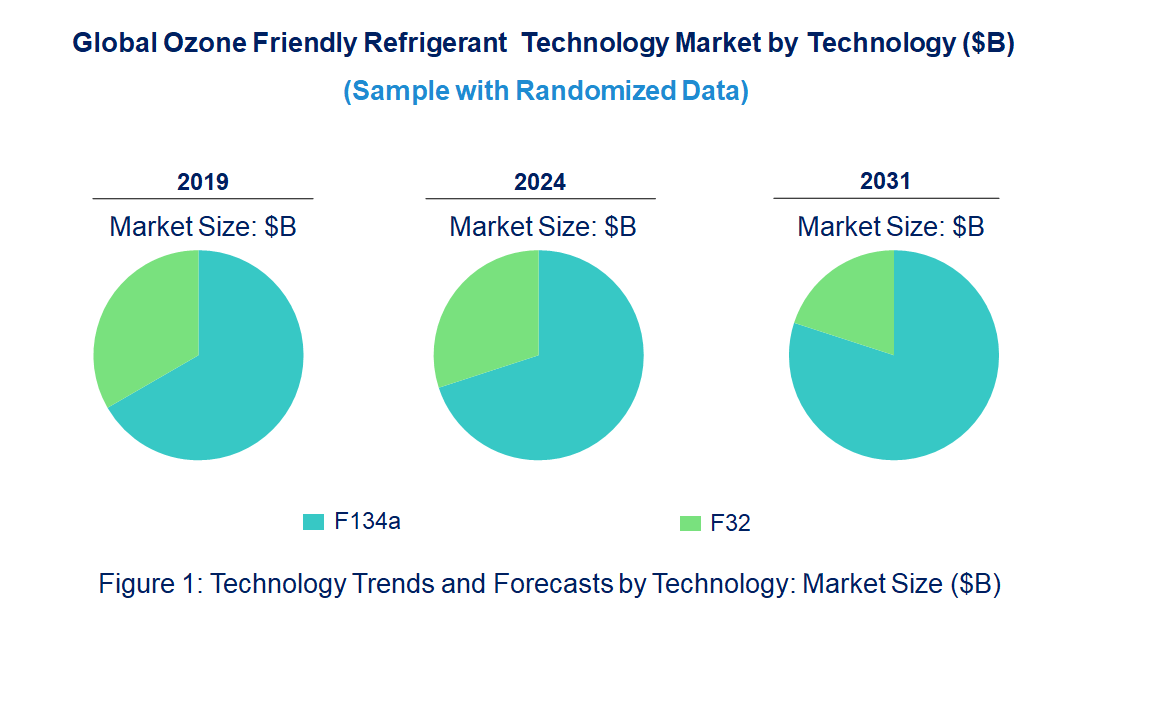
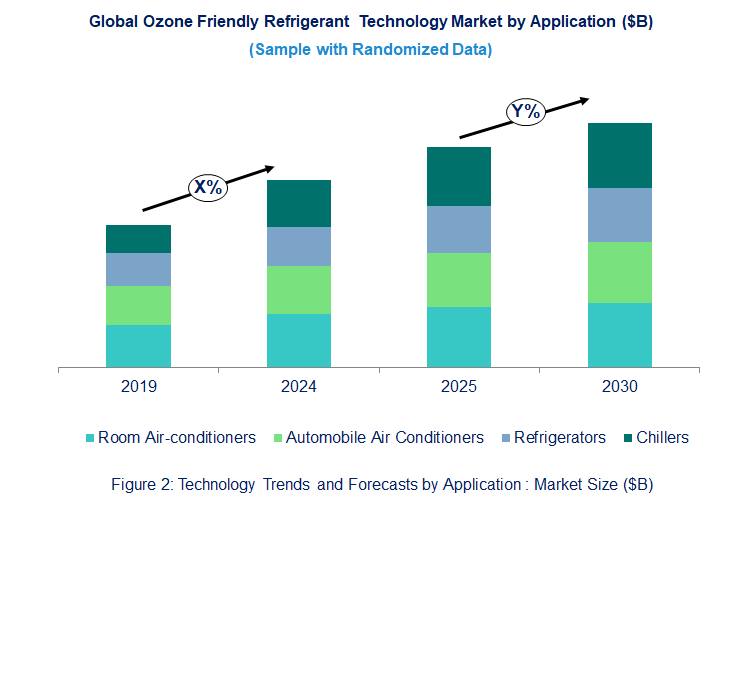
• Shift from HFCs to Lower-GWP Alternatives: As part of broader international initiatives to reduce greenhouse gases, high-GWP refrigerants like R-134a are being replaced with alternatives that have lower global warming potential, such as R-32 and R-1234yf. These alternatives have a significantly smaller environmental footprint than the former refrigerants.
• R-32 Refrigerant Is Becoming More Widely Adopted: R-32 is increasingly preferred due to its superior energy efficiency, lower GWP, and compatibility with existing systems. The widespread adoption of R-32 in applications such as air conditioners, refrigerators, and chillers is gaining momentum, as manufacturers seek cost-effective and environmentally responsible alternatives to older refrigerants like R-134a.
• Regulatory Push for More Sustainable Refrigerants: Governments and international institutions are imposing stricter regulations for the phase-down of high-GWP refrigerants. Policies such as the Kigali Amendment to the Montreal Protocol are driving the transition towards more environmentally friendly refrigerants. Companies in the refrigerant industry are restructuring their portfolios to meet new regulatory standards for competitiveness and compliance.
• Adoption of Natural Refrigerants: There is an increasing trend towards the use of natural refrigerants such as CO2, ammonia, and hydrocarbons in cooling applications, especially in commercial and industrial settings. These alternatives are becoming more attractive due to their sustainability, zero or low GWP, and suitability for both new installations and retrofitting of existing systems.
• Energy Efficiency and Performance Focus: As demand for sustainability rises, the focus is shifting towards energy-efficient refrigerants. In addition to low GWP, manufacturers are prioritizing refrigerants that improve the energy performance of air-conditioning, refrigeration, and industrial cooling systems. This shift leads to long-term cost savings while reducing the environmental impact. These emerging trends are redefining the ozone friendly refrigerant market by stimulating innovation and promoting more environmentally friendly and energy-efficient solutions. The shift away from high-GWP refrigerants, the increasing popularity of R-32 and natural refrigerants, and the focus on better energy efficiency are transforming the design and operation of cooling systems, supporting a greener and more sustainable future.
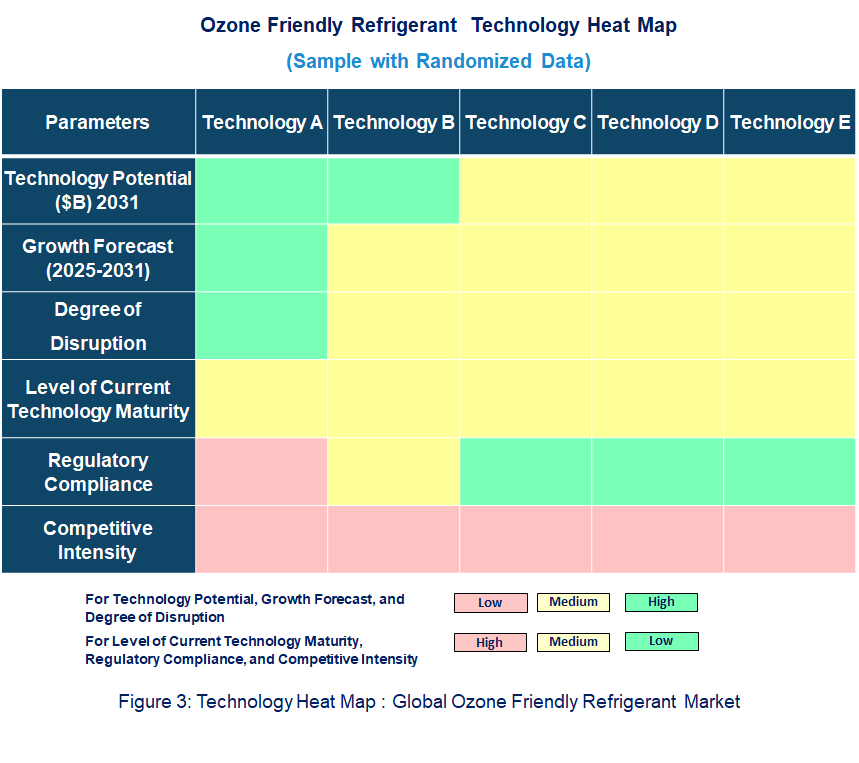
• Technology Potential: The potential of ozone-friendly refrigerant technologies lies in their ability to significantly reduce environmental impact. Low-GWP alternatives such as R-32 and natural refrigerants, like CO2 and ammonia, provide efficient cooling while minimizing harmful emissions. The transition to these refrigerants enables industries to meet both environmental and operational goals.
• Degree of Disruption: These technologies have a high degree of disruption, as they challenge long-established refrigerant practices. The shift from high-GWP refrigerants like R-134a to more sustainable options not only impacts production and application processes but also encourages new standards in product design and regulatory compliance.
• Level of Current Technology Maturity: Technologies such as R-32 and natural refrigerants are at a mature stage and are already being implemented in commercial applications like air conditioning, refrigeration, and chillers. However, certain natural refrigerants (e.g., ammonia and CO2) are still in the early stages of widespread adoption in specific sectors.
• Regulatory Compliance: With increasing global regulations such as the Kigali Amendment to the Montreal Protocol, industries are compelled to adopt ozone-friendly refrigerants. Compliance with these regulations is driving the shift towards lower-GWP refrigerants, helping manufacturers stay competitive while adhering to environmental standards.
• R-32 and Natural Refrigerants Investment by SRF: SRF is ahead of the curve in developing low-GWP refrigerants, including R-32, which offers a significant advantage in energy efficiency compared to traditional alternatives. SRF's goal of expanding its product line of ozone-friendly refrigerants aligns with stringent environmental regulations worldwide. This positions the company well to reduce its carbon footprint.
• INTARCON's Focus on Natural Refrigerants: INTARCON has emphasized the adoption of natural refrigerants, including CO2 and ammonia, in its cooling and refrigeration systems. This trend promotes sustainability in industries such as food and beverages, where energy efficiency and low environmental impact are growing concerns. The new refrigeration technologies developed by INTARCON, using natural refrigerants, enhance its market position by offering eco-friendly solutions that align with the global trend of reducing GWP. Such developments by SRF and INTARCON mirror a larger movement in the ozone-friendly refrigerant market, as companies invest in and research technologies that comply with stringent regulatory standards while providing sustainable and energy-efficient alternatives to traditional refrigerants.
• Stringent Environmental Regulations: International regulations place stricter controls on high-GWP refrigerants to protect the ozone layer and mitigate global warming. The Kigali Amendment to the Montreal Protocol is one of the main drivers, pushing industries to switch to low-GWP and ozone-friendly refrigerants, such as R-32 and natural refrigerants.
• Increase in Demand for Energy-Efficient Solutions: As companies strive to achieve sustainability, the demand for more energy-efficient and cost-effective refrigerants is increasing. This drives the adoption of new refrigerants, such as R-32, which offer superior energy performance compared to older refrigerants, enabling companies to meet both environmental and cost-saving targets.
• Refrigerant Technological Advancements: Technological innovations in refrigerant development allow the creation of more efficient and environmentally friendly alternatives. Natural refrigerants, such as CO2, ammonia, and hydrocarbons, are gaining popularity because they have lower environmental impacts and are more efficient when used as coolants. This is driving the adoption of ozone-friendly refrigerants. Challenges in the ozone friendly refrigerant market are:
• High Initial Investment and Retrofit Costs: The installation of ozone-friendly refrigerants requires large upfront costs, such as retrofitting existing systems and purchasing new equipment. Small businesses or those operating on limited budgets cannot compete with the costs, which slows the adoption of new sustainable refrigerants.
• New Refrigerants Lack Supporting Infrastructure: New refrigerants, such as R-32 and natural refrigerants, lack the necessary infrastructure, including compatible equipment and trained personnel. They cannot, therefore, be widely utilized in areas that lack developed cooling and refrigeration infrastructure. The ozone-friendly refrigerant market is growing due to regulatory pressures, technological innovations, and an increased demand for energy-efficient solutions. While challenges, such as high costs and infrastructure limitations, persist, these drivers are reshaping the market to promote sustainability and enable the widespread adoption of alternative refrigerants. Companies will continue to innovate, and the market is likely to grow and transform further.
• SRF
• INTARCON
• Technology Readiness of F134a, F32 for Ozone Friendly Refrigerant Market: The technology readiness of F134a and F32 in the ozone friendly refrigerant market varies significantly. F134a, once a reliable refrigerant, is now facing obsolescence due to its high global warming potential (GWP) and is being phased out in favor of alternatives like F32. F32 has already gained significant traction due to its low GWP, superior energy efficiency, and compatibility with existing HVAC systems. F32 is also being incorporated into new cooling systems and retrofitted in older units to improve performance and reduce environmental impact. In terms of regulatory compliance, F32 is far more aligned with current and future standards, particularly the Kigali Amendment to the Montreal Protocol. On the other hand, F134a is increasingly non-compliant, making it less competitive in the long run. F32’s readiness for widespread adoption is bolstered by its integration in multiple applications, including air conditioners, refrigerators, and chillers, with many major manufacturers already incorporating it into their product lines. As the market shifts towards low-GWP solutions, F32 stands as the leading technology, while F134a continues to be phased out in favor of more sustainable alternatives.
• Competitive Intensity and Regulatory Compliance of F134a, F32 for Ozone Friendly Refrigerant Market: The competitive intensity between refrigerants like F134a and F32 is driven by the need to comply with stricter environmental regulations. F134a, once widely used in air conditioners and refrigerators, faces growing pressure from governments worldwide, particularly due to its high global warming potential (GWP). F32, as a more environmentally friendly option, is gaining momentum because it has a significantly lower GWP and better energy efficiency, aligning with the targets of global regulations such as the Kigali Amendment to the Montreal Protocol. This has led to increasing competition between companies to develop systems and equipment compatible with F32, thus accelerating its adoption. While F134a still holds a significant market share, its regulatory non-compliance with new environmental standards makes it less competitive, particularly in regions with stringent laws. F32, however, is well-positioned to comply with these regulations, ensuring its future dominance. The push for sustainability and compliance is reshaping the competitive landscape, pushing companies to innovate and adopt refrigerants with a lower environmental impact.
• Disruption Potential of Different Technologies (F134a, F32) for Ozone Friendly Refrigerant Market: The disruption potential of refrigerants like F134a and F32 in the Ozone Friendly Refrigerant Market is significant. F134a, while effective, has a high Global Warming Potential (GWP) and is being phased out in favor of lower-GWP options like F32. F32 has gained traction due to its much lower environmental impact and superior energy efficiency, particularly in air-conditioning and refrigeration systems. The shift from F134a to F32 is driven by regulatory pressures and environmental concerns. F32's potential for improving energy efficiency while reducing the carbon footprint makes it a disruptive force in the industry. As F32 becomes more widely adopted, it is expected to replace older refrigerants in various applications, particularly in the residential and commercial HVAC sectors. This change in refrigerant technology is part of the larger trend toward sustainability, further disrupting the market by challenging traditional refrigerant technologies. The ongoing evolution towards F32 also opens the door for advancements in cooling system efficiency, leading to better performance and lower energy consumption.
• F134a
• F32
• Room Air-Conditioners
• Automobile Air Conditioners
• Refrigerators
• Chillers
• North America
• Europe
• Asia Pacific
• The Rest of the World
• Latest Developments and Innovations in the Ozone Friendly Refrigerant Technologies
• Companies / Ecosystems
• Strategic Opportunities by Technology Type


Choose a license that fits your team. Instant PDF delivery.
Prices exclude taxes. Instant delivery. Custom licensing available on request.
Market Report · May 18, 2026
Market Report · May 18, 2026
Market Report · May 18, 2026
Trusted partner for strategic intelligence and business growth


Receive a complimentary market analysis tailored to your industry. Our analysts will identify key growth opportunities and competitive dynamics specific to your business.

Market size, growth rate, and key trend analysis for your specific sector.

Top competitor positioning and market share analysis.

Strategic recommendations backed by data-driven insights.
Get curated market intelligence and competitive moves straight to your inbox.
By subscribing, you agree to receive our monthly insights. Unsubscribe anytime.
Receive a complimentary market analysis tailored to your industry. Our analysts will identify key growth opportunities and competitive dynamics specific to your business.
Market size, growth rate, and key trend analysis for your specific sector.
Top competitor positioning and market share analysis.
Strategic recommendations backed by data-driven insights.
Get curated market intelligence, emerging trends, and competitive moves straight to your inbox each month.
By subscribing, you agree to receive our monthly insights. Unsubscribe anytime.
We'll send your sample report shortly.