
Market Report · May 18, 2026

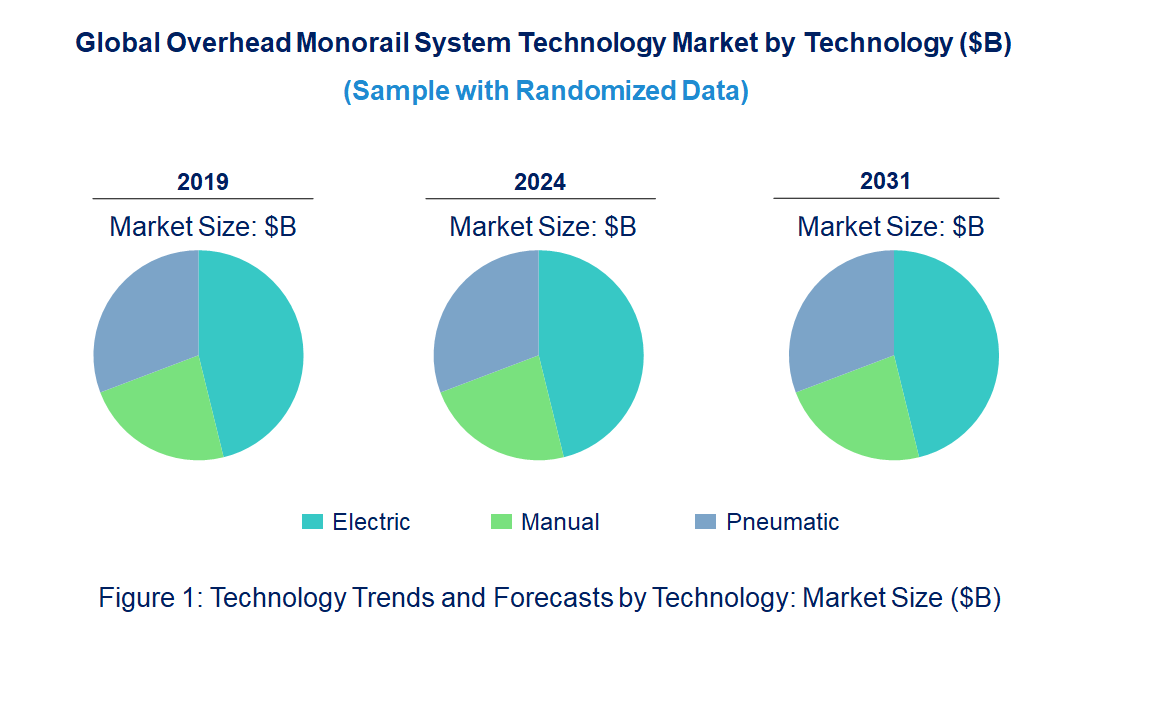
This market report covers trends, opportunities, and forecasts in the global overhead monorail system market to 2031 by technology (electric, manual, and pneumatic), application (industrial plants, manufacturing companies, and mining companies), and region (North America, Europe, Asia Pacific, and the Rest of the World)
We'll send your sample report shortly.
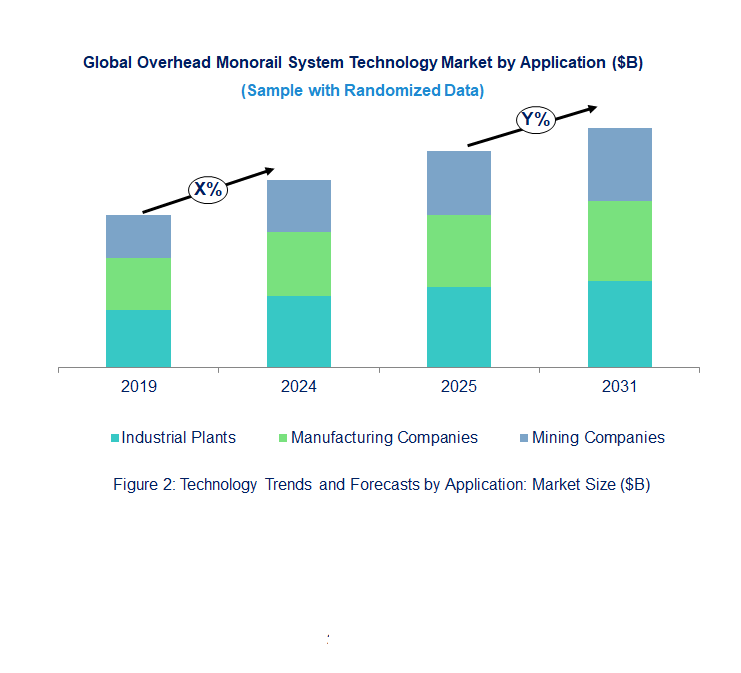
• Automation and Integration with IoT: The integration of the Internet of Things with automation is becoming the new standard for the Overhead Monorail System Market. These monorail systems are incorporating smart sensors, connected devices, and real-time analytics to promote efficient operations and minimize downtime or even enable predictive maintenance. This trend ensures real-time monitoring, automated tasks, and actionable insights to optimize system performance.
• Electric Overhead Monorails in High Demand: Electric-powered overhead monorails are gaining traction as replacements for traditional manual systems. Electric monorails offer advantages such as higher load capacity, energy efficiency, and smooth operation. With industries striving to reduce their carbon footprint and improve energy consumption, the demand for electric systems will continue to rise, especially in manufacturing and industrial plant environments.
• Customization and Flexible Designs: Overhead monorail systems are increasingly being designed to meet specific needs in industries like automotive, logistics, and mining. Manufacturers are offering modular designs, flexible configurations, and adjustable load capacities to meet diverse client requirements. This trend is fueling market growth due to its ability to provide more efficient and adaptable transportation solutions.
• Safety and Reliability: Safety and reliability are key drivers for innovation in the overhead monorail system market. Manufacturers are introducing advanced safety features, such as automatic stop mechanisms, collision avoidance sensors, and emergency braking systems, to protect workers and prevent accidents. The growing emphasis on workplace safety is encouraging companies to adopt more reliable and secure monorail systems.
• Sustainability and Eco-Friendly Solutions: The priority of sustainability across industries worldwide is promoting the adoption of environmentally friendly overhead monorail systems. Energy-efficient motors, reduced carbon emissions, and recyclable materials are becoming key design considerations to minimize environmental impact. This demand is driven by regulations and the increasing corporate social responsibility (CSR) efforts of companies aiming to reduce their ecological footprint. These trends are transforming the overhead monorail system market by focusing on automation, energy efficiency, safety, and adaptability. Industries will increasingly prioritize customization, sustainability, and real-time data integration, pushing the market toward more advanced, efficient, and environmentally friendly monorail systems. These trends are laying the foundation for innovative and optimized solutions across various industrial applications.
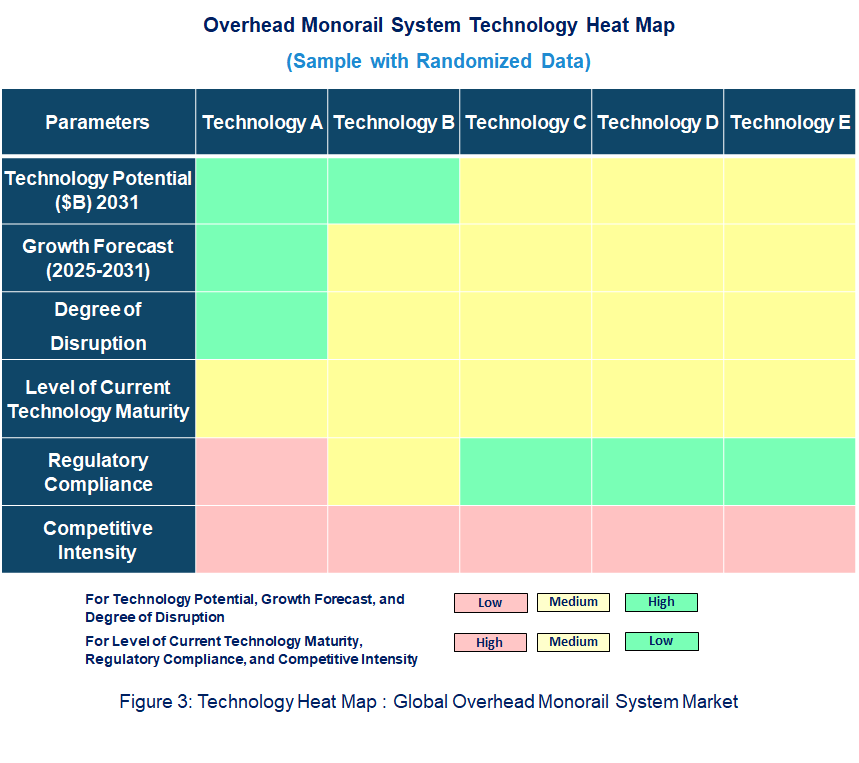
• Technology Potential: Overhead monorail systems are leveraging next-generation technologies such as electrical propulsion, IoT connectivity, and smart sensors. These advancements enable real-time monitoring, preventive maintenance, and improved operational efficiency, making the systems more reliable and reducing downtime. The growing trend of automation in material handling and integration with various transportation systems further accelerates market growth.
• Degree of Disruption: The degree of disruption in the Overhead Monorail System Market is moderate. The shift from manual to electric-powered monorails, along with the introduction of automation and IoT, is transforming traditional systems. However, the pace of disruption is tempered by the high costs and complexity involved in implementing these technologies, particularly in legacy infrastructure.
• Level of Current Technology Maturity: The current technology maturity is high in electric and automated monorail systems, with many industries, especially manufacturing, adopting these solutions due to their energy efficiency, safety, and scalability. However, fully automated solutions are still evolving in some sectors, such as mining, where complete system automation is not yet fully realized.
• Regulatory Compliance: The overhead monorail system market is heavily influenced by regulatory compliance, particularly in the manufacturing and logistics sectors, where stringent safety and environmental standards are in place. Systems must adhere to local and international regulations concerning safety, energy efficiency, and operational performance to ensure proper compliance.
• Schneider Electric SE: Schneider Electric has incorporated state-of-the-art automation and IoT technology into overhead monorail systems, maximizing energy efficiency and operational optimization. The company specializes in providing energy-efficient solutions that are monitored in real-time and have predictive maintenance capabilities, supporting sustainability and reducing operational costs across industries.
• Vanderlande Industries B.V.: Vanderlande has made tremendous strides in developing integrated monorails that promote automated warehousing and distribution solutions. Their systems leverage cutting-edge robotics and applications for smooth operational efficiency, minimizing operation time, and solving complex logistics challenges, particularly in e-commerce and large retail operations.
• Gorbel: Gorbel provides ergonomic overhead monorail systems focusing on worker safety and operational productivity. Gorbel’s systems are particularly popular in manufacturing environments, offering customized solutions to improve material handling and reduce the risks of workplace injuries. Production processes become more flexible and safer with Gorbel’s systems.
• Interroll: Interroll developed modular conveyor systems specifically designed to improve overhead monorail applications. The modular design allows for easy scalability, quick installations, and greater flexibility in system design. Interroll’s products enhance material flow efficiency, especially in industries like logistics, food, and pharmaceuticals.
• Otis Elevator Company: Otis has developed innovative vertical and horizontal transport solutions that complement overhead monorail systems in large industrial facilities. Their developments have optimized space usage and enhanced efficiency in high-rise buildings and commercial facilities that require vertical and horizontal material movement.
• Daifuku: Daifuku has strengthened its market position by introducing technologically advanced overhead monorails equipped with automated guided vehicles. The systems offer an efficient, flexible, and highly automated material handling solution that is ideally suited for automotive and electronics manufacturing industries. Daifuku focuses on increasing the integration of AI and automation technologies.
• Siemens: Siemens has been at the forefront of the digitization of overhead monorails. They have used Siemens Digital Industries Software to provide real-time tracking, predictive maintenance, and system performance monitoring. Their solutions have expanded into several sectors, improving operational efficiency and enabling smart factory transformations in manufacturing environments. These developments by key players indicate that the overhead monorail system market is increasingly shifting toward automation, integration with IoT and AI, and a focus on energy efficiency and safety. As these innovations gain traction, the industry is expected to experience sustained growth and improved operational capabilities across multiple sectors.
• Growing Demand for Automated Systems: Companies are increasingly adopting automated material handling systems to reduce labor costs and enhance operational efficiency. Monorail systems simplify the transportation of products and goods in factories, warehouses, and distribution centers, thus driving market growth.
• Urbanization and Infrastructure Development: Rapid urbanization is creating a demand for more efficient public transportation solutions, particularly in densely populated cities. Monorails offer space-efficient, environmentally friendly transport options, making them ideal for overcrowded urban areas.
• Technological Advancements in Monorail Systems: Innovations in safety, efficiency, and integration with other transport systems have enhanced the appeal of monorail systems across various sectors. These technological improvements are spurring wider adoption.
• Cost-Effective and Space-Efficient Transportation: Monorails offer a cost-effective alternative to traditional rail systems due to their lower construction costs, smaller footprint, and ability to navigate tight spaces. This makes them attractive for both industrial and urban applications, further boosting demand.
• Environmental and Sustainability Concerns: Monorail systems, particularly electric versions, offer a greener alternative to traditional transportation, with lower emissions and energy consumption. As environmental regulations become more stringent, this sustainability aligns with emerging goals in multiple industries. Challenges in the overhead monorail system (OMS) market are:
• High Initial Capital Investment: The significant cost of designing and building monorail systems is a major barrier to adoption, especially for small to medium-sized enterprises or cities with limited budgets. The high upfront capital investment required slows down market penetration.
• Infrastructural Compatibility Issues: Integrating monorail systems into already-crowded urban environments poses substantial challenges. Modifications to roads, bridges, and buildings to accommodate monorails can be expensive and require long-term investment.
• Competition from Alternative Transport Options: Monorail systems face competition from other transport solutions, such as light rail, buses, and subways, which are less costly or easier to implement in certain areas. The Overhead Monorail System market is poised for significant growth driven by increasing demands for automation, urbanization, technological advancements, and sustainable transportation solutions. Despite challenges such as high initial investment, infrastructure integration, and competition from other transport options, the market’s upward trajectory remains strong. The need for space-saving, cost-effective transportation solutions in both industrial and urban settings will continue to drive the adoption of monorail systems, leading to ongoing market expansion.
• Schneider Electric Se.
• Vanderlande Industries B.V.
• Gorbel
• Interroll
• Otis Elevator Company
• Daifuku
• Technology Readiness by Technology Type: The most technologically advanced electric monorail systems are considered the most ready for mass-scale deployment in industries like automotive, logistics, and manufacturing. Their high efficiency and minimal maintenance needs make them highly competitive for automation system integration. Manual systems are mature but highly outdated, with competition in almost every sector. Pneumatic systems have matured in niche applications, such as mining, and are not scalable or as cost-effective as electric systems. Electric systems are more demanding in terms of regulatory compliance because they must meet environmental and safety standards, while manual and pneumatic systems face fewer regulations.
• Competitive Intensity and Regulatory Compliance: The competitive intensity is highest with electric monorail systems. Demand is growing significantly across diverse industries such as manufacturing and logistics. Manual systems are experiencing eroding competitiveness, as most of them are now being replaced by more efficient technologies. Competition in pneumatics has declined, as various niche sectors are experiencing the above. From a regulatory point of view, electric systems must meet more stringent environmental and safety standards, whereas the requirements for manual and pneumatic systems are less stringent but are becoming less attractive due to their inefficiencies. Industries are increasingly being pushed toward electric solutions by regulatory compliance, as they better align with sustainability goals.
• Disruption Potential by Technology Type: Electric technologies are the most disruptive in the Overhead Monorail System Market, offering automation, energy efficiency, and scalability. They are replacing manual systems, which are limited in application and less efficient. Pneumatic systems, while effective in specific scenarios like mining, face competition from more energy-efficient solutions. As industries demand more automation and sustainability, electric monorail systems are poised to dominate, leaving manual and pneumatic systems with limited growth potential. Market developments are expected to continue evolving around electric technologies. Innovations will focus on design, innovative layouts, and operational efficiency.
• Electric
• Manual
• Pneumatic
• Industrial Plants
• Manufacturing Companies
• Mining Companies
• North America
• Europe
• Asia Pacific
• The Rest of the World
• Latest Developments and Innovations in the Overhead Monorail System Technologies
• Companies / Ecosystems
• Strategic Opportunities by Technology Type


Choose a license that fits your team. Instant PDF delivery.
Prices exclude taxes. Instant delivery. Custom licensing available on request.
Market Report · May 18, 2026
Market Report · May 18, 2026
Market Report · May 18, 2026
Trusted partner for strategic intelligence and business growth


Receive a complimentary market analysis tailored to your industry. Our analysts will identify key growth opportunities and competitive dynamics specific to your business.

Market size, growth rate, and key trend analysis for your specific sector.

Top competitor positioning and market share analysis.

Strategic recommendations backed by data-driven insights.
Get curated market intelligence and competitive moves straight to your inbox.
By subscribing, you agree to receive our monthly insights. Unsubscribe anytime.
Receive a complimentary market analysis tailored to your industry. Our analysts will identify key growth opportunities and competitive dynamics specific to your business.
Market size, growth rate, and key trend analysis for your specific sector.
Top competitor positioning and market share analysis.
Strategic recommendations backed by data-driven insights.
Get curated market intelligence, emerging trends, and competitive moves straight to your inbox each month.
By subscribing, you agree to receive our monthly insights. Unsubscribe anytime.
We'll send your sample report shortly.