
Market Report · July 15, 2026

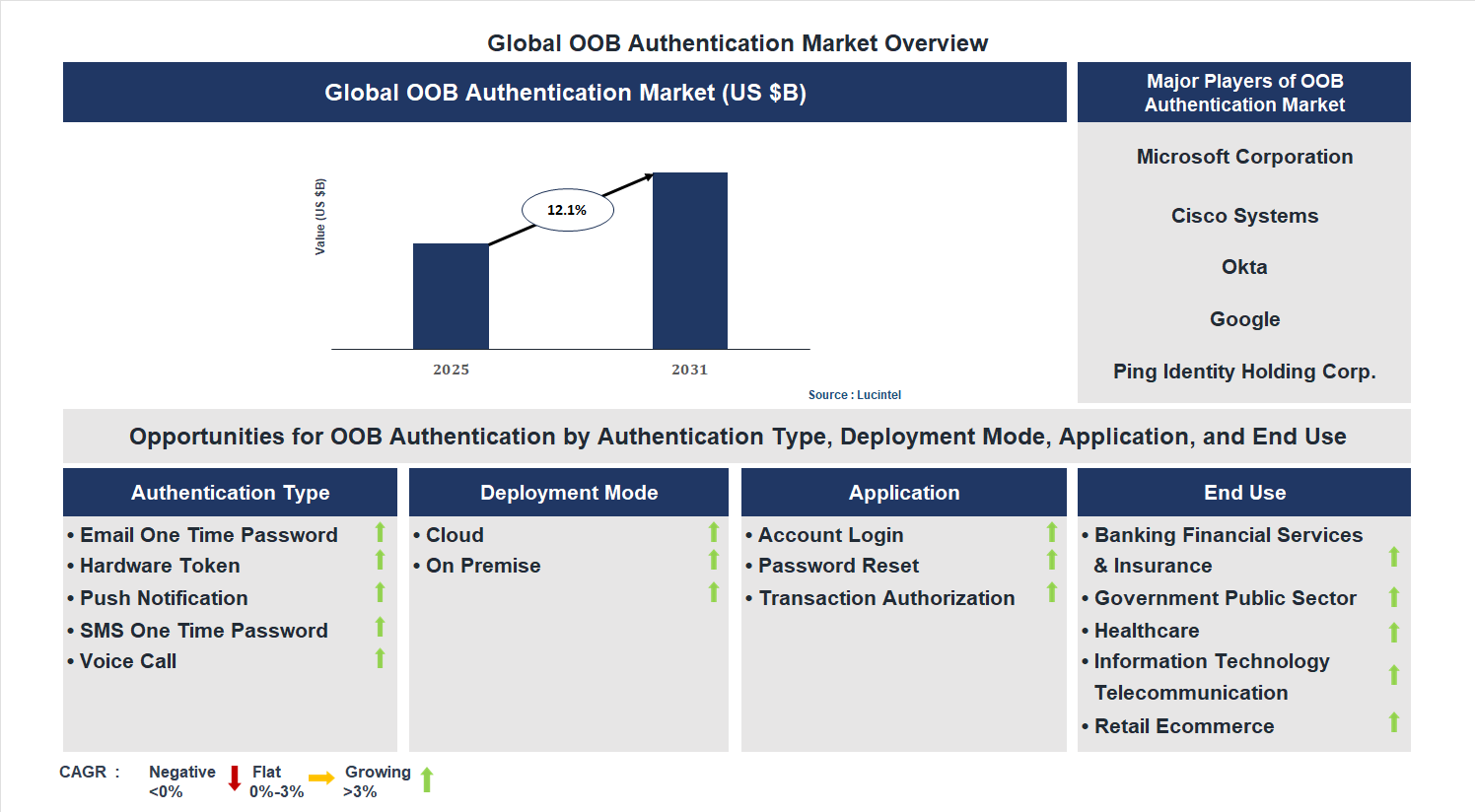
Key data points: The growth forecast = 12.1% annually for the next 7 years. Scroll below to get more insights. This market report covers trends, opportunities and forecasts in OOB authentication market to 2031 by authentication type (email one time password, hardware token, push notification, SMS one time password, and voice call), deployment mode (cloud and on premise), application (account login, password reset, and transaction authorization), end use (banking financial services & insurance, government public sector, healthcare, information technology telecommunication, and retail ecommerce), and region (North America, Europe, Asia Pacific, and the Rest of the World)
We'll send your sample report shortly.
• Lucintel forecasts that, within the authentication type category, SMS one time password is expected to witness the highest growth over the forecast period.
• Within the end use category, information technology telecommunication is expected to witness the highest growth.
• In terms of region, APAC is expected to witness the highest growth over the forecast period. Gain valuable insights for your business decisions with our comprehensive 150+ page report. Sample figures with some insights are shown below.
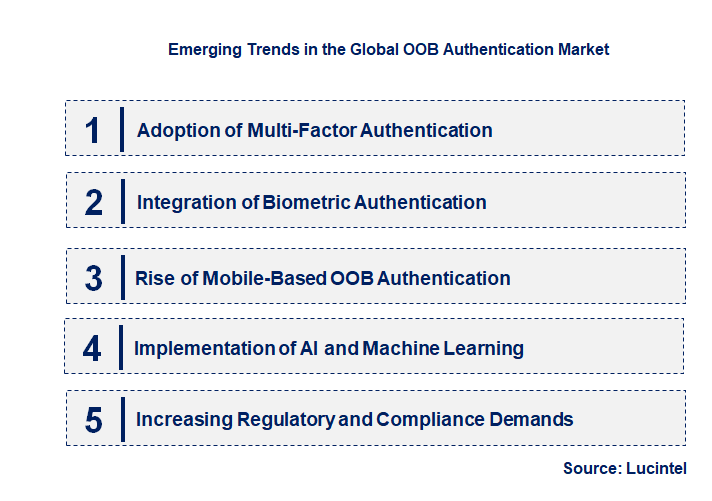
• Adoption of Multi-Factor Authentication (MFA): The market is witnessing a surge in MFA solutions that combine OOB methods with other authentication factors. This layered approach significantly enhances security by requiring users to verify their identity through multiple channels, such as SMS, email, or hardware tokens. Organizations across banking, healthcare, and e-commerce sectors are increasingly implementing MFA to comply with regulatory standards and reduce fraud risks. The integration of MFA with OOB authentication is expected to become a standard practice, providing a more resilient defense against cyber threats.
• Integration of Biometric Authentication: Biometric technologies like fingerprint scans, facial recognition, and voice authentication are being integrated with OOB systems. This convergence offers a seamless and highly secure user experience, reducing reliance on traditional passwords. Biometric OOB methods are particularly appealing for mobile banking and remote access applications, where convenience and security are paramount. The adoption of biometric OOB authentication is driven by advancements in sensor technology and increasing consumer demand for contactless, frictionless security solutions.
• Rise of Mobile-Based OOB Authentication: With the proliferation of smartphones, mobile-based OOB authentication solutions are gaining prominence. These solutions leverage push notifications, one-time passcodes sent via SMS, or app-based authenticators to verify user identities. Mobile OOB methods provide real-time alerts and easy-to-use interfaces, making them ideal for remote and on-the-go authentication needs. The market growth is supported by the widespread adoption of smartphones and the need for quick, secure access to digital services, especially in banking and financial sectors.
• Implementation of AI and Machine Learning: Artificial Intelligence (AI) and machine learning are being integrated into OOB authentication systems to enhance security and user experience. These technologies enable real-time threat detection, anomaly analysis, and adaptive authentication processes. AI-driven OOB solutions can identify suspicious activities and trigger additional verification steps automatically, reducing false positives and improving accuracy. This trend is transforming OOB authentication from static methods to dynamic, intelligent systems capable of responding to evolving cyber threats more effectively.
• Increasing Regulatory and Compliance Demands: Governments and industry bodies are imposing stricter regulations requiring robust authentication measures to protect sensitive data. Compliance standards such as GDPR, PSD2, and PCI DSS are driving organizations to adopt advanced OOB authentication solutions. These regulations emphasize the importance of secure customer verification and data protection, prompting businesses to invest in innovative OOB methods. As regulatory landscapes evolve, the market will continue to innovate, ensuring that authentication solutions meet compliance requirements while maintaining user convenience. In summary, these emerging trends are fundamentally reshaping the OOB authentication market by enhancing security, improving user experience, and ensuring compliance. The integration of biometric and AI technologies, coupled with the rise of mobile solutions and regulatory pressures, is driving innovation and adoption. These developments are creating a more secure digital environment, enabling organizations to better protect their assets and customer data in an increasingly interconnected world.
• Adoption of Biometric OOB Authentication: Increasing integration of biometric data such as fingerprint and facial recognition in OOB systems enhances security and user convenience, reducing fraud risks and improving authentication accuracy.
• Rise of Mobile-Based OOB Solutions: The proliferation of smartphones has led to the development of mobile-based OOB authentication methods, enabling seamless, real-time verification and expanding accessibility for users worldwide.
• Strategic Partnerships and Collaborations: Major players are forming alliances with technology providers and financial institutions to develop innovative OOB solutions, accelerating market growth and broadening application scope.
• Implementation of AI and Machine Learning: Incorporating AI-driven analytics into OOB authentication systems improves threat detection, adaptive security measures, and reduces false positives, strengthening overall security.
• Regulatory and Compliance Enhancements: Governments and industry bodies are establishing stricter security standards and regulations, encouraging organizations to adopt advanced OOB authentication methods to ensure compliance and protect sensitive data. These developments are collectively transforming the OOB authentication market by making security measures more robust, user-friendly, and adaptable to emerging threats. The market is moving towards more integrated, intelligent, and compliant solutions, which are crucial for safeguarding digital assets in an increasingly connected world.
• Banking: Enhanced Security for Digital Transactions : The banking sector is adopting OOB authentication to secure online banking and mobile transactions, reducing fraud and unauthorized access. This growth improves customer trust and compliance with regulatory standards, driving market expansion.
• Healthcare: Protecting Patient Data and Access : Healthcare providers are implementing OOB solutions to safeguard electronic health records and telemedicine platforms. This ensures data integrity and privacy, fostering secure remote healthcare services and increasing market demand.
• Government: Securing Critical Infrastructure and E-Government Services : Governments are deploying OOB authentication to protect sensitive information and critical infrastructure from cyber threats. This enhances national security and promotes digital government initiatives, fueling market growth.
• Retail: Securing E-Commerce and Customer Accounts : Retailers are leveraging OOB authentication to prevent account breaches and fraud in online shopping platforms. This enhances customer confidence and reduces financial losses, expanding the market.
• Telecommunications: Strengthening Network Security and User Authentication : Telecom companies are adopting OOB methods to authenticate users and secure network access. This reduces fraud and enhances service security, contributing to market development. In summary, these growth opportunities across key applications are significantly impacting the OOB authentication market by driving adoption, enhancing security, and fostering innovation. As industries prioritize cybersecurity, the market is poised for sustained expansion, offering new avenues for technological advancement and competitive differentiation.
• Increasing Cybersecurity Threats: The surge in cyberattacks and data breaches has heightened the need for secure authentication solutions. Organizations are adopting OOB methods to mitigate risks associated with traditional password-based systems, which are vulnerable to hacking. This demand is driven by the rising sophistication of cyber threats and the critical need to safeguard sensitive information, especially in banking, healthcare, and government sectors. As cyber threats continue to evolve, the market for robust OOB authentication solutions is expected to expand significantly.
• Growing Adoption of Mobile Devices: The widespread use of smartphones and tablets has transformed authentication practices. OOB authentication leverages mobile devices for secure verification, making it more convenient and accessible for users. This trend is particularly prominent in financial services, where mobile banking and payment apps require strong security measures. The proliferation of mobile technology has enabled real-time, user-friendly authentication processes, thereby fueling market growth and encouraging vendors to develop innovative OOB solutions compatible with various devices.
• Regulatory Compliance and Data Privacy Laws: Governments and regulatory bodies worldwide are implementing stringent data protection laws, such as GDPR and HIPAA, which mandate enhanced security measures for data access and transactions. OOB authentication provides a compliant solution by offering multi-factor verification that reduces fraud and unauthorized access. Organizations are increasingly adopting these solutions to meet legal requirements, avoid penalties, and build customer trust. The evolving regulatory landscape acts as a catalyst for market expansion, prompting investments in advanced authentication technologies.
• Digital Transformation Initiatives: The ongoing digital transformation across industries necessitates secure and reliable authentication methods. Businesses are migrating to cloud platforms, online services, and digital channels, which require robust security frameworks. OOB authentication plays a vital role in enabling secure access to digital assets, supporting remote work, and facilitating seamless customer experiences. As organizations prioritize digital innovation, the demand for scalable and effective OOB solutions is expected to grow, driving market development.
• Technological Innovations in Authentication: Advances in biometric verification, tokenization, and real-time verification technologies are enhancing the capabilities of OOB authentication systems. These innovations improve security, user experience, and integration flexibility. Vendors are investing in R&D to develop smarter, faster, and more secure solutions, which attract a broader customer base. The continuous evolution of technology ensures that OOB authentication remains a vital component of comprehensive cybersecurity strategies, fostering sustained market growth. The challenges facing this OOB authentication market include:-
• User Convenience and Adoption Barriers: While OOB authentication enhances security, it can sometimes be perceived as cumbersome or intrusive by users. The additional steps required for verification may lead to frustration, reducing user adoption rates. Organizations must balance security with ease of use to ensure widespread acceptance. Overcoming resistance and educating users about the benefits of OOB methods are critical for successful implementation, but these factors can slow market growth and limit deployment in certain regions.
• High Implementation and Maintenance Costs: Deploying OOB authentication solutions involves significant investment in hardware, software, and infrastructure. Small and medium-sized enterprises may find these costs prohibitive, limiting market penetration. Additionally, ongoing maintenance, updates, and support add to operational expenses. These financial barriers can hinder widespread adoption, especially in cost-sensitive markets, and challenge vendors to offer affordable yet effective solutions.
• Regulatory and Standardization Challenges: The lack of universal standards and evolving regulatory requirements pose hurdles for market players. Variations in compliance standards across regions complicate product development and deployment. Vendors must navigate complex legal landscapes, which can delay product launches and increase costs. Ensuring interoperability and meeting diverse regulatory demands remain significant challenges that could impede market growth and innovation. In summary, the OOB authentication market is driven by increasing cybersecurity threats, mobile device adoption, regulatory compliance, digital transformation, and technological innovations. However, challenges such as user convenience, high costs, and regulatory complexities must be addressed to sustain growth. Overall, these factors collectively influence the markets trajectory, emphasizing the need for balanced solutions that prioritize security, usability, and compliance. As technology advances and awareness grows, the market is poised for continued expansion, provided stakeholders effectively manage the associated challenges.
• Microsoft Corporation
• Cisco Systems
• Okta
• Ping Identity Holding Corp.
• Broadcom
• International Business Machines Corporation
• ForgeRock
• RSA Security
• OneSpan
• Email One Time Password
• Hardware Token
• Push Notification
• SMS One Time Password
• Voice Call
• Cloud
• On Premise
• Account Login
• Password Reset
• Transaction Authorization
• Banking Financial Services & Insurance
• Government Public Sector
• Healthcare
• Information Technology Telecommunication
• Retail Ecommerce
• North America
• Europe
• Asia Pacific
• The Rest of the World
• United States: The US market for OOB authentication has seen rapid adoption, driven by financial institutions and tech giants implementing multi-factor authentication solutions. Innovations include biometric integrations and mobile-based OOB methods. Regulatory frameworks like the FFIEC guidelines have further propelled market growth, emphasizing security and compliance. The rise of remote work has also increased demand for secure access solutions, prompting vendors to develop more user-friendly and scalable OOB authentication systems.
• China: China’s OOB authentication market is expanding due to government initiatives promoting cybersecurity and digital payments. Major tech companies are investing in biometric and mobile-based OOB solutions to enhance user security. The government’s push for digital currency and e-governance has accelerated adoption. Additionally, the increasing prevalence of online banking and e-commerce has driven demand for robust authentication methods, with local providers focusing on integrating AI and machine learning to improve security and user experience.
• Germany: Germany’s market is characterized by a focus on compliance with strict EU data protection regulations, such as GDPR. Financial institutions and enterprises are adopting advanced OOB authentication solutions to meet regulatory requirements and prevent fraud. There is a growing emphasis on integrating OOB methods with existing security frameworks, including hardware tokens and mobile authentication apps. The market also benefits from increased awareness of cybersecurity threats and the need for secure digital identities.
• India: The Indian OOB authentication market is witnessing rapid growth fueled by the expansion of digital banking, mobile payments, and government initiatives like Digital India. Local providers are developing cost-effective and user-friendly OOB solutions to cater to a large, diverse population. The adoption of biometric authentication, especially fingerprint and facial recognition, is increasing. Regulatory mandates for secure transactions and anti-fraud measures are further boosting market expansion, with a focus on mobile-based OOB methods to reach rural and urban populations alike.
• Japan: Japan’s market is driven by the banking and government sectors, emphasizing high-security standards and user convenience. The adoption of OOB authentication solutions, including hardware tokens and mobile apps, is increasing to comply with strict security regulations. Innovations include integration with biometric systems and the use of AI for fraud detection. The aging population and the rise of digital services have prompted providers to develop accessible and reliable authentication methods, ensuring secure digital interactions across various sectors.


• Microsoft Corporation
• Cisco Systems
• Okta
• Ping Identity Holding Corp.
• Broadcom
• International Business Machines Corporation
• ForgeRock
• RSA Security
• OneSpan Q5. Which OOB authentication market segment will be the largest in future? Answer: Lucintel forecasts that, within the authentication type category, SMS one time password is expected to witness the highest growth over the forecast period. Q6. In OOB authentication market, which region is expected to be the largest in next 5 years? Answer: In terms of region, APAC is expected to witness the highest growth over the forecast period. Q7. Do we receive customization in this report? Answer: Yes, Lucintel provides 10% customization without any additional cost.


Choose a license that fits your team. Instant PDF delivery.
Prices exclude taxes. Instant delivery. Custom licensing available on request.
Market Report · July 15, 2026
Market Report · June 26, 2026
Market Report · June 24, 2026
Trusted partner for strategic intelligence and business growth


Receive a complimentary market analysis tailored to your industry. Our analysts will identify key growth opportunities and competitive dynamics specific to your business.

Market size, growth rate, and key trend analysis for your specific sector.

Top competitor positioning and market share analysis.

Strategic recommendations backed by data-driven insights.
Get curated market intelligence and competitive moves straight to your inbox.
By subscribing, you agree to receive our monthly insights. Unsubscribe anytime.
Receive a complimentary market analysis tailored to your industry. Our analysts will identify key growth opportunities and competitive dynamics specific to your business.
Market size, growth rate, and key trend analysis for your specific sector.
Top competitor positioning and market share analysis.
Strategic recommendations backed by data-driven insights.
Get curated market intelligence, emerging trends, and competitive moves straight to your inbox each month.
By subscribing, you agree to receive our monthly insights. Unsubscribe anytime.
We'll send your sample report shortly.