
Market Report · July 29, 2026

Key data points: The market size in 2030 = $825.0 million, growth forecast = 5.6% annually for the next 6 years. Scroll below to get more insights. This market report covers trends, opportunities, and forecasts in the global online photography education market to 2030 by type (degree and non-degree), end use (academic institutions and individual learners), and region (North America, Europe, Asia Pacific, and the Rest of the World)
We'll send your sample report shortly.
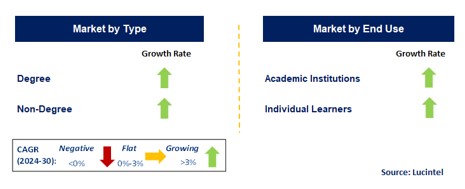
• Lucintel forecasts that, within the type category, degree segment is expected to witness higher growth over the forecast period because of growing interest in photography among students worldwide, many colleges have begun to provide online degree programs in photography.
• Within the end use category, academic institutions is expected to witness higher growth.
• In terms of regions, North America is expected to witness the highest growth over the forecast period due to switching to digital content in the classroom to improve participation and foster communication between students and teachers. Gain valuable insights for your business decisions with our comprehensive 150+ page report.
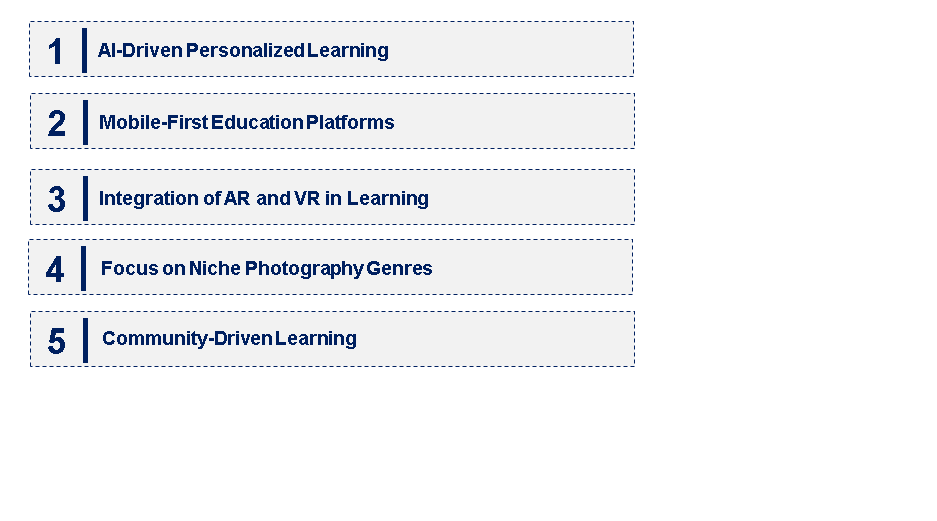
• AI-Driven Personalized Learning: AI-powered tools make online photography education more personalized for learners. By analyzing learner data, these tools can suggest course content based on an individual’s progress and preferences. This increases student engagement and retention by offering customized pathways that adapt to each student’s unique needs, making education more efficient and effective.
• Mobile-First Education Platforms: The rise of mobile-first platforms is transforming online photography education, as more people choose to take courses on their smartphones. These platforms ensure that content fits smaller screens and provide app-based learning experiences. This increases the accessibility of photography education in regions with high smartphone penetration rates and meets the demand for learning anytime, anywhere.
• Integration of AR and VR in Learning: Online photography courses are integrating Augmented Reality (AR) and Virtual Reality (VR) to create immersive learning settings. These technologies enable learners to engage with real-life photo scenarios without physically attending the class, allowing them to acquire practical skills. They are especially useful for difficult subjects like lighting and composition, offering hands-on experience that traditional online courses cannot provide.
• Focus on Niche Photography Genres: There is increasing demand for niche photography courses catering to specific interests, such as drone photography, underwater photography, and astrophotography. This trend highlights the variety of ways in which people perceive photography. As both a hobby and a career, students are looking for specialized knowledge rather than general, one-size-fits-all education. Online platforms are responding by offering specialized lessons to differentiate themselves from other digital educational sites.
• Community-Driven Learning: Online photography education has become more community-oriented by incorporating social aspects, allowing peers to interact and provide feedback within these platforms. There are online forums where learners can discuss various topics related to their coursework or projects. Peer reviews help create a sense of belonging through collaborative efforts aimed at enhancing the overall learning process. This shift has improved student engagement by providing networking possibilities, mentoring systems, and spaces for interaction among photographers and enthusiasts alike. These emerging trends will redefine online photography education by making it more personalized, accessible, and engaging. As technology continues to develop, it is likely that photography education will undergo further changes, creating new opportunities for learners and instructors alike.
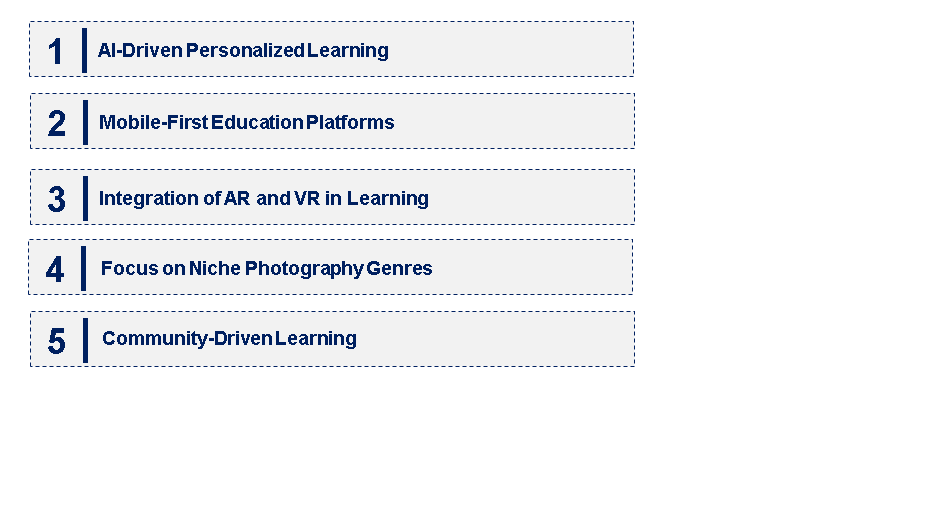
• Expansion of Mobile-Friendly Platforms: Online photography education providers are increasingly focusing on mobile-friendly platforms, allowing them to create courses for smartphone users, their primary target audience. This is important as many students now use mobile devices to access the internet. It ensures that photography courses can be accessed anytime, from anywhere, meeting the demand for flexible learning solutions.
• Integration of AI and Machine Learning: There has been a tremendous shift in course delivery through AI and machine learning in the online photography education sector. These technologies personalize learning experiences, content, and feedback based on where an individual currently stands. Such developments improve effectiveness by making online programs more adaptive and learner-centric.
• Growth of Live-Streaming Workshops: Real-time streaming workshops have become popular ways of conducting live photography workshops. In countries like China, live streaming is particularly prevalent. This allows students to interact with teachers in real-time, ask questions, and receive immediate feedback, creating dynamic engagement during teaching sessions unlike earlier static methods.
• A New Focus on Professional Certification: There is growing attention to professional certification in the online photography education market. Many platforms now offer courses that lead to credentials recognized by employers, helping students improve their career prospects and enhance employability. This trend has led to more structured pathways for formalized learning.
• AR and VR Adoption: The adoption of AR and VR technologies in photography education is enabling immersive experiences that go beyond traditional methods of learning. These technologies simulate real-life scenarios that occur during photo shoots, allowing students to practice in controlled environments, thus gradually enhancing their skills. These developments are especially useful for challenging subjects like lighting and composition. These developments have increased accessibility, personalization, and interactivity in the online photography education market. As these trends continue to evolve, they may bring about even more changes in how photography is taught and learned online, offering fresh opportunities for both teachers and students.
• Professional Development Courses: The demand for professional development courses has risen, especially regarding specific skills required in industries like photography. Professionals looking to improve their qualifications can choose from various courses offered by online platforms across the world. This includes freelancers, hobbyists, and industry practitioners seeking promotions or career advancement.
• Niche Photography Education: The niche segment—consisting of underwater photography, drone photography, wildlife photography, and others—is developing rapidly within this market. Enthusiasts interested in specific genres can register for these specialized programs, which also cater to professionals. The opportunity lies in targeting these niche markets, often neglected by traditional education providers.
• Content Creation for Social Media: The emergence of social media has increased the demand for photography education to facilitate content creation for platforms like Instagram, YouTube, and TikTok. Companies offering online courses in photography have capitalized on this trend by developing courses that teach how to generate appealing visual content for these platforms. This growth opportunity is driven by the rising importance of visual storytelling in digital marketing and personal branding.
• Photography Education for E-Commerce: The rise of e-commerce has created a need for specialized photography education focused on product photography. Some online platforms offer training on how to capture high-quality product images suitable for online use. This growth opportunity is significant as e-commerce continues to expand, with businesses relying on visually appealing content to attract customers.
• Interactive and Immersive Learning Experiences: The demand for interactive and immersive learning experiences is growing, driven by advancements in AR and VR technologies. Online educators in photography have embraced these changes by incorporating VR into their curriculum, offering a more practical and engaging learning experience. This growth opportunity is reshaping how photography is taught, making it more applicable to real-world scenarios. These strategic growth opportunities are driving the development of the online photography education market, offering new avenues for development and innovation. By leveraging these opportunities, online education providers can meet diverse learner needs and stay competitive in an ever-changing marketplace.
• Technological Advancements: The speed at which technology changes—especially with AI, AR, and VR—has contributed to the expansion of online photography education. As a result, there are more personalized learning experiences, attracting a larger audience by providing interactive or immersive e-learning environments, thus improving overall teaching quality.
• Growing Demand for Flexible Learning: Flexible, self-paced learning solutions are increasingly sought after, spurring demand for this mode of education. Increased enrollment levels have been witnessed as individuals seek to balance educational commitments with other aspects of their lives. This has led to the rise of online photography courses available round the clock, making them more appealing to a wider spectrum of learners.
• Rise of Digital Content Creation: The surge in digital content creation, driven by social media platforms and e-commerce, fuels the demand for photography education. People want to learn how to take better photos, whether with DSLRs or smartphones. High-quality visual content is important for individuals and businesses alike, driving the need for photography skills and expanding the online education market.
• Increasing Accessibility and Affordability: The availability of low-cost online photography classes has made learning more inclusive. By making education convenient and affordable, the market is constantly expanding as more people opt for online courses compared to traditional methods, which may be time-consuming or expensive.
• Globalization and Cross-Cultural Learning: The rise of globalization has increased cross-cultural learning, leading to a more diverse range of students seeking photography education from different parts of the world. Challenges in the online photography education market include:
• High Competition and Market Saturation: The market is becoming saturated, with many players competing for a share. This increased competition makes it difficult for new entrants to differentiate themselves and for existing players to maintain growth.
• Technological Barriers: Technology can be a barrier, especially in regions with limited internet access or outdated devices, preventing some students from participating in online courses.
• Quality Control and Accreditation: Maintaining consistent quality across all online courses and securing recognized accreditation is difficult. This creates a perception issue, with potential customers unsure of the effectiveness of certain platforms, leading to variations in the quality of education depending on the provider. The interplay between these drivers and challenges is shaping the future of the online photography education market. While advancements in technology and the rise of digital content creation offer ample growth opportunities, challenges such as competition, technological barriers, and quality control must be addressed to ensure sustained success in this dynamic industry.
• Alison
• Chris Bray Photography
• Coursera
• Domestika
• Edtech Services
• Eduonix Learning Solutions
• edX
• Fiverr International
• Jerad Hill Courses
• Magnum Photos
• Degree
• Non-Degree
• Academic Institutions
• Individual Learners
• North America
• Europe
• Asia Pacific
• The Rest of the World
• United States: There has been a significant increase in specialized photography courses offered online in the U.S., with platforms expanding their range of offerings to cater to different skill levels and interests. Some major institutions have partnered with renowned photographers to create content-rich courses that incorporate AI-driven tools for personalized learning.
• China: China booming e-commerce and social media industries have significantly contributed to the growth of the online photography education market. Local platforms integrate photography courses into their e-commerce programs, helping customers improve product photography. Real-time photo-shooting workshops via live streaming also benefit from China’s large internet user base.
• Germany: The German online photography education market is growing with an emphasis on professional certification programs. Aspiring photographers are increasingly taking online courses on German platforms that offer accredited qualifications, enhancing their career prospects.
• India: Affordable online photography courses in India are making education accessible to a wider audience via mobile devices. This surge is attributed to the smartphone revolution and the popularity of social media. Platforms in India are also offering courses in regional languages, broadening their reach across the multilingual landscape.
• Japan: The Japanese online photography education market is growing, driven by niche genres such as cosplay and anime photography. Japanese platforms have also embraced VR and AR technologies to create immersive learning experiences, aligning with Japan’s reputation for technological innovation.


• Alison
• Chris Bray Photography
• Coursera
• Domestika
• Edtech Services
• Eduonix Learning Solutions
• edX
• Fiverr International
• Jerad Hill Courses
• Magnum Photos Q6. Which online photography education market segment will be the largest in future? Answer: Lucintel forecasts that degree segment is expected to witness higher growth over the forecast period because of growing interest in photography among students worldwide, many colleges have begun to provide online degree programs in photography. Q7. In online photography education market, which region is expected to be the largest in next 5 years? Answer: In terms of regions, North America is expected to witness the highest growth over the forecast period due to switching to digital content in the classroom to improve participation and foster communication between students and teachers. Q.8 Do we receive customization in this report? Answer: Yes, Lucintel provides 10% customization without any additional cost.


Choose a license that fits your team. Instant PDF delivery.
Prices exclude taxes. Instant delivery. Custom licensing available on request.
Market Report · July 29, 2026
Market Report · July 20, 2026
Market Report · July 20, 2026
Trusted partner for strategic intelligence and business growth


Receive a complimentary market analysis tailored to your industry. Our analysts will identify key growth opportunities and competitive dynamics specific to your business.

Market size, growth rate, and key trend analysis for your specific sector.

Top competitor positioning and market share analysis.

Strategic recommendations backed by data-driven insights.
Get curated market intelligence and competitive moves straight to your inbox.
By subscribing, you agree to receive our monthly insights. Unsubscribe anytime.
Receive a complimentary market analysis tailored to your industry. Our analysts will identify key growth opportunities and competitive dynamics specific to your business.
Market size, growth rate, and key trend analysis for your specific sector.
Top competitor positioning and market share analysis.
Strategic recommendations backed by data-driven insights.
Get curated market intelligence, emerging trends, and competitive moves straight to your inbox each month.
By subscribing, you agree to receive our monthly insights. Unsubscribe anytime.
We'll send your sample report shortly.