
Market Report · July 15, 2026

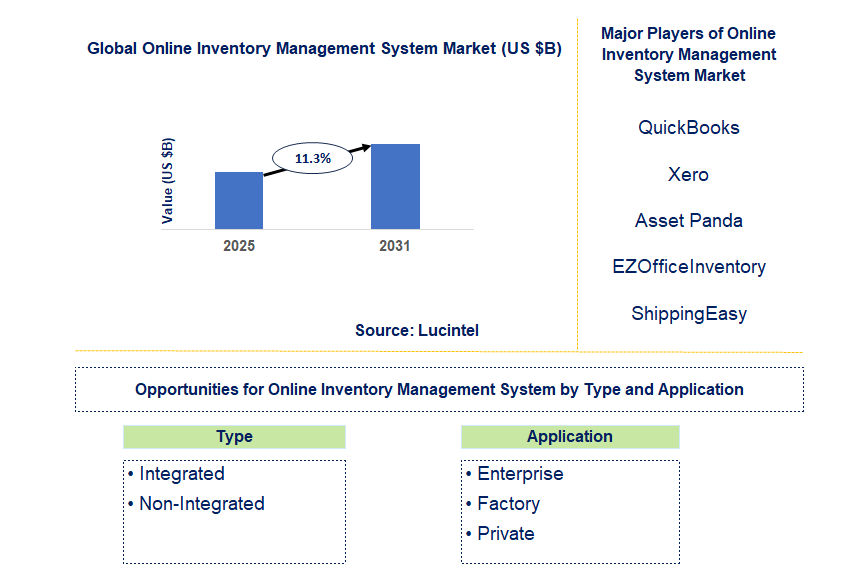
Key data points: The growth forecast = 11.3% annually for the next 7 years. Scroll below to get more insights. This market report covers Trends, opportunities and forecasts in online inventory management system market to 2031 by type (integrated and non-integrated), application (enterprise, factory, and private), and region (North America, Europe, Asia Pacific, and the Rest of the World)
We'll send your sample report shortly.
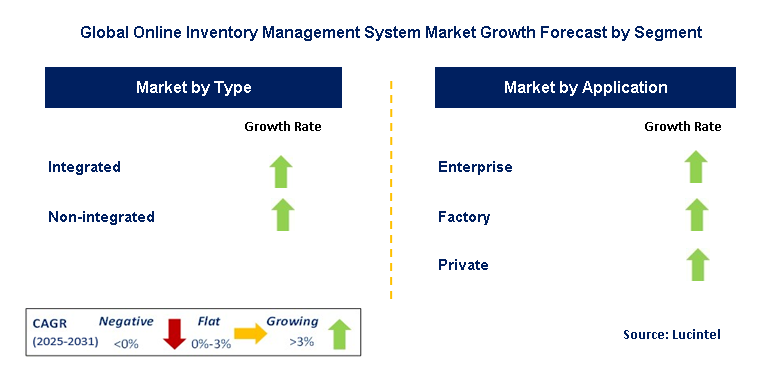
• Lucintel forecasts that, within the type category, integrated is expected to witness higher growth over the forecast period.
• Within the application category, enterprise is expected to witness the highest growth.
• In terms of region, North America is expected to witness the highest growth over the forecast period.
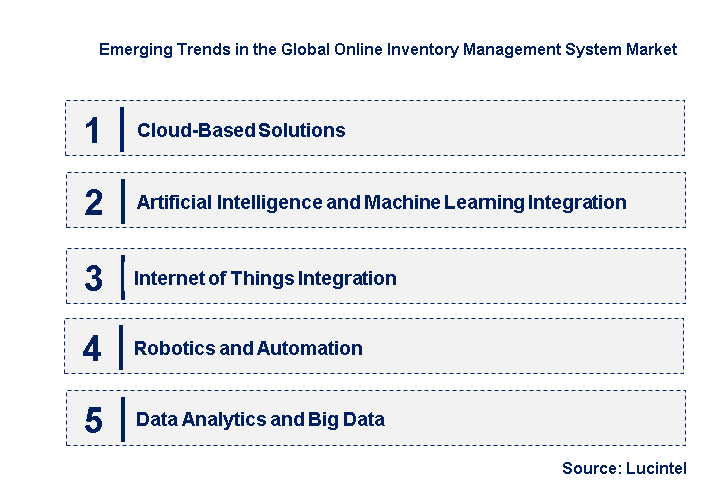
• Cloud-Based Solutions: Cloud-based inventory management solutions have gained widespread popularity because of their flexibility, scalability, and ease of integration with other enterprise software solutions. Cloud technology enables companies to store and access inventory information remotely, with real-time updates, enhanced collaboration across teams, and minimizing the need for on-premise infrastructure. This trend helps companies save costs and enhance scalability, particularly for global operations.
• Artificial Intelligence and Machine Learning Integration: AI and ML technologies are being more and more integrated into web-based inventory management systems to facilitate data-driven decision-making. These technologies have the ability to scan large amounts of data, determine trends, and forecast future inventory requirements, thereby enhancing forecasting accuracy. AI-driven systems can automate stock replenishment and ordering, minimizing the need for manual intervention and enhancing overall supply chain efficiency.
• Internet of Things Integration: The integration of IoT devices into inventory management systems is revolutionizing real-time stock tracking and monitoring. IoT sensors enable businesses to gather live data on inventory levels, location, and condition, which helps in optimizing warehouse operations and reducing stockouts or overstock situations. This trend is gaining traction across various industries, including retail, manufacturing, and logistics, as it ensures more accurate tracking and timely replenishment.
• Robotics and Automation: Robotics and automation technologies are gaining wider use in inventory management. Automated guided vehicles (AGVs) and drones are being employed for activities such as stock picking, sorting, and shelf scanning in warehouses, significantly lowering labor costs and boosting speed and accuracy. Automation not only enhances the efficiency of operations but also assists companies in managing their inventory better by offering real-time information about stock movement.
• Data Analytics and Big Data: Data analytics and big data are revolutionizing inventory management by offering rich insights into stock performance, demand patterns, and supply chain inefficiencies. Using big data, companies can make better purchasing, stocking, and pricing decisions, resulting in better cash flow and reduced waste. This trend is especially useful for companies with complex supply chains, allowing them to maximize inventory levels and enhance demand forecasting. These emerging trends are reshaping the market for online inventory management systems by promoting increased efficiency, accuracy, and scalability. The convergence of AI, IoT, and automation is facilitating smoother real-time management of inventory for companies, with cloud-based services improving accessibility. As businesses move further to adopt these technologies, the market is poised to undergo continued growth and innovation.
• Cloud-Based Inventory System Adoption: The shift towards cloud-based inventory management software has picked up speed, with companies looking to improve scalability, lower costs, and enhance data access. Cloud-based systems enable real-time inventory tracking, enhanced collaboration, and seamless integration with other business applications. This is especially useful for companies with multiple outlets or international supply chains, as it offers a single platform to manage inventory.
• AI Utilization for Demand Forecasting: Artificial intelligence is transforming demand forecasting in inventory management. Using past sales history, market trends, and other factors, AI-based systems can make accurate predictions of future demand. This prevents stockouts, minimizes excess inventory, and enhances customer satisfaction. AI is being increasingly deployed on IMS platforms for the automation of inventory ordering and restocking processes.
• Heightened IoT Technology Integration: Integration of IoT technology into inventory management systems has boosted real-time monitoring and tracking. IoT sensors are utilized to track inventory levels, trace the movement of goods, and even track environmental aspects like temperature and humidity. The advancement enhances the level of precision in inventory information and allows companies to make informed decisions in a timely manner about restocking and distribution.
• Warehouse Robotics and Automation: Robotics and automation are being used more and more in warehouses to enhance inventory handling. Automated guided vehicles (AGVs) and robotic arms are employed for operations like stock picking, sorting, and packaging, which minimizes human intervention and maximizes efficiency. Such technologies are especially helpful in mass operations, where speed and precision are essential in handling huge quantities of inventory.
• Prioritize Data-Driven Inventory Management: Organizations are using big data and analytical techniques to streamline inventory levels and enhance supply chain decision-making. Analyzing large amounts of data allows organizations to see patterns, forecast demand more accurately, and optimize their inventory management process. This data-driven strategy is enabling organizations to refine their stock levels and minimize waste, resulting in cost efficiencies and enhanced operational performance. Recent trends in the online inventory management system market are mainly directed towards the implementation of cutting-edge technologies like AI, IoT, and automation. These technologies are enabling companies to automate their operations, cut costs, and enhance the inventory management process, which will continue to influence the future growth of the market.
• Small and Medium-Sized Businesses: There is a new opportunity to sell small and medium-sized businesses on low-cost and scalable IMS solutions online. As more SMBs embrace digital technologies, cloud-based IMS software can assist them in streamlining processes, cutting stockouts, and enhancing decision-making without the cost and complexity of conventional systems. Making simple and affordable solutions available can secure much of this growing market.
• Retail and E-commerce: The retail and e-commerce industries are significant drivers of the IMS market growth. Due to the accelerated growth of internet shopping, such companies require solid inventory management solutions to cope with varying demand levels, track stocks, and guarantee timely deliveries. Opportunities for growth exist in the provision of solutions that integrate into e-commerce systems, give real-time reporting, and enhance supply chain efficiency.
• Supply Chain and Manufacturing Management: The manufacturing sector is increasingly implementing online inventory management systems to streamline production functions and make timely procurement of raw materials. Manufacturing companies are seeking solutions that provide real-time monitoring of stock levels, enable demand forecasting, and enhance the efficiency of supply chain functions. By integrating IMS with other ERP systems, businesses can develop a more integrated and efficient production process.
• Warehousing and Logistics: The warehousing and logistics industries offer considerable growth prospects for online inventory management systems. With growing demand for quicker deliveries and streamlined warehouse operations, businesses are looking for systems that provide real-time tracking of inventory, automated replenishment, and effective stock handling. Integration of warehouse automation with IMS can enhance operational effectiveness and lower labor expenses.
• AI and Machine Learning Integration: Integrating AI and machine learning with online inventory management systems presents enormous growth prospects by enabling businesses to gain predictive analytics, automated ordering, and enhanced demand forecasting. These technologies enable businesses to minimize human error, optimize inventory levels, and enhance decision-making. By integrating AI-driven insights, businesses can provide more precise and efficient solutions to their customers. The market for online inventory management systems is seeing strategic growth prospects in different industries. By providing scalable solutions to SMBs, incorporating emerging technologies such as AI, and serving the requirements of industries such as e-commerce, manufacturing, and logistics, companies can position themselves to benefit from these growing market segments.
• QuickBooks
• Xero
• Asset Panda
• EZOfficeInventory
• ShippingEasy
• Lightspeed Retail
• Oracle
• ShipStation
• Fishbowl
• InFlow Inventory
• Integrated
• Non-Integrated
• Enterprise
• Factory
• Private
• North America
• Europe
• Asia Pacific
• The Rest of the World
• United States: The United States has experienced the widespread implementation of cloud-based inventory management solutions, which provide companies with increased flexibility and scalability. Oracle, SAP, and Microsoft are among the companies that have increased their cloud-based inventory offerings, assisting organizations in controlling stock levels, forecasting demand, and minimizing waste. In addition, the adoption of artificial intelligence (AI) and machine learning (ML) into IMS has increased, providing predictive analytics and automation, which enable companies to make more intelligent inventory decisions.
• China: China, a manufacturing and e-commerce leader, has advanced considerably in using online inventory management systems to make its massive supply chains more efficient. Chinese internet giants Alibaba and JD.com have deployed sophisticated inventory management systems, optimizing warehouses and distribution networks. These systems rely extensively on data-driven insights, AI, and IoT (Internet of Things) to track inventory levels in real time. China's ongoing investment in automation and robotics for warehousing is improving the efficiency of inventory systems nationwide.
• Germany: Germany, with its robust industrial base, has been adopting sophisticated inventory management systems to further improve manufacturing efficiency and supply chain management. Industry 4.0 solutions have gained wider acceptance in the country, with online inventory management systems at the forefront of linking automated warehouses and manufacturing facilities. Firms such as Siemens and SAP are driving ahead solutions integrating IoT, AI, and big data analytics into inventory management, which is giving real-time visibility and guaranteeing optimal stock levels across production cycles.
• India: The increasing retail industry in India has been among the key drivers of the online inventory management systems market. The growth of e-commerce players such as Flipkart and Amazon has driven the need for more efficient inventory tracking and management systems. The Indian market has witnessed high-scale adoption of cloud-based solutions, which offer cost-effective, scalable, and flexible inventory management features for small to large enterprises. Additionally, local startups are now using AI and ML technologies more and more to automate stock management processes, eliminating human error and enhancing decision-making.
• Japan: Japan has led the way in adopting robotics and automation into inventory management systems. Toyota and Rakuten are two Japanese companies that have installed very sophisticated online IMS to enhance operational efficiency. Japan's emphasis on automation and AI has fueled the adoption of robotics in warehouses for real-time monitoring and management of stock. Furthermore, Japan is spending big on data analytics and IoT to boost inventory tracking, minimize errors, and increase overall supply chain transparency.


• QuickBooks
• Xero
• Asset Panda
• EZOfficeInventory
• ShippingEasy
• Lightspeed Retail
• Oracle
• ShipStation
• Fishbowl
• InFlow Inventory Q5. Which online inventory management system market segment will be the largest in future? Answer: Lucintel forecasts that, within the type category, integrated is expected to witness higher growth over the forecast period. Q6. In online inventory management system market, which region is expected to be the largest in next 5 years? Answer: In terms of region, North America is expected to witness the highest growth over the forecast period. Q7. Do we receive customization in this report? Answer: Yes, Lucintel provides 10% customization without any additional cost.


Choose a license that fits your team. Instant PDF delivery.
Prices exclude taxes. Instant delivery. Custom licensing available on request.
Market Report · July 15, 2026
Market Report · June 26, 2026
Market Report · June 24, 2026
Trusted partner for strategic intelligence and business growth


Receive a complimentary market analysis tailored to your industry. Our analysts will identify key growth opportunities and competitive dynamics specific to your business.

Market size, growth rate, and key trend analysis for your specific sector.

Top competitor positioning and market share analysis.

Strategic recommendations backed by data-driven insights.
Get curated market intelligence and competitive moves straight to your inbox.
By subscribing, you agree to receive our monthly insights. Unsubscribe anytime.
Receive a complimentary market analysis tailored to your industry. Our analysts will identify key growth opportunities and competitive dynamics specific to your business.
Market size, growth rate, and key trend analysis for your specific sector.
Top competitor positioning and market share analysis.
Strategic recommendations backed by data-driven insights.
Get curated market intelligence, emerging trends, and competitive moves straight to your inbox each month.
By subscribing, you agree to receive our monthly insights. Unsubscribe anytime.
We'll send your sample report shortly.