
Market Report · July 16, 2026

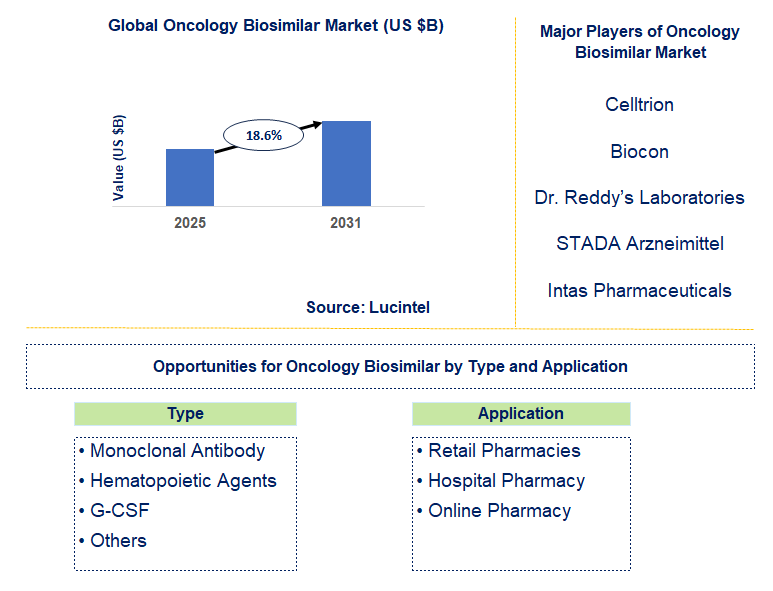
Key data points: The growth forecast = 18.6% annually for the next 7 years. Scroll below to get more insights. This market report covers trends, opportunities and forecasts in oncology biosimilar market to 2031 by type (monoclonal antibody, hematopoietic agents, G-CSF, and others), application (retail pharmacies, hospital pharmacy, and online pharmacy), and region (North America, Europe, Asia Pacific, and the Rest of the World)
We'll send your sample report shortly.
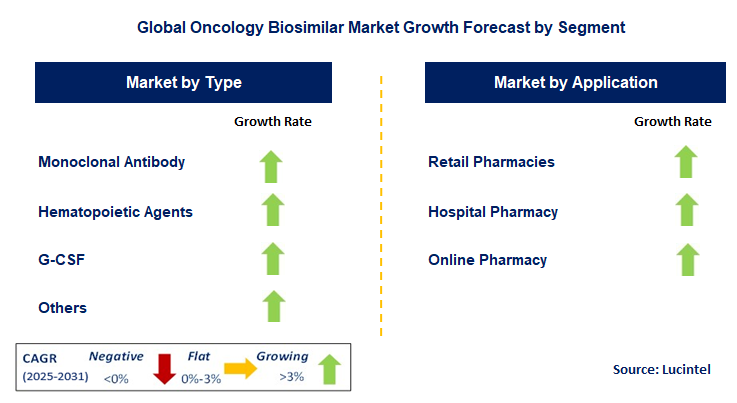
• Lucintel forecasts that, within the type category, monoclonal antibody is expected to witness the highest growth over the forecast period.
• Within the application category, online pharmacy is expected to witness the highest growth.
• In terms of region, APAC is expected to witness the highest growth over the forecast period. Gain valuable insights for your business decisions with our comprehensive 150+ page report. Sample figures with some insights are shown below.
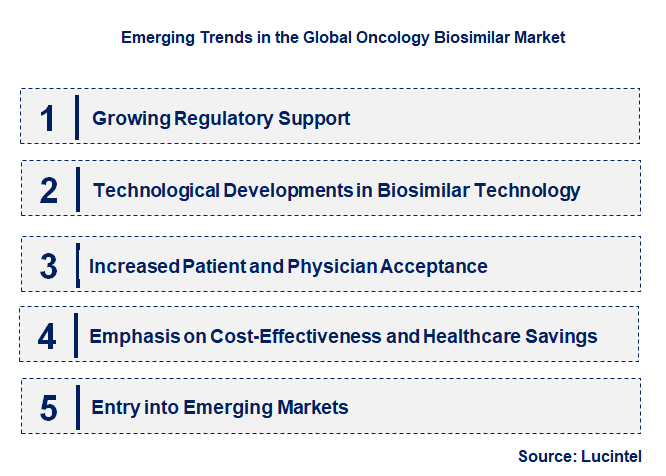
• Growing Regulatory Support: Regulatory bodies in leading markets are increasingly implementing policies to facilitate the growth and approval of oncology biosimilars. For instance, the FDA has established streamlined procedures for the approval of biosimilars, which have minimized the time and cost involved in taking products to market. In Europe, as well, the European Medicines Agency (EMA) has established frameworks to facilitate biosimilar development. This regulatory encouragement is promoting a competitive market, which is driving innovation while also providing for patient safety.
• Technological Developments in Biosimilar Technology: Advances in technology for the creation of biosimilars are greatly enhancing the success rates and efficiency of manufacturing procedures. Implementation of advanced technologies, including high-throughput screening, cell line development, and advanced analytical tools, is allowing biosimilar manufacturers to generate high-quality and more consistent products. These advances are making oncology biosimilars more marketable due to enhanced reliability and safety of the treatment, ultimately reaching the patients and healthcare providers.
• Increased Patient and Physician Acceptance: As education about oncology biosimilars improves, patients and physicians are becoming increasingly tolerant of these affordable substitutes for high-priced branded biologics. Physicians are becoming more aware of the promising advantages of biosimilars in the treatment of cancer, especially in regions where drug expenses are high. Patient acceptance is increasing as biosimilars provide an affordable alternative without reducing the level of care. This increasing acceptance is critical to the widespread use of oncology biosimilars in the clinic.
• Emphasis on Cost-Effectiveness and Healthcare Savings: Cost-effectiveness continues to be the driving force for the oncology biosimilar market, especially with the increasing global cancer burden. Biosimilars offer a massive potential for decreasing the overall expense of cancer treatment, especially in nations with vast and expanding populations. Oncology biosimilars assist the healthcare systems by making treatment options more accessible at lower costs, leading to enhanced treatment access and financial assistance for patients.
• Entry into Emerging Markets: Emerging markets like India, China, and Latin America are likely to see the growth in oncology biosimilar adoption accelerate as a result of the affordability concerns regarding branded biologics and the rising cancer burden. These markets are increasingly becoming the focus for firms as fresh growth opportunities as they adopt low-cost manufacturing and regulatory environments favorable to developing biosimilars. With the development of healthcare systems in these areas, there is a likely increase in demand for oncology biosimilars that will create new markets for both foreign and domestic manufacturers. These new trends demonstrate how the oncology biosimilar market is transitioning towards higher adoption and growth. Support from the regulatory authorities, advancement in technologies, and increasing acceptance by patients and physicians are propelling the market towards higher growth. Further, cost containment and penetration into emerging nations will remain at the forefront to drive oncology biosimilars as a natural part of cancer treatment globally.
• FDA Approvals of Oncology Biosimilars: The FDA has approved numerous oncology biosimilars in recent years, including trastuzumab, bevacizumab, and rituximab. Such approvals are critical in determining oncology biosimilars as effective substitutes for branded biologics. More and more FDA-approved biosimilars are increasing competition, reducing the cost of treatment, and expanding patient access to life-saving treatment. Consequently, oncology biosimilars are capturing a greater percentage of the cancer treatment market.
• China's Fast-Track Regulatory Clearance Process: China's National Medical Products Administration (NMPA) has implemented policies to accelerate approval for oncology biosimilars, leading to increased market activity. As local demand continues to rise for inexpensive cancer treatments, Chinese regulators have made the fast-tracking of oncology biosimilars a priority, drawing in global manufacturers to the Chinese market. The trend is likely to spur innovation and lead to greater numbers of biosimilars entering the market, helping to counter China's growing cancer burden.
• Collaborations among Global Players: Partnership between multinational pharmaceutical firms and domestic biosimilar producers has become more widespread. Multinational-firm partnerships with Chinese or Indian producers have facilitated the production and commercialization of oncology biosimilars. The partnerships not only increase production capacity but also enable firms to more effectively move through complicated regulatory systems. Joint ventures should remain important in broadening access to oncology biosimilars globally.
• Expansion of Market in Developing Areas: The market for oncology biosimilars is witnessing extensive growth in developing markets, especially in Asia and Africa. Large patient populations and high cancer prevalence in these countries are appealing to oncology biosimilars to manage increasing hospitalization rates and expenditure on cancer therapy. Initiatives to create affordable access to these treatments, coupled with regulatory reform, are supporting biosimilar uptake in underserved areas where access to life-saving biologics has been low.
• More Investment in Production of Biosimilars: There has been increased investment in biosimilar production plants, specifically in countries like India and China, where the cost of production is less. Such investment is enabling production capabilities to be scaled up, the quality of biosimilar products to be made more consistent, and there to be a guaranteed supply of oncology biosimilars to match rising demand. This, in addition to technology growth in manufacturing, is enhancing the general quality and effectiveness of biosimilars, thus firmly positioning them in the oncology marketplace. These recent trends confirm the fast-track growth and evolution of the oncology biosimilar market. FDA approvals, regulatory shifts in China, international collaborations, market development in emerging economies, and greater investment in manufacturing are all contributing to enhanced access to cancer therapies and the adoption of biosimilars as a cost-saving option for branded biologics.
• Cost Reduction in Cancer Treatment: Cost saving is among the largest opportunities for oncology biosimilars. While the cost of branded biologics continues to be high, biosimilars are a more affordable choice for patients and healthcare systems. Biosimilars are increasingly preferred by governments and insurers because they are cost-saving, which is pushing growth in this area. The accessibility of oncology biosimilars at an affordable cost is increasing cancer treatment, especially in resource-constrained areas.
• Growth in Emerging Markets: Emerging markets in Asia, Africa, and Latin America offer enormous growth prospects for oncology biosimilars. With growing cancer incidence in these markets and increasing demand for low-cost treatments, biosimilars are emerging as a central solution. Local production and regulatory changes are facilitating market introduction at a faster pace, making biosimilars more accessible. Those players who manage to enter these markets successfully could capture a major proportion of the world oncology biosimilar market.
• Regulatory Approvals and Fast-Track Pathways: The adoption of fast-track approval mechanisms for oncology biosimilars in such markets as the U.S., Europe, and China is a primary growth opportunity. These regulatory reforms are shortening development-to-market times for new biosimilars, creating more opportunities for companies to address increasing demand more rapidly. As regulators continue to streamline approvals, additional oncology biosimilars are likely to become available, broadening the treatment options for patients.
• Healthcare Provider and Institutional Partnerships: Collaborations with healthcare providers, hospitals, and cancer treatment facilities provide expansion avenues for oncology biosimilar drug manufacturers. With close coordination with medical practitioners to raise awareness and offer training on how biosimilars can be used, adoption levels can be improved. Furthermore, institutional collaboration can ensure that resistance to the use of biosimilars over branded biologics is addressed.
• Technological Advancements in Biosimilar Development: Technological innovation within biosimilar development is enhancing product quality, safety, and efficiency. Those firms that invest in advanced manufacturing processes and analytical technology are well placed to thrive in the oncology biosimilar competitive market. Developments that enhance the scalability and cost-effectiveness of biosimilar manufacturing will enable firms to increase market share without compromising on high-quality standards. These strategic growth prospects are essential to the continued growth and success of the oncology biosimilar market. Reducing costs, expanding markets, regulatory innovation, collaborations, and technological advances are likely to spur universal use of biosimilars, making cancer therapies more affordable and accessible throughout the world.
• Celltrion
• Biocon
• Dr. Reddy’s Laboratories
• STADA Arzneimittel
• Intas Pharmaceuticals
• Pfizer
• Sandoz International
• Teva Pharmaceutical Industries
• Apotex
• BIOCAD
• Monoclonal Antibody
• Hematopoietic Agents
• G-CSF
• Others
• Retail Pharmacies
• Hospital Pharmacy
• Online Pharmacy
• North America
• Europe
• Asia Pacific
• The Rest of the World
• United States: The United States continues to be among the top markets for oncology biosimilars, with regulatory bodies like the Food and Drug Administration (FDA) offering a conducive environment for biosimilar development. These developments include recent approvals of various oncology biosimilars, including trastuzumab and rituximab, which are now in circulation to offer cost-effective substitutes to costly biologics. Further momentum is being generated by higher levels of awareness among patients and healthcare providers. Intense competition in the biosimilar market has helped reduce prices, enhancing access to cancer care. Nonetheless, the market continues to be challenged with respect to physician uptake and reimbursement complexity.
• China: The oncology biosimilar market in China is growing fast, owing to growing demand for low-cost cancer therapies and supportive government policies. The government of China has conducted reforms to speed up the approval and commercialization of biosimilars, with regulatory bodies such as the National Medical Products Administration (NMPA) now rushing to approve oncology biosimilars. Local firms are at the forefront, with a number of biosimilars already on sale in the market. The increasing incidence of cancer in China is also encouraging both domestic and foreign companies to invest in the development of biosimilars. Challenges persist in training healthcare providers and managing market fragmentation.
• Germany: Germany, being an influential country in the European Union, has developed substantially within the oncology biosimilar market based on a sound healthcare infrastructure and positive reimbursement policy. The market has witnessed the approval and subsequent success of several oncology biosimilars, such as those aimed at HER2-positive breast cancer and lymphoma. Germany's public healthcare system facilitates the use of biosimilars with cost savings and agreements on prices with healthcare insurers. The market, with significant growth, is hindered by resistance from some healthcare providers and by winning over widespread physician acceptance. Still, Germany continues to be an important market for the expansion of biosimilars in Europe.
• India: The Indian biosimilar market in oncology is growing fast, fueled by the demand for low-cost cancer treatment in both urban and rural India. The Indian regulatory agency, the Central Drugs Standard Control Organization (CDSCO), has made the process of approving biosimilars easier, enabling domestic manufacturers to launch low-cost treatments. India has a number of biosimilar manufacturers that are now selling products globally, especially in emerging markets.
• Japan: Japan has progressed notably in the oncology biosimilar market, mainly because of the population's aging as well as the growing burden of cancer. The government of Japan has introduced initiatives to promote the development and approval of oncology biosimilars. Government agencies like the Pharmaceuticals and Medical Devices Agency (PMDA) have expedited the approval of biosimilars in response to the unaffordability of cancer therapies. International players and domestic companies are joining forces to bring biosimilar therapies to market. Nonetheless, Japan also has market acceptance issues, especially from healthcare providers who are reluctant to transition from mature biologics to biosimilars.


• Celltrion
• Biocon
• Dr. Reddy’s Laboratories
• STADA Arzneimittel
• Intas Pharmaceuticals
• Pfizer
• Sandoz International
• Teva Pharmaceutical Industries
• Apotex
• BIOCAD Q5. Which oncology biosimilar market segment will be the largest in future? Answer: Lucintel forecasts that, within the type category, monoclonal antibody is expected to witness the highest growth over the forecast period. Q6. In oncology biosimilar market, which region is expected to be the largest in next 5 years? Answer: In terms of region, APAC is expected to witness the highest growth over the forecast period. Q7. Do we receive customization in this report? Answer: Yes, Lucintel provides 10% customization without any additional cost.


Choose a license that fits your team. Instant PDF delivery.
Prices exclude taxes. Instant delivery. Custom licensing available on request.
Market Report · July 16, 2026
Market Report · July 15, 2026
Market Report · July 15, 2026
Trusted partner for strategic intelligence and business growth


Receive a complimentary market analysis tailored to your industry. Our analysts will identify key growth opportunities and competitive dynamics specific to your business.

Market size, growth rate, and key trend analysis for your specific sector.

Top competitor positioning and market share analysis.

Strategic recommendations backed by data-driven insights.
Get curated market intelligence and competitive moves straight to your inbox.
By subscribing, you agree to receive our monthly insights. Unsubscribe anytime.
Receive a complimentary market analysis tailored to your industry. Our analysts will identify key growth opportunities and competitive dynamics specific to your business.
Market size, growth rate, and key trend analysis for your specific sector.
Top competitor positioning and market share analysis.
Strategic recommendations backed by data-driven insights.
Get curated market intelligence, emerging trends, and competitive moves straight to your inbox each month.
By subscribing, you agree to receive our monthly insights. Unsubscribe anytime.
We'll send your sample report shortly.