
Market Report · July 16, 2026

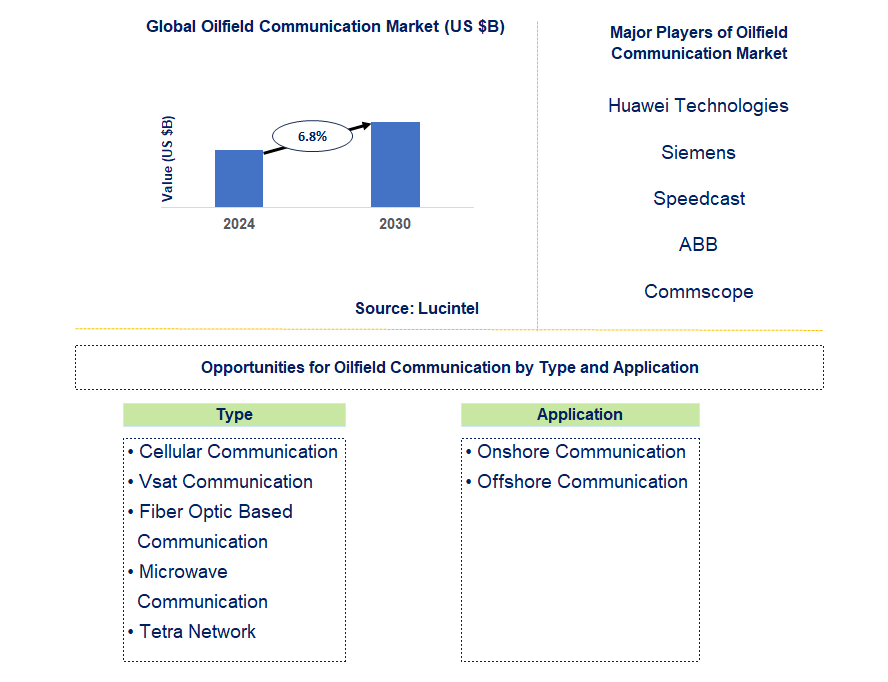
Key data points: The growth forecast = 6.8% annually for the next 7 years. Scroll below to get more insights. This market report covers Trends, opportunity and forecast in oilfield communication market to 2031 by type (cellular communication, VSAT communication, fiber optic based communication, microwave communication, and tetra network), application (onshore communication and offshore communication), and region (North America, Europe, Asia Pacific, and the Rest of the World)
We'll send your sample report shortly.
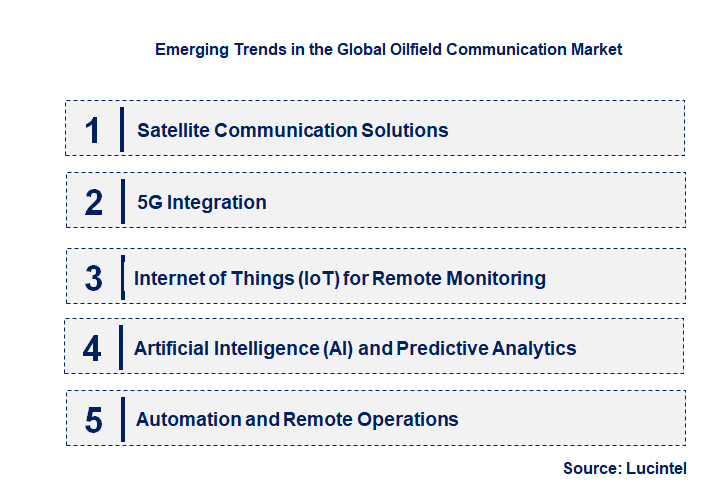
• Satellite Communication Solutions: Satellite communication continues to be a critical trend in the oilfield communication market, especially for remote offshore locations. Oil and gas companies are increasingly adopting satellite technology to ensure reliable and continuous communication in areas where traditional communication infrastructure is unavailable. Satellite systems provide real-time data transmission, enhancing remote monitoring and control of operations. This trend is particularly important for improving operational efficiency and safety, as it enables teams to make informed decisions regardless of their location.
• 5G Integration: The rollout of 5G technology is expected to have a major impact on the oilfield communication market. 5G offers higher data transfer speeds, lower latency, and more reliable connections, which are crucial for supporting advanced communication tools and devices in the oilfield. The integration of 5G allows for seamless connectivity across multiple devices, improving collaboration and real-time monitoring. This trend is revolutionizing how data is shared and analyzed, enabling faster decision-making and enhanced operational control in remote oilfield locations.
• Internet of Things (IoT) for Remote Monitoring: IoT technology is increasingly being deployed in oilfield communication systems to enable remote monitoring and control of oilfield equipment. Sensors and devices connected through IoT networks collect and transmit real-time data, providing insights into equipment performance and operational conditions. This trend allows operators to detect issues before they escalate, improving maintenance scheduling and reducing downtime. IoT-powered communication systems are enhancing efficiency, lowering operational costs, and increasing the safety of oilfield operations by providing continuous monitoring and data-driven insights.
• Artificial Intelligence (AI) and Predictive Analytics: The use of AI and predictive analytics is revolutionizing oilfield communication by improving the accuracy and speed of decision-making. AI algorithms analyze vast amounts of operational data to predict equipment failures, optimize workflows, and improve resource management. This technology is being used for predictive maintenance, ensuring that potential issues are detected early, minimizing downtime, and reducing repair costs. AI-powered communication systems are enabling oilfield operators to optimize operations and improve safety by automating tasks and providing actionable insights.
• Automation and Remote Operations: Automation and remote operations are increasingly being adopted in the oilfield communication market to enhance efficiency and reduce the need for on-site personnel. Through remote operation technologies, operators can control equipment, monitor performance, and perform diagnostics without having to be physically present at the site. This trend is particularly important for offshore and hazardous locations where human presence is limited. Remote operations and automation are enhancing productivity, improving safety, and reducing operational costs in the oil and gas industry. These emerging trends are reshaping the oilfield communication market by enhancing connectivity, improving data analysis, and increasing safety and efficiency. The integration of satellite communication, 5G, IoT, AI, and automation is transforming oilfield operations, allowing for better decision-making and smoother operations in remote locations. As these trends continue to evolve, they will further improve the productivity and profitability of the oil and gas sector.
• Cloud-Based Communication Systems: The shift to cloud-based communication systems has been a significant development in the oilfield communication market. Cloud technologies offer scalable and flexible solutions that allow oilfield operators to access real-time data, collaborate remotely, and manage operations more effectively. These systems enable seamless communication between different teams, whether onshore or offshore, and support data storage and management in a secure environment. Cloud-based systems are enhancing operational efficiency, improving decision-making, and reducing infrastructure costs.
• Integration of 5G Networks: The integration of 5G networks into oilfield communication systems is transforming how data is transmitted and processed. With faster data speeds, lower latency, and improved reliability, 5G technology allows oilfield operators to leverage advanced tools such as real-time monitoring, augmented reality (AR), and IoT-based systems. This development is improving operational efficiency by enabling real-time data transmission, reducing delays in communication, and supporting high-bandwidth applications for remote operations.
• Advancements in Satellite Communication: Satellite communication has played a vital role in improving connectivity in remote and offshore oilfield operations. Recent advancements in satellite technology, including the use of low Earth orbit (LEO) satellites, are enhancing the speed and reliability of communication systems. These advancements provide better coverage in areas with limited terrestrial infrastructure, ensuring that oilfield operations can run smoothly and safely in even the most remote locations. Satellite systems are becoming increasingly integrated with other technologies, such as IoT, to provide continuous monitoring and real-time data exchange.
• AI and Machine Learning for Predictive Maintenance: Artificial intelligence (AI) and machine learning are becoming essential tools for improving communication and operational efficiency in oilfields. By analyzing vast amounts of data from sensors and equipment, AI can predict potential failures, optimize resource allocation, and schedule maintenance activities more effectively. This development in predictive maintenance is reducing downtime, improving safety, and lowering operational costs. AI-powered communication systems are also automating routine tasks, enabling oilfield operators to focus on more critical aspects of the operation.
• Remote Operation Technologies: The development of remote operation technologies is enabling oilfield operators to manage equipment and monitor operations from a distance. These technologies are reducing the need for on-site personnel, improving safety in hazardous locations, and optimizing workflows. Remote operations are particularly beneficial for offshore and remote oilfields where maintaining a physical presence is challenging. By enabling real-time monitoring, remote control of equipment, and data-driven decision-making, these technologies are improving operational efficiency and safety across the oilfield. These recent developments are significantly impacting the oilfield communication market by enhancing connectivity, improving real-time data exchange, and enabling more efficient operations. The integration of cloud systems, 5G, satellite communication, AI, and remote operations is reshaping how oilfields are managed, contributing to improved productivity, safety, and cost-effectiveness in the industry.
• IoT-Based Monitoring Solutions: The use of IoT technology to monitor oilfield equipment and operations is one of the biggest growth opportunities in the market. IoT devices and sensors can collect and transmit real-time data, providing valuable insights into equipment performance, operational conditions, and safety metrics. By leveraging IoT, oilfield operators can optimize workflows, predict equipment failures, and improve maintenance scheduling, ultimately enhancing efficiency and reducing downtime. IoT-based solutions are gaining traction as a cost-effective way to improve communication and decision-making in oilfield operations.
• Cloud-Based Collaboration Platforms: Cloud-based collaboration platforms are rapidly becoming a vital tool for oilfield communication. These platforms enable seamless communication between different teams, regardless of their location, and provide access to real-time data and analytics. The scalability and flexibility of cloud solutions make them an attractive option for oilfield operators looking to improve operational efficiency. By centralizing communication and data storage, cloud-based platforms help oilfield companies manage operations more effectively and reduce the need for expensive on-site infrastructure.
• Integration of 5G Networks for Real-Time Data Sharing: The implementation of 5G technology in oilfield communication systems is opening up new opportunities for faster data sharing, real-time monitoring, and collaboration. 5G offers high bandwidth, low latency, and more reliable connections, making it an ideal solution for supporting advanced technologies such as IoT, augmented reality (AR), and remote operation tools. The growth of 5G networks will allow oilfield operators to make quicker decisions, enhance safety, and improve productivity by enabling real-time communication and data exchange.
• Remote Monitoring and Control Solutions: Remote monitoring and control solutions are rapidly gaining popularity in the oilfield communication market, particularly for offshore and remote operations. By enabling operators to monitor and control equipment remotely, these solutions reduce the need for on-site personnel, improve safety, and increase operational efficiency. With advancements in communication technologies like satellite communication and 5G, remote monitoring is becoming more effective and reliable. This growth opportunity is transforming how oilfield operations are managed, providing greater flexibility and reducing operational costs.
• Advanced AI-Powered Communication Systems: Artificial intelligence (AI) is becoming a key driver of growth in the oilfield communication market. AI-powered communication systems are capable of analyzing vast amounts of data, identifying patterns, and providing actionable insights for decision-making. AI is particularly useful for predictive maintenance, resource optimization, and process automation. By integrating AI with communication systems, oilfield operators can streamline operations, reduce downtime, and enhance safety. This growth opportunity is helping to drive innovation and improve the overall efficiency of oilfield operations. The strategic growth opportunities in the oilfield communication market are focused on leveraging cutting-edge technologies such as IoT, cloud computing, 5G, remote monitoring, and AI. These opportunities are helping oilfield operators improve operational efficiency, reduce costs, and enhance safety. As these technologies continue to evolve, they will reshape the oilfield communication market and drive continued growth and innovation across the industry.
• Huawei Technologies
• Siemens
• Speedcast
• ABB
• Commscope
• Inmarsat
• Tait Communications
• Cellular Communication
• VSAT Communication
• Fiber Optic Based Communication
• Microwave Communication
• Tetra Network
• Onshore Communication
• Offshore Communication
• North America
• Europe
• Asia Pacific
• The Rest of the World
• United States: In the U.S., oilfield communication systems have advanced with the integration of cloud-based technologies and the Internet of Things (IoT). Leading companies in the industry are implementing satellite communications, data analytics, and real-time monitoring systems that improve operational efficiency. The shift to digital solutions, including automated systems, enhances communication between onshore and offshore sites. Additionally, the U.S. has made significant investments in 5G and low Earth orbit (LEO) satellite networks to provide faster and more reliable communication in remote areas.
• China: In China, advancements in oilfield communication are focused on 5G integration and the development of specialized communication tools for offshore and remote oilfield operations. The Chinese government has made substantial investments in infrastructure, enabling better connectivity for oilfield operations in remote regions. New satellite communication solutions and AI-powered predictive maintenance systems are being adopted to ensure real-time data exchange and decision-making. These technologies are particularly vital for enhancing safety and reducing operational costs in China’s vast oil and gas reserves.
• Germany: The German oilfield communication market has seen the integration of digital technologies aimed at improving efficiency and ensuring regulatory compliance. The focus is on advanced monitoring systems that provide real-time data transmission from oil rigs to control centers. These systems support both operational data and safety monitoring, ensuring compliance with stringent environmental and safety regulations. German companies are also investing in smart automation systems and IoT-enabled devices to monitor and control oilfield operations, improving communication across all levels of the supply chain.
• India: In India, oilfield communication advancements are closely tied to the country’s growing energy demand and the need for increased efficiency in the oil and gas sector. The introduction of satellite-based communication systems and real-time data analytics is helping oilfield operators streamline operations in both onshore and offshore fields. India is investing in digital infrastructure, with the aim of enhancing safety, operational control, and productivity. Furthermore, the government is promoting smart oilfield technology to optimize exploration and production processes in remote areas.
• Japan: Japan is integrating advanced communication tools such as 5G and IoT to enhance the efficiency of its oilfield operations. The country’s oil and gas companies are adopting satellite communication technologies to address challenges faced by remote and offshore fields. Japan is focusing on using digital platforms to streamline operational data and improve collaboration between teams, ensuring higher safety standards and reducing operational risks. Moreover, the use of AI and machine learning in predictive maintenance is becoming more common, allowing for real-time issue detection and resolution.


• Huawei Technologies
• Siemens
• Speedcast
• ABB
• Commscope
• Inmarsat
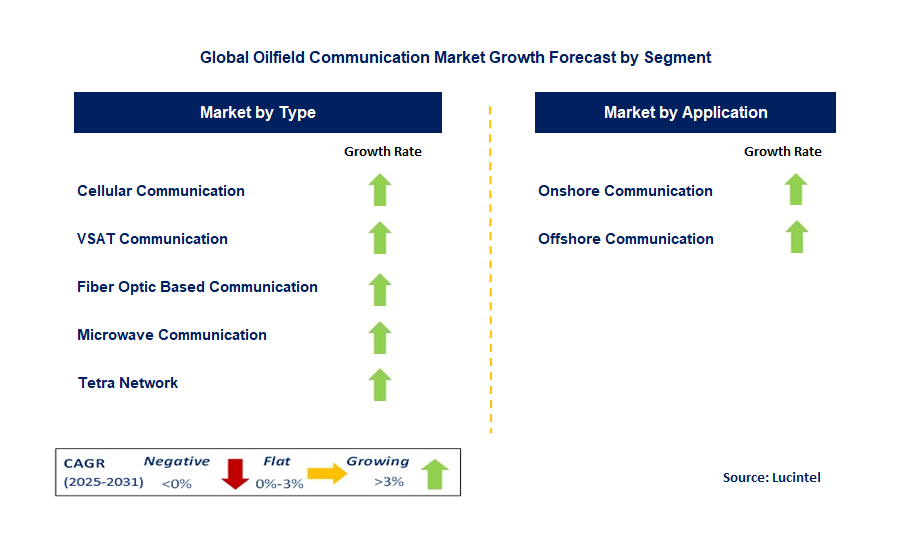
• Tait Communications Q5. Which oilfield communication market segment will be the largest in future? Answer: Lucintel forecasts that fiber optic based communication is expected to witness the highest growth over the forecast period. Q6. In oilfield communication market, which region is expected to be the largest in next 5 years? Answer: APAC is expected to witness the highest growth over the forecast period. Q7. Do we receive customization in this report? Answer: Yes, Lucintel provides 10% customization without any additional cost.


Choose a license that fits your team. Instant PDF delivery.
Prices exclude taxes. Instant delivery. Custom licensing available on request.
Market Report · July 16, 2026
Market Report · May 18, 2026
Market Report · May 18, 2026
Trusted partner for strategic intelligence and business growth


Receive a complimentary market analysis tailored to your industry. Our analysts will identify key growth opportunities and competitive dynamics specific to your business.

Market size, growth rate, and key trend analysis for your specific sector.

Top competitor positioning and market share analysis.

Strategic recommendations backed by data-driven insights.
Get curated market intelligence and competitive moves straight to your inbox.
By subscribing, you agree to receive our monthly insights. Unsubscribe anytime.
Receive a complimentary market analysis tailored to your industry. Our analysts will identify key growth opportunities and competitive dynamics specific to your business.
Market size, growth rate, and key trend analysis for your specific sector.
Top competitor positioning and market share analysis.
Strategic recommendations backed by data-driven insights.
Get curated market intelligence, emerging trends, and competitive moves straight to your inbox each month.
By subscribing, you agree to receive our monthly insights. Unsubscribe anytime.
We'll send your sample report shortly.