
Market Report · July 22, 2026

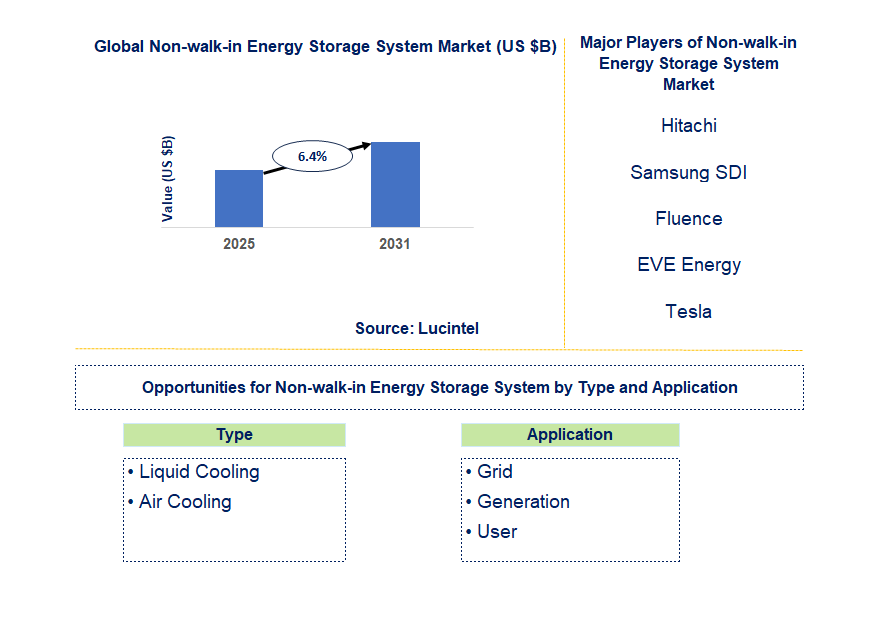
Key data points: The growth forecast = 6.4% annually for the next 7 years. Scroll below to get more insights. This market report covers Trends, opportunities and forecasts in non-walk-in energy storage system market to 2031 by type (liquid cooling and air cooling), application (grid, generation, and user), and region (North America, Europe, Asia Pacific, and the Rest of the World)
We'll send your sample report shortly.
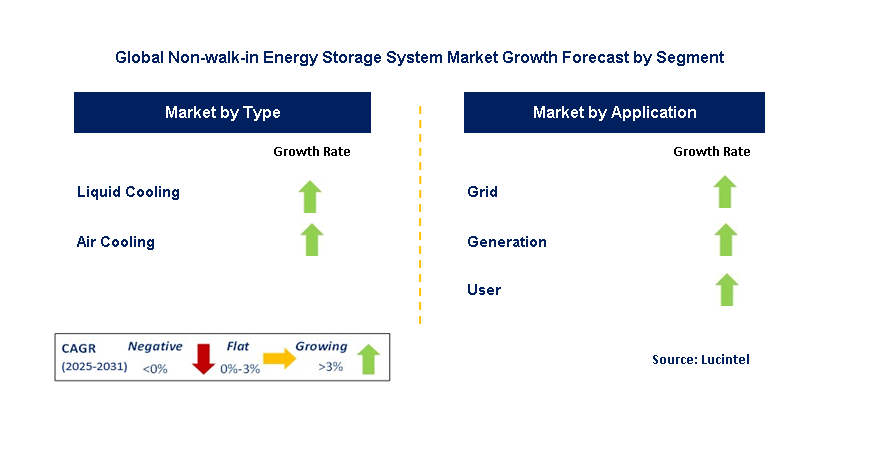
• Lucintel forecasts that, within the type category, liquid cooling is expected to witness higher growth over the forecast period due to it transfers heat more effectively.
• Within the application category, generation is expected to witness the highest growth due to it focuses on power production.
• in terms of region, APAC is expected to witness the highest growth over the forecast period due to strong government support for sustainability initiatives.
• Improvement of Battery Technologies: Innovations in battery technology- lithium-ion batteries in particular, are advancing to increase energy density, efficiency, and bring down the costs. Solid-state batteries and sodium-ion batteries are expected to perform better over time and thus reduce the cost of energy storage systems. These changes are fundamental to expanding the implementation of energy storage systems for the grid and at the household level. The further these technologies develop, the easier and more affordable it will be to adopt non-walk in energy storage systems. Subsequently increasing market demand.
• Integration with Renewable Sources: Energy storage systems are becoming increasingly integrated with renewable energy sources like solar and wind to mitigate their variability. These systems are used to capture the surplus energy that is available during peak periods and use it during the times when there is low energy produced. This integration assures the availability of power supply. It is also significant for the improvement and sustainability of renewable energy. The shift towards renewable energy is gaining momentum, which creates a growing market for energy storage systems that are used with these sources.
• Energy Storage as a Service: With the development of energy storage as a service (ESaaS), the consumers and enterprises do not have to grapple with the full burden of investment. There has been a notable change in offering storage systems on a subscription or pay-per-use basis, which eliminates the barriers to adoption of these systems. This trend improves energy storage systems suitability for different sectors of the economy, and as a result it’s more widely used.
• Increase in Electric Vehicle Adoption: The adoption of electric vehicles (EVs) is increasing at a rapid pace which is boosting the need for energy storage systems. The batteries of EVs, when coupled with stationary energy storage, can store electricity for future use or even supply power back into the grid, thus further improving grid stability. The mutually beneficial relationship between EVs and energy storage systems is anticipated to become more common as both markets grow. The expansion of the EV market is hence, creating a plausible market for energy storage systems, particularly for urban centers.
• Support through Policies and Regulations: There are new policies and regulations being formulated at the global level to support the adoption of energy storage systems, including financial assistance, subsidized rates, tax allowance, and even rule of law that allow lower cost deployment and installation of these facilities. There is significant political pressure to shift towards cleaner energy sources and this policy support is fundamental in driving the expansion of the Non-walk in Energy Storage System market, where renewable energy targets are more ambitious.
The emerging trends in the Non-walk-in Energy Storage System market are reshaping how energy is stored, distributed, and consumed. With advancements in battery technologies, greater integration with renewable energy, and the rise of energy storage as a service, the market is becoming more accessible and efficient. The growth of electric vehicle integration and supportive policies are also contributing to the expansion of energy storage systems. These trends are not only enhancing the performance and cost-effectiveness of storage solutions but are also helping accelerate the transition to sustainable energy systems worldwide. As these trends continue to evolve, they will play a pivotal role in supporting a cleaner, more resilient energy future.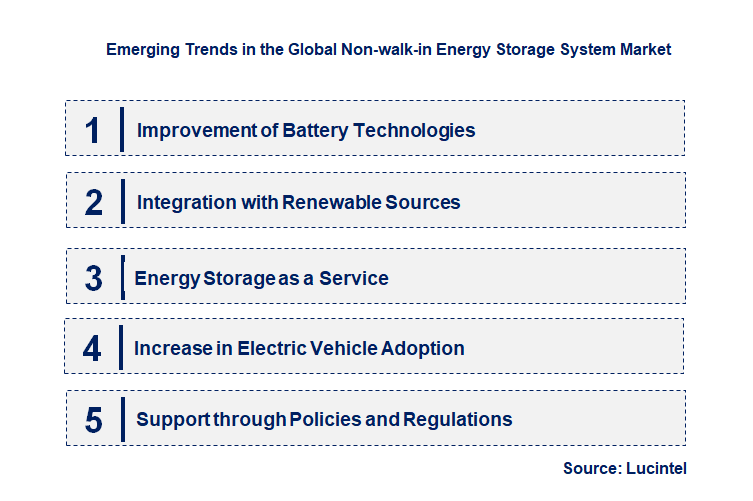
• Growth In Investments Towards Research and Development: Countries and businesses are putting resources towards research and development in modern energy storage technologies. The goal is to increase the energy storage capacity, storage system efficiency, and affordability. This trend is pivotal for the evolution of the non-walk-in energy storage systems for more large scale implementation. The more advanced technologies become, the cheaper and more powerful these systems will be, leading to further comforts the requirements for wider adoption.
• Increase In Smart Grid Adoption: Adoption of smart grid technology makes it easier for energy storage systems integration. Grids allow for real-time monitoring, management, and distribution of energy and energy storage systems add more stability and flexibility. This technology helps utility companies with energy distribution particularly where penetration of renewables is very high. Adopting these technologies requires opening up a larger smart grid infrastructure which is crucial to generally improving energy storage systems performance and market growth.
• Advancements in Grid-Scale Storage Solutions: There is a clear and significant rise in the demand for scalable energy storage solutions for grid level usage which stems from managing supply and demand more practically. These smaller systems are designed to scale and store energy for use during high consumption to maintain grid stability. Advancements in storage technologies, particularly in pumped hydro and battery systems, are making large scope solutions more responsive and efficient.
• Focus on Sustainability and Eco-Friendly Solutions: There is increasing attention on developing sustainable and green friendly energy storage systems. This comprises new approaches in materials, manufacturing processes, and even recycling technology. Eco-friendly energy storage systems are in increasing demand not only because they help achieve global sustainability objectives, but because they are more appealing to consumers and businesses. This pivot towards greener storage solutions encourages the development of supporting technologies while ensuring that energy storage systems become instrumental in the world’s energy transition.
• Expanding markets in Developing Countries Energy Storage Systems are penetrating into developing markets due to the increase in energy consumption and aspiration for renewable energy. Countries like India and Brazil, among others, are adopting energy storage technologies to meet their renewable energy objectives as well as improve grid reliability. The usage of non-walk-in energy storage systems in these regions offers a tremendous opportunity and these countries are trying to find viable and affordable solutions to their energy needs.
Recent developments in the Non-walk-In Energy Storage System market have significantly influenced the energy landscape, driving growth and innovation. Investments in research and development, along with the expansion of smart grid integration and grid-scale storage solutions, are key factors propelling the market forward. Additionally, advancements in sustainability and the increasing market penetration in emerging economies are enhancing the adoption of these systems. As the demand for cleaner, more reliable energy solutions grows, these developments are contributing to the broader transition toward renewable energy, creating long-term growth opportunities for the energy storage sector.• Residential Energy Storage Solutions Residential energy storage systems enable consumers to capture energy from solar panels and utilize it during non-sunny periods, which lowers dependency on the grid. As solar energy consumption continues to grow, there will be a larger market for home energy storage systems. Apart from the monetary benefits, these systems also eliminate energy dependency. Growth in the residential energy storage sector is likely to continue as consumers become more energy efficient and seek sustainable options.
• Commercial and Industrial Storage Applications The commercial and industrial spaces are beginning to implement energy storage systems to improve energy savings, streamline costs, and increase the reliability of power. Businesses are able to operate during peak hours without worrying about high energy bills and can aid in the use of green energy for storage. The commercial and industrial storage segment is expected to grow as more businesses become aware of the solutions’ impact on operational effectiveness and overall sustainability.
• Integrating Electric Vehicles The integration of electric vehicles is on the rise, and this means connecting EV batteries with energy storage systems offers a valuable opportunity. EVs can act as reserve battery energy storage systems, and they can also release power back to the grid when demand is high. In regions with high EV penetration, the storage in batteries aligns with the implementation of energy storage units. These linkages between electric vehicles and energy storage will foster further development of the market.
• Energy Storage Systems for Utilities Utility scale stored energy is essential to control electricity demand and supply, especially in some regions where there is an oversupply of renewable energy. It‘s these systems that help maintain a stable gigawatts supplied by the grid by storing excessive energy from renewable sources and dispensing it as necessary. The market for utility scale storage systems is projected to increase significantly these countries shift towards less carbon-intensive energy. This market represents many opportunities for expansion, particularly as efforts to modernize the grid systems are intensifying.
Strategic growth in the Non-Walk-In Energy Storage System market is being shaped by key opportunities across various sectors, including residential, commercial, and utility-scale applications. As the demand for renewable energy increases, energy storage solutions are becoming crucial for ensuring grid stability and reducing energy costs. The integration of electric vehicles, smart grids, and off-grid systems presents additional avenues for growth. Government support through policies and incentives is further driving the adoption of these technologies. Together, these factors are fostering a dynamic market poised for significant expansion, supporting the global transition to cleaner, more sustainable energy solutions.• Hitachi
• Samsung SDI
• Fluence
• EVE Energy
• Tesla
• LG
• Gotion
• Intilion
• EK Solar Energy
• Shenzhen Kehui Wantranse
• Liquid Cooling
• Air Cooling
• Grid
• Generation
• User
• North America
• Europe
• Asia Pacific
• The Rest of the World
• US: US investment and private spending, allied with advancements in battery technology, has had a positive impact on the Non Walk In Energy Storage market. The market has also seen growth in grid level and other energy storage systems that improve the ability to integrate renewables. The EVs and the EV charging stations also kickstarted a new wave of innovation in energy storage systems. US R&D investments aim to create energy storage alternatives that enhance grid reliability, lower costs and facilitate the use of more renewable energy.
• China: China has become a prominent player in the global Non-walk in Energy Storage System market thanks to vast investment in large-scale and residential storage systems. The country is already in the forefront with investment in Lithium-ion and other advanced batteries to increase energy storage. Besides this, China’s aggressive goal for electric vehicles and rapidly growing renewable energy generation have intensified the need for sophisticated storage systems. To this end, the government policies and added incentives have enabled the accessibility of energy storage technologies, making them economically friendly. Thus, China scales up its market share at the same time making strides much faster in technology than other countries.
• Germany: Germany has been one of the leaders of energy storage systems because of the energy transition (Energiewende) policy of Germany. The country has experienced high investments in decentralized energy storage Electric systems for both domestic and industrial purposes. These systems are utilized for the storage of surplus energy from solar panels and wind turbines to ensure a sustainable electrical grid. Germany’s energy storage systems are also combined with other systems such as smart grid, to maximize the energy storage system. The expansion of Germany‘s energy storage market is driven by well defined policies that stimulate new ideas and innovations and provide long term certainty to the energy storage technology market.
• India: As is the entire economy of India, India’s Non-walk-in Energy Storage System is projected to boom as well, considering the non-deficit energy consumption focus area of the country. The government of India now realizes how crucial energy storage is when accompanying renewable energy deployment on the grid. For instance, solar power generation is being done alongside energy storage systems which aim at providing necessary power even during outages. It is also expected that many markets will benefit from government initiatives such as setting storage devices for high power boards, or incentives geared towards energy storage technology manufacturing. With scaling ambitions towards renewable energy in the nation, the need for energy storage solutions will be ever increasing as well.
• Japan: Japan is actively expanding its Non-walk-in Energy Storage System market due to its commitment to reducing reliance on fossil fuels and increasing the share of renewable energy in its grid. Japan has developed advanced storage systems, including hydrogen storage solutions, to complement its renewable energy goals. The country also focuses on grid stability, supporting energy storage systems that can manage intermittent renewable generation. Japan’s energy storage market is growing with the help of government subsidies and regulations that promote sustainable energy practices, ensuring its continued expansion and integration into the national grid.


• Hitachi
• Samsung SDI
• Fluence
• EVE Energy
• Tesla
• LG
• Gotion
• Intilion
• EK Solar Energy
• Shenzhen Kehui Wantranse
Q5. Which non-walk-in energy storage system market segment will be the largest in future?

Choose a license that fits your team. Instant PDF delivery.
Prices exclude taxes. Instant delivery. Custom licensing available on request.
Market Report · July 22, 2026
Market Report · July 22, 2026
Market Report · July 17, 2026
Trusted partner for strategic intelligence and business growth


Receive a complimentary market analysis tailored to your industry. Our analysts will identify key growth opportunities and competitive dynamics specific to your business.

Market size, growth rate, and key trend analysis for your specific sector.

Top competitor positioning and market share analysis.

Strategic recommendations backed by data-driven insights.
Get curated market intelligence and competitive moves straight to your inbox.
By subscribing, you agree to receive our monthly insights. Unsubscribe anytime.
Receive a complimentary market analysis tailored to your industry. Our analysts will identify key growth opportunities and competitive dynamics specific to your business.
Market size, growth rate, and key trend analysis for your specific sector.
Top competitor positioning and market share analysis.
Strategic recommendations backed by data-driven insights.
Get curated market intelligence, emerging trends, and competitive moves straight to your inbox each month.
By subscribing, you agree to receive our monthly insights. Unsubscribe anytime.
We'll send your sample report shortly.