
Market Report · July 15, 2026

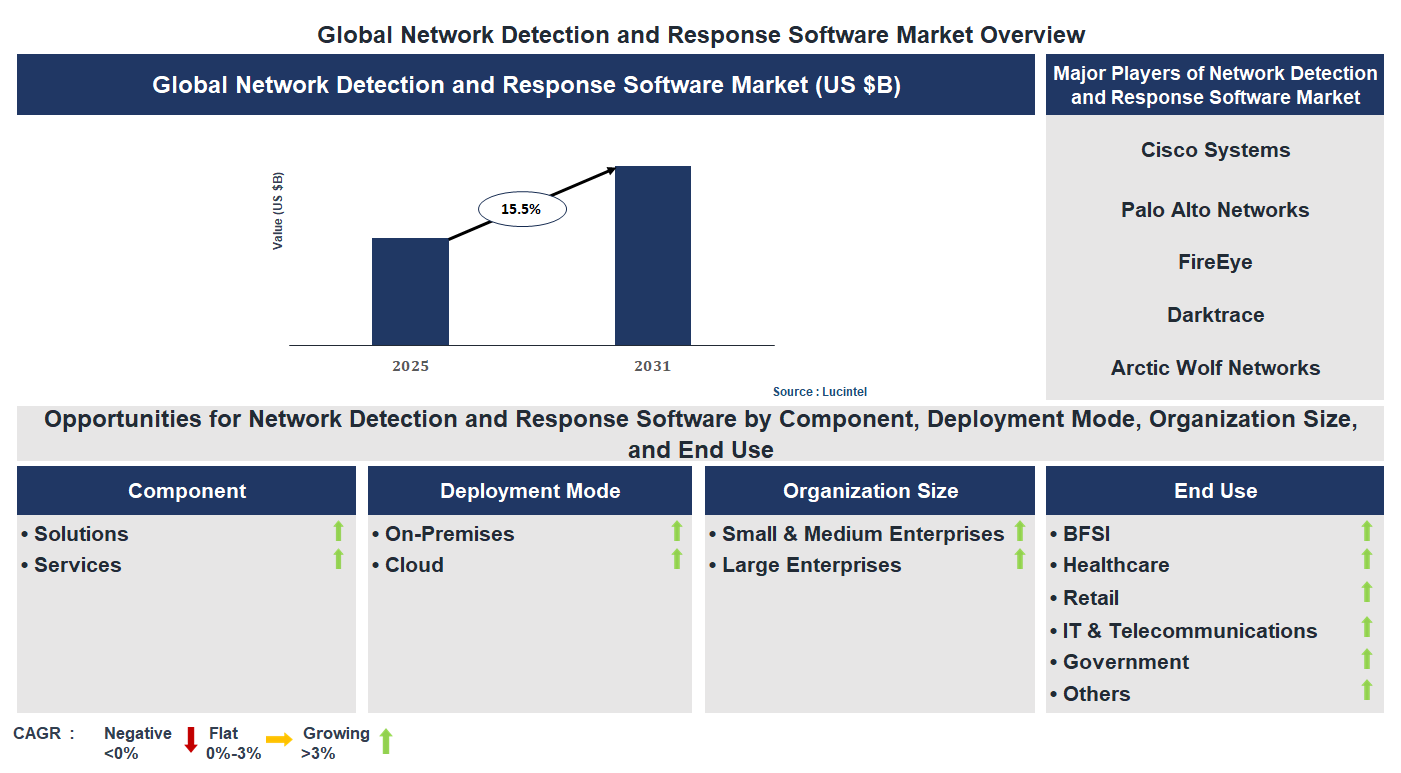
Key data points: The growth forecast = 15.5% annually for the next 7 years. Scroll below to get more insights. This market report covers trends, opportunities and forecasts in network detection and response software market to 2031 by component (solutions and services), deployment mode (on-premises and cloud), organization size (small & medium enterprises and large enterprises), end use (BFSI, healthcare, retail, IT & telecommunications, government, and others), and region (North America, Europe, Asia Pacific, and the Rest of the World)
We'll send your sample report shortly.
• Lucintel forecasts that, within the component category, solution is expected to witness higher growth over the forecast period.
• Within the end use category, BFSi is expected to witness the highest growth.
• In terms of region, North America is expected to witness the highest growth over the forecast period. Gain valuable insights for your business decisions with our comprehensive 150+ page report. Sample figures with some insights are shown below.
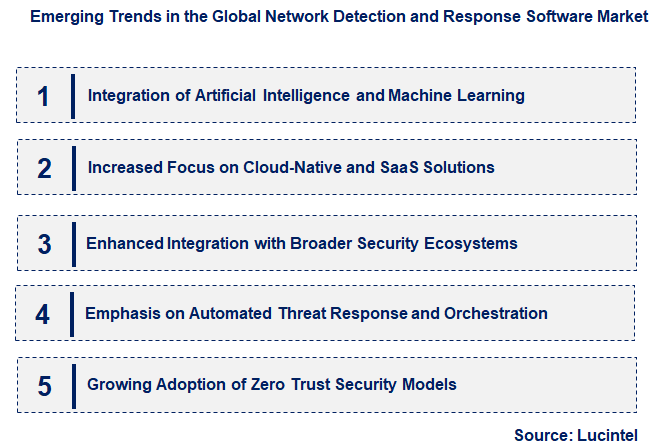
• Integration of Artificial Intelligence and Machine Learning: The adoption of AI and ML in NDR solutions enables real-time threat detection and predictive analytics. These technologies improve accuracy by reducing false positives and allow for automated response actions. AI-driven NDR tools can analyze vast amounts of network data swiftly, identifying subtle anomalies indicative of emerging threats. This trend enhances the efficiency and effectiveness of security operations, allowing organizations to respond proactively rather than reactively. As AI continues to evolve, its integration into NDR solutions is expected to become more sophisticated, further strengthening network defenses.
• Increased Focus on Cloud-Native and SaaS Solutions: As organizations migrate to cloud environments, NDR providers are developing cloud-native and Software-as-a-Service (SaaS) solutions. These platforms offer scalability, flexibility, and ease of deployment, catering to the growing demand for cloud security. Cloud-native NDR solutions facilitate seamless integration with existing cloud infrastructure, providing continuous monitoring across hybrid environments. SaaS models reduce upfront costs and enable rapid updates, ensuring organizations stay protected against the latest threats. This trend is making advanced network security accessible to a broader range of businesses, including small and medium enterprises.
• Enhanced Integration with Broader Security Ecosystems: NDR solutions are increasingly being integrated with other cybersecurity tools such as Security Information and Event Management (SIEM), Endpoint Detection and Response (EDR), and Threat Intelligence platforms. This interconnected approach provides a comprehensive security posture, enabling better contextual analysis and faster incident response. Integration facilitates centralized management and streamlined workflows, reducing operational complexity. As cyber threats become more complex, this trend supports a unified defense strategy, allowing organizations to correlate data across multiple security layers for more accurate threat detection and mitigation.
• Emphasis on Automated Threat Response and Orchestration: Automation in NDR solutions is gaining prominence, allowing for rapid containment and remediation of threats without human intervention. Orchestration platforms coordinate responses across various security tools, ensuring swift action against detected threats. This reduces response times significantly and minimizes potential damage. Automated threat response also alleviates the burden on security teams, enabling them to focus on strategic tasks. As cyberattacks grow in sophistication, automation becomes essential for maintaining effective security operations and ensuring timely mitigation of threats.
• Growing Adoption of Zero Trust Security Models: The Zero Trust approach, which assumes no implicit trust within or outside the network, is increasingly being integrated into NDR strategies. NDR solutions support Zero Trust principles by continuously verifying user and device identities, monitoring network traffic, and enforcing strict access controls. This trend enhances security by limiting lateral movement of threats and reducing attack surfaces. As organizations recognize the importance of a proactive security posture, Zero Trust integration with NDR solutions is becoming a standard practice, significantly improving overall network security resilience. In summary, these emerging trends are fundamentally reshaping the network detection and response software market by making security more intelligent, scalable, integrated, automated, and aligned with modern security frameworks. These developments are enabling organizations to better anticipate, detect, and respond to cyber threats, thereby strengthening their overall cybersecurity posture in an increasingly complex digital landscape.
• Adoption of AI and Machine Learning: Integration of AI and ML algorithms has improved threat detection accuracy, enabling real-time identification of sophisticated cyber threats and reducing false positives, thus enhancing overall security posture.
• Cloud-Based NDR Solutions: The shift towards cloud deployment offers scalability, flexibility, and cost-efficiency, allowing organizations to implement NDR solutions without significant infrastructure investments and supporting remote and hybrid work environments.
• Enhanced Integration with SIEM and SOAR: NDR tools are increasingly integrating with Security Information and Event Management (SIEM) and Security Orchestration, Automation, and Response (SOAR) platforms, facilitating streamlined incident response and comprehensive security management.
• Focus on Zero Trust Architecture: NDR solutions are aligning with Zero Trust principles by providing continuous monitoring and verification, which minimizes insider threats and lateral movement within networks, strengthening overall security frameworks.
• Expansion into Small and Medium Enterprises (SMEs): Vendors are developing simplified, affordable NDR solutions tailored for SMEs, broadening market reach and enabling smaller organizations to benefit from advanced threat detection capabilities. These developments are significantly impacting the network detection and response software market by enhancing detection accuracy, operational efficiency, and scalability. The integration of AI and cloud solutions is democratizing access, while improved interoperability and focus on Zero Trust are elevating security standards across industries. As a result, the market is poised for sustained growth, driven by increasing cyber threats and the evolving needs of organizations worldwide.
• Strengthening organizational defenses : NDR solutions are increasingly integrated into enterprise security frameworks to detect sophisticated internal and external threats, reducing breach risks and ensuring business continuity.
• Securing cloud environments : As cloud adoption accelerates, NDR software is vital for monitoring cloud traffic, identifying anomalies, and preventing data breaches in hybrid and multi-cloud setups.
• Protecting connected devices : The proliferation of IoT devices creates new vulnerabilities; NDR tools are essential for real-time detection of malicious activities targeting IoT networks, safeguarding critical infrastructure.
• Enhancing transaction security : Financial institutions leverage NDR to monitor network traffic for fraudulent activities, ensuring compliance and protecting sensitive customer data.
• Securing patient data and devices : NDR solutions help healthcare providers detect cyber threats targeting sensitive patient information and connected medical devices, ensuring regulatory compliance and patient safety. In summary, these growth opportunities are significantly impacting the network detection and response software market by expanding its application scope and enhancing security capabilities across industries. This evolution is driving increased adoption, fostering innovation, and establishing NDR as a critical component of modern cybersecurity strategies.
• Technological Advancements: Rapid innovations in AI, machine learning, and big data analytics enable more effective threat detection and response capabilities. These technologies facilitate real-time analysis of network traffic, anomaly detection, and automated incident response, significantly enhancing security posture. As organizations seek smarter, more adaptive solutions, vendors are investing heavily in R&D to incorporate cutting-edge tech, thus accelerating market growth. The continuous evolution of cybersecurity tools ensures that NDR solutions remain relevant and effective against sophisticated cyber threats, fostering increased adoption across industries.
• Increasing Cyber Threats: The surge in cyberattacks, including ransomware, phishing, and advanced persistent threats, underscores the need for robust network security solutions. Organizations are experiencing data breaches and operational disruptions, prompting a heightened focus on proactive detection and response mechanisms. The growing complexity and volume of cyber threats make traditional security measures insufficient, driving demand for advanced NDR solutions that can identify and mitigate threats swiftly. This trend underscores the critical role of NDR software in safeguarding digital assets, thereby fueling market expansion.
• Growing Adoption of Cloud and IoT: The proliferation of cloud computing and Internet of Things (IoT) devices expands the attack surface, necessitating sophisticated network security solutions. NDR software is increasingly integrated into cloud environments and IoT networks to monitor traffic, detect anomalies, and prevent breaches. As organizations migrate to hybrid and multi-cloud infrastructures, the need for scalable, flexible detection tools becomes vital. This shift not only broadens the market scope but also encourages vendors to develop tailored solutions, further propelling market growth.
• Regulatory and Compliance Requirements: Stringent data protection laws such as GDPR, HIPAA, and CCPA compel organizations to implement comprehensive cybersecurity measures. NDR solutions help meet compliance by providing detailed network activity logs, threat detection, and incident response capabilities. Regulatory pressures motivate organizations to invest in advanced security tools to avoid penalties and reputational damage. As compliance standards evolve, the demand for sophisticated NDR software that can adapt to changing legal requirements continues to rise, supporting market expansion.
• Increasing Digital Transformation Initiatives: Organizations across sectors are embracing digital transformation to enhance operational efficiency and customer experience. This shift involves deploying new digital infrastructure, which introduces vulnerabilities that require advanced security measures. NDR software plays a crucial role in protecting digital assets during this transition by providing continuous network monitoring and threat detection. The increasing reliance on digital platforms accelerates the adoption of NDR solutions, making them integral to modern cybersecurity strategies and driving market growth. The challenges facing network detection and response software market include:
• High Implementation and Operational Costs: Deploying NDR solutions involves significant investment in hardware, software, and skilled personnel. Small and medium-sized enterprises (SMEs) often find these costs prohibitive, limiting market penetration. Additionally, ongoing operational expenses for maintenance, updates, and staff training can strain budgets. These financial barriers slow down widespread adoption, especially in regions with limited cybersecurity budgets, thereby constraining market growth and creating disparities among organizations.
• Evolving and Sophisticated Threat Landscape: Cyber threats are becoming more complex, targeted, and evasive, making detection increasingly difficult. Attackers employ advanced techniques such as encryption, obfuscation, and zero-day exploits, which challenge existing NDR capabilities. Keeping pace with these evolving threats requires continuous updates and innovations, demanding significant R&D investment from vendors. The dynamic threat environment increases the risk of undetected breaches, potentially undermining confidence in NDR solutions and hindering market expansion.
• Integration and Compatibility Issues: Incorporating NDR software into existing network infrastructure can be complex, especially in heterogeneous environments with legacy systems. Compatibility issues may lead to operational disruptions, increased deployment time, and additional costs. Organizations often face challenges in integrating NDR with other security tools, which can result in fragmented security architectures. These complexities can delay deployment, reduce effectiveness, and deter organizations from adopting advanced NDR solutions, thereby impeding market growth. In summary, the network detection and response software market is driven by technological innovations, increasing cyber threats, and the expanding digital landscape, which collectively foster growth and innovation. However, high costs, evolving threats, and integration challenges pose significant hurdles. The interplay of these factors shapes the market’s future trajectory, requiring stakeholders to balance innovation with practical implementation strategies. Overall, the market is poised for growth, provided that solutions become more cost-effective, adaptable, and capable of addressing emerging cyber risks efficiently.
• Cisco Systems
• Palo Alto Networks
• FireEye
• Darktrace
• Arctic Wolf Networks
• Rapid7
• ExtraHop Networks
• Vectra AI
• LogRhythm
• Corelight
• Solutions
• Services
• On-Premises
• Cloud
• Small & Medium Enterprises
• Large Enterprises
• BFSI
• Healthcare
• Retail
• IT & Telecommunications
• Government
• Others
• North America
• Europe
• Asia Pacific
• The Rest of the World
• United States: The US market continues to lead with innovative solutions, driven by major cybersecurity firms investing heavily in AI-powered detection tools. Recent developments include the integration of machine learning algorithms for real-time threat detection and increased adoption of cloud-based NDR solutions. Regulatory pressures such as CCPA and evolving cybersecurity standards are also prompting organizations to upgrade their defenses. The government has launched initiatives to enhance national cybersecurity infrastructure, fostering a competitive environment for NDR providers.
• China: China’s NDR market is rapidly expanding, supported by government initiatives to bolster cybersecurity resilience. Recent developments include the deployment of domestically developed NDR solutions tailored for critical infrastructure and enterprise sectors. The Chinese government emphasizes self-reliance, leading to increased investments in indigenous cybersecurity technologies. Additionally, the integration of big data analytics and AI in NDR systems is becoming more prevalent, aiming to improve threat detection accuracy and response times amid rising cyber threats.
• Germany: Germany’s market is characterized by a focus on compliance and data privacy, aligning with the EU’s GDPR regulations. Recent advancements include the adoption of NDR solutions that prioritize data protection and transparency. German firms are increasingly integrating NDR with existing security frameworks, such as SIEM systems, to enhance overall cybersecurity posture. The government and private sector are collaborating on initiatives to develop more sophisticated detection capabilities, especially for industrial control systems and critical infrastructure.
• India: India’s NDR market is witnessing rapid growth driven by digital transformation and increasing cyberattacks targeting financial, government, and telecom sectors. Recent developments include the adoption of AI-driven NDR solutions to address sophisticated threats. The government’s push for a digital economy and initiatives like the National Cyber Security Policy are encouraging organizations to invest in advanced detection tools. Startups and local vendors are gaining prominence, offering cost-effective and scalable NDR solutions tailored to regional needs.
• Japan: Japan’s market is evolving with a focus on integrating NDR solutions into broader cybersecurity frameworks. Recent advancements include the deployment of AI and machine learning to enhance threat detection capabilities. The country emphasizes protecting critical infrastructure, such as transportation and manufacturing sectors, through specialized NDR systems. Japanese firms are also investing in research collaborations to develop next-generation detection technologies, aligning with national cybersecurity strategies and ensuring resilience against emerging cyber threats.


• Cisco Systems
• Palo Alto Networks
• FireEye
• Darktrace
• Arctic Wolf Networks
• Rapid7
• ExtraHop Networks
• Vectra AI
• LogRhythm
• Corelight Q5. Which network detection and response software market segment will be the largest in future? Answer: Lucintel forecasts that, within the component category, solution is expected to witness higher growth over the forecast period. Q6. In network detection and response software market, which region is expected to be the largest in next 5 years? Answer: In terms of region, North America is expected to witness the highest growth over the forecast period. Q7. Do we receive customization in this report? Answer: Yes, Lucintel provides 10% customization without any additional cost.


Choose a license that fits your team. Instant PDF delivery.
Prices exclude taxes. Instant delivery. Custom licensing available on request.
Market Report · July 15, 2026
Market Report · June 26, 2026
Market Report · June 24, 2026
Trusted partner for strategic intelligence and business growth


Receive a complimentary market analysis tailored to your industry. Our analysts will identify key growth opportunities and competitive dynamics specific to your business.

Market size, growth rate, and key trend analysis for your specific sector.

Top competitor positioning and market share analysis.

Strategic recommendations backed by data-driven insights.
Get curated market intelligence and competitive moves straight to your inbox.
By subscribing, you agree to receive our monthly insights. Unsubscribe anytime.
Receive a complimentary market analysis tailored to your industry. Our analysts will identify key growth opportunities and competitive dynamics specific to your business.
Market size, growth rate, and key trend analysis for your specific sector.
Top competitor positioning and market share analysis.
Strategic recommendations backed by data-driven insights.
Get curated market intelligence, emerging trends, and competitive moves straight to your inbox each month.
By subscribing, you agree to receive our monthly insights. Unsubscribe anytime.
We'll send your sample report shortly.