
Market Report · July 22, 2026

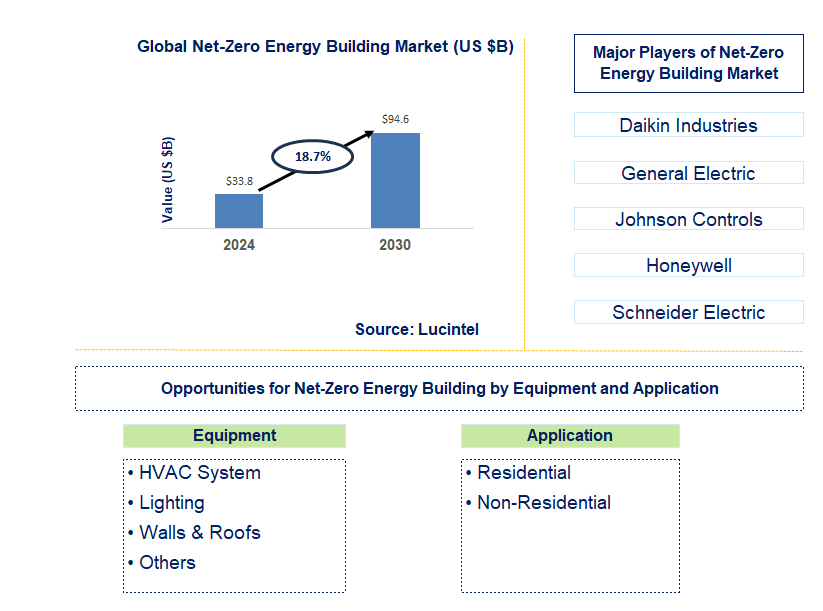
Key data points: The market size in 2030 = $94.6 billion, growth forecast = 18.7% annually for the next 6 years. Scroll below to get more insights. This market report covers trends, opportunities, and forecast in the global net-zero energy building market to 2030 by equipment (HVAC system, lighting, walls & roofs, and others), application (residential and non-residential), and region (North America, Europe, Asia Pacific, and the Rest of the World)
We'll send your sample report shortly.
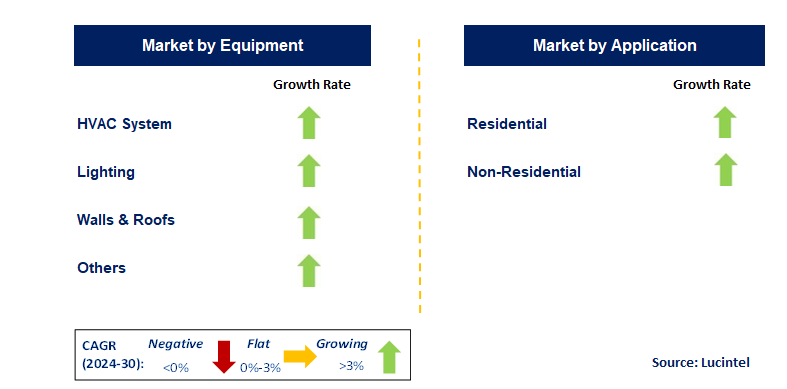
• Lucintel forecasts that, within the equipment category, the HVAC system is expected to witness the highest growth over the forecast period.
• Within the application category, residential is expected to witness a higher growth.
• In terms of regions, North America is expected to witness the highest growth over the forecast period. A more than 150-page report is developed to help in your business decisions.
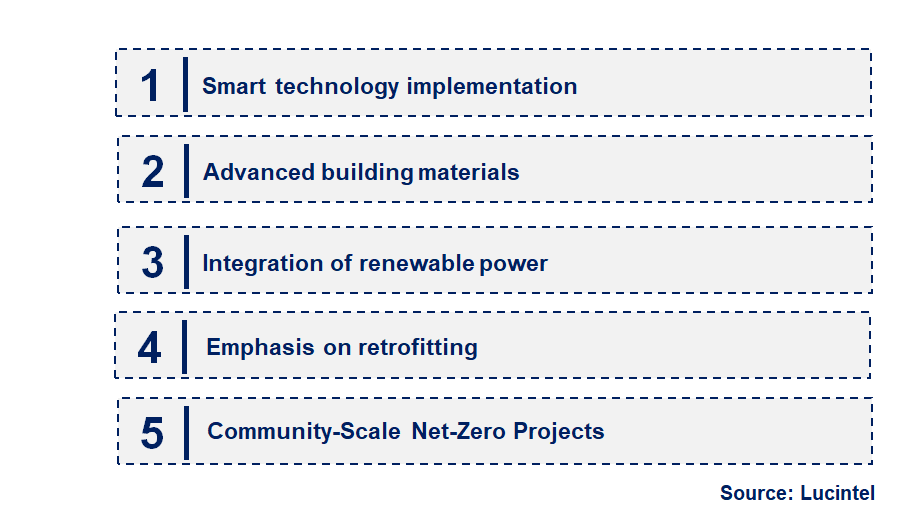
• Smart Technology Implementation: The integration of smart technologies is a key trend whereby net-zero buildings are increasingly being designed with advanced energy management systems, IoT devices, and AI-driven analytics. These technologies enable real-time monitoring and optimization of energy usage, improving efficiency and reducing costs. With these capabilities, smart buildings can regulate power consumption based on occupancy and external factors, thereby enhancing overall performance and contributing to sustainability goals.
• Advanced Building Materials: There is an increasing focus on advanced construction materials that enhance energy efficiency and sustainability. Innovations such as high-performance insulation, low-emissivity windows, and materials that use recycled or rapidly renewable resources contribute to enhanced thermal performance, reduced energy use, and improved indoor air quality. These innovations help promote net-zero energy objectives while bolstering building longevity.
• Integration of Renewable Power: Solar panels, wind turbines, and geothermal heating are common examples of renewable energy sources integrated into net-zero buildings today. On-site generation by these systems reduces reliance on grid power, leading to lower operational costs. Moreover, decreases in costs, government assistance programs, and increased effectiveness support for sustainable construction methods have been additional drivers toward the adoption of renewable energies.
• Emphasis on Retrofitting: Retrofitting existing buildings to attain net-zero energy performance is becoming more popular. This approach involves upgrading building envelopes, introducing energy-efficient equipment, and incorporating renewable sources in the system to improve performance while lowering energy consumption. Retrofitting provides a cost-effective way to increase the sustainability of the current building stock, contributing to broader climate goals.
• Community-Scale Net-Zero Projects: The concept of community-scale net-zero energy projects is gaining traction as cities and municipalities strive to meet sustainability goals. These initiatives involve designing neighborhoods or districts that collectively achieve net-zero energy by integrating renewable energy sources, shared resources, and energy-efficient infrastructure. By fostering collaboration among residents, businesses, and local governments, these projects create synergies that enhance energy resilience and reduce costs. This trend highlights the importance of a collective approach to sustainability, emphasizing the potential for larger-scale impacts in the fight against climate change while promoting community engagement and awareness. Trends like smart technology integration, the incorporation of advanced building materials, and the introduction of sustainable alternatives for generating electricity from natural sources that do not depend on fossil fuel usage have created the guidelines needed for better choices in construction and maintenance. With this, there is innovation in the market, while the sustainability of building operations is enhanced, leading to the goal of reducing energy consumption and carbon emissions.
• Advanced Energy Management Systems Adoption: This has been evidenced by recent advances such as widespread acceptance of complex energy management systems (EMS) with AI-enabled features that optimize net-zero buildings' power consumption patterns. These systems contain real-time information on energy use, thus they can be fine-tuned automatically to minimize wastage by adjusting their functions over time. Energy-efficient systems require EMS to perform even better, save money on bills, and become environmentally friendly.
• Renewable Solutions Growth: One major development in the net-zero energy building market has been characterized by a growing trend toward incorporating renewable energy solutions, including photovoltaic panels, wind turbines, and geothermal systems, among others. At present, these solutions are more affordable due to technological improvements that have facilitated their adoption, allowing on-site generation of electricity and fostering independence in terms of power usage. This progress leads to more sustainable modes of construction that do not depend on nonrenewable fuel sources.
• Innovations in Building Materials: Energy efficiency and sustainability have witnessed significant changes with new construction materials being developed. These include advanced insulation materials, high-performance windows, and other sustainable construction materials, such as recycled content and low-carbon options. Such materials decrease heat loss through envelopes, reducing electricity intake and contributing to the overall sustainability of net-zero energy buildings, thus fulfilling regulatory requirements for environmental protection concerning sustainable infrastructure projects across the world.
• Increase in Net-Zero Retrofit Projects: The retrofitting market for existing buildings to achieve net-zero energy performance is growing. Recent projects have focused on improving building envelopes, efficient energy systems, and renewable energy integration to enhance overall energy performance. Retrofitting existing buildings offers a cost-effective way to enhance sustainability and meet energy performance standards, addressing the challenge of transforming the existing building stock. Recent developments in the net-zero energy building market include the adoption of advanced energy management systems, expansion of renewable energy solutions, innovations in building materials, and growth in retrofit projects. These advancements are driving the evolution of net-zero buildings, enhancing their efficiency and sustainability while contributing to broader climate and energy goals.
• Expansion into Emerging Markets: Emerging markets present significant growth opportunities for net-zero energy buildings. As countries in Asia, Africa, and Latin America develop economically, there is increasing demand for sustainable and energy-efficient construction. Expanding into these markets allows companies to capitalize on growing infrastructure investments and support global sustainability efforts while addressing local energy challenges and regulatory requirements.
• Development of Modular and Prefabricated Solutions: Modular and prefabricated building solutions offer a strategic opportunity to accelerate the deployment of net-zero energy buildings. This type of construction enables faster construction times, less waste generation, and lower costs, thus opening up the accessibility of zero-energy homes to more people. Modular designs that meet zero-net requirements will help bridge the growing gap between the demand for greener homes or workplaces and the need for environmentally friendly housing solutions.
• Integration of Emerging Technologies: Integrating emerging technologies like blockchain technology used in trading electric power and advanced battery storage represents a key opportunity within this market segment that can be leveraged by firms operating within it. Using such technologies can help improve energy management systems, strengthen the grid, and promote distributed energy generation. Incorporating these innovative technologies enables firms to develop state-of-the-art systems that are adaptable to this market’s dynamics.
• Focus on Policy and Incentive Alignment: Alignment with policies and incentives set by governments helps foster growth in zero-energy buildings. Companies that take advantage of these subsidies, tax breaks, and support from environmental regulatory authorities can cut costs and gain a competitive edge over other players while promoting sustainable development. Active engagement with policymakers and participation in incentive programs can help accelerate the adoption of net-zero technologies and contribute to achieving sustainability goals. Strategic growth opportunities in the net-zero energy building market include expanding into emerging markets, developing modular and prefabricated solutions, integrating emerging technologies, and focusing on policy and incentive alignment. These opportunities align with market trends and regulatory support, offering potential for innovation and growth in the evolving landscape of sustainable construction.
• Increasing Environmental Regulations: Stringent environmental regulations have made it necessary for companies to adopt net-zero buildings. Governments around the world have developed guidelines to reduce carbon emissions while promoting the efficient use of power. Such regulations facilitate sustainable construction practices, which spur market expansion in this area.
• Technological Advancements: Technological advances in energy management systems, construction materials, and renewable energy technologies are driving the net-zero energy building market. Consequently, there has been significant development in high-performance insulation, smart grids, and advanced photovoltaics that enhance the viability of net-zero buildings for developers and property owners.
• Growing Consumer Awareness: Demand for net-zero energy buildings is driven by increased awareness among consumers of the need for environmental sustainability and energy efficiency. As people and businesses become more conscious of their carbon footprint and energy consumption, they are increasingly opting for structures that have minimal impact on the environment while being cost-effective.
• Economic Incentives: Government subsidies and tax credits for sustainable construction, coupled with support for energy-efficient technology, have fostered the market for zero-net-energy buildings. While implementing net-zero measures can be expensive, financial assistance is essential for promoting sustainable building solutions. Challenges:
• High Initial Costs: The initial costs for setting up net-zero energy buildings can be substantial due to the advanced materials, technologies, and renewable energy systems required. Although these costs can be offset by long-term savings and benefits, such project investments remain elusive for many property developers.
• Complexity of Implementation: Implementing net-zero performance standards in building designs requires complex design, engineering, and integration processes. This necessitates good coordination at all stages and specialized expertise, as any slight mismatch can lead to project failures, challenging deadlines.
• Limited Availability of Skilled Workforce: The limited availability of professionals skilled in designing and constructing highly effective non-energy-consuming buildings is a major hindrance to the adoption of this concept. The requirement for specialized knowledge can affect project quality and contribute to challenges in the industry. The development of net-zero energy buildings can be attributed to environmental regulations, technological changes, consumer awareness, and economic incentives. Nonetheless, the extent to which these drivers are balanced remains a challenge for the industry. This is due to obstacles such as high initial costs, implementation complexity, limited skilled workforce, and regulatory variability that need to be addressed for net-zero energy buildings to grow further.
• Daikin Industries
• General Electric
• Johnson Controls
• Honeywell
• Schneider Electric
• HVAC System
• Lighting
• Walls & Roofs
• Others
• Residential
• Non-Residential
• North America
• Europe
• Asia Pacific
• The Rest of the World
• United States: The net-zero energy building market has experienced considerable growth in the US, driven by advancements in solar technologies and intelligent building systems. Recent projects include residential houses equipped with innovative energy management systems and high-performance insulation, among other features, designed to generate renewable on-site energy and reduce carbon emissions. These efforts align with the country's goal of becoming energy-independent.
• China: China has made significant strides in the net-zero energy building sector through large-scale solar panel installations, particularly in major urban projects, along with the use of advanced construction materials. Stringent government policies on green buildings, combined with increased investment in renewable energy sources, have led to a surge in net-zero buildings across the country. Key developments include the integration of smart grid technology for managing power use in congested urban areas, contributing to China’s sustainability objectives.
• Germany: Germany continues to lead globally in the development of net-zero energy buildings, thanks to its emphasis on retrofitting existing buildings and adopting new construction techniques. The country is currently focused on advanced building envelopes and energy-efficient technologies that exceed existing European standards. Additionally, Germany is investing in sustainable materials and systems for net-zero buildings, improving their marketability and affordability, while also working toward achieving its ambitious climate goals.
• India: Growing awareness of environmental conservation and the government’s commitment to sustainability have sparked increased interest in net-zero energy buildings across India. Recent developments include several residential and commercial projects that incorporate energy-efficient technologies and renewable energy. These projects aim to integrate solar panels and energy-efficient heating, ventilation, and air conditioning (HVAC) systems into buildings, reducing power consumption and operational costs. These initiatives align with India’s climate change mitigation strategies.
• Japan: The market for net-zero energy buildings in Japan is evolving as the country embraces more energy-efficient technologies and smarter solutions for buildings. Recent developments include the use of high-performance insulation materials in new constructions. For instance, Japan has implemented photovoltaic systems and heat pump systems in many buildings, utilizing alternative approaches to power generation and storage to reduce carbon emissions, thus promoting sustainability.


• Daikin Industries
• General Electric
• Johnson Controls
• Honeywell
• Schneider Electric Q6. Which net-zero energy building market segment will be the largest in the future? Answer: Lucintel forecasts that the HVAC system is expected to witness the highest growth over the forecast period. Q7. In the net-zero energy building market, which region is expected to be the largest in the next 5 years? Answer: North America is expected to witness the highest growth over the forecast period. Q.8 Do we receive customization in this report? Answer: Yes, Lucintel provides 10% customization without any additional cost.


Choose a license that fits your team. Instant PDF delivery.
Prices exclude taxes. Instant delivery. Custom licensing available on request.
Market Report · July 22, 2026
Market Report · July 22, 2026
Market Report · July 17, 2026
Trusted partner for strategic intelligence and business growth


Receive a complimentary market analysis tailored to your industry. Our analysts will identify key growth opportunities and competitive dynamics specific to your business.

Market size, growth rate, and key trend analysis for your specific sector.

Top competitor positioning and market share analysis.

Strategic recommendations backed by data-driven insights.
Get curated market intelligence and competitive moves straight to your inbox.
By subscribing, you agree to receive our monthly insights. Unsubscribe anytime.
Receive a complimentary market analysis tailored to your industry. Our analysts will identify key growth opportunities and competitive dynamics specific to your business.
Market size, growth rate, and key trend analysis for your specific sector.
Top competitor positioning and market share analysis.
Strategic recommendations backed by data-driven insights.
Get curated market intelligence, emerging trends, and competitive moves straight to your inbox each month.
By subscribing, you agree to receive our monthly insights. Unsubscribe anytime.
We'll send your sample report shortly.