
Market Report · July 15, 2026

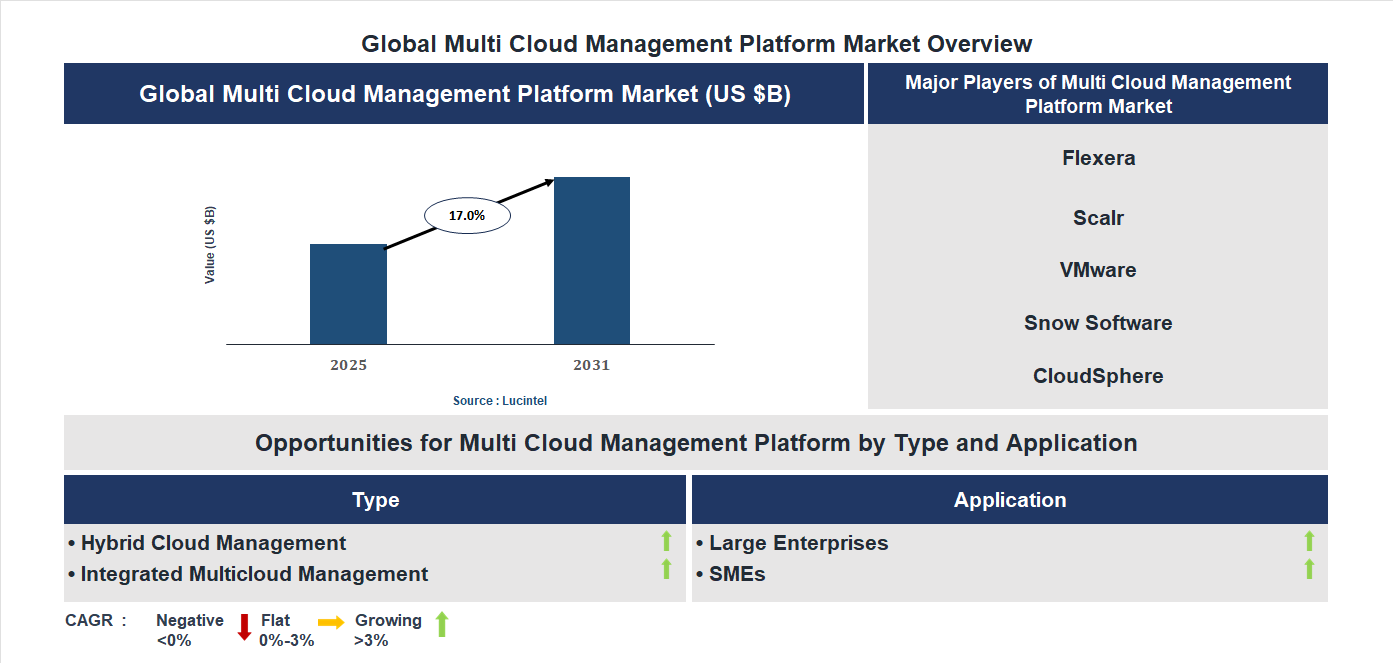
Key data points: The growth forecast = 17% annually for the next 7 years. Scroll below to get more insights. This market report covers trends, opportunities and forecasts in multi cloud management platform market to 2031 by type (hybrid cloud management and integrated multicloud management), application (large enterprises and SMEs), and region (North America, Europe, Asia Pacific, and the Rest of the World)
We'll send your sample report shortly.
• Lucintel forecasts that, within the type category, integrated multicloud management is expected to witness higher growth over the forecast period.
• Within the application category, SME is expected to witness higher growth.
• In terms of region, APAC is expected to witness the highest growth over the forecast period. Gain valuable insights for your business decisions with our comprehensive 150+ page report. Sample figures with some insights are shown below.
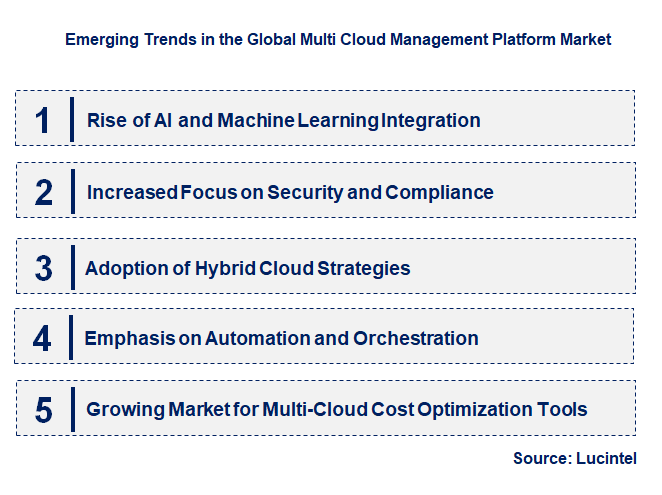
• Rise of AI and Machine Learning Integration: AI and machine learning are increasingly embedded in multi-cloud management platforms, enabling predictive analytics, automated resource allocation, and enhanced security. These technologies help organizations optimize cloud performance, reduce manual intervention, and identify potential issues proactively. As AI capabilities mature, platforms will become more intelligent, offering personalized insights and automation that improve decision-making and operational efficiency. This trend is transforming how enterprises manage complex multi-cloud environments, making management more intuitive and responsive.
• Increased Focus on Security and Compliance: With data breaches and regulatory requirements gaining prominence, security and compliance features are becoming central to multi-cloud management platforms. Vendors are integrating advanced security protocols, real-time threat detection, and compliance monitoring tools to safeguard sensitive data across multiple clouds. This trend ensures that organizations can meet industry standards such as GDPR, HIPAA, and others while maintaining robust security postures. As security concerns grow, platforms that offer comprehensive, integrated security solutions will have a competitive edge, fostering trust and reliability.
• Adoption of Hybrid Cloud Strategies: Hybrid cloud approaches, combining public and private clouds, are gaining popularity as organizations seek flexibility and control. Multi-cloud management platforms are evolving to seamlessly orchestrate hybrid environments, enabling smooth workload migration, resource sharing, and unified management. This trend allows enterprises to optimize costs, enhance security, and meet specific regulatory requirements. The ability to manage hybrid clouds efficiently is becoming a key differentiator, driving platform innovation and adoption across diverse sectors.
• Emphasis on Automation and Orchestration: Automation features are increasingly vital in multi-cloud management platforms, reducing manual effort and minimizing errors. Orchestration tools enable automated deployment, scaling, and management of cloud resources across multiple providers. This trend enhances agility, accelerates deployment cycles, and improves resource utilization. As organizations aim for faster innovation cycles, automation becomes essential for managing complex multi-cloud environments efficiently, leading to more streamlined operations and cost savings.
• Growing Market for Multi-Cloud Cost Optimization Tools: Cost management is a critical concern as organizations operate across multiple cloud providers. Platforms are integrating advanced cost analytics, budgeting, and optimization tools to help organizations monitor and control cloud expenses effectively. These tools provide insights into usage patterns, identify wastage, and recommend cost-saving measures. The focus on cost optimization is driving the development of specialized solutions, enabling enterprises to maximize ROI and maintain financial control in their multi-cloud strategies. In summary, these emerging trends are fundamentally reshaping the multi cloud management platform market by enhancing automation, security, flexibility, and cost efficiency. As technology advances and organizational needs evolve, platforms will become more intelligent, secure, and capable of managing increasingly complex multi-cloud environments. This evolution is empowering enterprises to leverage cloud benefits fully while mitigating associated risks, ultimately driving innovation and competitive advantage in the digital era.
• Adoption of AI and Machine Learning: Integration of AI and ML into management platforms has improved automation, predictive analytics, and decision-making, leading to increased efficiency and reduced operational costs for users.
• Enhanced Security and Compliance Features: New security protocols and compliance tools have been incorporated, helping organizations better protect data across multiple clouds and meet regulatory requirements more effectively.
• Increased Focus on Hybrid Cloud Solutions: Vendors are developing platforms that seamlessly manage hybrid cloud environments, enabling organizations to optimize workloads between on-premises and cloud infrastructures.
• Greater Integration Capabilities: Platforms now offer improved integration with third-party tools and existing enterprise systems, facilitating smoother workflows and better data synchronization across diverse environments.
• Expansion of Multi Cloud Management Services: Providers are expanding their service portfolios to include cost management, performance monitoring, and governance, offering comprehensive solutions tailored to enterprise needs. These developments are significantly impacting the multi cloud management platform market by enhancing operational efficiency, strengthening security, and providing more flexible and integrated solutions. As a result, organizations are better equipped to manage complex multi-cloud environments, driving market growth and innovation.
• Enterprise IT Management: Enhanced control and automation : Multi cloud management platforms enable enterprises to streamline their IT operations across multiple cloud providers, reducing complexity and improving efficiency. They facilitate centralized monitoring, resource allocation, and automation, leading to cost savings and faster deployment cycles. This growth opportunity allows organizations to better manage hybrid and multi-cloud environments, ensuring agility and scalability in their IT infrastructure.
• Data Analytics and Business Intelligence: Improved data integration : These platforms support seamless data integration from various cloud sources, enabling more comprehensive analytics. Businesses can derive actionable insights faster, improving decision-making processes. The ability to manage and analyze large datasets across multiple clouds enhances competitive advantage and drives innovation in data-driven strategies.
• Application Development and Deployment: Accelerated DevOps processes : Multi cloud management tools facilitate continuous integration and continuous deployment (CI/CD) across diverse cloud environments. They enable developers to deploy applications more rapidly, with better resource management and reduced downtime. This growth opportunity accelerates application delivery, enhances flexibility, and supports modern agile development practices.
• Security and Compliance: Strengthened security posture : These platforms offer unified security management, policy enforcement, and compliance monitoring across multiple clouds. They help organizations mitigate risks, ensure regulatory compliance, and respond swiftly to security threats. The increasing importance of data privacy and security regulations makes this a critical growth area for the market.
• Disaster Recovery and Business Continuity: Robust backup and recovery solutions : Multi cloud management platforms provide reliable disaster recovery options by distributing backups across various cloud providers. This ensures high availability and minimizes downtime during outages or cyberattacks. The ability to maintain business continuity enhances organizational resilience and supports digital transformation initiatives. In summary, these growth opportunities are significantly impacting the multi cloud management platform market by driving innovation, improving operational efficiency, and strengthening security. As organizations increasingly adopt multi-cloud strategies, these applications will continue to evolve, fostering a more flexible, secure, and efficient cloud ecosystem.
• Increasing Adoption of Multi-Cloud Strategies: Organizations are diversifying their cloud environments to avoid vendor lock-in, improve redundancy, and optimize performance. This shift necessitates advanced management tools capable of handling complex multi-cloud architectures efficiently. As businesses seek agility and resilience, the demand for integrated management platforms that provide centralized control and visibility is surging. This trend is further accelerated by the need for disaster recovery and compliance, making multi-cloud management solutions indispensable for modern enterprises.
• Growing Need for Cost Optimization and Operational Efficiency: Managing multiple cloud services often leads to increased costs and operational complexities. Multi cloud management platforms enable organizations to monitor, analyze, and optimize cloud resource utilization, reducing unnecessary expenses. Features like automated provisioning, workload balancing, and real-time analytics help businesses achieve better cost control and operational efficiency. As cloud spending continues to rise, companies are investing in these platforms to maximize ROI and streamline their cloud operations.
• Technological Advancements in Automation and AI: The integration of automation and artificial intelligence into management platforms enhances their capabilities, allowing for predictive analytics, automated resource allocation, and proactive issue resolution. These innovations reduce manual intervention, improve accuracy, and speed up decision-making processes. As technology evolves, platforms equipped with AI-driven insights become essential for managing complex multi-cloud environments effectively, providing a competitive edge to early adopters and fostering market growth.
• Increasing Focus on Security and Compliance: With data breaches and cyber threats on the rise, organizations prioritize security and regulatory compliance in their cloud strategies. Multi cloud management platforms offer features like unified security policies, identity management, and compliance reporting, helping organizations meet stringent regulatory standards such as GDPR and HIPAA. The ability to enforce consistent security measures across multiple cloud providers is critical, making security a key driver for platform adoption in this market.
• Rising Demand for Hybrid Cloud Solutions: The convergence of public and private clouds into hybrid environments offers flexibility and control over sensitive data and workloads. Multi cloud management platforms facilitate seamless integration and orchestration across diverse cloud types, enabling organizations to optimize their infrastructure based on workload requirements. This demand is driven by the need for agility, cost efficiency, and regulatory compliance, positioning hybrid cloud as a strategic choice supported by advanced management tools. The challenges facing this multi cloud management platform market include:
• Data Security and Privacy Concerns: Managing data across multiple cloud providers increases exposure to security vulnerabilities and compliance risks. Ensuring consistent security policies, data encryption, and access controls across diverse platforms is complex and resource-intensive. Organizations often face difficulties in maintaining data privacy standards, which can hinder adoption and create apprehension about potential breaches or regulatory penalties.
• Integration Complexity and Lack of Standardization: The heterogeneity of cloud platforms and services complicates integration efforts. Lack of standardized APIs and management protocols can lead to compatibility issues, increased deployment times, and higher costs. This complexity hampers seamless orchestration and automation, limiting the efficiency gains that multi-cloud management platforms aim to deliver.
• Skill Gap and Talent Shortage: Effective management of multi-cloud environments requires specialized skills in cloud architecture, security, and automation tools. The scarcity of trained professionals poses a significant challenge for organizations seeking to implement and optimize these platforms. This talent gap can delay deployment, increase operational risks, and elevate costs, impeding overall market growth. In summary, the multi cloud management platform market is driven by the increasing adoption of multi-cloud strategies, technological innovations, cost optimization needs, and the demand for security and hybrid solutions. However, challenges such as data security concerns, integration complexities, and skill shortages pose significant hurdles. These factors collectively influence market dynamics, requiring vendors to innovate continuously and organizations to invest strategically. The interplay of these drivers and challenges will shape the future trajectory of the market, emphasizing the need for robust, secure, and flexible management solutions to meet evolving enterprise demands.
• Flexera
• Scalr
• VMware
• Snow Software
• CloudSphere
• IBM
• Micro Focus
• BMC Software
• FIT2CLOUD
• Sinontt
• Hybrid Cloud Management
• Integrated Multicloud Management
• Large Enterprises
• SMEs
• North America
• Europe
• Asia Pacific
• The Rest of the World
• United States: The US market has seen rapid adoption of multi-cloud management platforms driven by major cloud providers like AWS, Azure, and Google Cloud. Innovations in AI-powered automation and security features are prominent, with increased investments in hybrid cloud solutions. Several startups and established firms are expanding their offerings to include comprehensive governance and compliance tools, catering to enterprise needs. The US government is also promoting cloud security standards, influencing market growth. Overall, the US remains a leader in technological advancements and strategic integrations within this market.
• China: Chinas market is characterized by rapid digital transformation and government support for cloud infrastructure development. Local cloud providers such as Alibaba Cloud and Tencent Cloud are expanding their multi-cloud management capabilities to compete with international players. The focus is on integrating AI and big data analytics to enhance cloud operations and security. Regulatory policies are evolving to ensure data sovereignty, impacting platform features and deployment strategies. Chinese companies are also investing heavily in developing indigenous multi-cloud solutions to reduce reliance on foreign technology, fostering a competitive and innovative environment.
• Germany: Germany emphasizes data privacy, security, and regulatory compliance in its multi-cloud management strategies. The market is driven by the adoption of European Union data protection standards, such as GDPR, influencing platform features. Major tech firms and cloud providers are collaborating with local enterprises to develop secure, compliant multi-cloud solutions. There is a growing focus on sustainable cloud practices and energy-efficient management tools. Germanys strong industrial base and emphasis on digital transformation are fueling demand for sophisticated multi-cloud platforms that support complex manufacturing and automotive sectors.
• India: The Indian market is experiencing rapid growth due to increasing cloud adoption among startups, SMEs, and large enterprises. Local cloud providers are enhancing their multi-cloud management offerings to cater to diverse industry needs. The government’s push for digital India and initiatives like data localization are shaping platform development. There is a rising trend of integrating AI and machine learning for better resource optimization and security. Additionally, partnerships between Indian firms and global cloud providers are expanding, fostering innovation and competitive pricing. The market is poised for substantial growth driven by digital transformation across sectors.
• Japan: Japans market is characterized by a focus on security, reliability, and compliance, driven by its highly regulated industries such as finance and healthcare. Local providers are developing multi-cloud management platforms with advanced security features and seamless integration capabilities. The adoption of AI and IoT technologies is enhancing cloud management efficiency. Japanese companies are also investing in hybrid cloud solutions to meet specific regulatory and operational requirements. The government’s initiatives to promote digital innovation and cybersecurity are further accelerating market development. Overall, Japan is prioritizing secure, compliant, and innovative multi-cloud management solutions to support its technological ecosystem.


• Flexera
• Scalr
• VMware
• Snow Software
• CloudSphere
• IBM
• Micro Focus
• BMC Software
• FIT2CLOUD
• Sinontt Q5. Which multi cloud management platform market segment will be the largest in future? Answer: Lucintel forecasts that, within the type category, integrated multicloud management is expected to witness higher growth over the forecast period. Q6. In multi cloud management platform market, which region is expected to be the largest in next 5 years? Answer: In terms of region, APAC is expected to witness the highest growth over the forecast period. Q7. Do we receive customization in this report? Answer: Yes, Lucintel provides 10% customization without any additional cost.


Choose a license that fits your team. Instant PDF delivery.
Prices exclude taxes. Instant delivery. Custom licensing available on request.
Market Report · July 15, 2026
Market Report · June 26, 2026
Market Report · June 24, 2026
Trusted partner for strategic intelligence and business growth


Receive a complimentary market analysis tailored to your industry. Our analysts will identify key growth opportunities and competitive dynamics specific to your business.

Market size, growth rate, and key trend analysis for your specific sector.

Top competitor positioning and market share analysis.

Strategic recommendations backed by data-driven insights.
Get curated market intelligence and competitive moves straight to your inbox.
By subscribing, you agree to receive our monthly insights. Unsubscribe anytime.
Receive a complimentary market analysis tailored to your industry. Our analysts will identify key growth opportunities and competitive dynamics specific to your business.
Market size, growth rate, and key trend analysis for your specific sector.
Top competitor positioning and market share analysis.
Strategic recommendations backed by data-driven insights.
Get curated market intelligence, emerging trends, and competitive moves straight to your inbox each month.
By subscribing, you agree to receive our monthly insights. Unsubscribe anytime.
We'll send your sample report shortly.