
Market Report · July 22, 2026

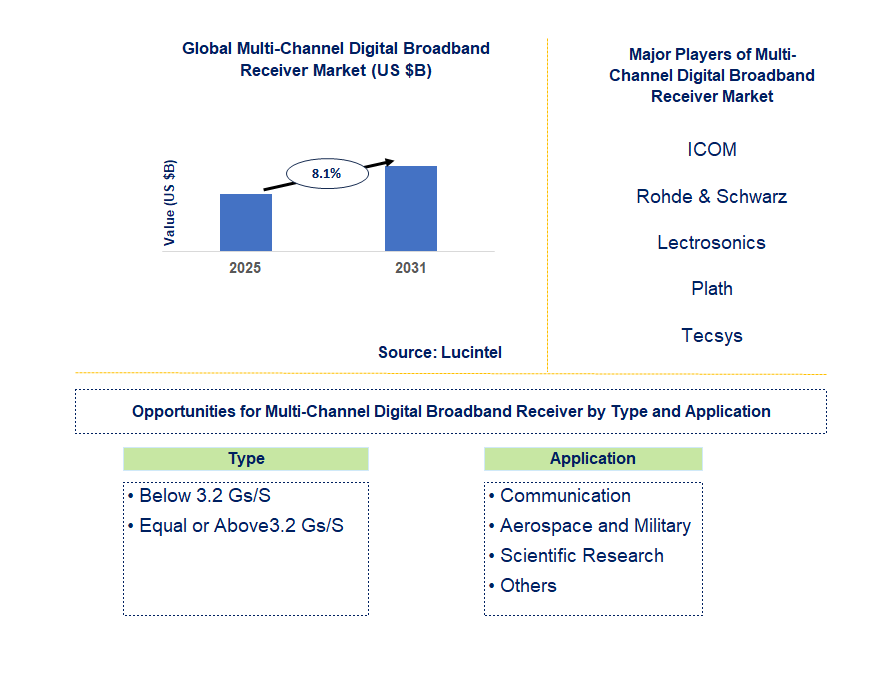
Key data points: The growth forecast = 8.1% annually for the next 7 years. Scroll below to get more insights. This market report covers Trends, opportunity and forecast in multi-channel digital broadband receiver market to 2031 by type (below 3.2 gs/s and equal or above3.2 gs/s), application (communication, aerospace and military, scientific research, and otherss), and region (North America, Europe, Asia Pacific, and the Rest of the World)
We'll send your sample report shortly.
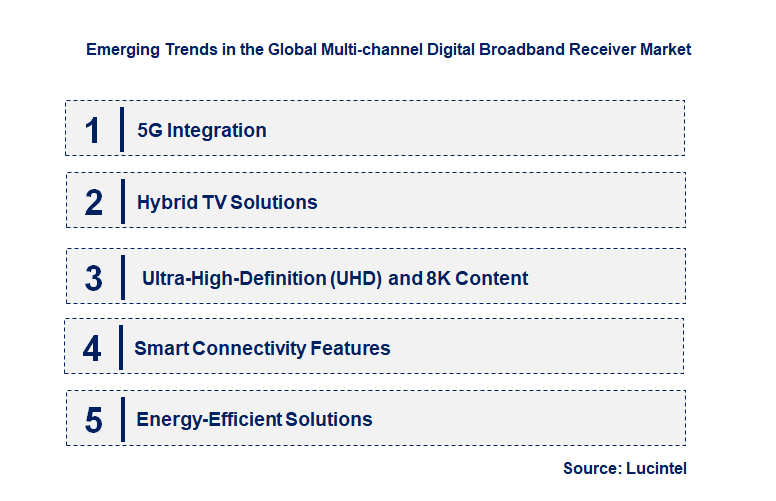
• 5G Integration: One of the major emerging trends is the integration of 5G technology with multi-channel digital broadband receivers. As 5G becomes more widespread, receivers are now designed to incorporate both broadband internet and digital TV services so that a customer can enjoy seamless, high-speed internet alongside traditional broadcast content. The integration will bring about better connectivity, higher quality, and more versatile devices that meet ever-changing consumer requirements.
• Hybrid TV Solutions: Hybrid TV systems combine traditional broadcasting with internet-based services and are increasingly popular. Multichannel receivers are being developed to handle satellite/cable TV as well as internet-based services like OTT platforms, which can provide the user with a richer entertainment experience. Such systems are very important in markets where traditional broadcast and streaming services coexist and where consumers need the flexibility and convenience of both worlds.
• Ultra-High-Definition (UHD) and 8K Content: According to consumer demand, ultra-high-definition, or 8K, content television, there is a shift in the multi-channel digital broadband receiver market toward receivers that are UHD and 8K capable. Receivers that support UHD and 8K content are in high demand in markets like Japan, which is at the forefront of 8K broadcast trials. This trend is forcing manufacturers to innovate and come up with receivers that have a higher processing power, better compression algorithms, and better signal handling capabilities.
• Smart Connectivity Features: The rise of smart home gadgets and Internet of Things technology means that the innovation of multi-channel broadband receivers in terms of the connectivity features also increases. Thus, receivers start to come integrated with Wi-Fi, Bluetooth, and voice controls, so the receiver is readily integrated into the whole smart home eco-system. Consumer appeal comes for greater convenience, control, and interactivity on digital content.
• Energy-Efficient Solutions: With the growing awareness of environmental concerns, energy efficiency has become a major trend in the multi-channel digital broadband receiver market. Manufacturers are focusing on designing receivers that consume less power while still delivering high-quality performance. Energy-efficient receivers are appealing to environmentally conscious consumers and are also aligned with global sustainability efforts, further driving their adoption in both residential and commercial markets. These emerging trends are changing the multi-channel digital broadband receiver market by enhancing device functionality, improving user experiences, and increasing efficiency. As technology continues to advance, multi-channel receivers will become more integrated with broadband, 5G, smart home devices, and next-generation content formats, creating new opportunities for growth and innovation.
• Transition to Next-Generation Broadcasting Standards: The adoption of next generation broadcasting standards has been a major market development: ATSC 3.0 and DVB-T2, for instance. Offers higher quality broadcasts, improved bandwidth efficiencies, and additional features such as internet-based services and enhanced interactivity. Demand is expected to grow with shifting of broadcasters to new standards.
• Internet and TV Services Integration: Many countries, including the United States and China, are shifting toward hybrid TV systems that integrate traditional broadcasting with internet-based streaming services. Multi-channel receivers that support both broadcast and OTT content are gaining popularity because they offer consumers greater flexibility and convenience in accessing digital content. The integration of these services is driving innovation in receiver technologies, including support for various content delivery methods.
• 8K and UHD-Compatible Receivers: The increasing popularity of 8K and UHD content calls for multi-channel digital broadband receivers that can accommodate these high-resolution formats. Japan is one of the countries that has been at the forefront of the development and trial of 8K broadcasts, thus creating demand for receivers capable of decoding and displaying ultra-high-definition signals. This trend also is encouraging companies to focus their attention on even more powerful receivers with significantly enhanced signal processing and compression qualities.
• Smart Features Built into Receivers: The building of smart features right into multi-channel digital broadband receivers is another thing. New models are including Wi-Fi and Bluetooth as well as voice control functions to allow operating in the wide context of the smart home scenario. Such functions appeal particularly to high-tech individuals who would need greater control, comfort, or both over a more integrated audio entertainment system.
• Government and Industry Support for Broadband Expansion: The governments and industry associations in different countries have been supporting broadband infrastructure expansion. In particular, it is to the under-developed areas where such initiatives have been made, and this drives the demand for inexpensive and efficient multi-channel receivers which are needed for access to digital TV and internet services. In India and China, such initiatives improve the availability of broadband and television services, driving the growth of the market. These innovations are pushing the growth of the multi-channel digital broadband receiver market as it is introducing new technologies and improved services to consumers. It is changing the landscape with integrating internet and television services and advancement in capabilities of UHD and 5G.
• Hybrid TV Solutions Expansions: Advancing from traditional broadcasting integrated with Internet-enabled solutions, receiver vendors are finding good opportunities with expansion through hybrid TV systems. This involves applications where the subscribers use a considerable amount of time for satellite/Cable TV viewing and simultaneous watching of Internet video services. Flexibility in demand All-in-one device solutions is experiencing rapid growth multichannel capabilities to receive a hybrid service stream.
• 5G Integration and Mobile Broadcasting: The advent of 5G networks presents an opportunity for multi-channel digital broadband receivers to capture both traditional broadcast and high-speed internet services. As 5G technology becomes integrated with broadcasting, multi-channel receivers will be able to offer consumers a seamless multimedia experience at home or on the go. This integration will spur the development of portable, 5G-compatible receivers.
• Smart Home Integration: The smart home devices are increasingly popular, and the growth opportunity for multi-channel digital broadband receivers with advanced connectivity features is high. These receivers, which integrate with voice assistants, IoT systems, and other smart home technologies, will cater to consumers seeking greater control and flexibility over their digital content and home environments.
• OTT and Streaming Services Growth: OTT and streaming services continue growing. There is immense market opportunity created for multi-channel receivers capable of offering such services. With the consumption of content via Netflix, Hulu, and Amazon Prime on the rise, both developed and emerging markets will experience growth in demand for multi-channel receivers that can cater to traditional broadcast and streaming content.
• Emerging Markets and Affordable Solutions. The opportunity that is available in terms of affordable multi-channel digital broadband receivers is in emerging markets, most of which are in Asia and Africa. As more customers in these emerging markets embrace digital TV and broadband services, there are increasing demands for cost-effective receivers with high performances. Companies should target these emerging markets by marketing budget-friendly solutions made to meet specific local needs. The strategic growth opportunities in the multi-channel digital broadband receiver market lie in hybrid TV solutions, 5G integration, smart home features, OTT services, and emerging market expansion. These opportunities will drive the market forward, catering to evolving consumer demands and technological advancements.
• ICOM
• Rohde & Schwarz
• Lectrosonics
• Plath
• Tecsys
• Chongqing Huawei Industrial
• Keysight
• Beijing Decentest Technology
• Transcom
• Mipro
• Below 3.2 Gs/S
• Equal or Above3.2 Gs/S
• Communication
• Aerospace and Military
• Scientific Research
• Otherss
• North America
• Europe
• Asia Pacific
• The Rest of the World
• United States: The multi-channel digital broadband receiver market in the United States has been influenced by the advancement of digital television and satellite communications. Demand for updated receivers is driven by the adoption of next-generation broadcasting technologies such as ATSC 3.0, which offers better video quality and higher bandwidth efficiency. In addition, the increasing demand for IPTV and OTT platforms has shifted consumer preference to internet-based digital broadcasting, which has further fueled innovation in broadband receivers that can handle multiple signal formats. Companies are also focusing on integrating 5G support, offering high-speed internet access alongside traditional broadcasting services.
• China: The multi-channel digital broadband receiver market in China has been growing steadily with the rapid development of the country's satellite and cable television industries. Consequently, expansion in China's DTV network, accompanied by government policies that boost the sharing of digital content, drives up demand for multi-channel receivers. In addition, due to the improvement in 5G infrastructure, China is experiencing a trend shift towards all-in-one systems that can accommodate both digital TV and internet data. In essence, consumers are going for seamless multimedia experience. China's efforts to expand digital TV services in rural areas will be a further boost to the growth of receiver demand.
• Germany: In Germany, the multi-channel digital broadband receivers market is evolving with the rollout of DVB-T2, which offers high-definition terrestrial TV broadcasts. The country is also shifting towards more integrated systems, which combine broadband internet access with digital television services, making it easier to transition towards hybrid TV platforms. Adoption in streaming services at a very high rate, combining broadcasting with broadband-based services, necessitates the development of receivers that both support broadcast services and broadband. Germany's significant focus on renewable energy and technologies is driving an increase in efforts to make energy-efficient and miniaturized receivers.
• India: Multi-channel digital broadband receivers are witnessing rapid growth in India, with increased internet penetration, a growing middle class, and expansion of digital television infrastructure. The government's Digital India initiative and the transition from analog to digital television have increased demand for affordable and high-performance receivers. The rapid diffusion of broadband and mobile internet services leads to integrated receiver solutions where digital TV, satellite, and internet access become intertwined, opening for multi-device and multi-channel solutions. On account of its being a price-conscious market, it has seen development of value-oriented receiver products too.
• Japan: Japan leads multi-channel digital broadband receiver technology still, having more focus on next generation digital television and Internet offerings. Advanced technologies such as 8K and ultra-high-definition television were widely adopted in Japan early on, increasing the demand for high-performance receivers that would support these formats. Hybrid receivers became popular again as the digital broadcasting services were accompanied by broadband internet and IPTV. Moreover, Japan's push for 5G creates opportunities for multi-channel receivers capable of integrating both broadcast and internet services for consumers.


• ICOM
• Rohde & Schwarz
• Lectrosonics
• Plath
• Tecsys
• Chongqing Huawei Industrial
• Keysight
• Beijing Decentest Technology
• Transcom
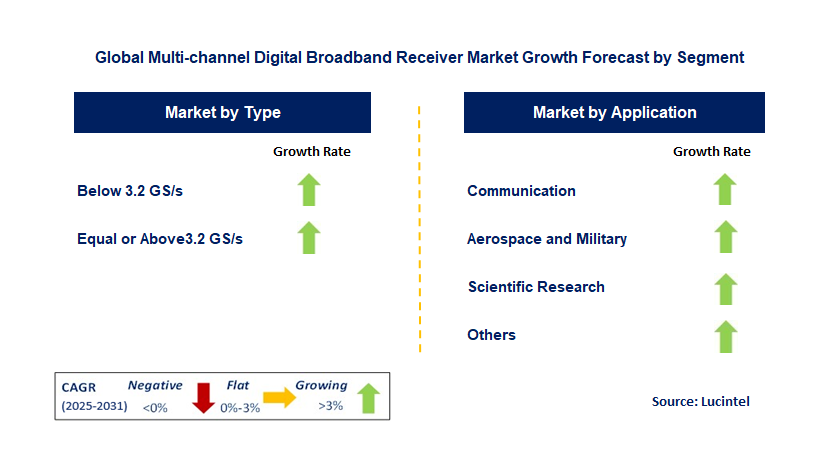
• Mipro Q5. Which multi-channel digital broadband receiver market segment will be the largest in future? Answer: Lucintel forecasts that, within the type category, equal or above3.2 gs/s is expected to witness higher growth over the forecast period due to growing demand for high-speed, high-performance receivers in advanced broadcasting. Q6. In multi-channel digital broadband receiver market, which region is expected to be the largest in next 5 years? Answer: In terms of region, North America is expected to witness the highest growth over the forecast period. Q7. Do we receive customization in this report? Answer: Yes, Lucintel provides 10% customization without any additional cost.


Choose a license that fits your team. Instant PDF delivery.
Prices exclude taxes. Instant delivery. Custom licensing available on request.
Market Report · July 22, 2026
Market Report · July 17, 2026
Market Report · July 17, 2026
Trusted partner for strategic intelligence and business growth


Receive a complimentary market analysis tailored to your industry. Our analysts will identify key growth opportunities and competitive dynamics specific to your business.

Market size, growth rate, and key trend analysis for your specific sector.

Top competitor positioning and market share analysis.

Strategic recommendations backed by data-driven insights.
Get curated market intelligence and competitive moves straight to your inbox.
By subscribing, you agree to receive our monthly insights. Unsubscribe anytime.
Receive a complimentary market analysis tailored to your industry. Our analysts will identify key growth opportunities and competitive dynamics specific to your business.
Market size, growth rate, and key trend analysis for your specific sector.
Top competitor positioning and market share analysis.
Strategic recommendations backed by data-driven insights.
Get curated market intelligence, emerging trends, and competitive moves straight to your inbox each month.
By subscribing, you agree to receive our monthly insights. Unsubscribe anytime.
We'll send your sample report shortly.