
Market Report · July 29, 2026

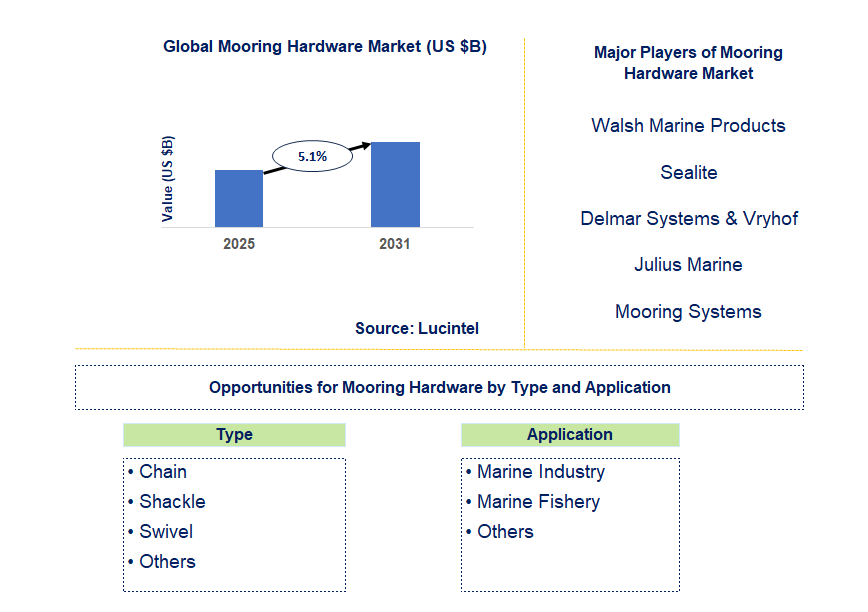
Key data points: The growth forecast = 5.1% annually for the next 7 years. Scroll below to get more insights. This market report covers Trends, opportunity and forecast in mooring hardware market to 2031 by type (chain, shackle, swivel, and others), application (marine industry, marine fishery, and others), and region (North America, Europe, Asia Pacific, and the Rest of the World)
We'll send your sample report shortly.
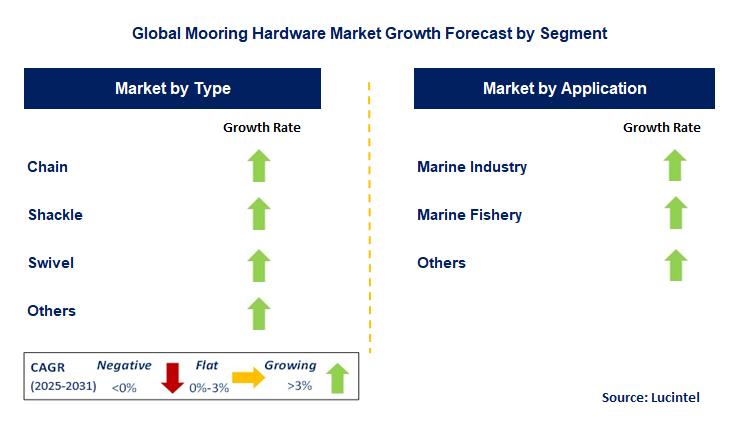
• Lucintel forecasts that, within the type category, the chain is expected to witness the highest growth over the forecast period.
• Within the application category, the marine industry is expected to witness higher growth.
• In terms of region, APAC is expected to witness the highest growth over the forecast period. Gain valuable insights for your business decisions with our comprehensive 150+ page report. Sample figures with some insights are shown below.
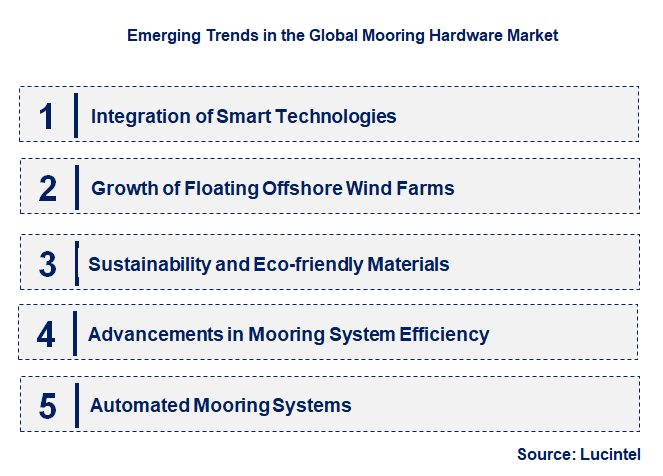
• Integration of Smart Technologies: The integration of IoT (Internet of Things) and sensor-based technologies in mooring hardware is a major trend, enabling real-time monitoring of mooring conditions such as tension, movement, and environmental factors. By incorporating sensors into mooring lines, anchors, and winches, operators can access continuous data, allowing for more precise adjustments and predictive maintenance. This trend improves operational efficiency, reduces risks of equipment failure, and enhances safety by providing early warning systems for potential hazards. Moreover, the data collected can be used for performance optimization and compliance with safety regulations.
• Growth of Floating Offshore Wind Farms: The increasing adoption of floating offshore wind farms is a significant driver of demand for advanced mooring hardware. These installations require highly specialized mooring systems that can withstand harsh marine environments and deep water conditions. Floating platforms, unlike traditional fixed-bottom wind turbines, necessitate flexible, robust mooring solutions capable of securing the structures while accommodating their movement. This trend is pushing the development of new materials and innovative mooring techniques to meet the unique challenges posed by floating wind farms, ultimately contributing to the expansion of renewable energy infrastructure.
• Sustainability and Eco-friendly Materials: Sustainability has become a central focus in the mooring hardware market, with increasing pressure to adopt eco-friendly materials and reduce the environmental impact of mooring systems. This includes the use of recyclable, biodegradable, and less toxic materials for anchors, chains, and ropes. Additionally, innovations in anti-corrosion coatings and sustainable manufacturing processes are helping reduce the carbon footprint of mooring hardware production. The move toward sustainable solutions not only addresses regulatory concerns but also caters to the growing demand from environmentally conscious industries aiming to minimize their ecological footprint.
• Advancements in Mooring System Efficiency: Efficiency improvements in mooring systems are becoming essential to accommodate larger and heavier vessels, including LNG carriers and ultra-large container ships. The focus is on enhancing the operational lifespan and strength of mooring hardware while minimizing maintenance costs. Developments in high-performance materials, such as high-strength synthetic fibers, and the use of automation in mooring operations are contributing to these efficiency gains. These systems are designed to reduce downtime, lower operating costs, and improve the overall reliability of mooring operations. In turn, they help meet the demands of growing shipping and offshore industries.
• Automated Mooring Systems: The rise of automation in mooring operations is a key trend that aims to improve safety, efficiency, and operational reliability. Automated mooring systems use advanced robotics and artificial intelligence (AI) to control the securing and releasing of vessels without human intervention. These systems offer faster turnaround times, reduced labor costs, and enhanced precision in mooring operations. By minimizing human error and exposure to hazardous marine environments, automated systems are improving safety standards and operational productivity, making them particularly attractive in sectors such as container shipping, oil rigs, and port operations. These trends are collectively reshaping the mooring hardware market, driving innovations in technology, sustainability, and efficiency. The increasing integration of smart technologies and automation is optimizing mooring operations, while the demand for eco-friendly solutions and the rise of offshore wind farms are pushing the development of specialized, sustainable hardware. As the maritime and offshore industries evolve, these trends will continue to redefine mooring systems, making them more efficient, environmentally friendly, and suited to the complex challenges of the modern maritime world.
• Introduction of High-Strength Synthetic Mooring Lines: High-strength synthetic mooring lines have emerged as a game-changer in the mooring hardware market. Materials like polyester, polypropylene, and aramid fibers are being increasingly used to replace traditional steel cables. These synthetic lines offer several advantages, including lighter weight, higher strength-to-weight ratios, greater flexibility, and easier handling. The adoption of synthetic lines has significantly reduced the overall weight of mooring systems, allowing for easier storage and installation. These developments are particularly beneficial for offshore platforms and vessels operating in deep-water environments, where the need for lightweight yet durable materials is critical.
• Advancements in Anchor Design for Floating Structures: New developments in anchor design have been essential in securing floating structures such as offshore wind turbines and floating oil platforms. Innovative anchor designs, such as suction anchors and drag embedment anchors, are being developed to improve performance in deep-water and high-pressure environments. These designs ensure that anchors can withstand the dynamic forces exerted on floating structures, ensuring stability and safety. With the rapid growth of floating offshore wind farms, these new anchor designs are critical in meeting the increasing demand for reliable mooring solutions in offshore renewable energy projects.
• Automated Mooring Systems: The development of automated mooring systems is revolutionizing mooring operations by reducing human error and increasing operational efficiency. Automated systems use robotics, sensors, and AI to moor and unmoor vessels without human intervention. These systems enhance safety by minimizing the need for manual labor in potentially hazardous conditions, improving precision, and reducing turnaround times. Automated mooring is becoming increasingly common in ports and offshore vessels, making mooring operations more efficient, cost-effective, and safer for workers. Additionally, automated systems help optimize the use of docking space, leading to better port management.
• Sustainable Materials and Eco-Friendly Coatings: Sustainability is a growing priority in the mooring hardware market, prompting manufacturers to develop environmentally friendly materials and coatings. Biodegradable, recyclable materials are being used for ropes, chains, and other hardware components, significantly reducing the environmental impact of mooring systems. In addition, eco-friendly anti-corrosion coatings are being introduced to extend the lifespan of mooring hardware and minimize maintenance needs. This move towards more sustainable practices is in response to increasing regulatory pressures and the industry’s growing commitment to reducing its carbon footprint, especially in the context of offshore energy production and shipping industries.
• Integration of Real-Time Monitoring and Smart Sensors: Real-time monitoring through IoT-enabled sensors is increasingly integrated into mooring systems, allowing operators to track mooring conditions such as line tension, environmental factors, and potential wear and tear. These sensors provide critical data that help operators perform predictive maintenance, avoiding costly breakdowns and ensuring that mooring hardware remains in optimal condition. Real-time monitoring enhances safety by providing early warning signals in the event of equipment failure or extreme weather conditions. This development is particularly valuable in offshore oil rigs and vessels, where the stakes for maintaining reliable mooring systems are high. These recent developments in the mooring hardware market are reshaping the industry by improving safety, efficiency, and environmental performance. High-strength synthetic mooring lines and advanced anchor designs cater to the growing needs of deep-water and floating structures, while automation and real-time monitoring stream operations and enhance operational safety. Using sustainable materials and coatings also aligns with the industry’s focus on reducing environmental impact. Collectively, these innovations are driving the market toward more robust, efficient, and eco-friendly mooring solutions, meeting the demands of the expanding offshore energy and maritime sectors.
• Offshore Wind Energy: As the world accelerates its transition to renewable energy, offshore wind farms represent a significant growth opportunity for the mooring hardware market. Offshore wind farms require advanced mooring systems that can withstand harsh ocean conditions while providing reliable anchorage for floating platforms. Innovations in lightweight, high-strength materials like composites and synthetic ropes are enabling the development of cost-effective mooring solutions for these applications. The growing investment in offshore wind energy, particularly in Europe, the U.S., and Asia-Pacific, is driving demand for more efficient and durable mooring hardware, positioning it as a high-potential market segment.
• Floating Oil and Gas Platforms: The demand for floating oil and gas platforms is another key growth opportunity for mooring hardware, driven by the growing exploration and production activities in deepwater and ultra-deepwater fields. These platforms require robust, flexible, and long-lasting mooring systems to endure extreme weather conditions and heavy operational loads. The development of advanced mooring systems, such as turret mooring and spread mooring systems, offers the ability to position and stabilize these floating platforms. Additionally, innovations in materials that resist corrosion and fatigue are enhancing the reliability of these mooring solutions, leading to increased adoption in oil and gas exploration.
• Port and Terminal Infrastructure: Port and terminal infrastructure is a vital segment of the mooring hardware market, with opportunities arising from the increasing volume of global shipping and trade. As container ships grow larger, ports require more advanced mooring systems that can accommodate bigger vessels and ensure safe docking operations. Automated and remotely monitored mooring systems are gaining traction as they improve operational efficiency and reduce the risk of human error. Moreover, environmentally friendly mooring solutions, such as those using eco-friendly materials or systems designed to minimize environmental impact, are gaining importance as sustainability becomes a key focus within the global shipping and port industries.
• Autonomous Shipping: Autonomous shipping is poised to transform the maritime industry and with it, the mooring hardware market. As the development of autonomous vessels progresses, the need for smart mooring systems capable of automatically docking and securing these ships without human intervention is becoming a critical requirement. These systems leverage technologies like IoT, AI, and dynamic positioning to enable vessels to moor efficiently in a variety of environmental conditions. The growth of autonomous shipping, driven by technological advancements and regulatory changes, offers a significant opportunity for innovation in mooring hardware, providing enhanced safety, efficiency, and cost-effectiveness in maritime operations.
• Offshore Aquaculture: Offshore aquaculture is an emerging market with significant growth potential for mooring hardware. As the demand for sustainable fish farming grows, offshore aquaculture farms are being established in open waters, requiring specialized mooring systems to anchor cages and platforms. These systems must endure challenging marine environments, such as strong currents and extreme weather. As offshore aquaculture expands, the need for durable, cost-effective, and environmentally friendly mooring solutions will continue to increase. Companies are focusing on developing corrosion-resistant materials and integrated systems that improve the stability and safety of offshore aquaculture operations, positioning this application as a growing market segment. The mooring hardware market is undergoing a transformation driven by significant growth opportunities across key applications. Offshore wind energy, floating oil and gas platforms, port and terminal infrastructure, autonomous shipping, and offshore aquaculture are all burgeoning sectors that present unique challenges and demand innovative mooring solutions. These opportunities are not only expanding the market but also encouraging the development of advanced, sustainable, and cost-effective mooring technologies. As the demand for safer, more efficient, and eco-friendly mooring solutions grows, the market is poised for continued innovation and expansion, benefiting from a wide range of technological advancements and strategic investments.
• Walsh Marine Products
• Sealite
• Delmar Systems & Vryhof
• Julius Marine
• Mooring Systems
• NexSens
• Marine Town
• Seasmart
• Badinotti
• Posidonia
• Chain
• Shackle
• Swivel
• Others
• Marine Industry
• Marine Fishery
• Others
• North America
• Europe
• Asia Pacific
• The Rest of the World
• United States: The U.S. has seen considerable advancements in mooring hardware, driven by the booming offshore oil and gas sector, as well as growing investments in offshore wind projects. Companies are integrating advanced materials like high-tensile steel and synthetic ropes for stronger, more durable mooring systems. Additionally, the U.S. Navy’s emphasis on innovation for maritime defense has fostered cutting-edge technology in mooring, including smart monitoring systems and automated mooring solutions. These innovations improve safety and efficiency in both commercial and military applications, and regulatory changes are encouraging more sustainable practices, boosting the demand for advanced mooring systems.
• China: China is increasingly focused on upgrading its mooring hardware, particularly to support its vast shipping and offshore oil industry. The country’s extensive investments in offshore energy, including floating wind farms, have led to significant developments in mooring systems. Chinese companies are enhancing the efficiency and resilience of their mooring solutions with an emphasis on reducing maintenance costs and increasing lifespan. Moreover, the Chinese government is pushing for eco-friendly maritime solutions, encouraging the use of sustainable materials in mooring hardware. This shift is driving both innovation and the adoption of automated mooring technologies across China’s vast coastlines.
• Germany: The German mooring hardware market is experiencing rapid technological innovation spurred by the country’s transition to renewable energy, including offshore wind farms. German manufacturers are increasingly adopting advanced materials like composites and high-strength alloys to create lighter, more efficient mooring solutions. Innovations in dynamic positioning systems are also being integrated into offshore platforms, allowing more precise and reliable mooring capabilities. Germany is focused on developing smart mooring technologies that reduce operational costs while improving safety and environmental performance. Furthermore, the country is pushing for more stringent regulatory frameworks that promote sustainable mooring practices in both the offshore energy and shipping sectors.
• India: India is witnessing growth in the mooring hardware market, fueled by the expansion of its offshore oil and gas sector and an emerging focus on renewable energy, particularly offshore wind. The country has been upgrading its port infrastructure, which is driving demand for enhanced mooring systems. Companies are focusing on cost-effective yet robust solutions, such as hybrid mooring systems combining traditional and modern technologies. Additionally, India’s focus on domestic manufacturing of mooring hardware is strengthening its market position, with increased local production of durable, high-performance materials designed to meet the challenges of India’s varied maritime environment.
• Japan: The Japanese mooring hardware market is advancing with a strong focus on technological innovation and disaster resilience. The country’s maritime sector, particularly its fleet of oil tankers and liquefied natural gas (LNG) carriers, is increasingly relying on advanced mooring systems that offer greater flexibility and security in harsh weather conditions. Japan is also investing heavily in offshore renewable energy, including floating solar and wind farms, necessitating the development of specialized mooring solutions. Additionally, Japanese companies are leveraging AI and IoT-based technologies to develop smart mooring systems capable of real-time performance monitoring and predictive maintenance, significantly improving operational efficiency.


• Walsh Marine Products
• Sealite
• Delmar Systems & Vryhof
• Julius Marine
• Mooring Systems
• NexSens
• Marine Town
• Seasmart
• Badinotti
• Posidonia Q5. Which mooring hardware market segment will be the largest in future? Answer: Lucintel forecasts that the chain is expected to witness the highest growth over the forecast period. Q6. In mooring hardware market, which region is expected to be the largest in next 5 years? Answer: APAC is expected to witness the highest growth over the forecast period. Q7. Do we receive customization in this report? Answer: Yes, Lucintel provides 10% customization without any additional cost.


Choose a license that fits your team. Instant PDF delivery.
Prices exclude taxes. Instant delivery. Custom licensing available on request.
Market Report · July 29, 2026
Market Report · July 20, 2026
Market Report · July 20, 2026
Trusted partner for strategic intelligence and business growth


Receive a complimentary market analysis tailored to your industry. Our analysts will identify key growth opportunities and competitive dynamics specific to your business.

Market size, growth rate, and key trend analysis for your specific sector.

Top competitor positioning and market share analysis.

Strategic recommendations backed by data-driven insights.
Get curated market intelligence and competitive moves straight to your inbox.
By subscribing, you agree to receive our monthly insights. Unsubscribe anytime.
Receive a complimentary market analysis tailored to your industry. Our analysts will identify key growth opportunities and competitive dynamics specific to your business.
Market size, growth rate, and key trend analysis for your specific sector.
Top competitor positioning and market share analysis.
Strategic recommendations backed by data-driven insights.
Get curated market intelligence, emerging trends, and competitive moves straight to your inbox each month.
By subscribing, you agree to receive our monthly insights. Unsubscribe anytime.
We'll send your sample report shortly.