
Market Report · May 18, 2026

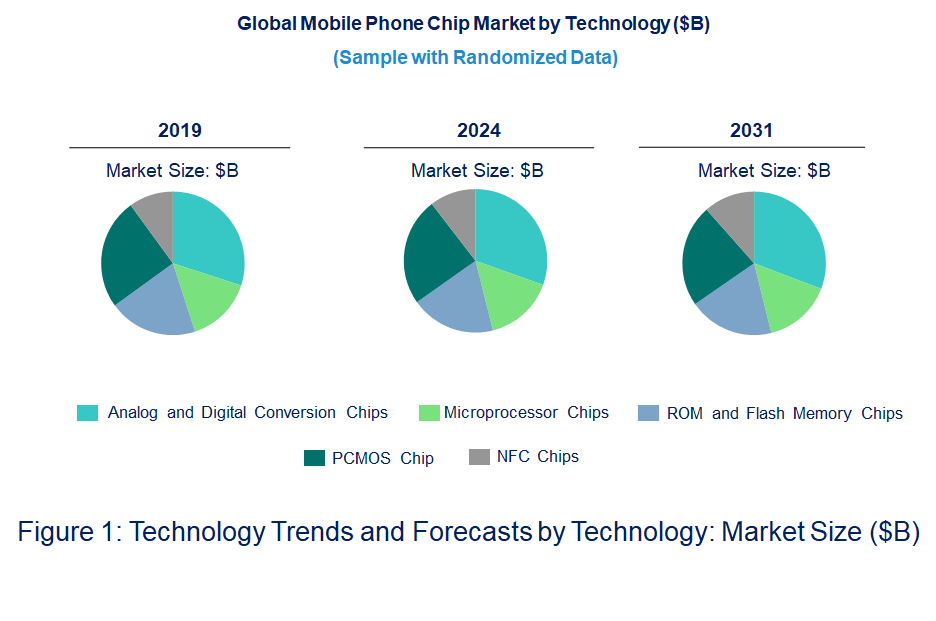
This market report covers trends, opportunities, and forecasts in the global mobile phone chip market to 2031 by technology (analog and digital conversion chips, microprocessor chips, rom and flash memory chips, pcmos chip, and nfc chips), application (smartphones and traditional phones), and region (North America, Europe, Asia Pacific, and the Rest of the World)
We'll send your sample report shortly.
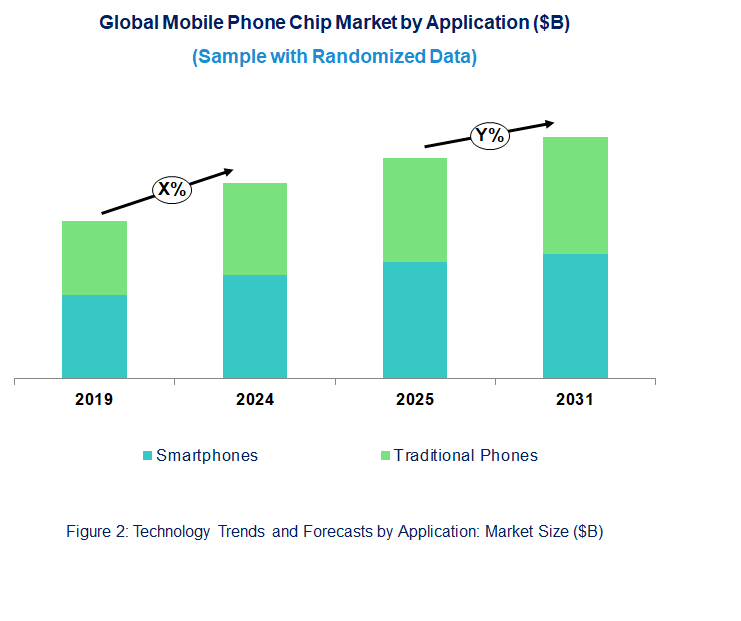
• Shift to 5G-Compatible Chips: The integration of 5G technology is a significant trend driving the mobile phone chip market. Manufacturers are developing 5G-compatible chips that support higher speeds, lower latency, and better connectivity. This shift is enabling smartphones to offer enhanced features like faster downloads, real-time streaming, and improved gaming experiences, accelerating the adoption of 5G networks worldwide.
• Advanced Multi-Core Processors: Multi-core processors are becoming increasingly common in smartphones, with chipsets now incorporating up to eight cores. These advanced processors improve performance and energy efficiency, allowing for better multitasking, enhanced gaming, and AI processing. The trend is critical for supporting the growing demand for high-performance applications, including virtual reality, gaming, and AI-driven apps.
• Integration of AI and Machine Learning: AI and machine learning (ML) are being integrated into mobile phone chips, allowing devices to perform tasks such as facial recognition, natural language processing, and image enhancement more efficiently. This trend is particularly important for enhancing user experiences in areas like photography, battery optimization, and personalized recommendations, making smartphones smarter and more intuitive.
• Advancements in Memory and Storage Technologies: The demand for higher storage capacities and faster memory is driving advancements in flash memory and ROM chips. Emerging technologies like 3D NAND and UFS (Universal Flash Storage) are offering higher densities, faster read/write speeds, and better power efficiency. These developments allow for seamless app performance, improved gaming, and increased overall storage capabilities, meeting consumer demands for larger apps and media storage.
• Energy-Efficient Chip Designs: With the increasing reliance on smartphones, energy efficiency has become a major focus. New chip designs are focusing on reducing power consumption without compromising performance. Low-power chips with enhanced energy-saving features are crucial for extending battery life and improving device longevity, addressing one of the most significant consumer concerns in mobile phones today. The mobile phone chip market is being reshaped by several technological trends, including the transition to 5G-compatible chips, the rise of multi-core processors, and the integration of AI and machine learning. Advances in memory and storage technologies, along with innovations in energy-efficient chip designs, are further driving the evolution of smartphones. These trends are creating more powerful, smarter, and energy-efficient mobile devices that cater to the growing consumer demand for faster, more seamless experiences.
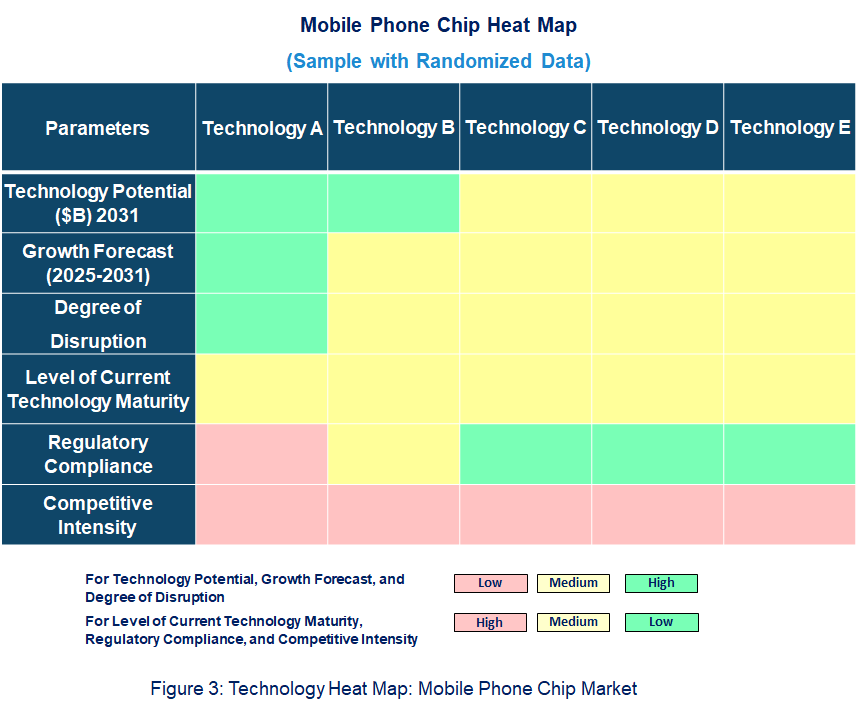
• Potential in Technology: As the backbone of mobile phones, mobile phone chips have tremendous prospects for development in computing, AI, 5G/6G connectivity, and energy efficiency. SoC (System on chip) integration, AI accelerators, as well as other innovations on industry architecture with low power consumption, continue to improve performance, user experience, and battery life. Further evolution in chiplets, 3D stacking to advanced process nodes like 3nm and 2nm will improve formidably, fueling new power-hungry applications like augmented reality, edge AI, and seamless IoT connectivity.
• Degree of Disruption: The era of unrivaled change is highly opportune as every mobile chipset generation advances upon the previous one, creating and redefining the key capability features of a device, resulting in a drastic shift in technologies serving telecommunications, consumer electronics, and even healthcare. New business models focused on AI-driven autonomous services and edge computing are enabled by advanced chips, complementing the digital shift in transformation services across the globe.
• Current Technology Maturity Level: Mobile chip technology is a mature which is the case with industry leaders like Qualcomm, Apple, and MediaTek producing highly optimized and efficient SoCs. There's a rapid pace of innovation cycle, however, ensuring that the evolving consumer demands will always be met promptly.
• Regulatory Compliance: Compliance regulations, as with the rest of the telco world, the device should at a minimum level satisfy the international Electromagnetic Compatibility standards for EMC, radiation (SAR limits), and be environmentally framed by RoHS and REACH compliance. In addition, compliance with telecom standards (3GPP) together with Cybersafe laws guarantees device security, interoperability within networks, and protection of stored personal information in the regions around the world.
• Apple: It has continued to innovate with its custom-designed A-series chips, such as the A16 and A17, which are integral to the performance of its iPhones. These chips integrate powerful CPU and GPU cores, improve battery efficiency, and offer advanced AI processing capabilities. Apple’s transition to using its chips has allowed for tighter integration with its hardware and software, resulting in highly optimized performance for its devices.
• Intel Corporation: It has been focusing on 5G technology and AI chipsets, with its efforts centered around providing faster, more efficient mobile connectivity. Intel’s partnership with key players in the telecom industry aims to bring advanced 5G capabilities to smartphones, while its AI-driven chips enhance mobile device functionality in areas such as voice recognition, camera technology, and user experience.
• NVIDIA Corporation: It has seen growth in the mobile phone chip market with its focus on AI and GPU technologies. The company’s mobile GPUs, particularly used in gaming smartphones, are pushing the boundaries of high-end gaming performance. NVIDIA’s advancements in AI-based chipsets, such as the Xavier and Orin platforms, are enabling powerful mobile AI applications, enhancing real-time image processing, and optimizing battery life.
• Samsung Electronics: It has made significant strides in the development of its Exynos chipsets, which are now used in its flagship Galaxy smartphones. Samsung is increasingly integrating 5G, AI, and advanced GPU technologies into its chips, enhancing the performance of its mobile devices. Additionally, Samsung's collaboration with foundries like TSMC for the manufacturing of its chips helps the company stay competitive in the evolving mobile chip market.
• Taiwan Semiconductor Manufacturing Company: TSMC plays a crucial role as a leading chip manufacturer, partnering with companies like Apple, NVIDIA, and AMD. TSMC’s advanced manufacturing processes, including 7nm and 5nm technologies, are integral to producing cutting-edge chips for mobile phones. TSMC’s consistent innovation in semiconductor fabrication has made it a key player in the mobile chip supply chain.
• Google LLC: It has shifted its focus towards developing its AI-powered chips, such as the Tensor chip, which debuted in the Pixel 6 smartphones. The Tensor chip is designed to enhance mobile AI and machine learning capabilities, such as voice recognition, image processing, and augmented reality. By integrating AI directly into its chips, Google aims to improve the user experience and performance of its smartphones, differentiating itself in the competitive market. These developments highlight the ongoing efforts by key players in the mobile phone chip market to push technological boundaries. Through custom chip designs, 5G integration, AI advancements, and better energy efficiency, these companies are significantly influencing the direction of the smartphone industry. Their innovations are driving performance improvements and enabling new features, ensuring that future mobile devices continue to meet consumer demands for higher speed, greater functionality, and enhanced user experiences.
• Increasing Demand for 5G Connectivity: The global rollout of 5G networks is a major driver for the mobile phone chip market. As smartphones transition to 5G, the need for chips that support faster speeds, lower latency, and higher data transfer rates is accelerating. This pushes chip manufacturers to innovate, resulting in enhanced mobile experiences.
• Rising Adoption of AI and Machine Learning: AI and machine learning capabilities in smartphones are driving chip development. The integration of dedicated AI processing units in chips enhances user experiences through features like real-time photo enhancements, voice assistants, and personalized recommendations. AI-driven chips are becoming essential for improving the functionality and efficiency of modern smartphones.
• Increasing Smartphone Performance Requirements: Consumers are demanding more powerful smartphones with enhanced processing capabilities for tasks like gaming, streaming, and multitasking. This demand has led to the development of multi-core processors and advanced GPUs in mobile chips, which provide faster performance and smoother experiences, boosting the overall market.
• Miniaturization of Components for Better Efficiency: The push for thinner, lighter smartphones has led to the miniaturization of chips. Smaller, more efficient chips that consume less power and offer higher processing capabilities are becoming essential. This trend drives continuous innovation in semiconductor technologies, allowing mobile phone manufacturers to create sleeker devices without compromising performance. Challenges:
• High Manufacturing Costs: Advanced chip manufacturing, particularly for 5G and AI-integrated chips, involves complex processes and significant investment. The high costs associated with research, development, and production of next-gen mobile phone chips can be a barrier to market expansion, especially for smaller manufacturers and emerging markets.
• Thermal Management and Power Consumption: As mobile chips become more powerful, managing heat dissipation and power consumption becomes a major challenge. Ensuring that chips remain efficient while avoiding overheating is critical, especially with the increasing demand for higher performance in areas like gaming, AI, and high-speed data processing.
• Supply Chain Vulnerabilities: The mobile phone chip market faces significant supply chain disruptions due to global semiconductor shortages and geopolitical tensions. Limited availability of raw materials, disruptions in manufacturing, and logistics challenges can lead to delays and increased prices, impacting production timelines for mobile phones.
• Regulatory and Environmental Compliance: Mobile chip manufacturers must comply with increasingly stringent environmental regulations such as RoHS (Restriction of Hazardous Substances) and WEEE (Waste Electrical and Electronic Equipment). Adhering to these regulations adds complexity to the production process and requires continuous investment in sustainable technologies and eco-friendly materials. The mobile phone chip market is being shaped by the rising demand for 5G connectivity, AI integration, and high-performance smartphones, pushing the industry toward innovation in chip technology. However, challenges such as high manufacturing costs, thermal management, supply chain disruptions, and regulatory compliance are hindering the market's full potential. Addressing these challenges while leveraging emerging technologies will ensure continued growth in the mobile phone chip market, ultimately driving the next generation of smartphones.
• Apple
• Intel Corp
• NVIDIA Corp
• Samsung Electronics
• Taiwan Semiconductor Manufacturing
• Google LLC
• Technology Readiness by Technology Type: The technology readiness for various chip types varies. Analog and Digital Conversion Chips are well-established and widely used in mobile audio and video processing. Microprocessor chips are highly competitive, with companies like Qualcomm, Apple, and Samsung consistently advancing their multi-core designs for better performance and energy efficiency. ROM and Flash Memory Chips, driven by advancements in 3D NAND technology, are mature, with major players like Micron and Samsung leading the market. PCMOS chips, while still gaining traction, are increasingly used in mobile devices due to their energy efficiency and reliability. NFC chips are already widely adopted, particularly in smartphones for contactless payments and data transfer, but the technology is evolving with higher security features. Each technology faces strong competition but is steadily progressing toward greater integration and efficiency, with regulatory compliance playing a key role in market access.
• Competitive Intensity and Regulatory Compliance: The competitive intensity in the mobile phone chip market is high, with companies constantly innovating to differentiate their chip solutions. Major players like Qualcomm, Intel, and Samsung compete fiercely across categories such as microprocessors, memory chips, and NFC solutions. Regulatory compliance is critical, especially with restrictions on hazardous substances (RoHS) and compliance with environmental standards. Chip manufacturers must ensure their products meet these stringent regulations to access global markets. For instance, the rapid adoption of 5G chips and AI-integrated microprocessors requires adherence to evolving standards for electromagnetic emissions and safety. Additionally, as mobile devices become more multifunctional, compliance with privacy and security regulations is becoming essential, especially for NFC chips involved in mobile payments and data transfer.
• Disruption Potential by Technology Type: The mobile phone chip market is experiencing significant disruption with technologies like Analog and Digital Conversion Chips, Microprocessor Chips, ROM and Flash Memory Chips, PCMOS Chips, and NFC Chips. Analog and Digital Conversion Chips enable high-quality audio and video, enhancing multimedia experiences. Microprocessor chips, central to mobile performance, have evolved into multi-core processors that drive speed and power efficiency, significantly improving multitasking and gaming. ROM and Flash Memory Chips have seen substantial advancements with 3D NAND technology, offering higher storage capacities and faster read/write speeds. PCMOS chips are becoming essential in mobile phones due to their low power consumption and integration benefits, making devices more efficient. NFC Chips are revolutionizing mobile payments and contactless transactions, creating new applications for smartphones in finance, retail, and transportation. These technologies are transforming the way mobile devices function, providing a more seamless, faster, and connected user experience.
• Analog and Digital Conversion Chips
• Microprocessor Chips
• ROM and Flash Memory Chips
• PCMOS Chip
• NFC Chips
• Smartphones
• Traditional Phones
• North America
• Europe
• Asia Pacific
• The Rest of the World
• Latest Developments and Innovations in the Mobile Phone Chip Technologies
• Companies / Ecosystems
• Strategic Opportunities by Technology Type


Choose a license that fits your team. Instant PDF delivery.
Prices exclude taxes. Instant delivery. Custom licensing available on request.
Market Report · May 18, 2026
Market Report · May 18, 2026
Market Report · May 18, 2026
Trusted partner for strategic intelligence and business growth


Receive a complimentary market analysis tailored to your industry. Our analysts will identify key growth opportunities and competitive dynamics specific to your business.

Market size, growth rate, and key trend analysis for your specific sector.

Top competitor positioning and market share analysis.

Strategic recommendations backed by data-driven insights.
Get curated market intelligence and competitive moves straight to your inbox.
By subscribing, you agree to receive our monthly insights. Unsubscribe anytime.
Receive a complimentary market analysis tailored to your industry. Our analysts will identify key growth opportunities and competitive dynamics specific to your business.
Market size, growth rate, and key trend analysis for your specific sector.
Top competitor positioning and market share analysis.
Strategic recommendations backed by data-driven insights.
Get curated market intelligence, emerging trends, and competitive moves straight to your inbox each month.
By subscribing, you agree to receive our monthly insights. Unsubscribe anytime.
We'll send your sample report shortly.