
Market Report · July 15, 2026

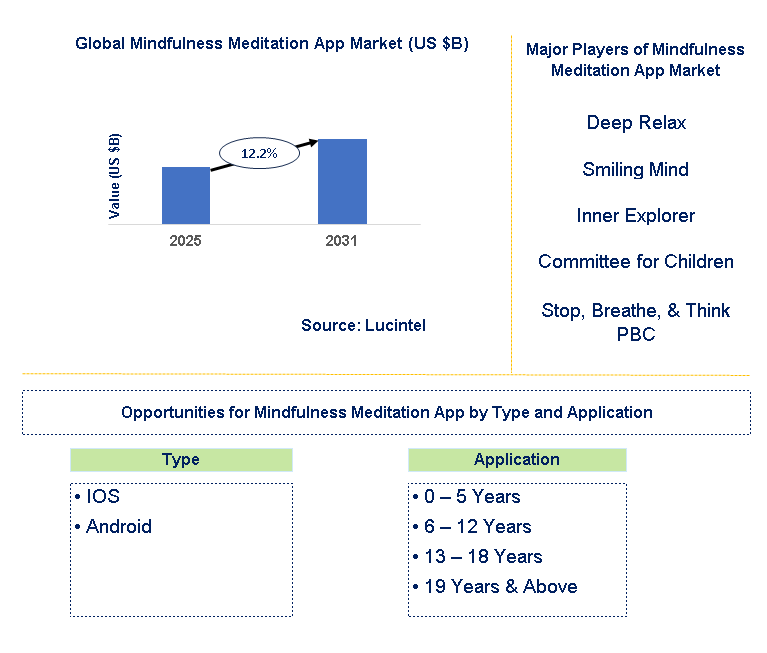
Key data points: The growth forecast = 12.2% annually for the next 7 years. Scroll below to get more insights. This market report covers trends, opportunities and forecasts in mindfulness meditation app market to 2031 by type (IOS and android), application (0 – 5 years, 6 – 12 years, 13 – 18 years, and 19 years & above), and region (North America, Europe, Asia Pacific, and the Rest of the World)
We'll send your sample report shortly.
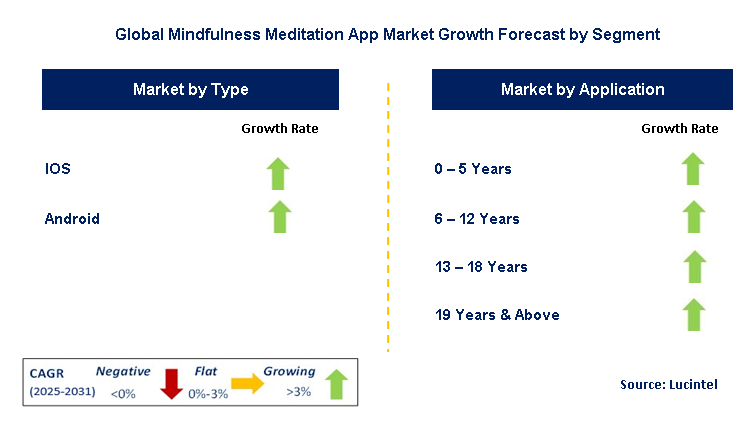
• Lucintel forecasts that, within the type category, android is expected to witness higher growth over the forecast period.
• Within the application category, 0 – 5 year is expected to witness the highest growth.
• In terms of region, APAC is expected to witness the highest growth over the forecast period. Gain valuable insights for your business decisions with our comprehensive 150+ page report. Sample figures with some insights are shown below.
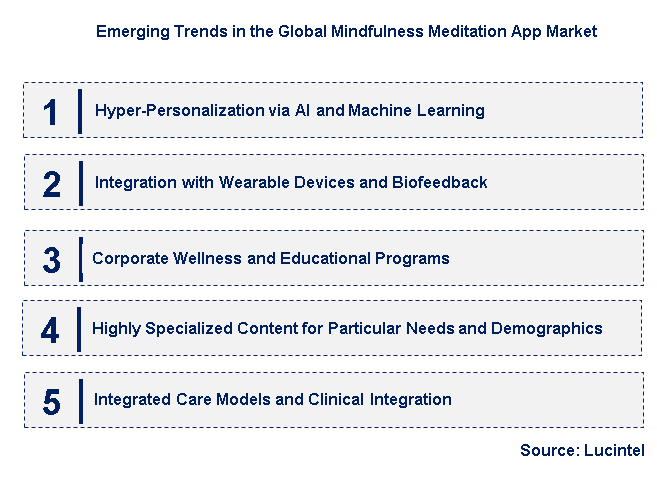
• Hyper-Personalization via AI and Machine Learning: This includes the application of artificial intelligence and machine learning techniques to customize meditation experiences exactly to the unique user requirements and preferences. AI monitors user behavior, pace, mood states (quite possibly through self-reporting or synchronization with other health data), and even physiological states. This enables apps to automatically alter content, recommend particular types of meditation, or alter session durations. The effect is a more compelling and effective user experience, as the content is perceived as specially applicable, encouraging more routine in practice and potentially resulting in improved stress reduction and mental clarity outcomes.
• Integration with Wearable Devices and Biofeedback: Mindfulness apps are progressively integrating with wearable devices like smartwatches and fitness trackers in order to include real-time biofeedback. This implies that when a person is meditating, the app has the ability to track physiological measures such as heart rate, heart rate variability, and even skin conductance. The app subsequently gives instant visual or audio feedback to the individual regarding their physiological condition, allowing them to comprehend more effectively how their practice is affecting their body. This increases the effectiveness of meditation as it enables users to monitor their relaxation responses objectively and make necessary adjustments to their technique.
• Corporate Wellness and Educational Programs: There is considerable growth in mindfulness meditation apps being embraced by companies and schools as part of holistic wellness initiatives. Organizations are realizing the benefits of mindfulness on workers’ well-being, stress reduction, work performance, and general workplace environment. Schools and universities are also incorporating these apps to assist students in managing anxiety, enhancing concentration, and building emotional resilience. This trend extends the market potential beyond solo consumers to include accessibility in controlled environments, enhancing collective well-being.
• Highly Specialized Content for Particular Needs and Demographics: The market is shifting away from generic mindfulness to creating highly specialized content targeted at specific user needs and demographics. This encompasses sleep improvement meditations, anxiety management, bereavement, chronic pain management, and even particular professional difficulties. In addition, apps are creating content targeting specific age segments, including children, adolescents, and elderly, which may include gamification or age-specific storytelling. This niche focus enables apps to address targeted markets, making more relevant and effective interventions for various user groups and their respective mental health trajectories.
• Integrated Care Models and Clinical Integration: A rising trend is the incorporation of mindfulness apps into "blended care" approaches, with digital mindfulness tools supplementing conventional mental health treatments or coaching. Certain apps are collaborating with medical providers, providing content written by therapists or integrating with telemedicine platforms. This has made it possible for a broader perspective on mental health whereby apps are used as an accessible and convenient support structure between therapy sessions or as a prevention tool that is recommended by medical experts. This movement indicates a recognition of mindfulness apps as valid parts of mental health treatment. These new trends are deeply transforming the mindfulness meditation app market by compelling a move towards more personalized, data-based, and integrated solutions. The hyper-personalization focus on AI-enabling apps is becoming more prominent, making apps more sensitive to the unique user inputs, boosting interaction and efficacy. Wearables and biofeedback integration are offering users concrete proof of their improvement by creating a stronger sense of self-awareness. In the process of venturing into corporate wellness and education markets, mindfulness is going mainstream and expanding its reach. Lastly, the emergence of specialized content and hybrid care models is making mindfulness apps indispensable, all-purpose tools in an inclusive mental health system, displacing them from niche wellness tools to part of standard modern health management.
• More Emphasis on Mental Health Consciousness and Destigmatization: One major development is the heightened international emphasis on mental health consciousness and the continued push towards destigmatizing mental illness. This cultural change, in part hastened by worldwide events, has resulted in higher acceptance and active seeking of solutions for mental well-being. Apps providing mindfulness meditation have benefited directly from this, as the apps provide an easy, personal, and frequently inexpensive portal for the person looking to cope with stress, anxiety, and enhance emotional strength without the perceived obstacles of standard therapy.
• Technological Advances: AI, VR, and Wearable Incorporation: Substantial technological developments have had a serious impact on the market. The integration of Artificial Intelligence (AI) enables personalized meditation guidance and adaptive content, improving user engagement. Virtual Reality (VR) is becoming a niche segment for immersive meditation experiences. Most importantly, integration with wearable devices gives biofeedback, enabling users to track physiological responses such as heart rate while meditating. These advancements provide a more rich, interactive, and data-driven experience, going beyond simple audio guides.
• Diversification into Corporate Wellness Programs: Another prominent trend is the mass adoption of mindfulness meditation apps by corporate wellness initiatives. Businesses are now spending more money on these apps to maintain employee mental well-being, enhance productivity, and mitigate stress-induced absenteeism. This is a testament to an increasing awareness among employers of the correlation between employee health and business success. These associations represent a lucrative B2B revenue source for app vendors and expand the user base by incorporating mindfulness into workaday life.
• Diversification of Content and Specialized Offerings: The market has experienced widespread diversification of content from the standard generic guided meditations. The developers are making specialized applications based on specific requirements like enhancing sleep, chronic pain management, enhancing concentration for work, or aiding emotional regulation during turbulent times. This specialization serves a broader set of user needs and differentiates apps in a crowded marketplace, enabling users to discover programs that specifically meet their individual issues, thus raising user retention and perceived value.
• Dominance through Freemium and Subscription Model: The freemium and subscription-based business models dominate the app market for mindfulness meditation. Most apps provide introductory content or simple meditations for free, but the advanced features, extensive libraries, and customized programs are paid-for through subscription. The model accommodates preview of content by users before deciding to buy, and offers developers a predictable recurring revenue. The snag is how to get free users into paying subscribers without showing enough value. These advancements are profoundly influencing the mindfulness meditation app market by increasing accessibility, personalization, and incorporation into daily life. Increased mental health consciousness has driven demand, and technological advancements are enhancing the user experience. Corporate wellness expansion has expanded the market scope, and diversification of content guarantees applicability to various needs. The popularity of freemium and subscription models defines the economic landscape, forcing companies to continually innovate and offer strong value to convert and retain users in a competitive marketplace.
• Corporate Wellness Programs: This application entails adapting mindfulness meditation apps for enterprise to integrate within their employee wellness programs. The opportunity is in offering customized or enterprise-level subscriptions that assist employees in reducing job-stress, increasing concentration, and enhancing mental resilience. Impact: This generates a huge B2B revenue source for app developers, aside from individual consumer subscriptions. It also expands the user pool, as businesses increasingly see the connection between staff wellness, productivity, and lower healthcare costs, making mindfulness an important business asset.
• Clinical and Therapeutic Support: The employee stress and mental health market is a huge growth opportunity when developing mindfulness applications for improving clinical environments and as adjuncts to standard therapy. This might include apps for particular chronic mental conditions (e.g., anxiety disorders, depression), frequently with evidence-based treatment plans. Impact: This validates mindfulness apps as legitimate within the healthcare system. It offers therapists a scalable patient homework and self-management resource, and patients convenient, accessible support between sessions, with potential for enhanced treatment adherence and outcomes, and opening up reimbursement streams.
• Educational Institutions: Reaching schools, colleges, and universities with student- and faculty-specific mindfulness programs is another important area of growth. Such applications can assist students in managing stress during exam times, enhance concentration, and build emotional intelligence. Impact: This embeds mindfulness practice at a core level, familiarizing an entire generation with digital wellness tools. It can result in better academic scores, diminished behavioral problems, and greater overall well-being among students, building long-term users and positive societal influence.
• Niche Specialist Markets: Creating highly specialized apps or content modules within established apps to meet a particular, acute need presents considerable potential. A few examples include guided meditations for patients with chronic pain, sleep programs for insomniacs, or mindfulness programs for caregivers. Impact: This enables app providers to address underserved markets with very exact problems. By providing solution-oriented products, these apps can show distinct value and impact, resulting in increased user activity, deeper retention, and possibly premium pricing, as they are solving important quality-of-life problems.
• Integration with Digital Health Platforms and Wearables: The strategic potential here is in smooth integration with more extensive digital health platforms, electronic medical records, and a greater range of wearable devices (not merely smartwatches). This might involve integration with telemedicine platforms, mental health symptom trackers, or nutrition and fitness apps. Effect: This forms a complete digital wellness ecosystem in which mindfulness is an integral part of a person’s overall health management. It increases data insights, enables more targeted interventions, and establishes mindfulness apps as the core of end-to-end digital health strategies. These opportunities are taking a huge toll on the mindfulness meditation app market by propelling its growth beyond being a mere consumer product. By planning to reach corporate well-being, clinical care, schools, specialist niches, and connect with wider digital health platforms, the market is being converted into a multi-dimensional business. This strategy guarantees continued growth, widens user bases, increases the perceived value and credibility of mindfulness practices, and establishes these apps as part of mainstream health and wellness solutions.
• Deep Relax
• Smiling Mind
• Inner Explorer
• Committee for Children
• Stop, Breathe, & Think PBC
• The Mindfulness App
• Mindfulness Everywhere
• Ten Percent Happier
• Breethe
• Insights Network
• IOS
• Android
• 0 – 5 Years
• 6 – 12 Years
• 13 – 18 Years
• 19 Years & Above
• North America
• Europe
• Asia Pacific
• The Rest of the World
• United States: The United States continues to be a powerhouse in the mindfulness meditation app marketplace, with industry giants such as Calm and Headspace setting the pace. Recent trends have seen Headspace incorporate its content into clinical coaching and therapy services, signaling a movement towards comprehensive mental health platforms. Corporate wellness initiatives are increasingly embracing mindfulness apps, illustrated by businesses such as Inner Explorer partnering with schools. As app usage peaked during the pandemic, the market remains strong, fueled by an enduring focus on mental wellness and a proclivity for all-encompassing digital wellness solutions.
• China: China is experiencing fast growth in the market for mindfulness meditation apps, fueled by growing awareness of mental health, mass adoption of smartphones, and cultural acceptance of holistic wellness. Heartly Lab, Tide, Now Meditation, and Flow are on the rise. The market is enhanced by the complementarities of latest technologies like artificial intelligence and virtual reality, driving user engagement by offering personalized and immersive experiences. Government initiatives towards mental health and digital health solutions also create a conducive scenario for the growth of the market, with paid subscription being a major source of revenue share.
• Germany: Although certain detailed recent developments for Germany are not more vigorously featured in general market summaries, overall growth in the broader European market, including Germany, is being spurred by greater awareness and adoption rates for mental health solutions. Major global players such as Headspace and Calm are present in the German market with their services aimed at treating stress, anxiety, and sleep disorders. The focus on European Union digital health implies a gradual incorporation of mindfulness apps into wellness regimens, although market information that is app-specific to recently developed German apps isn’t available in sweeping reports.
• India: India’s market for mindfulness meditation apps is seeing tremendous growth, estimated to achieve a considerable value by 2032. Its cause can be linked to mounting awareness of mental health, especially fueled by the COVID-19 pandemic, and an astounding boost in smartphone penetration. There is also an emerging trend toward apps that blend technology with human contact, proving users’ need for both automated assistance and true guidance. Important players such as Wyse are broadening their AI-based services, and international apps such as Calm and Headspace are picking up pace, with Android platforms leading the way owing to their huge coverage.
• Japan: Japan’s mental health application market, including mindfulness meditation apps, is anticipated to expand considerably. This expansion is fueled by rising smartphone penetration, growing cases of mental illness, and heightened demand for preventive care. In spite of a cultural reluctance in the past to embracing meditation apps because of language gaps and cultural predisposition toward "focused attention" as a natural behavior, key international players such as Headspace and Calm, and local players such as Awarif, remain active. The industry is witnessing a move toward focusing on the psychological damage of a high-pressure workplace culture and social pressures.


• Deep Relax
• Smiling Mind
• Inner Explorer
• Committee for Children
• Stop, Breathe, & Think PBC
• The Mindfulness App
• Mindfulness Everywhere
• Ten Percent Happier
• Breethe
• Insights Network Q5. Which mindfulness meditation app market segment will be the largest in future? Answer: Lucintel forecasts that, within the type category, android is expected to witness higher growth over the forecast period. Q6. In mindfulness meditation app market, which region is expected to be the largest in next 5 years? Answer: In terms of region, APAC is expected to witness the highest growth over the forecast period. Q7. Do we receive customization in this report? Answer: Yes, Lucintel provides 10% customization without any additional cost.


Choose a license that fits your team. Instant PDF delivery.
Prices exclude taxes. Instant delivery. Custom licensing available on request.
Market Report · July 15, 2026
Market Report · June 26, 2026
Market Report · June 24, 2026
Trusted partner for strategic intelligence and business growth


Receive a complimentary market analysis tailored to your industry. Our analysts will identify key growth opportunities and competitive dynamics specific to your business.

Market size, growth rate, and key trend analysis for your specific sector.

Top competitor positioning and market share analysis.

Strategic recommendations backed by data-driven insights.
Get curated market intelligence and competitive moves straight to your inbox.
By subscribing, you agree to receive our monthly insights. Unsubscribe anytime.
Receive a complimentary market analysis tailored to your industry. Our analysts will identify key growth opportunities and competitive dynamics specific to your business.
Market size, growth rate, and key trend analysis for your specific sector.
Top competitor positioning and market share analysis.
Strategic recommendations backed by data-driven insights.
Get curated market intelligence, emerging trends, and competitive moves straight to your inbox each month.
By subscribing, you agree to receive our monthly insights. Unsubscribe anytime.
We'll send your sample report shortly.