
Market Report · May 18, 2026

This market report covers trends, opportunities, and forecasts in the global mind control vr technology market to 2031 by technology (invasive and non-invasive), application (entertainment, medical, and others), and region (North America, Europe, Asia Pacific, and the Rest of the World)
We'll send your sample report shortly.
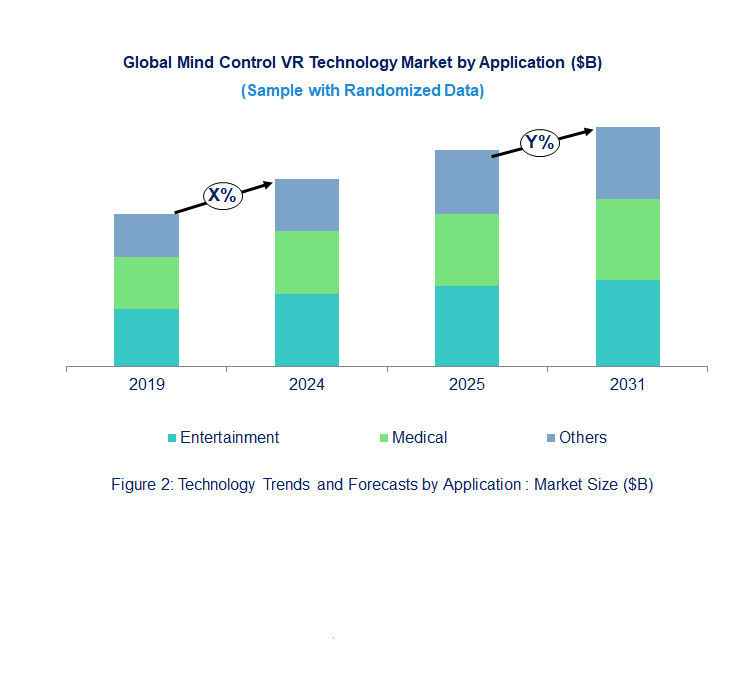
• Non-Invasive Brain-Computer Interfaces (BCIs): Non-invasive methods, such as EEG (electroencephalography), are becoming more refined, allowing users to control VR systems without surgical intervention. This trend has expanded the market to wider audiences, increasing the adoption of mind-controlled VR technologies.
• Integration of AI with VR and BCI: Artificial Intelligence (AI) is being integrated with BCI technology, enabling smarter and more responsive VR environments. AI-driven systems can better interpret brain signals, leading to more accurate control of VR experiences.
• Advancements in Wearable Devices: The development of lightweight, comfortable wearable devices for mind control is enhancing user experience. This trend makes it easier to engage with VR environments, increasing the appeal of the technology for gaming and medical applications.
• Personalized User Experience: Personalized VR experiences powered by BCI technology are becoming a key trend. By analyzing neural activity, the system can adjust the VR content to match the user’s cognitive state, creating more immersive and tailored experiences.
• Medical Applications of Mind-Controlled VR: The use of mind-controlled VR in medical settings is expanding, particularly in therapy and rehabilitation. It is being applied to help patients with neurological disorders, mental health conditions, and physical rehabilitation, proving its effectiveness in various therapeutic contexts. These technology trends are reshaping the mind control VR technology market by improving accessibility, enhancing user experiences, and enabling new applications in both entertainment and healthcare. As these technologies continue to evolve, they will play a pivotal role in transforming the way we interact with VR environments.
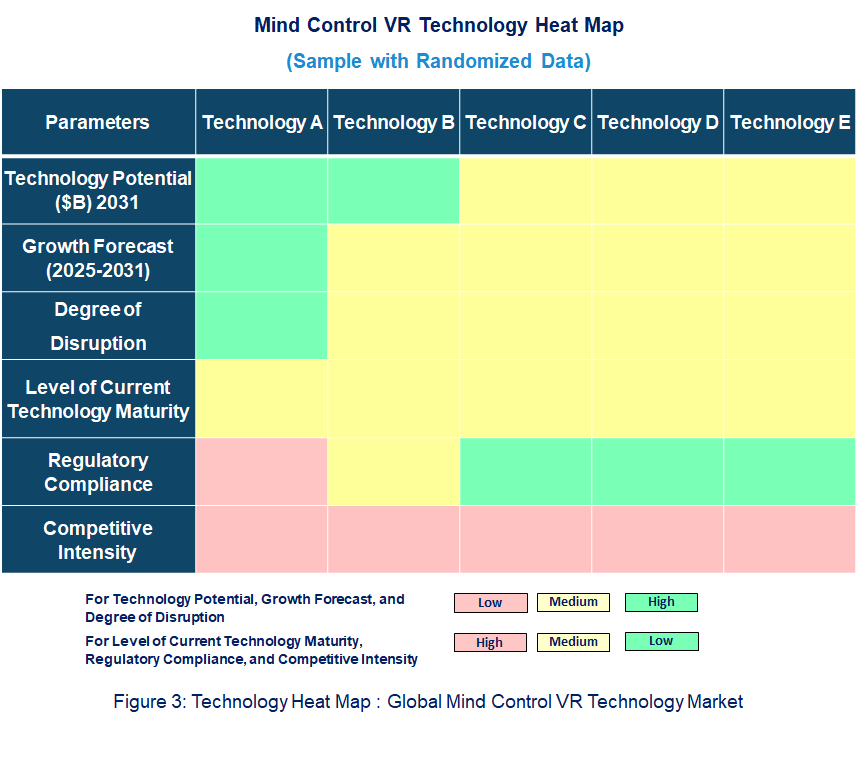
• Technology Potential: Mind Control VR has the potential to radically transform industries by enabling more immersive and intuitive user interactions. In healthcare, it could aid in rehabilitation, allowing patients with neurological conditions to control prosthetics or engage in virtual therapies. In gaming and entertainment, it opens up the possibility of fully immersive experiences, where the mind controls the virtual environment directly, bypassing traditional input devices.
• Degree of Disruption: This technology could disrupt traditional methods of human-computer interaction, particularly in the gaming and healthcare sectors. By eliminating the need for physical controllers or external devices, it can enhance the user experience, making VR more accessible and intuitive. In healthcare, it could reduce reliance on conventional rehabilitation methods, offering more personalized and effective treatments.
• Level of Current Technology Maturity: While the technology has seen significant progress, particularly in non-invasive BCIs, it is still in the early stages of widespread adoption. The technology is functional but not yet fully optimized for large-scale use, particularly due to issues like signal accuracy, device comfort, and cost.
• Regulatory Compliance: As a technology that interacts directly with the brain, regulatory compliance is crucial. In medical applications, BCIs must adhere to strict health and safety regulations, including FDA approvals for medical devices and data protection laws like HIPAA and GDPR to ensure privacy and security of neural data. Mind control VR technology holds transformative potential across various sectors, with the ability to disrupt traditional interfaces and enhance user experiences. Overcoming current technical challenges and ensuring regulatory compliance will be essential for realizing its full capabilities.
• MindMaze: MindMaze has been at the forefront of integrating VR and brain-computer interface (BCI) technologies, with their groundbreaking work in neuro-rehabilitation. Their solutions are being used to treat patients with neurological disorders, including stroke and traumatic brain injuries, helping individuals recover motor skills through immersive VR environments.
• Emotiv: Emotiv has focused on developing advanced EEG headsets that enable non-invasive brain control for VR applications. They have significantly advanced the ability to map brain signals, which allows for more seamless integration with VR platforms, providing users with greater interaction and control through thought alone.
• EyeMynd: EyeMynd has made strides in eye-tracking technology combined with brain activity monitoring, creating more immersive and intuitive VR experiences. Their work focuses on enhancing the accuracy of eye movements, which can now be used to control VR interfaces with minimal input, improving user experience and accessibility.
• Cognixion: Cognixion is leading the charge in the development of neurotechnology applications aimed at improving communication for individuals with disabilities. Their recent VR technology allows users with speech impairments to communicate more effectively by translating neural signals into text or voice commands, thus offering a unique solution in the healthcare sector.
• Neurable: Neurable has been focusing on the gaming aspect of the market, creating VR environments controlled by brain activity. Their recent collaborations with gaming companies allow users to control gameplay directly with their minds, transforming the entertainment experience and opening doors for mind-controlled gaming innovations. These developments from industry leaders are driving innovation in the mind control VR technology market. Through advances in non-invasive technology, AI integration, and specialized applications in healthcare and entertainment, these companies are pushing the boundaries of what is possible with mind-controlled VR systems.
• Technological Advancements in BCI: Advancements in brain-computer interface technology, particularly non-invasive methods, are providing new opportunities for the growth of mind-controlled VR systems. These improvements make the technology more accessible, reliable, and user-friendly.
• Increasing Demand in Healthcare Applications: The growing adoption of VR technologies in healthcare, particularly for rehabilitation and mental health treatments, is a key driver for the market. Mind-controlled VR provides a unique, immersive treatment method for patients with neurological disorders or psychological conditions.
• Expanding Entertainment Applications: The demand for immersive gaming and entertainment experiences has driven the adoption of VR technologies. As mind-controlled VR becomes more advanced, it offers gamers a more interactive and engaging experience, boosting market interest.
• Enhanced AI and Machine Learning Integration: AI integration with VR and BCI systems enables more accurate interpretation of brain signals, enhancing the user experience. This technology evolution has accelerated the development of sophisticated VR systems that are responsive to users’ cognitive states. Challenges facing the global mind control VR technology market are:
• High Cost of Development and Deployment: One of the primary challenges is the high cost associated with the development and deployment of BCI systems. Research and development in this field require substantial investments, which may limit access to the technology for some consumers and businesses.
• User Privacy and Security Concerns: With the sensitive nature of brain data, ensuring the privacy and security of users is a significant challenge. Developers must implement robust data protection measures to maintain trust and avoid potential misuse of neural data.
• Limited Public Awareness and Acceptance: Although mind-controlled VR technology holds significant promise, many users are still unaware of its potential benefits or are hesitant to adopt the technology due to misconceptions about its functionality or accessibility. These drivers and challenges are shaping the evolution of the mind control VR technology market. While advancements in BCI and growing applications in healthcare and entertainment are propelling the market forward, challenges like high costs, privacy concerns, and public awareness need to be addressed to unlock the full potential of this transformative technology.
• Mindmaze
• Emotiv
• Eyemynd
• Cognixion
• Neurable
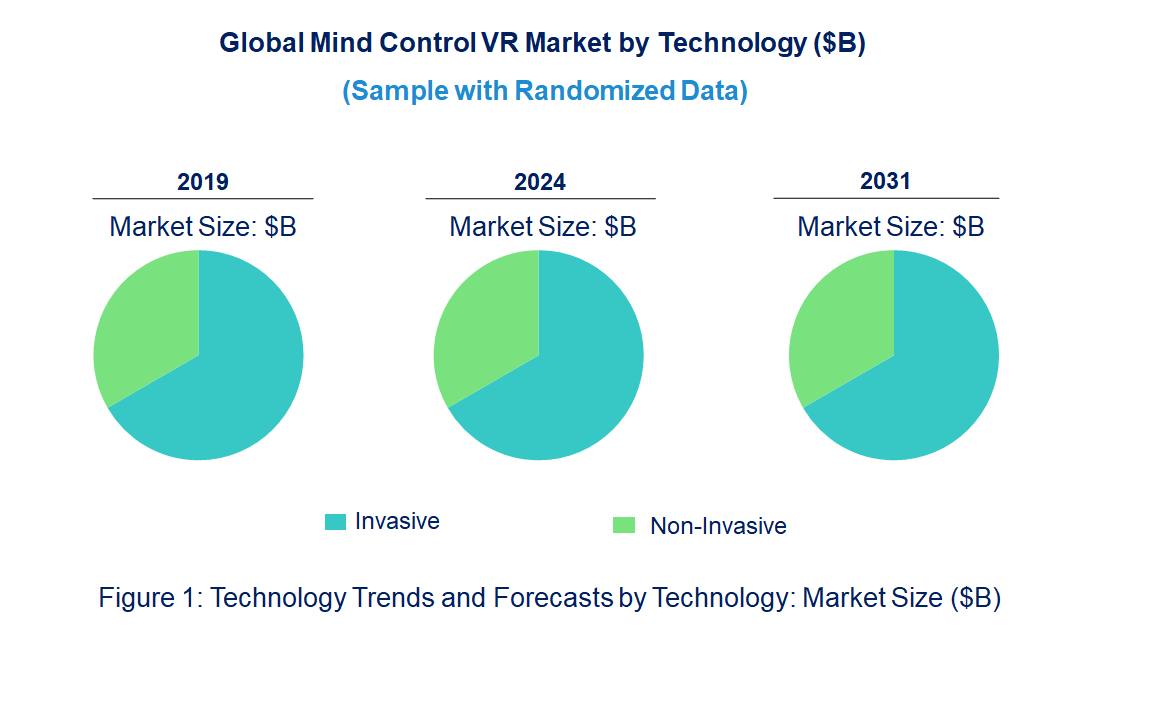
• Technology Readiness by Technology Type: In the mind control VR technology market, invasive and non-invasive technologies differ significantly in terms of readiness. Invasive technologies (such as implanted BCIs) are highly specialized and are still in the research and medical stages. They are ready for use in specific medical applications like neuroprosthetics and rehabilitation, but require surgical procedures, making them less widely adopted. Non-invasive technologies (like EEG and eye-tracking) are more mature and ready for mainstream adoption. They are already applied in consumer markets such as gaming, wellness, and research. Non-invasive BCIs have fewer regulatory hurdles, making them more accessible for large-scale use, while invasive BCIs are focused on high-precision medical fields and face stricter regulatory scrutiny.
• Competitive Intensity and Regulatory Compliance: The competitive intensity of the Mind Control VR Technology Market differs between invasive and non-invasive technologies. Non-invasive technologies face greater competitive pressure due to the availability of multiple players in the consumer sector, such as gaming and wellness applications, and are subject to less stringent regulatory compliance compared to invasive technologies. Invasive technologies face lower competition due to the specialized nature of their applications in medical fields, but are subject to rigorous regulatory requirements, including FDA approvals for medical use and patient safety protocols. Non-invasive technologies, while facing high competition, benefit from easier scalability and faster market adoption.
• Disruption Potential by Technology Type: Non-invasive technologies are poised to disrupt industries like gaming, entertainment, and wellness by offering more accessible, user-friendly solutions that allow direct brain control of virtual environments. These technologies have the potential to replace traditional input devices such as controllers or keyboards. Invasive technologies, although less disruptive in mainstream markets, have a high potential for medical disruption, especially in the fields of neuroprosthetics and rehabilitation. They offer greater precision and control, which can be transformational for patients with neurological disorders. Together, both types of technologies have the potential to revolutionize user interaction with virtual environments, with non-invasive methods leading in consumer markets and invasive methods driving innovation in healthcare.
• Invasive
• Non-Invasive
• Entertainment
• Medical
• Others
• North America
• Europe
• Asia Pacific
• The Rest of the World
• Latest Developments and Innovations in the Mind Control VR Technology Technologies
• Companies / Ecosystems
• Strategic Opportunities by Technology Type


Choose a license that fits your team. Instant PDF delivery.
Prices exclude taxes. Instant delivery. Custom licensing available on request.
Market Report · May 18, 2026
Market Report · May 18, 2026
Market Report · May 18, 2026
Trusted partner for strategic intelligence and business growth


Receive a complimentary market analysis tailored to your industry. Our analysts will identify key growth opportunities and competitive dynamics specific to your business.

Market size, growth rate, and key trend analysis for your specific sector.

Top competitor positioning and market share analysis.

Strategic recommendations backed by data-driven insights.
Get curated market intelligence and competitive moves straight to your inbox.
By subscribing, you agree to receive our monthly insights. Unsubscribe anytime.
Receive a complimentary market analysis tailored to your industry. Our analysts will identify key growth opportunities and competitive dynamics specific to your business.
Market size, growth rate, and key trend analysis for your specific sector.
Top competitor positioning and market share analysis.
Strategic recommendations backed by data-driven insights.
Get curated market intelligence, emerging trends, and competitive moves straight to your inbox each month.
By subscribing, you agree to receive our monthly insights. Unsubscribe anytime.
We'll send your sample report shortly.