
Market Report · July 15, 2026

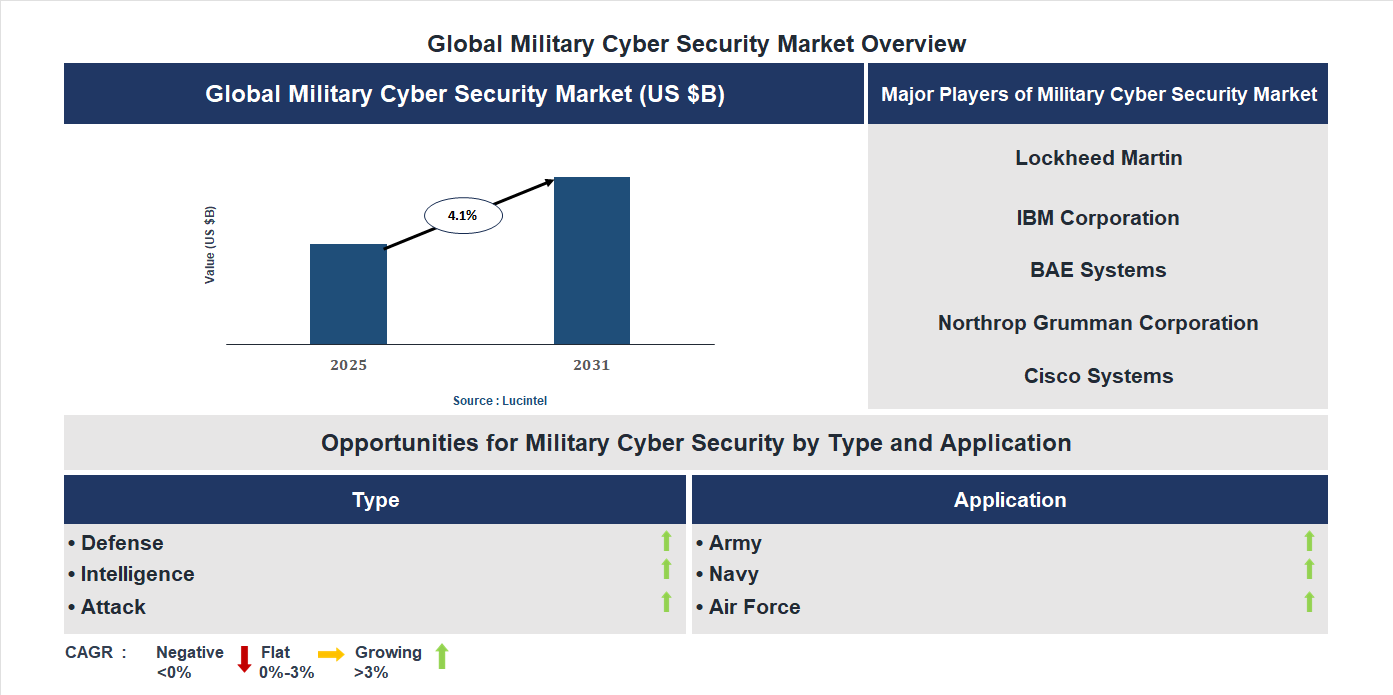
Key data points: The growth forecast = 4.1% annually for the next 7 years. Scroll below to get more insights. This market report covers trends, opportunities and forecasts in military cyber security market to 2031 by type (defense, intelligence, and attack), application (army, navy, and air force), and region (North America, Europe, Asia Pacific, and the Rest of the World)
We'll send your sample report shortly.
• Lucintel forecasts that, within the type category, defense is expected to witness the highest growth over the forecast period.
• Within the application category, air force is expected to witness the highest growth.
• In terms of region, APAC is expected to witness the highest growth over the forecast period. Gain valuable insights for your business decisions with our comprehensive 150+ page report. Sample figures with some insights are shown below.
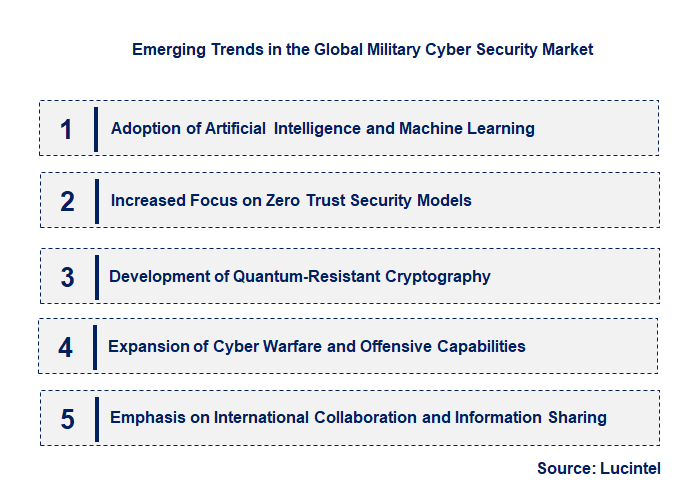
• Adoption of Artificial Intelligence and Machine Learning: The integration of AI and ML into military cybersecurity enhances threat detection and response capabilities. These technologies enable real-time analysis of vast data sets, identifying anomalies and potential threats faster than traditional methods. AI-driven systems can predict attack patterns, automate responses, and reduce human error, thereby strengthening defense mechanisms. This trend is transforming cybersecurity from reactive to proactive, allowing military forces to anticipate and mitigate cyber threats before they cause damage. The impact is a more resilient and adaptive security infrastructure capable of countering sophisticated cyber adversaries.
• Increased Focus on Zero Trust Security Models: Zero Trust architecture is gaining prominence in military cybersecurity strategies. This approach assumes no implicit trust within the network, requiring continuous verification of users and devices. It minimizes the risk of insider threats and lateral movement of malware within networks. Implementing Zero Trust involves strict access controls, multi-factor authentication, and micro-segmentation of networks. The shift enhances security posture by reducing vulnerabilities and ensuring that sensitive military data remains protected even if parts of the network are compromised. This trend is crucial for maintaining operational integrity in complex, multi-layered defense environments.
• Development of Quantum-Resistant Cryptography: As quantum computing advances, traditional encryption methods face potential vulnerabilities. The military sector is investing in quantum-resistant cryptography to safeguard classified information against future quantum attacks. These new algorithms are designed to be secure against the computational power of quantum computers, ensuring data confidentiality and integrity. The adoption of quantum-resistant solutions is vital for maintaining secure communications and data exchange in a post-quantum world. This trend signifies a proactive approach to future-proof military cybersecurity infrastructure against emerging technological threats.
• Expansion of Cyber Warfare and Offensive Capabilities: Militaries are increasingly developing offensive cyber capabilities to complement defensive measures. Cyber warfare strategies include disrupting adversary networks, disabling communication systems, and conducting information operations. This trend reflects a shift towards integrating cyber operations into broader military tactics, emphasizing the importance of offensive tools for strategic advantage. Enhanced cyber offensive capabilities can deter adversaries, support traditional military operations, and provide a rapid response option in conflicts. The impact is a more comprehensive and versatile military cybersecurity posture that encompasses both defense and offense.
• Emphasis on International Collaboration and Information Sharing: Recognizing the global nature of cyber threats, military organizations are fostering international partnerships for intelligence sharing and joint cybersecurity initiatives. Collaborative efforts improve situational awareness, facilitate rapid response to threats, and develop standardized security protocols. These alliances help counteract state-sponsored cyber attacks and cyber terrorism more effectively. Enhanced cooperation also promotes the development of shared best practices and technological innovations. This trend is reshaping the market by creating interconnected defense ecosystems that leverage collective expertise and resources to strengthen global military cybersecurity resilience. In summary, these emerging trends are fundamentally transforming the military cyber security market by fostering more intelligent, resilient, and collaborative defense systems. They enable militaries to anticipate threats, protect critical assets, and maintain strategic advantages in an increasingly digital battlefield. As these developments continue, the market will see greater innovation, integration, and international cooperation, ultimately enhancing national security and operational effectiveness.
• Growing Investment in Cyber Defense Infrastructure: Governments worldwide are increasing budgets for military cybersecurity, leading to the deployment of advanced security systems. This investment enhances the ability to detect, prevent, and respond to cyber threats, thereby strengthening national defense capabilities and deterring potential cyber-attacks.
• Adoption of Artificial Intelligence and Machine Learning: AI and ML are being integrated into military cybersecurity solutions to improve threat detection and automate response mechanisms. This technological shift results in faster identification of vulnerabilities and more effective mitigation strategies, significantly reducing response times during cyber incidents.
• Development of Quantum-Resistant Security Solutions: With the advent of quantum computing, military organizations are focusing on creating quantum-resistant encryption methods. These solutions aim to safeguard sensitive military data against future quantum-enabled cyber threats, ensuring long-term data security and operational integrity.
• Strategic Collaborations and Partnerships: Defense agencies are forming alliances with cybersecurity firms and technology providers to develop innovative security solutions. These collaborations facilitate knowledge sharing, accelerate product development, and enhance the overall cybersecurity posture of military systems.
• Increasing Focus on Cyber Warfare and Offensive Capabilities: Militaries are not only strengthening defensive measures but also developing offensive cyber capabilities. This dual approach aims to disrupt adversaries' networks and gain strategic advantages, transforming cyber warfare into a critical component of modern military strategy. In summary, these developments are significantly transforming the military cyber security market by enhancing defensive capabilities, integrating cutting-edge technologies, and expanding offensive strategies. The market is becoming more dynamic and sophisticated, driven by the need to counter increasingly complex cyber threats. These advancements are vital for maintaining national security, technological superiority, and strategic dominance in modern warfare.
• Communication Systems: Enhanced encryption and secure communication protocols are vital for military operations. Growth in this area improves operational security, enabling real-time, secure data exchange among units, which is crucial during conflicts. Advancements in quantum cryptography and secure mobile networks are expected to significantly bolster communication resilience against cyber threats.
• Intelligence, Surveillance, and Reconnaissance (ISR): The integration of AI and machine learning into ISR systems enhances threat detection and data analysis capabilities. This growth opportunity allows for faster, more accurate intelligence gathering, which is essential for strategic decision-making and battlefield awareness, ultimately increasing mission success rates.
• Command and Control (C2): Securing C2 systems is critical for coordinated military operations. The deployment of advanced cybersecurity measures ensures the integrity and availability of command networks, preventing cyberattacks that could disrupt command functions. This growth enhances operational agility and reduces vulnerability to cyber warfare tactics.
• Logistics and Supply Chain: Protecting logistics networks from cyber threats ensures the seamless movement of supplies and equipment. Implementing cybersecurity solutions in logistics reduces risks of disruption, theft, or sabotage, thereby maintaining operational readiness and supply chain integrity in conflict zones.
• Cyber Defense Training and Simulation: As cyber threats evolve, specialized training and simulation platforms are increasingly vital. This growth opportunity develops skilled personnel capable of defending against sophisticated cyberattacks, strengthening overall military cyber resilience and preparedness. In summary, these growth opportunities are significantly impacting the military cyber security market by driving innovation, enhancing operational security, and ensuring strategic advantage. As applications become more interconnected and complex, investments in these areas will continue to shape the future landscape of military cybersecurity, fostering resilience against emerging cyber threats.
• Increasing Cyber Threats and Geopolitical Tensions: The rise in sophisticated cyber-attacks targeting military infrastructure and sensitive data has heightened the need for advanced cybersecurity solutions. Countries face threats from state-sponsored hackers, terrorist groups, and cybercriminals, prompting governments to invest heavily in protecting critical military assets. Geopolitical tensions further accelerate the demand for resilient cyber defense systems to safeguard national security interests. This environment fosters continuous innovation and expansion within the market, as military organizations seek to stay ahead of evolving threats.
• Technological Advancements in Cyber Defense: Innovations such as artificial intelligence, machine learning, and blockchain are revolutionizing military cybersecurity. AI-powered threat detection systems enable real-time identification and response to cyber-attacks, reducing response times and minimizing damage. Blockchain enhances secure communication channels, preventing data tampering and unauthorized access. These technological advancements improve the efficiency, accuracy, and robustness of military cyber defenses, encouraging adoption across defense agencies worldwide. The ongoing development of these technologies sustains market growth and competitiveness.
• Growing Defense Budgets and International Collaborations: Governments worldwide are increasing defense spending to modernize military capabilities, including cybersecurity infrastructure. Enhanced budgets facilitate the procurement of advanced cyber defense tools and the development of in-house capabilities. International collaborations and defense alliances, such as NATO, promote shared cybersecurity standards and joint development initiatives, expanding market opportunities. These financial and collaborative efforts ensure continuous innovation and deployment of cutting-edge solutions, fueling market expansion and technological progress.
• Regulatory Frameworks and Compliance Standards: Stringent government regulations and international standards influence the development and deployment of military cybersecurity solutions. Compliance with standards such as the NIST Cybersecurity Framework and other national security directives ensures the effectiveness and security of defense systems. Regulatory requirements also drive innovation by necessitating the development of compliant, secure, and interoperable solutions. While these standards promote security, they can also pose challenges related to compliance costs and technological adaptation, impacting market dynamics.
• Increasing Adoption of Cloud and Networked Military Systems: The shift towards cloud computing and network-centric warfare enhances operational efficiency but introduces new cybersecurity vulnerabilities. Military organizations are adopting cloud-based solutions for data storage, communication, and command systems, necessitating advanced security measures. The integration of networked systems increases the attack surface, requiring sophisticated cybersecurity strategies to prevent breaches. This trend drives demand for scalable, flexible, and secure cyber defense solutions, fostering market growth but also presenting challenges related to data sovereignty and system interoperability. The challenges facing this Market include:
• Rapidly Evolving Cyber Threat Landscape: Cyber adversaries continuously develop new tactics, techniques, and procedures, making it difficult for military cybersecurity systems to keep pace. The dynamic nature of threats such as zero-day exploits, ransomware, and advanced persistent threats requires constant innovation and adaptation. Military organizations face the challenge of maintaining up-to-date defenses while managing limited resources and operational constraints. Failure to adapt swiftly can result in vulnerabilities, data breaches, and compromised national security, underscoring the need for agile and proactive cybersecurity strategies.
• High Costs of Advanced Cybersecurity Solutions: Developing, deploying, and maintaining sophisticated cybersecurity infrastructure involves significant financial investment. Military budgets are often constrained by competing priorities, and the high costs associated with cutting-edge technologies, skilled personnel, and continuous updates pose substantial challenges. Budget limitations can delay the adoption of innovative solutions or lead to reliance on outdated systems, increasing vulnerability. Balancing cost-effectiveness with security requirements remains a critical challenge for defense agencies aiming to enhance their cyber resilience.
• Regulatory and Policy Uncertainties: The evolving regulatory landscape and geopolitical considerations create uncertainties for military cybersecurity providers. Differing national policies, export restrictions, and compliance requirements complicate the development and deployment of solutions across borders. Additionally, classified nature of military operations limits transparency and standardization, hindering collaboration and innovation. These uncertainties can delay project implementation, increase costs, and restrict access to emerging technologies, impacting overall market growth and technological advancement. In summary, the military cyber security market is driven by technological innovations, increasing threats, and expanding defense budgets, which collectively foster growth and modernization. However, rapid threat evolution, high costs, and regulatory uncertainties pose significant challenges that could hinder progress. The interplay of these factors shapes a dynamic landscape requiring continuous adaptation, strategic investment, and international cooperation. Overall, the market's future depends on balancing innovation with effective risk management to ensure robust national security defenses.
• Lockheed Martin
• IBM Corporation
• BAE Systems
• Northrop Grumman Corporation
• Cisco Systems
• Booz Allen Hamilton
• General Dynamics
• Raytheon
• Boeing
• ManTech
• Defense
• Intelligence
• Attack
• Army
• Navy
• Air Force
• North America
• Europe
• Asia Pacific
• The Rest of the World
• United States: The US military cyber security market has seen substantial growth driven by increased government funding and strategic initiatives like the Cybersecurity Maturity Model Certification (CMMC). The Department of Defense (DoD) has prioritized the development of advanced threat detection systems, AI-powered defense tools, and secure communication networks. Collaborations with private sector firms have accelerated innovation, and recent policies emphasize resilience against state-sponsored cyber attacks. The US also focuses on offensive cyber capabilities, integrating cyber operations into broader military strategies to maintain technological superiority.
• China: China has made significant strides in military cyber security, emphasizing the development of sophisticated cyber espionage and defense systems. The government has increased investments in cyber warfare capabilities, including AI-driven intrusion detection and cyber attack simulation platforms. Recent advancements include the deployment of integrated cyber defense networks across military branches and enhanced training programs for cyber personnel. China’s focus on self-reliance in cyber technology and strategic cyber deterrence reflects its aim to safeguard national security and expand its influence in global cyber domains.
• Germany: Germany’s military cyber security market is characterized by a focus on strengthening NATO alliances and integrating cyber defense into national security policies. The Bundeswehr has upgraded its cyber infrastructure, adopting advanced encryption and threat intelligence tools. Recent developments include the establishment of dedicated cyber command units and increased collaboration with European partners to develop joint cyber defense initiatives. Germany emphasizes resilience, incident response capabilities, and the development of secure communication channels to protect critical military assets from evolving cyber threats.
• India: India has rapidly expanded its military cyber security capabilities, driven by regional security concerns and the need for technological self-reliance. The government has launched initiatives like the Defense Cyber Agency to coordinate cyber defense efforts across armed forces. Recent advancements include deploying AI-based threat detection systems, enhancing secure communication networks, and establishing cyber training academies. India’s focus is on building a robust cyber defense infrastructure to counter threats from neighboring countries and to develop offensive cyber capabilities for strategic deterrence.
• Japan: Japan’s military cyber security market has seen increased investment in protecting critical defense infrastructure amid regional tensions. The Japan Self-Defense Forces (JSDF) have adopted advanced cybersecurity measures, including AI-driven monitoring and threat analysis tools. Recent developments involve strengthening cyber incident response teams, enhancing secure communication systems, and collaborating with international partners for cyber intelligence sharing. Japan aims to bolster its resilience against cyber attacks targeting its military assets, with a focus on integrating cyber defense into broader national security strategies and maintaining technological independence.


• Lockheed Martin
• IBM Corporation
• BAE Systems
• Northrop Grumman Corporation
• Cisco Systems
• Booz Allen Hamilton
• General Dynamics
• Raytheon
• Boeing
• ManTech Q5. Which military cyber security market segment will be the largest in future? Answer: Lucintel forecasts that, within the type category, defense is expected to witness the highest growth over the forecast period. Q6. In military cyber security market, which region is expected to be the largest in next 5 years? Answer: In terms of region, APAC is expected to witness the highest growth over the forecast period. Q7. Do we receive customization in this report? Answer: Yes, Lucintel provides 10% customization without any additional cost.


Choose a license that fits your team. Instant PDF delivery.
Prices exclude taxes. Instant delivery. Custom licensing available on request.
Market Report · July 15, 2026
Market Report · June 26, 2026
Market Report · June 24, 2026
Trusted partner for strategic intelligence and business growth


Receive a complimentary market analysis tailored to your industry. Our analysts will identify key growth opportunities and competitive dynamics specific to your business.

Market size, growth rate, and key trend analysis for your specific sector.

Top competitor positioning and market share analysis.

Strategic recommendations backed by data-driven insights.
Get curated market intelligence and competitive moves straight to your inbox.
By subscribing, you agree to receive our monthly insights. Unsubscribe anytime.
Receive a complimentary market analysis tailored to your industry. Our analysts will identify key growth opportunities and competitive dynamics specific to your business.
Market size, growth rate, and key trend analysis for your specific sector.
Top competitor positioning and market share analysis.
Strategic recommendations backed by data-driven insights.
Get curated market intelligence, emerging trends, and competitive moves straight to your inbox each month.
By subscribing, you agree to receive our monthly insights. Unsubscribe anytime.
We'll send your sample report shortly.