
Market Report · July 16, 2026

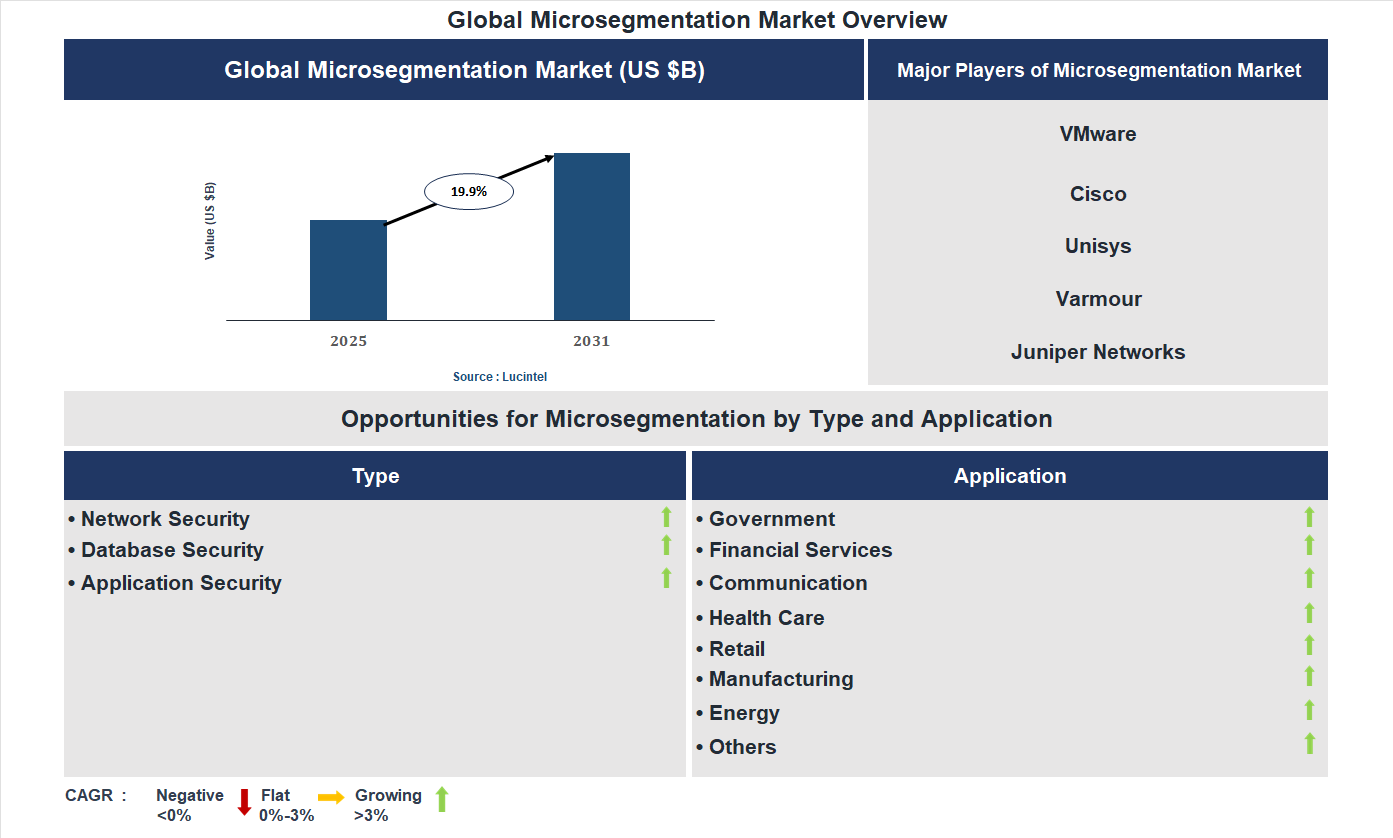
Key data points: The growth forecast = 19.9% annually for the next 7 years. Scroll below to get more insights. This market report covers trends, opportunities and forecasts in microsegmentation market to 2031 by type (network security, database security, and application security), application (government, financial services, communication, health care, retail, manufacturing, energy, and others), and region (North America, Europe, Asia Pacific, and the Rest of the World)
We'll send your sample report shortly.
• Lucintel forecasts that, within the type category, network security is expected to witness the highest growth over the forecast period.
• Within the application category, financial service is expected to witness the highest growth.
• In terms of region, APAC is expected to witness the highest growth over the forecast period. Gain valuable insights for your business decisions with our comprehensive 150+ page report. Sample figures with some insights are shown below.
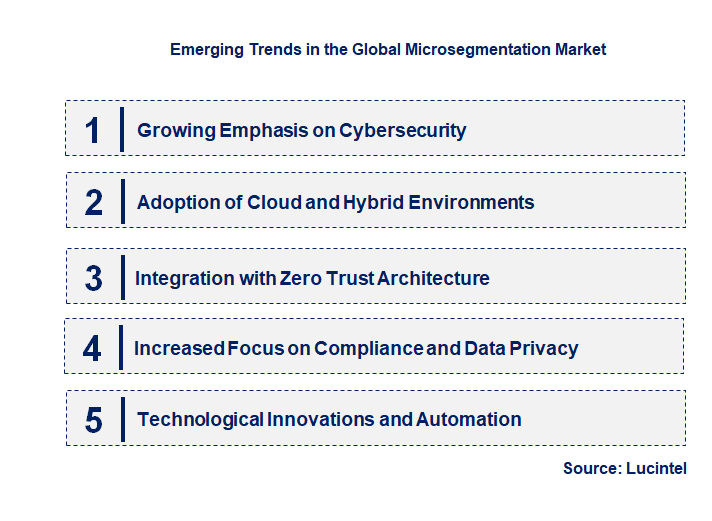
• Growing emphasis on cybersecurity: The rising frequency and sophistication of cyberattacks are prompting organizations to adopt microsegmentation to contain threats and limit lateral movement within networks. This trend enhances security by creating isolated segments, reducing the attack surface, and enabling rapid response to breaches. As cyber threats evolve, microsegmentation becomes a critical component of comprehensive security strategies, helping organizations comply with regulatory requirements and safeguard sensitive data.
• Adoption of cloud and hybrid environments: The shift towards cloud computing and hybrid infrastructures is accelerating the need for flexible, scalable security solutions like microsegmentation. Cloud environments require dynamic segmentation to protect workloads across multiple platforms. Microsegmentation enables organizations to implement consistent security policies regardless of deployment location, ensuring seamless protection and management. This trend supports digital transformation initiatives and helps organizations optimize their cloud investments while maintaining control over security.
• Integration with Zero Trust architecture: Microsegmentation is a core element of Zero Trust security models, which assume no implicit trust within networks. By implementing microsegmentation, organizations can enforce strict access controls, verify user identities, and monitor traffic between segments. This integration enhances overall security posture, reduces insider threats, and ensures compliance with evolving data protection regulations. The trend signifies a shift towards more granular, identity-centric security frameworks that adapt to modern threat landscapes.
• Increased focus on compliance and data privacy: Regulatory frameworks such as GDPR, HIPAA, and CCPA are compelling organizations to enhance data security and privacy measures. Microsegmentation helps meet these compliance requirements by isolating sensitive data and controlling access. It provides detailed audit trails and enforces policies that prevent unauthorized data access or exfiltration. As data privacy concerns grow, microsegmentation becomes an essential tool for organizations aiming to demonstrate compliance and build customer trust.
• Technological innovations and automation: Advances in AI, machine learning, and automation are transforming microsegmentation deployment and management. Automated policy creation, real-time threat detection, and adaptive segmentation are making microsegmentation more efficient and effective. These innovations reduce operational complexity, minimize human error, and enable proactive security measures. As technology continues to evolve, organizations can implement more sophisticated, responsive microsegmentation strategies that adapt to changing network conditions and emerging threats. In summary, these trends are reshaping the microsegmentation market by making security more dynamic, scalable, and aligned with modern digital infrastructures. They are enabling organizations to better protect their assets, ensure compliance, and deliver personalized, secure experiences in an increasingly complex cyber landscape.
• Adoption of AI and Machine Learning: Integration of AI and ML in microsegmentation tools has improved threat detection and automated policy enforcement, leading to more proactive security measures and reducing response times to cyber threats.
• Strategic Partnerships and Collaborations: Major vendors are forming alliances with cybersecurity firms and cloud providers to enhance product offerings, expand market reach, and deliver comprehensive, integrated solutions tailored to diverse industry needs.
• Cloud-native Microsegmentation Solutions: The shift towards cloud computing has driven the development of cloud-native microsegmentation solutions, enabling seamless security management across hybrid and multi-cloud environments, thus increasing adoption among enterprises.
• Regulatory Compliance and Data Privacy: Increasing regulatory requirements such as GDPR and CCPA have propelled the adoption of microsegmentation to ensure data privacy and compliance, boosting market growth and encouraging innovation in security protocols.
• Expansion into Small and Medium-sized Enterprises (SMEs): Vendors are developing simplified, cost-effective microsegmentation solutions targeted at SMEs, broadening the market scope and facilitating wider adoption beyond large enterprises. These developments are significantly impacting the microsegmentation market by enhancing security capabilities, enabling scalable and flexible network architectures, and expanding market reach. As organizations prioritize cybersecurity and compliance, the market is poised for continued growth, innovation, and increased adoption across various industry sectors.
• Healthcare: Improved Data Security and Compliance : Microsegmentation enables healthcare providers to isolate sensitive patient data, ensuring compliance with regulations like HIPAA. It reduces the risk of data breaches and enhances patient privacy, fostering trust and safeguarding organizational reputation.
• Financial Services: Enhanced Fraud Prevention and Risk Management : Financial institutions leverage microsegmentation to create secure zones for transaction processing and customer data. This minimizes fraud risks, ensures regulatory compliance, and improves overall security posture.
• Retail: Securing E-commerce and Customer Data : Retailers utilize microsegmentation to protect online transaction platforms and customer information. It helps prevent cyberattacks, reduces data breach risks, and enhances customer confidence in digital channels.
• Manufacturing: Protecting Industrial Control Systems : Microsegmentation isolates critical manufacturing infrastructure from external threats. This ensures operational continuity, prevents cyber-physical attacks, and maintains production efficiency.
• Government: Strengthening National Security and Data Privacy : Governments adopt microsegmentation to secure sensitive government networks and citizen data. It enhances threat detection, reduces attack surfaces, and supports compliance with national security standards. In summary, these growth opportunities across key applications are significantly impacting the microsegmentation market by driving increased adoption, enhancing security measures, and enabling organizations to meet regulatory requirements. As digital transformation accelerates, the market is poised for sustained expansion, with tailored solutions addressing specific industry needs and emerging cyber threats.
• Technological Innovation: The rapid development of advanced cybersecurity solutions, including AI and machine learning, enhances microsegmentation capabilities. These innovations enable real-time threat detection and automated policy enforcement, making microsegmentation more effective and easier to deploy. As organizations seek robust security frameworks, the adoption of innovative technologies accelerates market growth, providing scalable and adaptable solutions that meet diverse security needs.
• Increasing Cybersecurity Threats: The surge in sophisticated cyberattacks, data breaches, and ransomware incidents compels organizations to adopt granular security measures. Microsegmentation offers precise control over network traffic, reducing attack surfaces and limiting lateral movement of threats. This heightened threat landscape drives demand for microsegmentation solutions as a critical component of comprehensive cybersecurity strategies.
• Digital Transformation and Cloud Adoption: The widespread shift to cloud computing and digital services necessitates enhanced security measures. Microsegmentation facilitates secure cloud environments by isolating workloads and applications, ensuring data integrity and compliance. As businesses migrate to hybrid and multi-cloud architectures, the need for flexible, scalable security solutions like microsegmentation becomes increasingly vital, fueling market expansion.
• Regulatory Compliance and Data Privacy: Stringent data protection laws such as GDPR, HIPAA, and CCPA require organizations to implement effective security controls. Microsegmentation helps meet these compliance standards by providing detailed access controls and audit trails. The regulatory landscape incentivizes organizations to adopt microsegmentation to avoid penalties and safeguard customer trust, thereby propelling market growth. The challenges facing this microsegmentation market include:
• High Implementation and Maintenance Costs: Deploying microsegmentation involves significant investment in infrastructure, skilled personnel, and ongoing management. Small and medium-sized enterprises may find these costs prohibitive, limiting widespread adoption. Additionally, maintaining and updating microsegmentation policies to adapt to evolving threats adds to operational expenses, posing a barrier to market growth.
• Complex Integration with Existing Infrastructure: Integrating microsegmentation solutions into legacy networks and diverse IT environments can be complex and time-consuming. Compatibility issues, lack of standardized protocols, and the need for extensive customization hinder seamless deployment. These integration challenges can delay implementation and increase costs, impacting overall market penetration.
• Evolving Cyber Threats and Technological Obsolescence: Cyber threats are continuously evolving, requiring microsegmentation solutions to be regularly updated. Rapid technological changes can render existing solutions obsolete, necessitating ongoing investments in upgrades. This dynamic environment creates uncertainty and can deter organizations from adopting or fully committing to microsegmentation strategies. In summary, the microsegmentation market is driven by technological advancements, increasing cyber threats, digital transformation, and regulatory pressures. However, high costs, integration complexities, and rapidly evolving threats pose significant challenges. These factors collectively influence the pace and scope of market growth, requiring stakeholders to balance innovation with strategic planning. Overall, the markets future depends on overcoming these hurdles through technological innovation, cost-effective solutions, and adaptable deployment strategies, ensuring enhanced security in an increasingly digital world.
• VMware
• Cisco
• Unisys
• Varmour
• Juniper Networks
• Opaq Networks
• Nutanix
• Cloudvisory
• Guardicore
• Extrahop
• Network Security
• Database Security
• Application Security
• Government
• Financial Services
• Communication
• Health Care
• Retail
• Manufacturing
• Energy
• Others
• North America
• Europe
• Asia Pacific
• The Rest of the World
• United States: The US market has seen rapid adoption of AI-driven microsegmentation solutions, with major tech firms investing heavily in cybersecurity innovations. The focus is on integrating machine learning for real-time threat detection and improving data privacy compliance, especially under regulations like GDPR and CCPA. Cloud-based microsegmentation services are also gaining popularity among enterprises seeking scalable security solutions.
• China: China’s market is characterized by rapid digital transformation and government initiatives promoting cybersecurity. Local companies are developing advanced microsegmentation tools tailored for large-scale enterprise networks and smart city infrastructure. The government’s emphasis on data sovereignty and security has led to increased investments in domestic solutions, fostering innovation in AI and IoT integration within microsegmentation strategies.
• Germany: Germany’s market emphasizes compliance with strict data protection laws such as GDPR. Companies are adopting microsegmentation to enhance network security and ensure regulatory adherence. There is a strong focus on integrating microsegmentation with existing security frameworks and adopting zero-trust architectures. The automotive and manufacturing sectors are key adopters, leveraging microsegmentation to protect intellectual property and operational technology.
• India: The Indian market is witnessing rapid growth driven by digital adoption in banking, healthcare, and government sectors. Local vendors are offering cost-effective microsegmentation solutions to address the rising cybersecurity threats. The government’s push for digital infrastructure and initiatives like Digital India are fueling demand for secure network segmentation, with a focus on scalable and easy-to-deploy solutions suitable for diverse enterprise sizes.
• Japan: Japan’s market is characterized by a focus on industrial cybersecurity and IoT security. Companies are integrating microsegmentation into their smart manufacturing and automation systems to prevent cyberattacks. The emphasis is on developing robust, high-performance solutions that support legacy systems while ensuring compliance with stringent security standards. Collaboration between industry and government agencies is also fostering innovation in microsegmentation technologies.


• VMware
• Cisco
• Unisys
• Varmour
• Juniper Networks
• Opaq Networks
• Nutanix
• Cloudvisory
• Guardicore
• Extrahop Q5. Which microsegmentation market segment will be the largest in future? Answer: Lucintel forecasts that, within the type category, network security is expected to witness the highest growth over the forecast period. Q6. In microsegmentation market, which region is expected to be the largest in next 5 years? Answer: In terms of region, APAC is expected to witness the highest growth over the forecast period. Q7. Do we receive customization in this report? Answer: Yes, Lucintel provides 10% customization without any additional cost.


Choose a license that fits your team. Instant PDF delivery.
Prices exclude taxes. Instant delivery. Custom licensing available on request.
Market Report · July 16, 2026
Market Report · May 18, 2026
Market Report · May 18, 2026
Trusted partner for strategic intelligence and business growth


Receive a complimentary market analysis tailored to your industry. Our analysts will identify key growth opportunities and competitive dynamics specific to your business.

Market size, growth rate, and key trend analysis for your specific sector.

Top competitor positioning and market share analysis.

Strategic recommendations backed by data-driven insights.
Get curated market intelligence and competitive moves straight to your inbox.
By subscribing, you agree to receive our monthly insights. Unsubscribe anytime.
Receive a complimentary market analysis tailored to your industry. Our analysts will identify key growth opportunities and competitive dynamics specific to your business.
Market size, growth rate, and key trend analysis for your specific sector.
Top competitor positioning and market share analysis.
Strategic recommendations backed by data-driven insights.
Get curated market intelligence, emerging trends, and competitive moves straight to your inbox each month.
By subscribing, you agree to receive our monthly insights. Unsubscribe anytime.
We'll send your sample report shortly.