
Market Report · May 18, 2026

This market report covers trends, opportunities, and forecasts in the global microgrid controller market to 2031 by technology (grid-connected, off-grid, and hybrid), application (utilities, cities and municipalities, defense, industrial, and others), and region (North America, Europe, Asia Pacific, and the Rest of the World)
We'll send your sample report shortly.
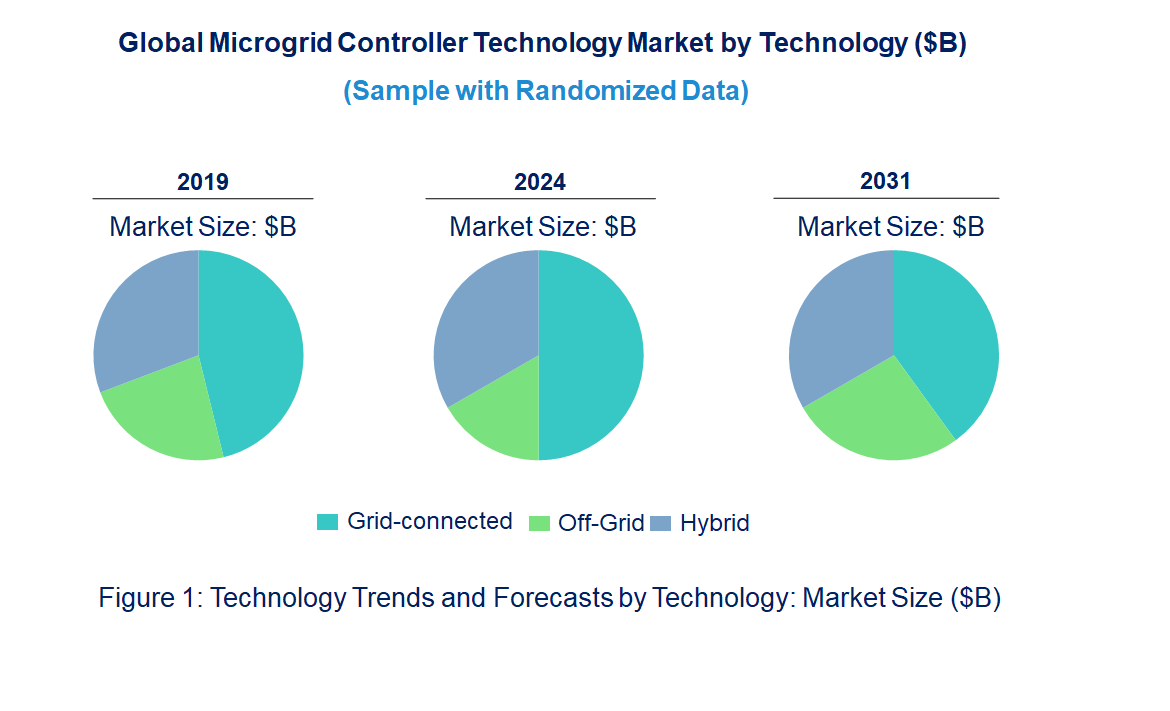
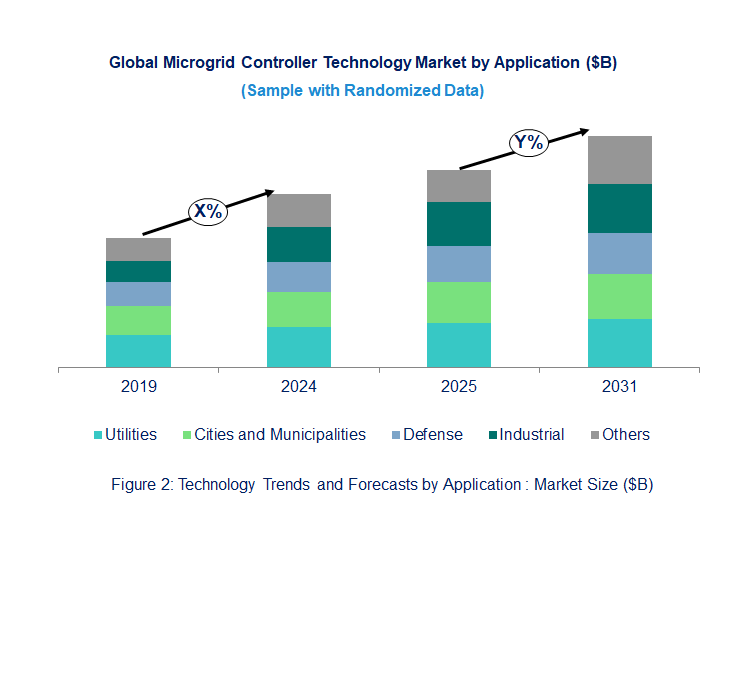
• Shift Toward Renewable Energy Integration: Microgrid controllers are increasingly integrating renewable energy sources such as solar, wind, and hydropower. These sources are becoming more prominent in grid-connected and off-grid applications due to their cost-effectiveness and sustainability benefits. This trend is helping to reduce dependency on conventional fossil fuels and enhance the environmental impact of microgrids.
• Adoption of AI and Machine Learning for Optimization: The integration of artificial intelligence (AI) and machine learning (ML) in microgrid controllers is transforming energy management. AI and ML algorithms enable real-time decision-making, predictive analytics, and automated fault detection, improving energy distribution efficiency, reducing costs, and enhancing the overall resilience of the grid.
• Decentralized and Distributed Control Systems: The old microgrid controllers were essentially centralized, though now there is a huge trend towards distributed control systems that would allow much more autonomy and reliability. These systems can better adapt to local disturbances and would work well when left independent, and thus are excellent for off-grid and emergency applications in defense and remote industrial locations.
• Energy Storage Integration for Grid Stability: Energy storage solutions like batteries and supercapacitors are now being increasingly integrated into microgrids. Such storage technologies help to manage intermittent renewable energy, store excess power, and provide backup during peak demand or grid outages. Overall, the stability and resilience of microgrids can be improved in this manner.
• Blockchain for Energy Transactions and Security: The technology is being explored for using blockchain to enhance security and efficiency in energy transactions in microgrids. A decentralized ledger system allows secure, transparent, and efficient energy trading transactions, with reduced risks and lower operational costs, enabling participants to buy and sell energy.
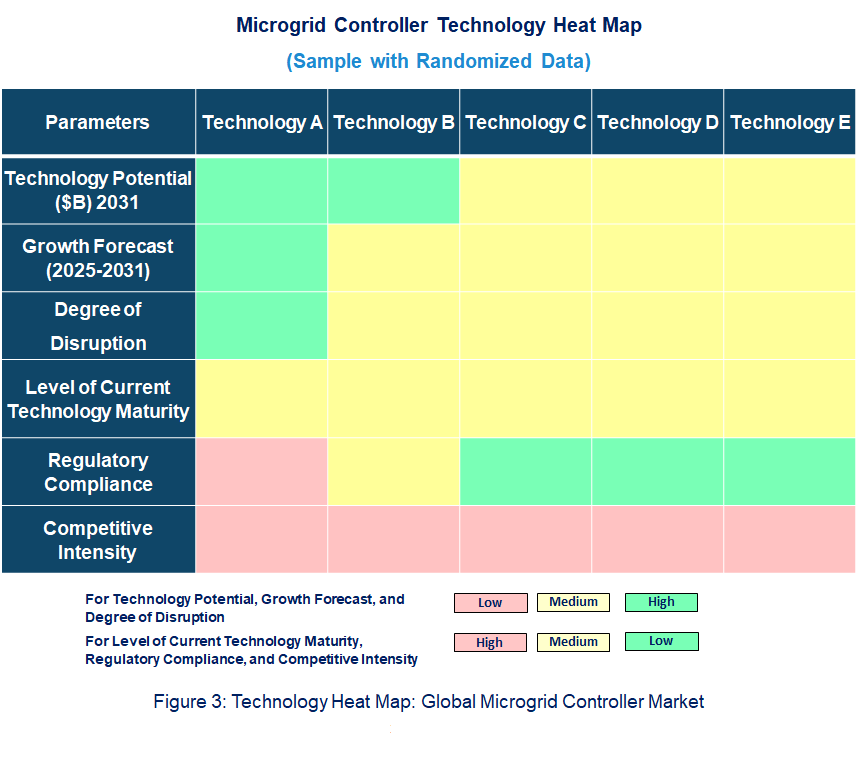
• Technologies Potential: The microgrid controllers have the potential in regard to enhancing the resilience of grid, reducing energy bills while supporting sustainability efforts, that smart microgrid controllers give them to integrate renewable energy while carrying their systems in real-time on time and optimize energy. By applying smart grids and Iot applications together, they can apply those controllers dynamically to reflect demand changes in power alongside production changes.
• Degree of Disruption: Microgrid controllers are disrupting traditional energy systems by decentralizing power generation and offering more localized, autonomous solutions. This shift allows communities and industries to rely less on central grids, enhancing energy security and reducing transmission losses. Moreover, as renewable energy integration becomes more critical, microgrid controllers will be crucial in enabling sustainable energy solutions.
• Technology Maturity: Microgrid controller technology is maturing with basic energy management matured, already deployed in many locations. However, advanced capabilities, such as AI-driven predictive analytics and real-time decision-making, are still developing but are being adopted rapidly in the market.
• Regulatory Compliance: Microgrid controllers must be in accordance with grid connection standards, safety regulations, and environmental guidelines. As microgrids increase, compliance with energy efficiency, renewable energy, and cybersecurity regulations will be essential.
• ABB Group: ABB has made tremendous strides in the microgrid controller market with their introduction of Microgrid Plus, an AI-based management, advanced energy storage, and renewable energy integration solution. This solution enables real-time optimization and enhances the reliability of energy supply, particularly for industrial and municipal applications.
• Siemens AG: Siemens has widened its offerings with the Siemens Spectrum Power Microgrid Controller, which integrates digitalization, automation, and AI to enhance grid stability and optimize energy management. Siemens solutions are mainly related to energy utilities and defense, helping users manage better loads of energy and integrate a variety of energy sources.
• Hitachi, Ltd: Hitachi has introduced a series of advanced microgrid controllers that use IoT technology to optimize energy distribution and integrate various renewable energy sources. Their controllers are especially useful in industrial and municipal applications, where real-time monitoring and quick adaptation to energy demands are essential.
• Eaton Corporation PLC: Eaton has been making its microgrid control systems smarter by incorporating intelligent energy management platforms with cloud-based analytics for optimizing energy distribution. Their solutions are meant for utilities, industrial sites, and commercial properties with a view to efficient energy management, reduced costs, and improved sustainability.
• Princeton Power Systems: Princeton Power Systems provides hybrid microgrid controllers that combine solar, energy storage, and backup generation for off-grid and hybrid applications. Their controllers provide flexible energy management solutions that are ideal for remote locations, military operations, and critical infrastructure.
• General Electric Corporation: General Electric has designed the Grid Solutions Microgrid Controller, offering integrated solutions for microgrids connected to the grid. GE focuses on automation and data analytics, ensuring that electricity is being supplied and delivered efficiently, especially for municipalities and energy utilities.
• Pareto Energy, Ltd: Pareto Energy introduced a family of intelligent microgrid controllers. This family of intelligent microgrid controllers is targeted at the optimization of DERs. These products are meant to optimize cost and bring sustainable energy solutions in industrial and commercial applications so that clients move toward more decentralized energy.
• Honeywell International, Inc.: Honeywell has been developing smart microgrid controllers that use cloud-based monitoring and predictive analytics. The technology is ideal for energy and oil applications where real-time performance can be tracked and controlled remotely to avert outages and to ensure operational efficiency.
• Northern Power Systems Corporation: Northern Power has included advanced control algorithms in its microgrid controller systems, thus offering better scalability and energy efficiency for off-grid and hybrid systems. Their solutions are for applications in rural areas and remote military operations.
• Exelon Corporation: Exelon has designed a unique microgrid management system, which optimizes the renewable energy sources and storage system's performance. The product line is centered around the municipal applications to enable cities to provide reliable, clean, and sustainable energy without a carbon footprint.
• Increasing Demand for Energy Independence and Resilience: Energy independence and resilience have emerged as key drivers for companies and governments to increase these levels. With microgrids offering localized energy solutions, they are ideal for use in defense and industrial operations in remote locations. It will fuel demand for even stronger and more efficient control of microgrids.
• Government Incentives for Renewable Energy Integration: Governments worldwide are offering subsidies and incentives for renewable energy projects, including microgrid installations. This creates significant growth opportunities, especially in developing economies, where solar, wind, and battery storage solutions are becoming increasingly popular as part of sustainable development strategies.
• Technological Advancements in Energy Storage and Control Systems: Advances in battery technology and smart energy management using AI can realize greater potential for microgrid applications in reliable and flexible energy solutions. The added value of energy storage and smart controllers enables optimized power distribution within the grid and enhances stability in the grid new market opportunity.
• Urbanization and Escalating Need for Smarter Cities: As towns and cities grow smarter, solutions in the form of a smart grid, including microgrid solutions, become an essential area of demand. Microgrid controllers play an important part in controlling the energy produced in smart cities. This forms a huge market opportunity as companies look forward to solutions that are sustainable and cost-cutting and help urban dwellers lead superior lives.
• High Initial Installation and Integration Cost: Installing and integrating microgrid control systems might be costly, especially for small municipalities and industrial players. Although the benefits in the long run will be greater, the investment in installing renewable energy, energy storage, and advanced controllers becomes a major barrier to its integration.
• Regulatory and Policy Uncertainty: The different regions have various regulations about installing microgrids, integration of renewable energy, and storage of energy. Companies, which look forward to expansion of their microgrid controllers across markets, are usually faced with the problem of inconsistent policies and standards.
• Complexity in System Integration: Integrating multiple energy sources and managing them through a single control system can be technically complex. Challenges in system compatibility, interoperability of different technologies, and the need for customization can make it difficult to implement microgrid controllers efficiently, especially in multi-application settings.
• ABB Group
• Siemens AG
• Hitachi, Ltd
• Eaton Corporation PLC
• Princeton Power Systems
• General Electric Corporation
• Technology Readiness by Technology Type in Microgrid Controller Market: Grid-connected controllers are mature, enabling reliable integration into national grids. Off-grid controllers are evolving with energy storage and renewable integration, though scalability remains a challenge. Hybrid controllers, combining grid and off-grid functions, are rapidly advancing and gaining popularity due to their flexibility. The market is highly competitive, driven by technological improvements and cost reduction. Regulatory compliance is crucial across all types, with grid-connected systems focusing on grid codes and off-grid systems adhering to off-grid standards. Applications include renewable energy integration, disaster recovery, and energy independence, with hybrid systems leading in adaptability.
• Competitive Intensity and Regulatory Compliance of Different Technologies in Microgrid Controller Market: Competition is intense in the microgrid controller market, with grid-connected solutions leading due to their scalability and integration. Off-grid and hybrid controllers are gaining market share, targeting renewable energy and energy storage applications. Regulatory compliance is critical, focusing on grid interoperability, safety, and environmental impacts. Grid-connected systems must meet standards like IEEE and IEC, while off-grid and hybrid systems face additional requirements for energy storage and renewable integration. As sustainability and energy efficiency regulations tighten, all technologies must adapt to meet new environmental standards.
• Disruption Potential of Different Technologies in Microgrid Controller Market: The disruption potential in the microgrid controller market is driven by grid-connected, off-grid, and hybrid technologies. Grid-connected controllers integrate local systems with the main grid, offering scalability for urban and industrial use. Off-grid controllers are gaining popularity in remote areas with limited grid access. Hybrid controllers, which combine both grid and off-grid functions, provide flexibility and resilience, especially in transitional or disaster-prone areas. Advancements in energy storage, renewables, and monitoring technologies are reducing costs and improving performance. As decentralized and sustainable energy solutions rise, hybrid and off-grid controllers are poised to disrupt traditional grids.
• Grid-connected
• Off-Grid
• Hybrid
• Utilities
• Cities and Municipalities
• Defense
• Industrial
• Others
• North America
• Europe
• Asia Pacific
• The Rest of the World
• Latest Developments and Innovations in the Microgrid Controller Technologies
• Companies / Ecosystems
• Strategic Opportunities by Technology Type


Choose a license that fits your team. Instant PDF delivery.
Prices exclude taxes. Instant delivery. Custom licensing available on request.
Market Report · May 18, 2026
Market Report · May 18, 2026
Market Report · May 18, 2026
Trusted partner for strategic intelligence and business growth


Receive a complimentary market analysis tailored to your industry. Our analysts will identify key growth opportunities and competitive dynamics specific to your business.

Market size, growth rate, and key trend analysis for your specific sector.

Top competitor positioning and market share analysis.

Strategic recommendations backed by data-driven insights.
Get curated market intelligence and competitive moves straight to your inbox.
By subscribing, you agree to receive our monthly insights. Unsubscribe anytime.
Receive a complimentary market analysis tailored to your industry. Our analysts will identify key growth opportunities and competitive dynamics specific to your business.
Market size, growth rate, and key trend analysis for your specific sector.
Top competitor positioning and market share analysis.
Strategic recommendations backed by data-driven insights.
Get curated market intelligence, emerging trends, and competitive moves straight to your inbox each month.
By subscribing, you agree to receive our monthly insights. Unsubscribe anytime.
We'll send your sample report shortly.