
Market Report · July 20, 2026

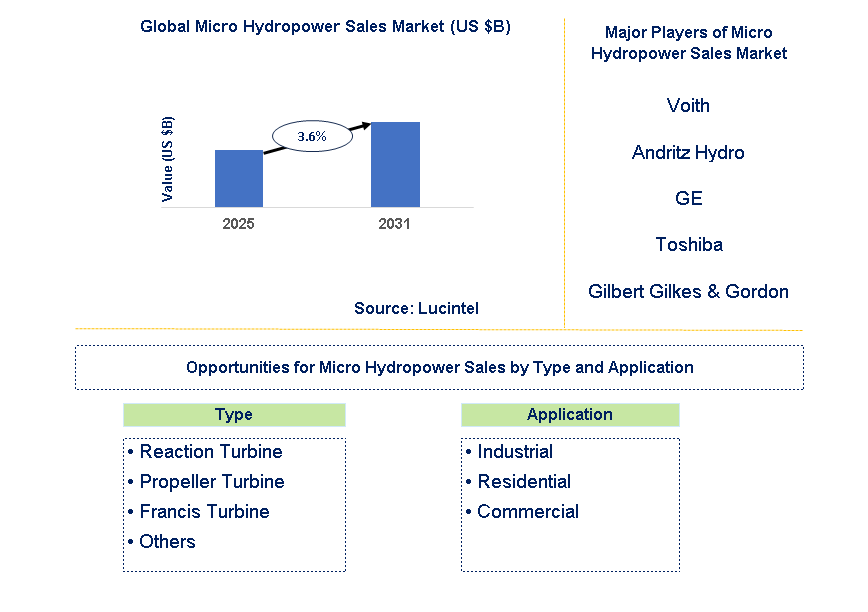
Key data points: The growth forecast = 3.6% annually for the next 7 years. Scroll below to get more insights. This market report covers Trends, opportunities and forecasts in micro hydropower sales market to 2031 by type (reaction turbine, propeller turbine, francis turbine, and others), application (industrial, residential, and commercial), and region (North America, Europe, Asia Pacific, and the Rest of the World)
We'll send your sample report shortly.
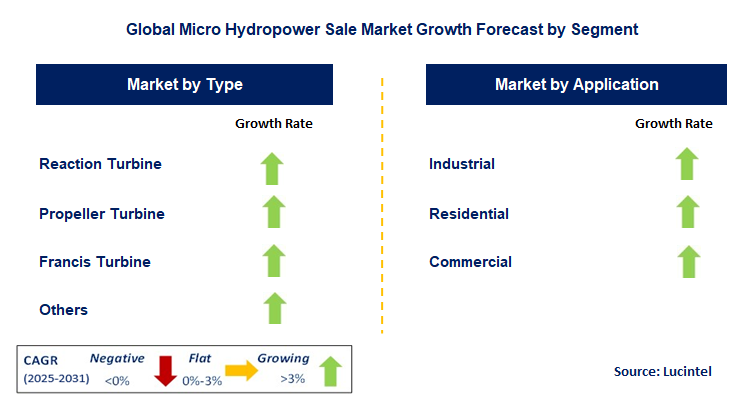
• Lucintel forecasts that, within the type category, francis turbine is expected to witness the highest growth over the forecast period due to the increasing efficiency in small-scale systems.
• Within the application category, industrial is expected to witness the highest growth due to the rising demand for sustainable energy solutions.
• In terms of region, APAC is expected to witness the highest growth over the forecast period due to the growing demand for renewable energy.
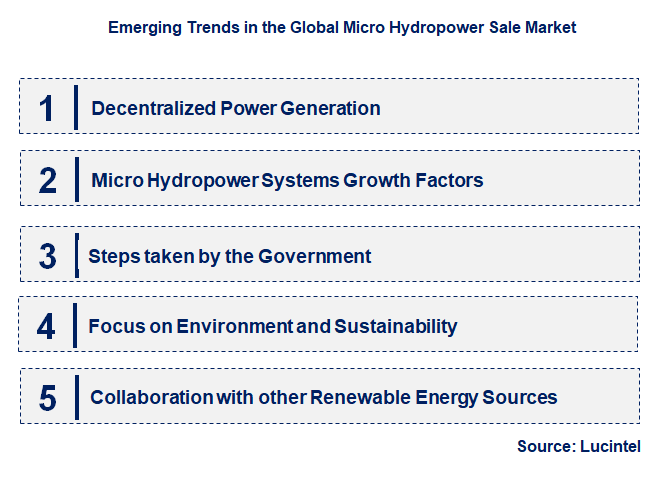
• Decentralized Power Generation: Another notable emerging trend, which is accelerated by the growing interest in clean and renewable energy, is decentralized power generation. Micro hydropower systems can serve to remotely located communities and off-the-grid areas by providing localized and scalable modular power generating plants. This phenomenon is in tandem with emerging global patterns for distributed energy resources and growing energy self-sufficiency. It is especially true for areas where centralized power generation and distribution systems are inadequate or absent.
• Micro Hydropower Systems Growth Factors: Shifts in Economic Efficiency: The latest innovations in turbine and generator technology have improved the efficiency levels of micro hydropower plants. The introduction of smaller and less expensive turbines has made it possible to use these systems in more places. Enhanced materials and design improvements have reduced the cost of operations, increasing the economic feasibility of micro hydropower for rural and small-scale applications. These improvements will continue to sustain growth in this region.
• Steps taken by the Government: There is a growing number of governments around the world which are putting into place even more helpful policies and incentives for the promotion of renewable energy sources. The micro hydropower industry benefits from tax credits, grant awards, and feed-in tariffs, which are particularly directed to make such systems more appealing to investors and developers. The United States, China, and Germany are some countries that have passed laws and developed budgetary provisions to aid in the installation of micro hydropower systems, which increases their use and market prospects.
• Focus on Environment and Sustainability: With the focus on battling climate change, more attention is being paid to how energy is produced and the sustainability of such practices. Compared to larger hydropower plants, micro hydropower has a smaller environmental footprint and is therefore seen as a environmentally sustainable option for fulfilling local energy requirements. There is a marketing shift towards developing systems that harmonize with natural ecosystems and minimize disruption to the environment, which is a welcome trend towards achieving sustainability across the globe.
• Collaboration with other Renewable Energy Sources: The micro hydropower sector's market is also characterized by the collaboration of these systems with other renewable energy technologies, solar and wind for example. Combines renewable energy systems are gaining popularity among people living in remote areas or regions underserved by the power grid, where continuous electricity is essential. Such combined systems provide energy in a more dependable and collaborative manner, which is particularly useful considering the unpredictability of power generated by solar and wind sources. Emerging trends are currently midwifing a new micro hydropower market that is more attractive and feasible for diverse regions around the globe. The market's growth and adoption is being spurred by technological innovation, supportive policies, sustainability orientation, and multilateral integration of renewable energy sources.
• Better Turbine Technology: Changes in turbine design have led to better performance and higher efficiency of micro hydropower systems. Modern turbines are smaller, lighter, more efficient, more powerful, and cheaper, which means they can economically serve in a larger number of regions. These changes make it possible to install micro hydropower systems in a larger number of small rivers and streams, which increases their possible uses.
• Support and Financial Helps: The use of micro hydropower systems has increased due to government financial aid in the shape of tax credits, subsidies, and feed-in tariffs. These polices create incentives that cut down costs for the developers and end-users. Micro hydropower, thanks to this financial assistance, has become more affordable than other sources of renewable energy.
• Less Restrictive Government Policies: There has been a significant reduction in the complexity of the regulatory systems for the development and installation of micro hydropower systems in different countries. The rules for obtaining permits are easier to satisfy, and the instructions offer lesser ambiguity which streamlines the project completion. Such regulatory leniency lowered financial risks and costs of investment into micro hydropower while enabling developers to meet their objectives.
• Environmental Reviews: The development of hydropower has adverse environmental effects that have led to the creation of systems with less ecological impact. These newer systems incorporate different design schemes and strategies for the assessment of micro hydropower systems to mitigate their negative effects on the environment and guarantee their sustainability.
• Rural Electrification Projects: Micro hydropower systems are becoming more crucial for rural electrification in developing nations. They supply dependable and renewable electricity to remote communities and villages where traditional grid electricity is not available. Governments along with international organizations are funding micro hydropower projects as part of wider strategies to enhance energy accessibility and to diminish non renewable energy sources. These notable changes are improving the micro hydropower industry’s marketability and widen its scope of use. The micro hydropower industry is set to undergo greater adoption driven by advances in technology, further investment, and greater policies changes after achieving some level of maturity.
• Off-The-Grid Power Generation: The need for off-the-grid power solutions is increasing, particularly in isolated and rural regions. Micro hydropower systems are well-suited for supplying reliable electricity to these areas, where the main grid is too far away or does not exist. The advancement of efficient and low-cost micro-hydropower technology provides an excellent opportunity to meet this demand while offering sustainable energy solutions for underserved populations.
• Hybrid Renewable Energy Systems: The combination of micro hydropower and electricity from other renewable sources, like solar panels or wind energy, is a powerful solution to the weakness of individual renewable sources. Hybrid systems are especially beneficial for remote locations or islands where energy security is critical. The expansion of hybrid systems offers a chance for the inclusion of micro hydropower in larger renewable energy projects.
• Integration of Energy Storage: The combination of micro hydropower systems with energy storage devices, batteries for example, improves the dependability of the power supply. Energy storage gives the possibility of storing excess energy to be used when there is low water flow or high demand. This integration offers a chance for micro hydropower systems to take part in the expanding market of energy storage.
• Water Supply Infrastructure: In certain areas, micro hydropower systems can be added to current water supply systems like irrigation and treatment plants. This combination makes it possible to generate power in a way that is beneficial for water systems. This is a good chance for local governments and even the central government to include micro hydropower in their water management programs.
• Developing Market Adoption in Emerging Economies: Emerging economies that have the right water resources available represent a major micro hydropower opportunity. Countries in Africa, Asia, and Latin America where energy access is low, can greatly benefit from micro hydropower systems to energize remote areas. These markets are increasing in issuance particularly as governments aim to achieve sustainable development objectives. The strategic growth opportunities in micro hydropower suggest a bright future for the sector in its application to off grid energy, hybrid systems, energy storage, water supply integration, and development markets. With the unfolding of these opportunities, the market is likely to undergo additional growth and diversification.
• Voith
• Andritz Hydro
• GE
• Toshiba
• Gilbert Gilkes & Gordon
• Mavel
• Hydrotu
• Ganz EEPM
• Canyon Hydro
• Global Hydro
• Reaction Turbine
• Propeller Turbine
• Francis Turbine
• Others
• Industrial
• Residential
• Commercial
• North America
• Europe
• Asia Pacific
• The Rest of the World
• United States: The micro hydropower industry within the United States experienced significant expansion from both federally and state backed policies supporting clean energy. New technologies have enhanced the level of ease with which micro hydropower systems are incorporated into the pre-existing infrastructure, especially in rural and remote regions. The investment in systems took flight due to the government’s renewable push, large scale investments, and payment policies such as the Production Tax Credit (PTC). However, further development is still needed in terms of regulatory bottlenecks and the economics of smaller scale installations.
• China: Today, China is considered one of the largest players in the micro hydropower market. The government has put significant focus on renewable energy and energy-efficiency, leading to giant investments in hydropower development including micro hydropower. In particular, micro hydropower systems are being deployed to remote villages in rural areas. The advancements in turbine technology, coupled with cost reductions, have contributed to an increasing market. On the downside, the continuing growth of micro hydropower is delayed by environmental concerns regarding its impact on water bodies' ecosystems.
• Germany: Germany has always been a renewable energy leader and is shifting its focus to micro hydropower as a new strategy for decentralizing energy production. A strong market base for renewable sources, including hydropower, comes from government policies and incentives. There have been positive improvements in technology which have increased the attractiveness of micro hydropower systems for small scale applications. However, Germany still faces micro hydropower obstacles due to geographical limitations making the search for new sites challenging.
• India: In India, rural regions with no access to the main electrical grid are being targeted as potential markets for micro hydropower systems and power generation capabilities. Because of the government’s stance towards renewable energy and infrastructure improvement in neglected areas, there is potential for developing micro hydropower plants in the country. India’s hills and mountainous regions are prime locations for micro hydropower installations due to the country’s diverse topography. Some barriers still remain, however, such as financing and regulatory policies.
• Japan: Japan’s micro hydropower industry is relatively new, but has experienced fast growth recently, especially after the Fukushima nuclear disaster. The nation is hoping to enhance its renewable energy volume extensively, where micro hydropower provides an excellent option. Advances in small turbine and small storage type hydropower systems have made it easier to adopt these technologies. Limited water resources, along with strict regulations to allow quicker project approval are some of the issues Japan needs to address.


• Voith
• Andritz Hydro
• GE
• Toshiba
• Gilbert Gilkes & Gordon
• Mavel
• Hydrotu
• Ganz EEPM
• Canyon Hydro
• Global Hydro Q5. Which micro hydropower sales market segment will be the largest in future? Answer: Lucintel forecasts that, within the type category, francis turbine is expected to witness the highest growth over the forecast period due to the increasing efficiency in small-scale systems. Q6. In micro hydropower sales market, which region is expected to be the largest in next 5 years? Answer: In terms of region, APAC is expected to witness the highest growth over the forecast period due to the growing demand for renewable energy. Q7. Do we receive customization in this report? Answer: Yes, Lucintel provides 10% customization without any additional cost.


Choose a license that fits your team. Instant PDF delivery.
Prices exclude taxes. Instant delivery. Custom licensing available on request.
Market Report · July 20, 2026
Market Report · July 20, 2026
Market Report · July 20, 2026
Trusted partner for strategic intelligence and business growth


Receive a complimentary market analysis tailored to your industry. Our analysts will identify key growth opportunities and competitive dynamics specific to your business.

Market size, growth rate, and key trend analysis for your specific sector.

Top competitor positioning and market share analysis.

Strategic recommendations backed by data-driven insights.
Get curated market intelligence and competitive moves straight to your inbox.
By subscribing, you agree to receive our monthly insights. Unsubscribe anytime.
Receive a complimentary market analysis tailored to your industry. Our analysts will identify key growth opportunities and competitive dynamics specific to your business.
Market size, growth rate, and key trend analysis for your specific sector.
Top competitor positioning and market share analysis.
Strategic recommendations backed by data-driven insights.
Get curated market intelligence, emerging trends, and competitive moves straight to your inbox each month.
By subscribing, you agree to receive our monthly insights. Unsubscribe anytime.
We'll send your sample report shortly.