
Market Report · May 18, 2026

This market report covers trends, opportunities, and forecasts in the global merchandizing carts market to 2031 by technology (metal type, plastic type, and other), application (supermarket, convenience store, hotel industry, catering, and others), and region (North America, Europe, Asia Pacific, and the Rest of the World)
We'll send your sample report shortly.
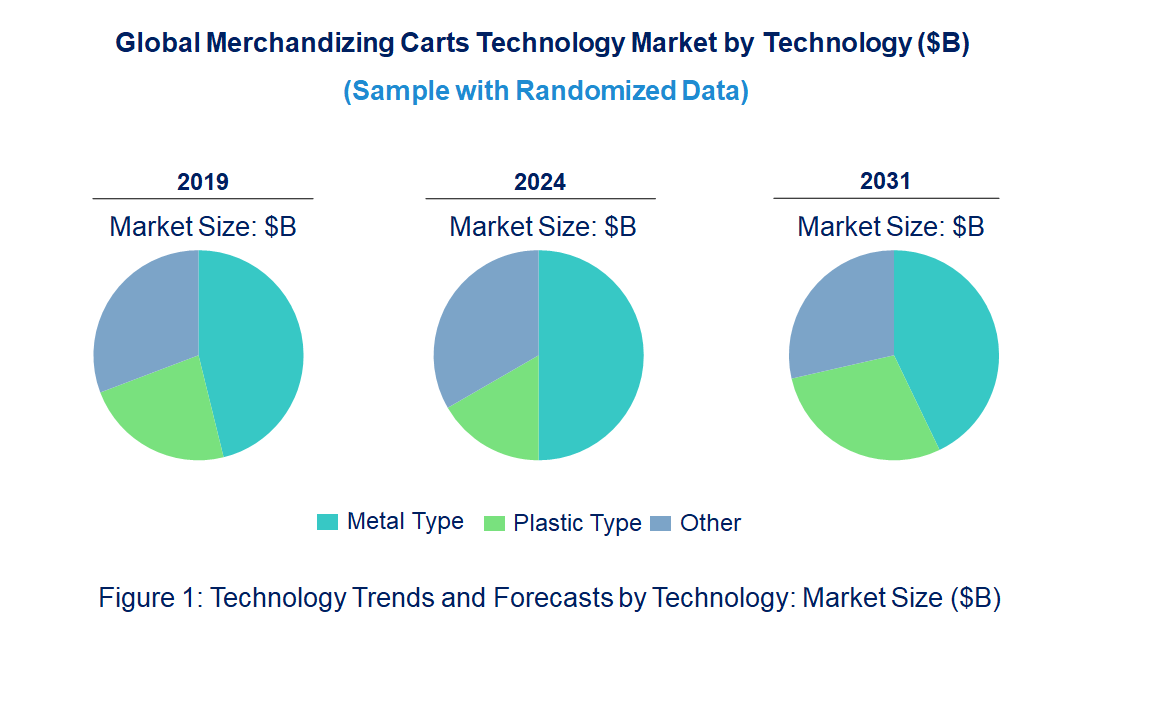
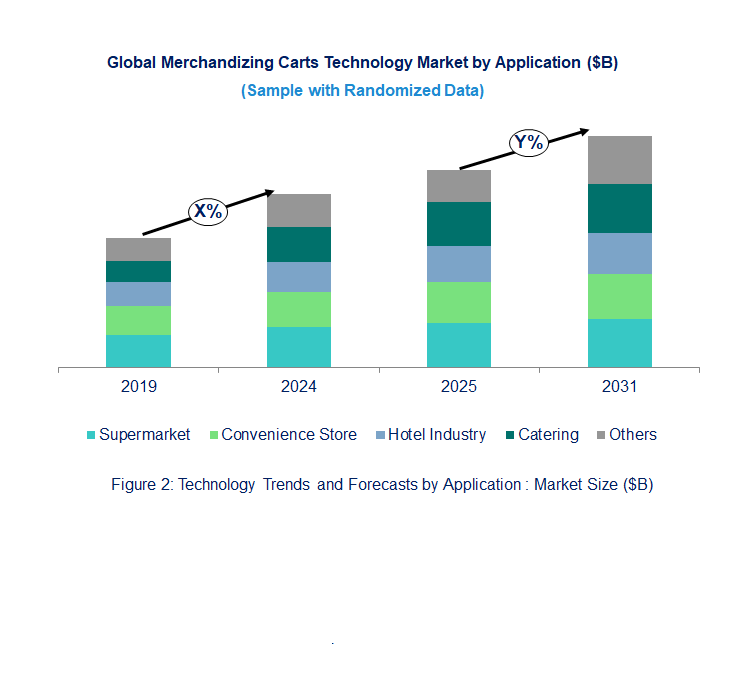
• Shift to Lightweight and Durable Materials: The trend of moving from traditional metal carts to plastic and composite materials is gaining momentum. Plastic carts are more lightweight, resistant to corrosion, and cost-effective. This trend is improving the user experience by making carts easier to handle and reducing maintenance costs.
• Smart Carts with RFID and IoT: With the increasing demand, there is a need for smart carts that have RFID tags and IoT. It will allow better inventory tracking, improve stock management, and enhance the shopping experience by providing real-time data on cart movements and product availability.
• Customizable and Modular Cart Designs: Retailers are looking for more flexible and customizable cart designs that can be tailored to their specific needs. Modular designs allow businesses to configure carts for different product types or to optimize space, making them more efficient for specific retail environments.
• Sustainability in Cart Production: Given the growing interest in sustainability, companies are now using eco-friendly materials and manufacturing processes in the making of merchandising carts. This is helping reduce the carbon footprint of a business and also attracting conscious consumers who care about their environment.
• E-commerce and Delivery Integration: The rise of online shopping has led to the integration of merchandising carts with e-commerce and delivery systems. This integration enables smoother transitions between in-store and online shopping experiences, allowing customers to order online and have their items ready for in-store pickup or direct home delivery. These trends reflect how the merchandising carts market is catering to changing retail needs and evolving customer expectations. The shift to smarter, more sustainable, and customizable cart designs changes the way businesses operate while improving the overall shopping experience.
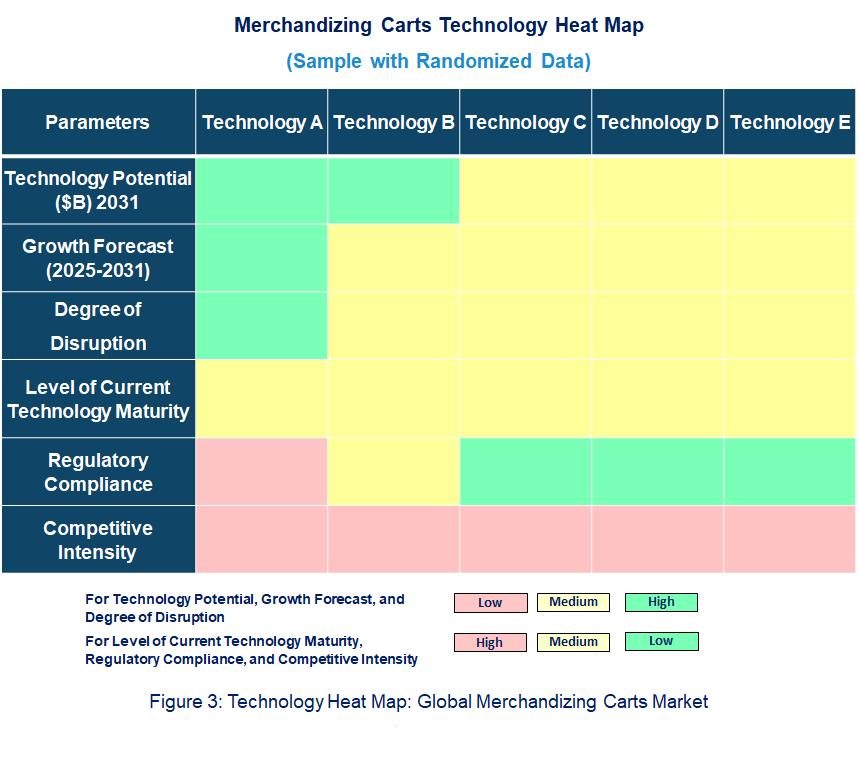
• Technology Potential: This merchandising cart technology is seen to be potential because of the integration of advanced materials like composites and IoT, and smart features. These innovations can enhance cart durability, reduce environmental impact, and optimize the shopping experience by tracking carts in real-time.
• Degree of Disruption: Plastic carts and hybrid materials are already disrupting by offering lighter, more cost-effective alternatives to metal. Smart, connected carts are expected to further disrupt the market by introducing efficiency improvements for both retailers and consumers .
• Technology Maturity: Metal and plastic carts are mature technologies, with wide commercial adoption. Emerging materials and smart carts are still in development but show promising growth potential.
• Regulatory compliance: Plastic carts must comply with recyclability standards and other environmental regulations, whereas the smart carts are subject to data privacy and safety standards.
• National Cart Co.: National Cart Co. has launched a new line of modular, foldable merchandising carts that help optimize space usage and transportation efficiency. Their carts also come with customizable features, which enable retailers to modify them for different product types and store layouts, thus enhancing operational flexibility.
• Americana Companies: Americana has been concentrating on making durable plastic carts that are light and resistant to wear and tear. The carts are intended to fulfill the increasing need for green solutions, thereby providing an environmentally friendly option to metal carts and decreasing the ecological footprint of retail operations.
• Wanzl Metallwarenfabrik GmbH: Wanzl has recently added a smart cart with RFID to its product portfolio. Smart carts can track inventory in real-time and provide enhanced customer shopping experiences. It's streamlining logistics and supply chain management for retailers through innovations in this area.
• Cari-All Group: Cari-All has been at the leading edge of modular cart systems, with easy-to-assemble and configure products that are highly valued for maximal space efficiency yet easy use, especially for large retail environments like supermarkets and warehouse stores.
• Unarco Material Handling, Inc.: Unarco has developed a range of foldable merchandising carts, designed for compact storage and convenient transportation. These foldable merchandising carts can reduce space requirements in the retail and catering industries, which enables businesses to improve the organization of their stores and streamline their workflows.
• Versacart Systems, Inc.: Versacart has made innovation within the foldable cart segment, with ease-of-storing solutions offered to the retailer who just doesn't have enough floor space. Their emphasis on compact design and usability is very important to smaller businesses and retail stores experiencing high traffic levels.
• RB Wire Products, Inc.: RB Wire introduced a new range of reinforced metal carts that can stand against heavy loads and extreme wear. Their products aim at providing a durable solution to the catering and hotel industry, where high-capacity carts are a requirement for efficient service.
• Kaili Manufacturing Co., Ltd.: Kaili has concentrated on plastic-based carts that are both lightweight and corrosion-resistant. Their products are gaining acceptance in supermarkets and convenience stores, where durability and easy handling are important.
• Retail Handling Solutions: Retail Handling Solutions has designed a series of smart carts that include contactless payment technology and real-time data analytics. These innovations are helping retailers improve their checkout processes and customer engagement.
• Technibilt: Technibilt has been continuously pushing the boundaries of sustainability in their cart production, making use of recycled materials for more eco-friendly merchandising carts. This makes them a leader in the green retail solutions market. These developments show how major players are responding to the needs of the retail sector in terms of evolving needs, introducing innovative products that are flexible, sustainable, and smart technologies.
• Increased demand for smart carts with advanced features of technology: As retailers consider improving the shopping experience, operational efficiency will need to increase demand for RFID and IoT-enabled smart carts. These technologies improve inventory management and help ensure less waste and greater availability of stock.
• Sustainability and Eco-friendly Cart Production: Sustainability is the growing trend that makes manufacturers opt for eco-friendly materials and production methods. Companies can attract environmentally conscious consumers by meeting this demand and contributing to reducing the carbon footprint of the retail industry.
• Customization and Modular Cart Designs: The demand for more flexible cart solutions that can accommodate different retail environments is a significant growth opportunity. Modular and customizable cart designs enable retailers to optimize space, enhance customer experience, and improve logistics operations.
• E-commerce and Retail Integration: As the lines blur between online and in-store shopping, more merchandising carts with seamless e-commerce integration support, such as order fulfillment and in-store pickup, are in demand. The shift is changing the retail experience, opening new avenues for cart manufacturers. Challenges in the merchandising carts market are:
• Increasing Material Costs: Raw material costs, especially for metals and plastics, have been rising. This challenges manufacturers, as higher material costs translate to higher production costs, affecting the pricing of merchandising carts and constraining profit margins.
• Competitive Market with Low Differentiation: The merchandising carts market is highly competitive, with many companies offering similar products. This has resulted in price-based competition, making it difficult for manufacturers to differentiate their products and maintain healthy margins.
• Logistics and Supply Chain Disruptions: Such global supply chain disruptions may further delay the production and delivery of merchandising carts. These challenges can result in gaps in supply, and retailers may not be able to maintain constant inventory levels, thus affecting customer demand. In conclusion, there are big growth opportunities through technological advancement, sustainability trends, and evolving retail needs; however, these must be accompanied by carefully navigating challenges like material costs and market competition. Such factors will shape the coming years' development of the merchandising carts market.
• National Cart Co.
• Americana Companies
• Wanzl Metallwarenfabrik GmbH
• Cari-All Group
• Unarco Material Handling, Inc.
• Versacart Systems,Inc.
• Technology Readiness by Technology Type in Merchandising Carts Market: Metal carts are very mature, widely used, and reliable for heavy-duty retail needs. Plastic carts have advanced, offering better durability and recyclability, but face environmental scrutiny. Emerging composite materials are still developing but offer the potential for better weight and durability balance. Smart carts with IoT features are innovative but rely on the retail infrastructure. The ongoing R&D fuels competitive intensity, and regulatory compliance, especially concerning plastic waste, is of extreme importance. Metal carts would find major applications in industrial sectors, while plastic and smart carts are best suited for a cost-conscious and technologically advanced retail environment.
• Competitive Intensity and Regulatory Compliance of Different Technologies in Merchandising Carts Market: The competition in the merchandising carts market is intense, driven by the dominance of metal carts and the rise of cost-efficient, lightweight plastics. Plastic carts face regulatory pressure due to environmental concerns, pushing manufacturers toward recyclable or biodegradable options. Compliance with safety standards and sustainability regulations is critical. The introduction of smart carts with tech components adds new challenges related to data security and wireless standards. Manufacturers need to balance performance, cost, and regulatory compliance to stay competitive in a rapidly evolving market.
• Disruption Potential of Different Technologies in Merchandising Carts Market: The disruption potential in the merchandizing carts market depends on the material type. The metal carts, offering durability and strength, are reliable but expensive and prone to rust. Plastic carts are gaining popularity as they are cost-effective and lightweight, with corrosion resistance, though lacking in strength. The newer materials, such as composites, offer a balance between cost and durability. Other technological developments, including smart carts, are changing the game through technology integration with sensors and RFID. With increasing demands for lighter, durable, and more eco-friendly options, the metal-dominated market is poised for disruption by plastic and composite materials.
• Metal Type
• Plastic Type
• Other
• Supermarket
• Convenience Store
• Hotel Industry
• Catering
• Others
• North America
• Europe
• Asia Pacific
• The Rest of the World
• Latest Developments and Innovations in the Merchandizing Carts Technologies
• Companies / Ecosystems
• Strategic Opportunities by Technology Type


Choose a license that fits your team. Instant PDF delivery.
Prices exclude taxes. Instant delivery. Custom licensing available on request.
Market Report · May 18, 2026
Market Report · May 18, 2026
Market Report · May 18, 2026
Trusted partner for strategic intelligence and business growth


Receive a complimentary market analysis tailored to your industry. Our analysts will identify key growth opportunities and competitive dynamics specific to your business.

Market size, growth rate, and key trend analysis for your specific sector.

Top competitor positioning and market share analysis.

Strategic recommendations backed by data-driven insights.
Get curated market intelligence and competitive moves straight to your inbox.
By subscribing, you agree to receive our monthly insights. Unsubscribe anytime.
Receive a complimentary market analysis tailored to your industry. Our analysts will identify key growth opportunities and competitive dynamics specific to your business.
Market size, growth rate, and key trend analysis for your specific sector.
Top competitor positioning and market share analysis.
Strategic recommendations backed by data-driven insights.
Get curated market intelligence, emerging trends, and competitive moves straight to your inbox each month.
By subscribing, you agree to receive our monthly insights. Unsubscribe anytime.
We'll send your sample report shortly.