
Market Report · July 15, 2026

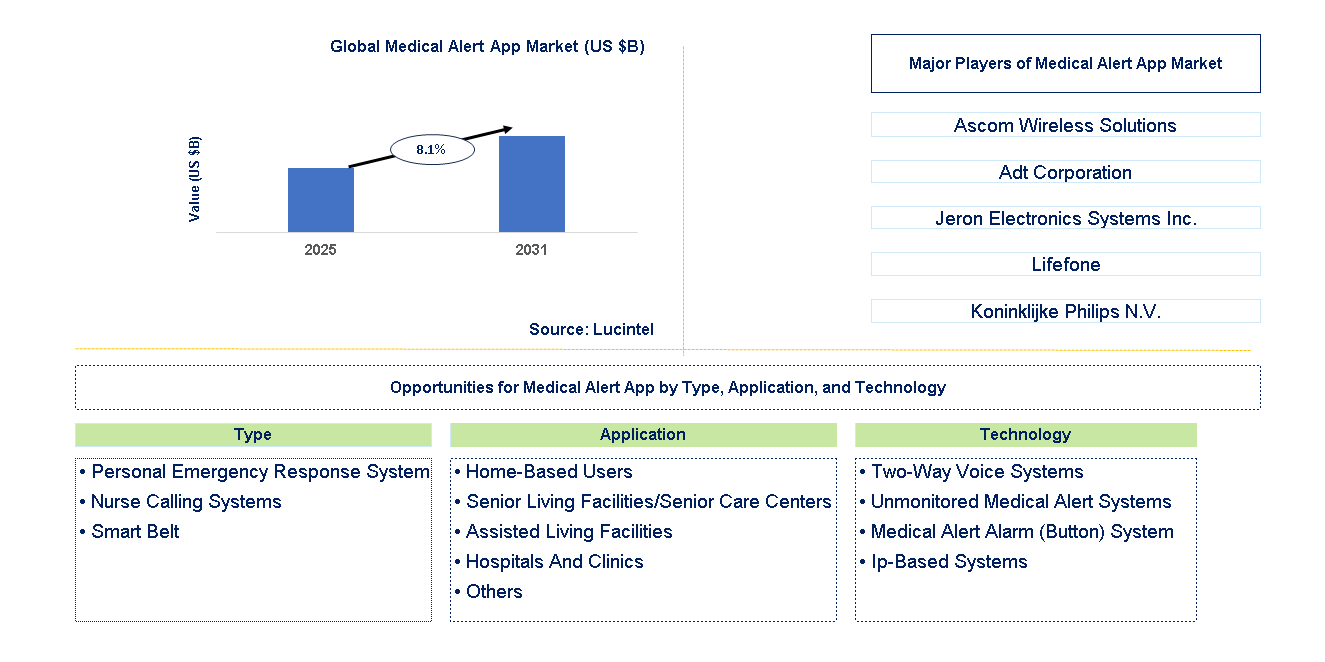
Key data points: The growth forecast = 8.1% annually for the next 7 years. Scroll below to get more insights. This market report covers Trends, opportunity and forecast in medical alert app market to 2031 by type (personal emergency response systems , nurse calling systems , and smart belt), application (home-based users, senior living facilities/senior care centers, assisted living facilities, hospitals and clinics, and others), technology (two-way voice systems, unmonitored medical alert systems, medical alert alarm (button) system, and ip-based systems), and region (North America, Europe, Asia Pacific, and the Rest of the World)
We'll send your sample report shortly.
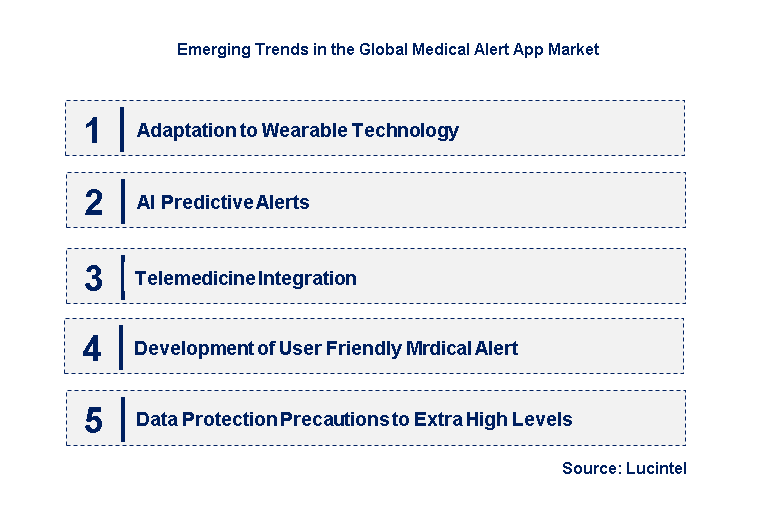
• Adaptation to Wearable Technology: Gradually, the medical alarm apps are being combined with wearable devices like smartwatches and fitness bands, making it possible to monitor health conditions at all times. These devices have the capability to automatically issue warnings following certain health concerns such as irregular heartbeat, falls, or accidents. This shift improves the provision of medical emergency services by making them timely.
• AI Predictive Alerts: Medical alert systems are being enhanced through the use of artificial intelligence, where the prediction of potential health issues is achieved even before they arise. Based on AI, heart attacks, strokes or diabetic episodes could be a thing of the past thanks to computer programs that predict dire circumstances based on data collected from the algorithms. They give timely warnings, and that allows users to employ preventative measures, thus minimizing the chances of suffering serious health issues in the future.
• Telemedicine Integration: The new trend is now towards integration of medical alert applications with telemedicine platforms enabling users to speak and connect with health care providers even during emergencies. Users can get directions and treatment advice through video calls, chat, or instant messages. Such trends improve the effectiveness of medical alert apps thereby making it a more effective healthcare tool.
• Development of User Friendly Mrdical Alert: There are now more than one medical alert app which is designed to be more user-friendly for older populations. This includes features: bigger font size, easier navigational buttons, voice command, and one button redirection to emergency contacts. There are many apps available now which have multi-language features and are integrated with hearing and vision impaired aids which makes use of the application more facile.
• Data Protection Precautions to Extra High Levels: Considering these medical alerting apps have access to users health information, the focus on privacy and individual security is heightening. These laws encourage users to seek out applications can meet high levels of privacy and data protection including regions such as Europe and North America (GDPR). Users are increasingly looking for applications that use heavy encryption techniques and provide adequate information about security. These trends are shaking up the Medical Alert App industry by offering better user experience, improved clinical results, and bringing in the latest advancements. The trend towards wearables and AI-powered alert is increasing the responsivity and the predictive features of medical alert systems. As these trends sections progress, the anticipation is that the industry will grow at a considerable pace especially in the elderly population and the regions that have better connectivity and digital healthcare.
• New Factors Regarding the Snapping of Wearable Devices: One of the wearables integration, easy devices and apps as smart watches and fitness bracelets with the Medical Alert Apps has been another pivotal breakthrough. This advances technology enables its users to continuously monitor their health status and receive prompt alerts on various health emergencies, such as falls, heart rate changes, or difficulty breathing. Wearables allow passing to a more active position in the health management process through the delivery of current information and automatic notification of emergencies.
• Advances in AI and Machine Learning: Artificial intelligence and machine learning in medical alert apps are changing the way the health crises are identified. Users can now get alerts about possible health crises even before they occur, courtesy of Artificial intelligence algorithms. This significantly improves response times and lowers the probability of adverse health consequences. This type of predicting health threats is especially useful when it comes to managing chronic diseases such as diabetes and heart diseases.
• Telehealth Integration and Remote Monitoring: Telehealth integration is one of the key features that is emerging out of medical alert apps as patients are able to speak with their medical providers in real time. These applications permit real-time interaction through text, video conferencing, or messaging tools, so that people don’t panic in case of a medical emergency as they are able to access help instantly. Remote monitoring is also becoming increasingly popular; users are remotely monitored by caregivers or medical personnel through devices linked to the app.
• Focus on Personalization and Customization: Users of medical alert apps are now able to choose how they’ll be contacted in case of an emergency, thanks to the app’s features – which include, customized alarm users contacts, limited alerts pertaining to broader health, and even alerts pertaining to conditions that the user prefers to get an alert about. This emergence of these aforementioned trends enables the users to customize their alert systems to their unique situations – such as chronic illness, or a specific medical threat.
• Improved Security and Risks to Privacy: With growing concerns about the privacy of medical data, app builders use features such as end-to-end encryption, two-factor authorization, and terms of data usage. This increased focus on data protection also ensures that laws like HIPAA in the US and GDPR in Europe are adhered to when creating medical alert apps, making them more credible to users. These advancements have enhanced the effectiveness and user-friendliness of medical alert apps. Because such technologies as wearables, AI, and telemedicine are fitted into the system, users shift from an emergency alert platform to an all rounded health management application. The greater concern for personalization and security means that such apps are innovation driven without overstepping regulatory requirements.
• Emergency Response Systems for Elderly Care: The global trend of seniors aging makes it quite an attractive sector to be invested in. Medical alert applications designed specifically for elderly individuals suffering chronic illnesses can provide features such as fall detection, emergency notifications, and health observation. These applications are able to be linked to a family caregiver’s web systems which can enhance the quality of care and provide solace to the family members.
• Chronic Disease Management: Chronic disease management is another area that is growing in its uptake. Medical alert applications can assist individuals regularly checking on vital statistics and monitoring their diabetes, hypertension, asthma among other conditions. Enabling such functionalities like monitoring vitals, automatic logs of statistics, and anticipating specific symptoms can alter how patients utilize resources and prevent frequent ER visits.
• Deployment of medical alert systems to be linked with telemedicine systems in remote areas and rural areas: For such regions where professionals are difficult to find, having surgical procedures combined with typical medicine would overcome those obstinate issues medical alert systems bring. The apps enable their clients to reach out to health workers, obtain diagnosis, treatment recommendations, and even relocation to more medical-supportive centers.
• Corporate Wellness Programs: There is a third opportunity that has also become somewhat evident is adopting the medical alert apps under corporate wellness programs. Organizations therefore can assist the employees with such associated devices that provide early warning of health deterioration or have the provision for something even as they are simple as a workplace emergency call system, thereby enhancing workplace safety and health of workers. This would be much more important in the case of employees who have already been diagnosed with some health problem whose effects bring about a lot of risk.
• Market Expansion in Emerging Economies: Another significant potential is the possibility of widening the scope of use of medical alert apps in the developing economies like India, Brazil, and some part of Africa. These areas are experiencing growth in mobile phone usage and emergence of healthcare needs thus creating a fertile ground for such economically viable and easily deployable solutions such as medical alert apps that have been designed to meet the increasing requirement of emergency medical services. These growth opportunities are in turn determining the future of Medical Alert App market structure by increasing the scope of its utility. Concentration there on elderly care, chronic disease management or telemedicine integration is especially important as it enables medical alert apps to serve for different users’ needs. Moreover, the further entry into developing markets will contribute to targeting more socially deprived audience for these apps.
• Ascom Wireless Solutions
• Adt Corporation
• Jeron Electronics Systems Inc.
• Lifefone
• Koninklijke Philips N.V.
• Medical Guardian
• Bay Alarm Medical
• Connect America
• Hill-Rom Holdings Inc.
• Mobilehelp
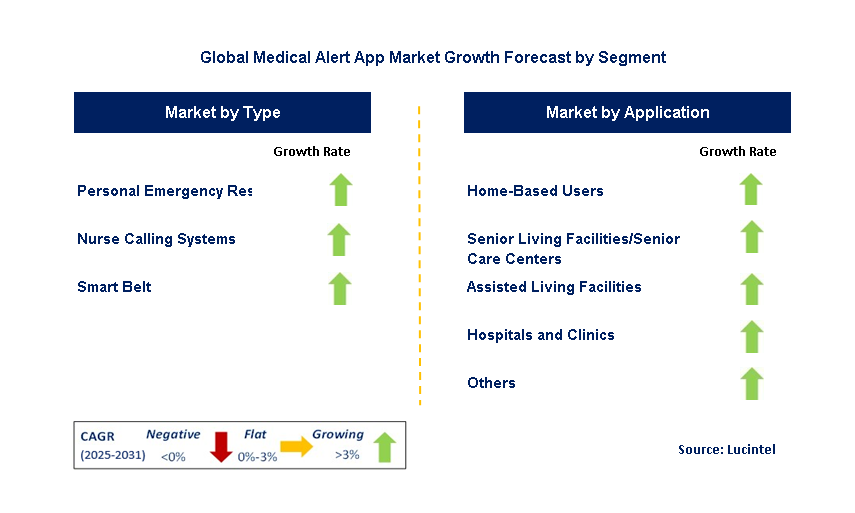
• Personal Emergency Response Systems
• Nurse Calling Systems
• Smart Belt
• Home-Based Users
• Senior Living Facilities/Senior Care Centers
• Assisted Living Facilities
• Hospitals And Clinics
• Others
• North America
• Europe
• Asia Pacific
• The Rest of the World
• United States: The demand for Medical Alert App is increasing tremendously in the U.S. owing to the growing geriatric population as well as the increasing usage of health–monitoring wearables. Such users have also enjoyed the convenience of increasingly popular apps that personalize care by integrating with their devices such as smart watches or fitness bands to send alerts and track their health parameters and need for assistance. Besides, improvement of mobile stenography like the "21st Century Cures Act" is also supporting the uptake of health technologies including portable medical alert systems. The growth in virtual health care is also increasing as there is more telemedicine being adopted in the market.
• China: Expanding the healthcare services, notably to the elderly population, has been one of the areas that the Chinese government has prioritized and has thus boosted the use of Medical Alert Apps and its market growth in the country. The shift to eHealth and ICT-enhanced healthcare is also adding momentum to the market. There is increasing adoption of new applications for chronic conditions management such as hypertension that utilizes AI to monitor, predict, or alert users in anticipation of telehealth. Also, through collaborations of tech firms with healthcare providers, there is more supply of inexpensive and user-friendly medical alert systems to rural areas. Adoption of medical alert applications will also increase greatly with rising mobile penetration.
• Germany: The German market for Medical Alert Apps has been increasing at a constant rate and is attributed to the country’s advanced healthcare system and high penetration of smartphones. The Covid-19 pandemic made the government actively push for mobile health solutions, which has translated into a demand for innovative technologies. There is wide acceptance of applications that have features such as fall detection, calling relatives in case of emergency, and being monitored all the time. Besides, careful attention is paid to data privacy where the apps are supposed to comply with the GDPR and other regulations. Medical alert systems are also deployed together with the emergency and insurance healthcare services.
• India: India’s medical alert app market is at an infancy owing to its rapid growth in smartphone penetration, increasing elderly population and the need for low-cost healthcare options. Medical alert apps in India include calling for help, tracking health information, and sending alerts based on the user’s geographic position, all of which are becoming commonplace. However, the market is still limited due to the low levels of digital literacy and the dearth of telemedicine facilities in the rural regions of the country. Still, there is an increasing traction of mobile health solutions in urban areas due to increase in demand for emergency services and chronic illness management.
• Japan: Japan, being one of the countries having the highest aging population, has a rapidly growing market for Medical Alert Apps. Besides basic emergency alert features, Japanese applications also have heart rate, blood pressure and blood glucose monitoring capabilities. Integration of the applications with wearable devices, as well as the integration of AI and anticipatory alerts geared at possible medical emergencies are becoming commonplace. The Japanese authorities are actively promoting mobile health technologies to meet the needs of the country’s elderly population. In the next years, the apps that combine emergency alert and health monitoring will be frequent in the market.


• Ascom Wireless Solutions
• Adt Corporation
• Jeron Electronics Systems Inc.
• Lifefone
• Koninklijke Philips N.V.
• Medical Guardian
• Bay Alarm Medical
• Connect America
• Hill-Rom Holdings Inc.
• Mobilehelp Q5. Which medical alert app market segment will be the largest in future? Answer: Lucintel forecasts that personal emergency response systems is expected to witness higher growth over the forecast period due to medical alert devices, two-way communication. Q6. In medical alert app market, which region is expected to be the largest in next 5 years? Answer: North America is expected to witness the highest growth over the forecast period. Q7. Do we receive customization in this report? Answer: Yes, Lucintel provides 10% customization without any additional cost.


Choose a license that fits your team. Instant PDF delivery.
Prices exclude taxes. Instant delivery. Custom licensing available on request.
Market Report · July 15, 2026
Market Report · June 26, 2026
Market Report · June 24, 2026
Trusted partner for strategic intelligence and business growth


Receive a complimentary market analysis tailored to your industry. Our analysts will identify key growth opportunities and competitive dynamics specific to your business.

Market size, growth rate, and key trend analysis for your specific sector.

Top competitor positioning and market share analysis.

Strategic recommendations backed by data-driven insights.
Get curated market intelligence and competitive moves straight to your inbox.
By subscribing, you agree to receive our monthly insights. Unsubscribe anytime.
Receive a complimentary market analysis tailored to your industry. Our analysts will identify key growth opportunities and competitive dynamics specific to your business.
Market size, growth rate, and key trend analysis for your specific sector.
Top competitor positioning and market share analysis.
Strategic recommendations backed by data-driven insights.
Get curated market intelligence, emerging trends, and competitive moves straight to your inbox each month.
By subscribing, you agree to receive our monthly insights. Unsubscribe anytime.
We'll send your sample report shortly.