
Market Report · July 15, 2026

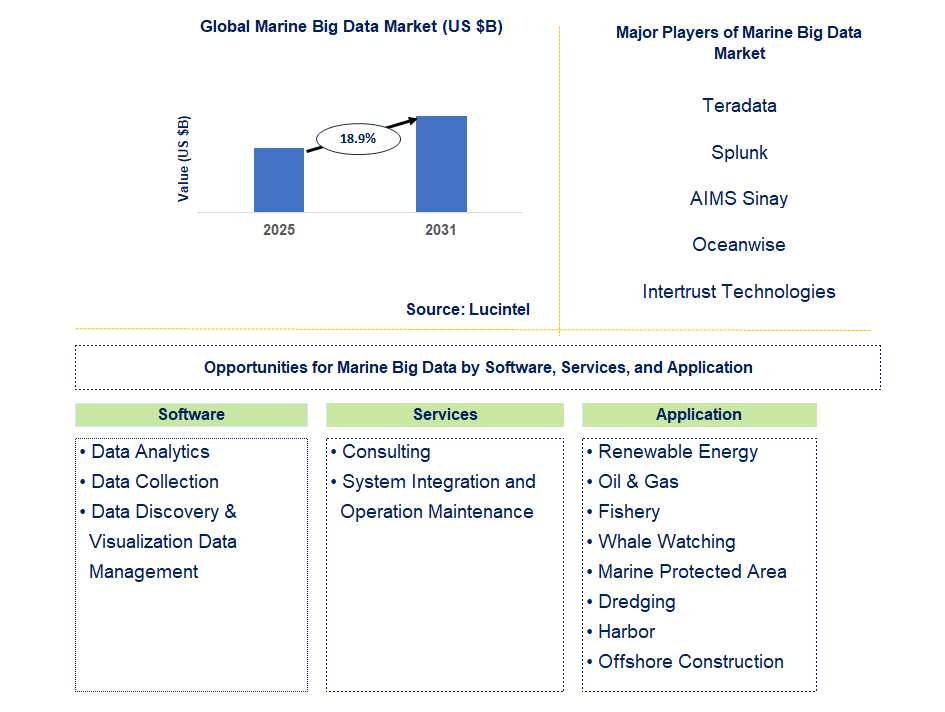
Key data points: The growth forecast = 18.9% annually for the next 7 years. Scroll below to get more insights. This market report covers Trends, opportunity and forecast in marine big data market to 2031 by software (data analytics, data collection, and data discovery & visualization data management), services (consulting and system integration and operation maintenance), application (renewable energy, oil & gas, fishery, whale watching, marine protected area, dredging, harbor, and offshore construction), and region (North America, Europe, Asia Pacific, and the Rest of the World)
We'll send your sample report shortly.
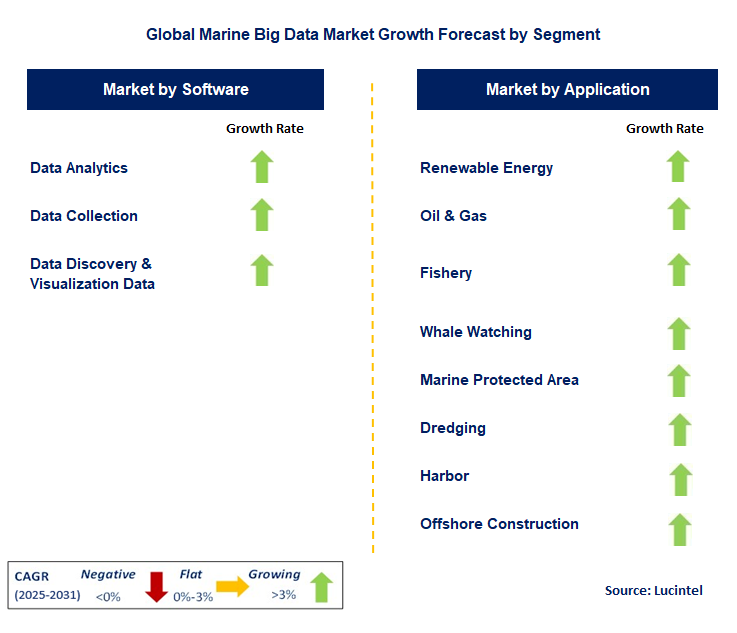
• Lucintel forecasts that, within the software category, data analytic is expected to witness the highest growth over the forecast period.
• Within the application category, oil & gas will remain the largest segment.
• In terms of region, North America is expected to witness the highest growth over the forecast period due to expanding maritime transportation & trade. Gain valuable insights for your business decisions with our comprehensive 150+ page report. Sample figures with some insights are shown below.
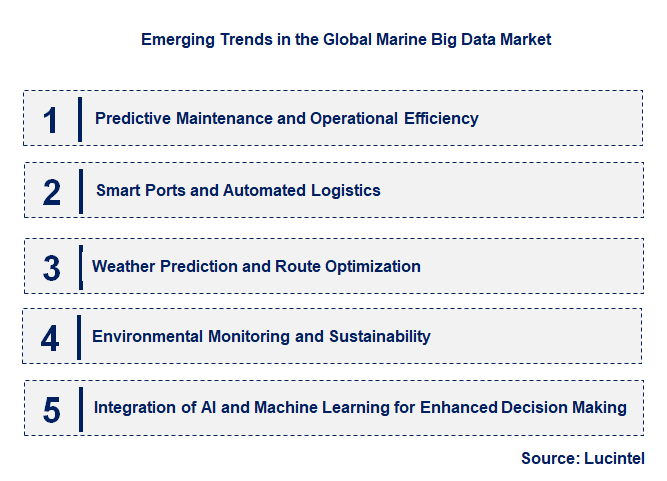
• Predictive Maintenance and Operational Efficiency: Predictive maintenance is one of the most impactful trends in the marine big data market. By analyzing real-time data from onboard sensors, Big Data solutions can predict when parts or systems are likely to fail, allowing for proactive maintenance. This reduces downtime, increases fleet availability, and cuts operational costs. Shipping companies are increasingly adopting these tools to optimize maintenance schedules, improve asset longevity, and prevent costly repairs. The use of predictive analytics also helps improve fuel efficiency, reducing both costs and the environmental footprint of vessels, aligning with the industry's sustainability goals.
• Smart Ports and Automated Logistics: The concept of "Smart Ports" is gaining traction, with Big Data playing a crucial role in transforming port operations. By integrating IoT sensors, AI, and machine learning, ports can track vessel arrivals, manage cargo flows, and reduce congestion in real-time. Automated cranes and trucks powered by Big Data improve logistics efficiency and reduce human error. This not only speeds up port processing but also ensures that resources are utilized efficiently, leading to cost savings and reduced environmental impacts. As more ports adopt these technologies, global supply chains are becoming faster, smarter, and more resilient.
• Weather Prediction and Route Optimization: Weather prediction and route optimization are becoming essential applications of Big Data in the maritime industry. Big Data allows for the analysis of vast amounts of meteorological data to forecast weather patterns and predict dangerous conditions at sea. Shipping companies can use these insights to optimize shipping routes, ensuring that vessels avoid severe weather and minimize fuel consumption. By integrating real-time weather data, route optimization tools help companies lower operational costs, improve safety, and ensure timely deliveries, making the shipping process more efficient and cost-effective while reducing environmental impacts.
• Environmental Monitoring and Sustainability: Environmental concerns have become a major focus in the marine industry, with stricter regulations on emissions and waste disposal. Big Data enables real-time monitoring of ship emissions, fuel consumption, and ocean pollution. By using data analytics, shipping companies can track their carbon footprint, comply with regulations, and identify ways to reduce emissions. Additionally, data-driven insights help marine organizations develop more sustainable practices, such as optimizing ship design for energy efficiency or identifying more eco-friendly shipping routes. This trend is aligned with the maritime industry's growing commitment to environmental sustainability and regulatory compliance.
• Integration of AI and Machine Learning for Enhanced Decision Making: AI and machine learning are transforming the marine big data market by providing more sophisticated and accurate insights for decision-making. These technologies can process vast amounts of data from multiple sources, such as vessel performance, weather patterns, and port conditions, to recommend optimal strategies. AI-powered systems can learn from historical data and predict future trends, improving fleet management, safety protocols, and cargo handling. Machine learning algorithms enable better decision-making in real-time, helping businesses optimize resources, improve safety, and reduce operational costs. As AI and machine learning technologies mature, they will continue to play a key role in maritime operations. The marine big data market is being reshaped by these emerging trends, all of which are geared toward improving operational efficiency, sustainability, and safety in the maritime industry. Predictive maintenance is extending fleet life and reducing costs, while smart ports and automated logistics are streamlining port operations globally. Enhanced weather prediction and route optimization are making shipping safer and more cost-effective, and Big Data's role in environmental monitoring is helping companies comply with regulations and meet sustainability goals. As AI and machine learning continue to evolve, they will further revolutionize maritime operations, creating more data-driven, efficient, and environmentally conscious strategies across the industry.
• Real-Time Fleet Monitoring and Analytics: Real-time fleet monitoring has been a game-changer in the marine big data market. Through IoT-enabled sensors and advanced analytics, shipping companies can now track the performance of vessels in real-time. This includes data on fuel consumption, engine health, weather conditions, and cargo load. Companies can optimize their operations, prevent equipment failures, and enhance safety by continuously monitoring this data. This development has led to more proactive management, improved fuel efficiency, and reduced maintenance costs. Real-time fleet monitoring also helps businesses comply with increasingly stringent environmental regulations by reducing emissions.
• Integration of AI for Predictive Maintenance: The integration of AI and machine learning in predictive maintenance is significantly advancing the marine big data market. By analyzing historical data and real-time operational data, AI systems can predict equipment failures before they occur. Shipping companies are now using AI-powered algorithms to monitor vessel components, such as engines, hulls, and electronics. This enables timely repairs, reduces unscheduled downtime, and minimizes maintenance costs. Predictive maintenance is increasingly being adopted across the industry as it ensures the longevity of vessels, reduces operational disruptions and contributes to overall fleet efficiency and sustainability.
• Smart Ports and Automated Cargo Handling: Smart ports have emerged as a critical development in the marine big data market. These ports use IoT devices, sensors, and AI-powered systems to automate cargo handling and optimize port operations. Big Data enables real-time tracking of shipments, container management, and the coordination of logistics operations. Ports are becoming more efficient by reducing congestion, increasing throughput, and enhancing the accuracy of cargo scheduling. This development has improved the global shipping industry's operational efficiency, reduced waiting times for vessels, and decreased operational costs, making ports more sustainable and competitive.
• Environmental Impact Monitoring and Compliance: With increasing regulatory pressure on reducing environmental footprints, the marine big data market is focusing heavily on environmental impact monitoring. Big Data analytics allows shipping companies to track and monitor emissions, fuel consumption, and waste management practices in real-time. This data-driven approach helps companies comply with environmental standards, such as the International Maritime Organization's (IMO) emission regulations. Additionally, monitoring environmental data enables better route optimization, reducing fuel use and lowering greenhouse gas emissions. These developments are pushing the maritime industry towards more sustainable operations and contributing to global environmental goals.
• Advanced Weather Forecasting and Route Optimization: Advanced weather forecasting and route optimization tools have become integral to the marine big data market. By analyzing large sets of meteorological data, shipping companies can predict weather patterns and sea conditions, helping vessels avoid adverse weather. This leads to safer, more efficient routes, reducing fuel consumption and enhancing delivery times. With Big Data-driven insights, shipping companies can dynamically adjust their routes based on weather forecasts, optimizing operational costs. This development has a significant impact on the safety of maritime operations while also contributing to the reduction of operational expenses and the overall carbon footprint. Recent developments in the marine big data market, such as real-time fleet monitoring, predictive maintenance, smart ports, environmental impact monitoring, and weather-driven route optimization, are fundamentally reshaping the maritime industry. These advancements are enhancing operational efficiencies, reducing costs, improving fleet management, and driving environmental sustainability. The integration of AI, IoT, and Big Data analytics is enabling companies to make data-driven decisions that improve safety, reduce downtime, and minimize environmental impact. As these technologies continue to evolve, they will shape the future of the maritime industry, leading to smarter, greener, and more efficient operations.
• Fleet Management Optimization: Fleet management is a critical application where Marine Big Data presents significant growth opportunities. Shipping companies can monitor vessel performance, track fuel consumption, and optimize routes by integrating IoT sensors, real-time analytics, and AI. Big Data allows for enhanced decision-making regarding fleet scheduling, reducing idle time, and optimizing cargo load, ultimately reducing operational costs. Moreover, this data-driven approach supports more efficient asset management, minimizing maintenance costs and improving fuel efficiency. As the maritime industry moves toward automation, fleet management will be a primary growth area, contributing to smarter and more cost-effective operations.
• Predictive Maintenance and Asset Management: Predictive maintenance is another significant growth opportunity in the marine big data market. AI algorithms can use historical and real-time data to forecast when vessel components require maintenance, helping shipping companies avoid costly downtime. This approach improves the longevity of vessels and machinery by enabling proactive repair schedules and identifying potential failures early. It also reduces unexpected disruptions and maintenance costs. With more ships adopting predictive maintenance tools, the market for AI-driven maintenance solutions is expected to grow, driving innovation and efficiency in the maritime industry by maximizing asset utilization and minimizing operational disruptions.
• Port Optimization and Smart Port Development: Smart ports, leveraging Big Data analytics, IoT, and AI, present a promising area for growth in the marine big data market. These technologies optimize cargo handling, reduce congestion, and improve overall port operations. Real-time tracking and automated systems for container management enhance port throughput and coordination across logistics networks. The growing adoption of automated cranes, trucks, and storage systems within ports is making them more efficient, reducing operational costs, and improving supply chain speed. As ports become more technologically advanced, opportunities for growth in this application will continue to drive efficiencies and competitiveness on a global scale.
• Environmental Monitoring and Sustainability: Environmental impact monitoring and sustainability initiatives are increasingly important for the maritime industry. Big Data enables the tracking of greenhouse gas emissions, fuel consumption, and waste management practices. With rising regulatory pressures, particularly from the International Maritime Organization (IMO), Big Data tools help shipping companies optimize fuel consumption and minimize emissions by adjusting routes and operating practices. This creates growth opportunities for data analytics firms offering solutions to meet these sustainability goals. By promoting greener operations, Big Data not only assists companies in complying with regulations but also helps reduce operational costs and enhance corporate social responsibility.
• Real-Time Data Analytics for Safety and Navigation: Real-time data analytics has become a vital tool for improving safety and navigation in the marine sector. With Big Data, shipping companies can access continuous updates on weather conditions, sea states, and vessel positions, allowing for more informed decision-making. Predictive analytics and AI can identify potential hazards or navigation risks, enabling timely interventions to avoid accidents. This application is crucial for enhancing the safety of both crew and cargo. As the technology becomes more sophisticated, the demand for real-time data analytics in the maritime industry will continue to grow, improving safety while optimizing route planning and operational efficiency. Strategic growth opportunities in the marine big data market are expanding across key applications such as fleet management, predictive maintenance, port optimization, environmental monitoring, and real-time data analytics. These applications are reshaping the maritime industry by enhancing operational efficiency, sustainability, and safety. With the continued integration of advanced technologies like IoT, AI, and machine learning, the maritime industry is moving toward more data-driven operations, which will drive significant growth. As these applications mature and expand, they will create new opportunities for innovation, cost reduction, and competitive advantage, ensuring the long-term evolution and sustainability of the sector.
• Teradata
• Splunk
• AIMS Sinay
• Oceanwise
• Intertrust Technologies
• MarineFIND
• BigOceanData
• Avenca Limited
• BMT Group
• Datameer
• Data Analytics
• Data Collection
• Data Discovery & Visualization Data Management
• Consulting
• System Integration and Operation Maintenance
• North America
• Europe
• Asia Pacific
• The Rest of the World
• United States: In the United States, the marine big data market is evolving rapidly, fueled by advancements in satellite technology, the Internet of Things (IoT), and artificial intelligence (AI). Key players in the shipping and maritime logistics sectors increasingly adopt big data solutions to optimize fleet management, improve predictive maintenance, and enhance maritime safety. The U.S. Navy and Coast Guard also leverage big data for better situational awareness and environmental monitoring. Regulatory pressure on environmental sustainability has led to the incorporation of big data for emission tracking and reporting, aligning with stricter emissions standards like IMO 2020.
• China: China has made significant strides in utilizing big data to improve its maritime infrastructure and operations. The Chinese government has been promoting the digital transformation of its shipping and logistics sectors through initiatives like the "Smart Shipping" program. Port authorities in China are employing big data analytics to monitor port operations in real time, enhance logistics efficiency, and reduce congestion. Additionally, Chinese maritime companies are incorporating AI and machine learning with Big Data to predict weather patterns and optimize shipping routes, improving the cost-efficiency and safety of marine transport.
• Germany: Germany is a leader in integrating Big Data into its maritime operations, particularly in the shipping and logistics industries. German shipping companies are investing heavily in digital technologies to optimize their operations. Big Data tools are used for predictive maintenance, monitoring ship performance, and ensuring compliance with environmental regulations. Port automation is another area where Big Data is being implemented, with Hamburg Port deploying smart technologies for real-time management of containers and logistics. Moreover, Germany's focus on environmental sustainability has led to innovations in reducing fuel consumption and emissions using data-driven insights.
• India: India is embracing big data in the marine sector to modernize its infrastructure and improve maritime safety and efficiency. The country's ports, such as Jawaharlal Nehru Port, are adopting smart technologies powered by Big Data to optimize container handling and improve logistics. The Indian Navy is also utilizing data analytics to enhance operational capabilities, streamline decision-making, and improve naval defense strategies. Additionally, India's growing focus on the “Blue Economy” has encouraged the adoption of Big Data for sustainable ocean management, including tracking fish populations and assessing marine ecosystems for better resource management.
• Japan: The Japanese maritime industry has been leveraging Big Data technologies to enhance operational efficiency and address the country's aging fleet issues. The Japanese government and private sector are collaborating on developing smart shipping solutions powered by Big Data analytics for route optimization, fuel efficiency, and predictive maintenance. Japan's maritime companies are also using Big Data for better disaster preparedness, particularly in earthquake and tsunami-prone regions. The use of advanced weather forecasting, powered by Big Data, has significantly improved Japan's ability to navigate and manage its large fleet. Furthermore, Japan is investing in digital solutions to reduce carbon emissions in line with global sustainability targets.


• Teradata
• Splunk
• AIMS Sinay
• Oceanwise
• Intertrust Technologies
• MarineFIND
• BigOceanData
• Avenca Limited
• BMT Group
• Datameer Q5. Which marine big data market segment will be the largest in future? Answer: Lucintel forecasts that data analytic is expected to witness the highest growth over the forecast period. Q6. In marine big data market, which region is expected to be the largest in next 5 years? Answer: North America is expected to witness the highest growth over the forecast period due to expanding maritime transportation & trade. Q7. Do we receive customization in this report? Answer: Yes, Lucintel provides 10% customization without any additional cost.


Choose a license that fits your team. Instant PDF delivery.
Prices exclude taxes. Instant delivery. Custom licensing available on request.
Market Report · July 15, 2026
Market Report · June 26, 2026
Market Report · June 24, 2026
Trusted partner for strategic intelligence and business growth


Receive a complimentary market analysis tailored to your industry. Our analysts will identify key growth opportunities and competitive dynamics specific to your business.

Market size, growth rate, and key trend analysis for your specific sector.

Top competitor positioning and market share analysis.

Strategic recommendations backed by data-driven insights.
Get curated market intelligence and competitive moves straight to your inbox.
By subscribing, you agree to receive our monthly insights. Unsubscribe anytime.
Receive a complimentary market analysis tailored to your industry. Our analysts will identify key growth opportunities and competitive dynamics specific to your business.
Market size, growth rate, and key trend analysis for your specific sector.
Top competitor positioning and market share analysis.
Strategic recommendations backed by data-driven insights.
Get curated market intelligence, emerging trends, and competitive moves straight to your inbox each month.
By subscribing, you agree to receive our monthly insights. Unsubscribe anytime.
We'll send your sample report shortly.