
Market Report · July 15, 2026

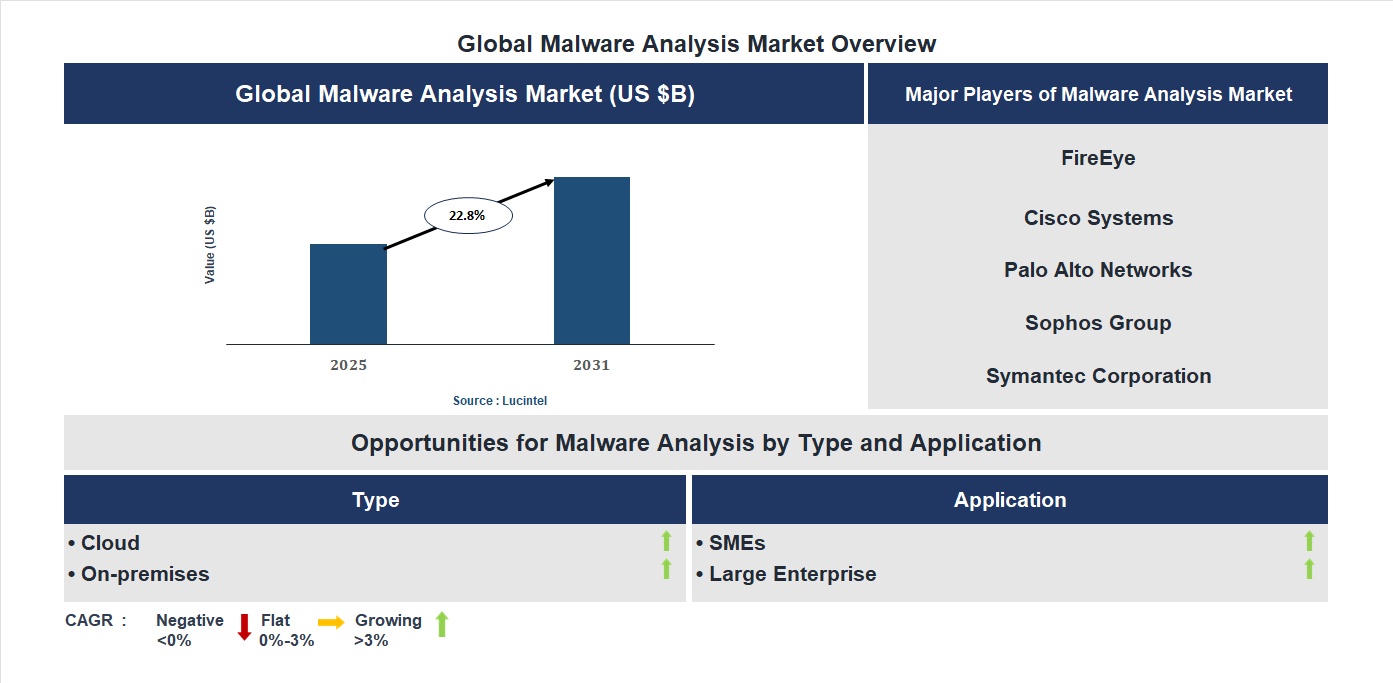
Key data points: The growth forecast = 22.8% annually for the next 7 years. Scroll below to get more insights. This market report covers trends, opportunities and forecasts in malware analysis market to 2031 by type (cloud and on-premises), application (SMEs and large enterprise), and region (North America, Europe, Asia Pacific, and the Rest of the World)
We'll send your sample report shortly.
• Lucintel forecasts that, within the type category, cloud is expected to witness higher growth over the forecast period.
• Within the application category, SME is expected to witness higher growth.
• In terms of region, APAC is expected to witness the highest growth over the forecast period. Gain valuable insights for your business decisions with our comprehensive 150+ page report. Sample figures with some insights are shown below.
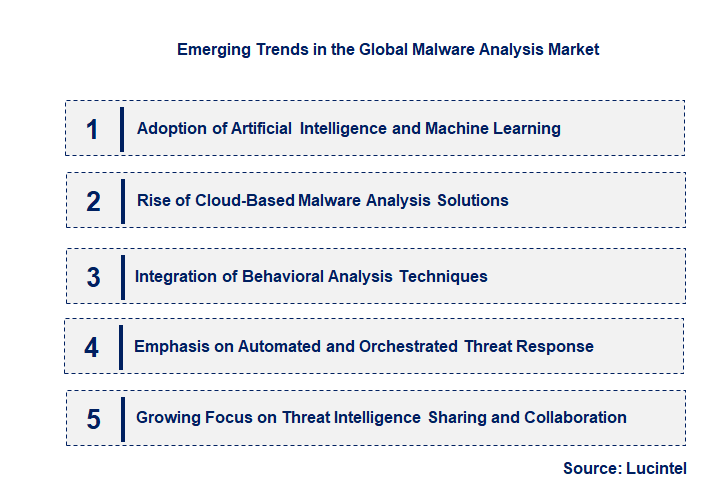
• Adoption of Artificial Intelligence and Machine Learning: AI and ML are increasingly integrated into malware analysis tools to enhance detection accuracy and speed. These technologies enable real-time analysis of vast data sets, identifying patterns and anomalies indicative of malware. Automated threat detection reduces reliance on manual processes, minimizes false positives, and accelerates response times. As malware becomes more sophisticated, AI-driven solutions are vital for staying ahead of emerging threats. This trend is transforming the market by enabling more intelligent, adaptive security systems that can predict and prevent attacks proactively.
• Rise of Cloud-Based Malware Analysis Solutions: Cloud platforms are gaining popularity for malware analysis due to their scalability, cost-effectiveness, and ease of deployment. Cloud-based solutions facilitate rapid sharing of threat intelligence across organizations and security teams, improving collaborative defense. They also support large-scale data processing and analysis, which is essential for handling complex malware variants. This trend is expanding market reach, enabling small and medium-sized enterprises to access advanced analysis tools without significant infrastructure investments, thereby democratizing cybersecurity capabilities.
• Integration of Behavioral Analysis Techniques: Behavioral analysis focuses on monitoring the actions of programs and processes to detect malicious activity. This approach helps identify zero-day malware and polymorphic threats that traditional signature-based methods might miss. By analyzing behavior patterns, security solutions can respond more dynamically to new and unknown threats. The adoption of behavioral analysis is increasing, leading to more comprehensive and effective malware detection strategies. This trend enhances the market by providing more robust, multi-layered defense mechanisms that adapt to evolving attack vectors.
• Emphasis on Automated and Orchestrated Threat Response: Automation in malware analysis allows for quicker identification and containment of threats, reducing the window of vulnerability. Orchestration integrates various security tools and processes to coordinate responses seamlessly across different platforms. This trend minimizes human intervention, decreases response times, and improves overall security posture. As cyber threats grow in complexity, automated and orchestrated responses are becoming essential for effective defense. This shift is reshaping the market by fostering the development of integrated security ecosystems that can react swiftly to emerging malware threats.
• Growing Focus on Threat Intelligence Sharing and Collaboration: Collaborative platforms enable organizations to share threat intelligence, malware signatures, and attack techniques in real-time. This collective approach enhances the ability to detect and respond to threats more effectively. Industry alliances and information-sharing communities are strengthening, fostering a proactive security environment. This trend is expanding the market by encouraging the development of interoperable tools and standards, ultimately leading to more resilient cybersecurity defenses. Increased collaboration helps organizations stay informed about the latest malware trends and attack methods, improving overall market responsiveness. In summary, these emerging trends are fundamentally reshaping the malware analysis market by fostering more intelligent, scalable, and collaborative security solutions. They enable organizations to better anticipate, detect, and respond to increasingly sophisticated malware threats, ensuring a more resilient digital environment. As these trends continue to evolve, the market is poised for significant growth driven by innovation and strategic adaptation.
• Adoption of AI and Machine Learning: Integration of AI and ML in malware analysis tools has improved threat detection accuracy and speed. These technologies enable automated analysis of large data sets, identifying patterns and anomalies indicative of malware. This development reduces reliance on manual analysis, accelerates response times, and enhances predictive capabilities. As a result, organizations can proactively defend against emerging threats, making security measures more robust and efficient.
• Cloud-Based Malware Analysis Solutions: The shift towards cloud-based platforms offers scalable, cost-effective, and accessible malware analysis services. Cloud solutions facilitate real-time threat intelligence sharing and collaboration across organizations. They also enable rapid deployment and updates, ensuring analysis tools stay current with evolving malware techniques. This development broadens market reach, especially for small and medium enterprises, and enhances overall cybersecurity posture.
• Strategic Partnerships and Collaborations: Companies are forming alliances with technology providers, cybersecurity firms, and government agencies to strengthen malware analysis capabilities. These partnerships foster innovation, share threat intelligence, and develop comprehensive security frameworks. Such collaborations improve the effectiveness of malware detection and response, creating a more resilient cybersecurity ecosystem and expanding market opportunities.
• Regulatory and Compliance Influences: Increasing regulatory requirements for data protection and cybersecurity are driving investments in malware analysis solutions. Governments and industry bodies are establishing standards and guidelines that mandate proactive threat detection and reporting. Compliance pressures encourage organizations to adopt advanced analysis tools, fueling market growth and innovation in malware detection technologies.
• Development of Behavioral Analysis Techniques: Focus on behavioral analysis enables detection of malware based on its actions rather than signatures. This approach helps identify zero-day threats and polymorphic malware that traditional signature-based methods might miss. The advancement enhances detection accuracy, reduces false positives, and improves overall security effectiveness, thereby expanding the market for behavioral analysis tools. In summary, these developments are significantly impacting the malware analysis market by enhancing detection capabilities, enabling scalable and collaborative solutions, and aligning with regulatory standards. They are driving innovation, increasing market competitiveness, and strengthening cybersecurity defenses across various sectors. As threats continue to evolve, these advancements will be crucial in maintaining effective malware defense strategies worldwide.
• Enterprise Security: Strengthening defenses against sophisticated malware attacks : As enterprises face complex cyber threats, malware analysis tools enable proactive threat detection and response, reducing potential data breaches and operational disruptions. This drives increased adoption of advanced security solutions within corporate environments, fostering market growth.
• Cloud Security: Securing cloud infrastructure and data : With the migration to cloud platforms, organizations require specialized malware analysis to identify threats in virtual environments. This application enhances cloud security measures, ensuring data integrity and compliance, thereby expanding market opportunities.
• Mobile Security: Protecting mobile devices and applications : The proliferation of mobile devices has increased malware risks targeting smartphones and tablets. Malware analysis solutions tailored for mobile security help detect and mitigate threats, supporting the growth of mobile security markets.
• Government Cybersecurity: Safeguarding national infrastructure : Governments are investing heavily in malware analysis to defend critical infrastructure from cyber espionage and attacks. This application strengthens national security frameworks and fuels market expansion through increased government funding.
• Financial Services: Securing transactions and sensitive data : Financial institutions rely on malware analysis to prevent fraud and cyber theft. Enhanced security measures in banking and payment systems drive demand for specialized malware detection tools, contributing to market growth. In summary, these key application areas are significantly impacting the malware analysis market by driving innovation, increasing adoption, and expanding market size. As cyber threats evolve, the focus on comprehensive malware analysis solutions across these sectors will continue to propel market growth and technological advancements.
• Growing Cybersecurity Threats: The surge in cyberattacks worldwide has heightened the need for effective malware detection and analysis tools. As cybercriminals develop more sophisticated malware variants, organizations across industries are compelled to invest in advanced analysis solutions to safeguard sensitive data and maintain operational integrity. This escalating threat landscape fuels demand for real-time, automated malware analysis platforms, fostering market expansion.
• Increasing Adoption of Cloud and Digital Transformation: The shift towards cloud computing and digital services has expanded the attack surface for cyber threats. Organizations are adopting cloud-based malware analysis tools to enable scalable, flexible, and remote threat detection capabilities. This trend accelerates market growth by enabling faster deployment and integration of malware analysis solutions within diverse IT environments.
• Rising Regulatory and Compliance Requirements: Governments and industry bodies are implementing stringent data security and privacy regulations, such as GDPR and HIPAA. These regulations mandate organizations to adopt robust malware analysis and cybersecurity measures to ensure compliance. The need to meet legal standards drives investments in advanced malware analysis tools, thereby propelling market growth.
• Technological Advancements in AI and Machine Learning: The integration of artificial intelligence and machine learning into malware analysis enhances detection accuracy and reduces response times. These technologies enable predictive analytics and behavioral analysis of malware, improving threat identification. Continuous innovation in this domain attracts organizations seeking cutting-edge solutions, fueling market development.
• Increasing Use of Automated and Behavioral Analysis Tools: Automation in malware analysis reduces manual effort and accelerates threat detection processes. Behavioral analysis tools monitor malware activities in real-time, providing deeper insights into malicious behaviors. The adoption of such advanced tools is driven by the need for rapid response and improved security posture, contributing significantly to market growth. The challenges facing this malware analysis market include:
• Rapid Evolution of Malware: Malware developers continuously innovate, creating new variants that evade traditional detection methods. This rapid evolution complicates analysis efforts, requiring constant updates to analysis tools and techniques. Staying ahead of emerging threats demands significant R&D investment, which can be a barrier for smaller players and hampers overall market growth.
• High Implementation and Maintenance Costs: Advanced malware analysis solutions often involve substantial initial investments and ongoing operational expenses. Small and medium-sized enterprises may find these costs prohibitive, limiting market penetration. Additionally, maintaining and updating complex analysis systems require specialized expertise, further increasing total cost of ownership.
• Regulatory and Privacy Concerns: While regulations promote security, they also impose compliance challenges. Data privacy laws restrict data sharing and analysis, complicating malware research and threat intelligence sharing across organizations and borders. Navigating these regulatory landscapes can delay deployment and increase operational complexity, hindering market expansion. In summary, the malware analysis market is driven by increasing cyber threats, technological innovations, and regulatory pressures, which collectively foster growth opportunities. However, challenges such as malware's rapid evolution, high costs, and regulatory complexities pose significant hurdles. The market's future will depend on how effectively stakeholders innovate and adapt to these dynamic factors, balancing technological advancements with cost-efficiency and compliance to sustain growth.
• FireEye
• Cisco Systems
• Palo Alto Networks
• Sophos Group
• Symantec Corporation
• Kaspersky Lab
• Fortinet
• Check Point Software Technologies
• Qualys
• McAfee
• Cloud
• On-premises
• SMEs
• Large Enterprise
• North America
• Europe
• Asia Pacific
• The Rest of the World
• United States: The US leads in malware analysis innovation, with major investments in AI-driven detection tools and cloud-based platforms. Government agencies and private firms are collaborating to develop advanced threat intelligence systems, focusing on real-time analysis and automated response. The adoption of machine learning algorithms has improved malware identification accuracy, while startups are pioneering new solutions to combat evolving threats. Regulatory frameworks are also evolving to enhance cybersecurity standards across industries, fostering a competitive and innovative environment.
• China: China has accelerated its malware analysis capabilities through government-backed initiatives and technological investments. The country emphasizes integrating AI and big data analytics into malware detection systems to address increasing cyber espionage and cybercrime activities. Domestic companies are expanding their R&D efforts, developing sophisticated malware sandboxing and behavioral analysis tools. The government’s focus on cybersecurity sovereignty has led to the development of localized solutions, boosting the domestic malware analysis market and reducing reliance on foreign technologies.
• Germany: Germany’s malware analysis market is characterized by a focus on industrial cybersecurity and critical infrastructure protection. Leading firms are adopting advanced static and dynamic analysis techniques, incorporating AI to detect complex malware strains. The country emphasizes compliance with European Union cybersecurity regulations, fostering innovation in secure software development and threat intelligence sharing. Collaborative efforts between academia and industry are driving research in malware behavior analysis, enhancing Germany’s resilience against cyber threats targeting its manufacturing and energy sectors.
• India: India’s malware analysis market is rapidly expanding, driven by increasing cyberattacks on financial institutions, government agencies, and enterprises. The country is investing in AI-powered malware detection tools and cloud-based security solutions to address the rising threat landscape. Government initiatives like the National Cyber Security Policy aim to strengthen malware analysis capabilities through skill development and infrastructure enhancement. Local startups are emerging with innovative solutions, focusing on behavioral analysis and automated threat response, positioning India as a growing hub for malware analysis technology.
• Japan: Japan is advancing its malware analysis market by integrating AI and machine learning into cybersecurity frameworks. The focus is on protecting critical infrastructure, including transportation and manufacturing sectors. Japanese firms are developing sophisticated sandbox environments and behavioral analysis tools to detect advanced persistent threats. The government promotes cybersecurity resilience through national strategies and public-private partnerships, encouraging innovation in malware detection and analysis. The market is also witnessing increased adoption of cloud-based solutions to enhance scalability and real-time threat mitigation.


• FireEye
• Cisco Systems
• Palo Alto Networks
• Sophos Group
• Symantec Corporation
• Kaspersky Lab
• Fortinet
• Check Point Software Technologies
• Qualys
• McAfee Q5. Which malware analysis market segment will be the largest in future? Answer: Lucintel forecasts that, within the type category, cloud is expected to witness higher growth over the forecast period. Q6. In malware analysis market, which region is expected to be the largest in next 5 years? Answer: In terms of region, APAC is expected to witness the highest growth over the forecast period. Q7. Do we receive customization in this report? Answer: Yes, Lucintel provides 10% customization without any additional cost.


Choose a license that fits your team. Instant PDF delivery.
Prices exclude taxes. Instant delivery. Custom licensing available on request.
Market Report · July 15, 2026
Market Report · June 26, 2026
Market Report · June 24, 2026
Trusted partner for strategic intelligence and business growth


Receive a complimentary market analysis tailored to your industry. Our analysts will identify key growth opportunities and competitive dynamics specific to your business.

Market size, growth rate, and key trend analysis for your specific sector.

Top competitor positioning and market share analysis.

Strategic recommendations backed by data-driven insights.
Get curated market intelligence and competitive moves straight to your inbox.
By subscribing, you agree to receive our monthly insights. Unsubscribe anytime.
Receive a complimentary market analysis tailored to your industry. Our analysts will identify key growth opportunities and competitive dynamics specific to your business.
Market size, growth rate, and key trend analysis for your specific sector.
Top competitor positioning and market share analysis.
Strategic recommendations backed by data-driven insights.
Get curated market intelligence, emerging trends, and competitive moves straight to your inbox each month.
By subscribing, you agree to receive our monthly insights. Unsubscribe anytime.
We'll send your sample report shortly.