
Market Report · July 22, 2026

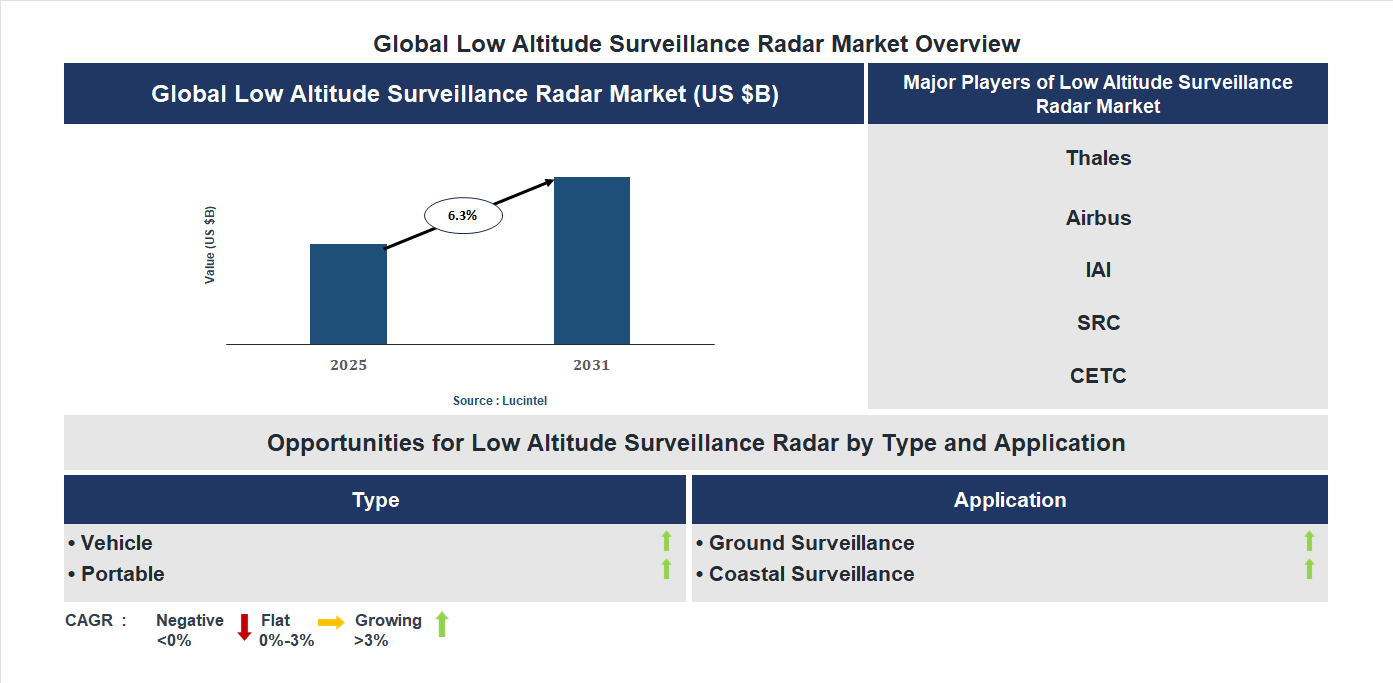
Key data points: The growth forecast = 6.3% annually for the next 7 years. Scroll below to get more insights. This market report covers trends, opportunities and forecasts in low altitude surveillance radar market to 2031 by type (vehicle and portable), application (ground surveillance and coastal surveillance), and region (North America, Europe, Asia Pacific, and the Rest of the World)
We'll send your sample report shortly.
• Lucintel forecasts that, within the type category, portable is expected to witness higher growth over the forecast period.
• Within the application category, ground surveillance is expected to witness higher growth.
• In terms of region, APAC is expected to witness the highest growth over the forecast period. Gain valuable insights for your business decisions with our comprehensive 150+ page report. Sample figures with some insights are shown below.
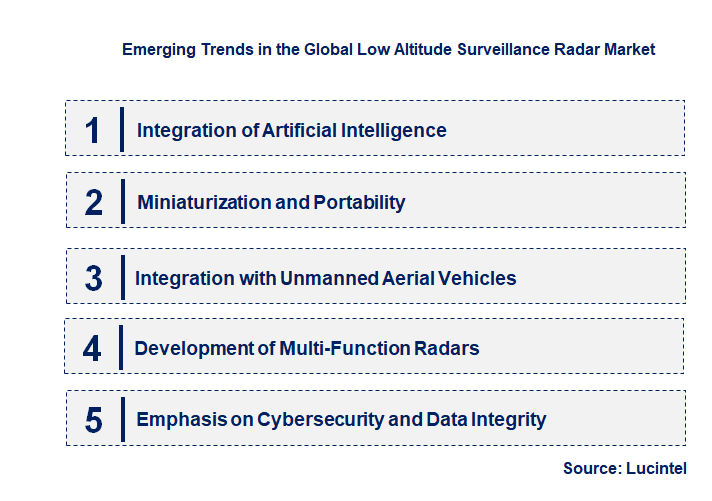
• Integration of Artificial Intelligence (AI): AI is increasingly integrated into radar systems to enhance data processing, target identification, and threat assessment. Machine learning algorithms enable real-time analysis of vast data streams, improving accuracy and reducing false alarms. This trend allows for more autonomous operations, faster decision-making, and better resource allocation, ultimately increasing the effectiveness of low altitude surveillance. As AI technology matures, its adoption is expected to become a standard feature, transforming traditional radar capabilities into smarter, more adaptive systems.
• Miniaturization and Portability: Advances in electronics and materials have led to smaller, lightweight radar units that are easier to deploy in diverse environments. Portable radars facilitate rapid deployment in remote or tactical scenarios, providing flexible surveillance options. This trend enhances operational agility, allowing for quick setup and repositioning, which is crucial for border security, disaster response, and military applications. Miniaturization also reduces costs and logistical challenges, broadening access to advanced surveillance technology across various sectors.
• Integration with Unmanned Aerial Vehicles (UAVs): The combination of low altitude radars with UAV platforms is gaining traction, enabling persistent surveillance over large areas. UAV-mounted radars can be rapidly deployed to monitor specific zones, providing real-time data to command centers. This integration enhances coverage, reduces blind spots, and offers a cost-effective alternative to traditional fixed systems. It also allows for dynamic response to emerging threats, making surveillance more adaptable and comprehensive in complex operational environments.
• Development of Multi-Function Radars: Modern radars are evolving into multi-function systems capable of performing various roles such as target tracking, weather monitoring, and electronic warfare. These versatile radars optimize resource utilization and reduce the need for multiple specialized systems. Multi-function radars improve operational efficiency, provide comprehensive situational awareness, and support integrated defense strategies. Their adaptability makes them suitable for diverse applications, from military defense to civilian airspace management, reflecting a trend toward more consolidated and intelligent surveillance solutions.
• Emphasis on Cybersecurity and Data Integrity: As radar systems become more connected and reliant on digital networks, cybersecurity has become a critical concern. Protecting sensitive data and preventing cyber-attacks are priorities to ensure operational continuity and data integrity. Enhanced encryption, secure communication protocols, and regular system updates are being implemented to safeguard surveillance infrastructure. This trend underscores the importance of resilient systems capable of resisting cyber threats, which is vital for maintaining trust and reliability in low altitude surveillance operations amid increasing digital vulnerabilities. In summary, these trends are collectively transforming the low altitude surveillance radar market by making systems more intelligent, flexible, integrated, and secure. They are enabling more effective monitoring and threat detection, supporting a wide range of applications from military defense to civilian security. As these developments continue, the market is poised for significant growth, driven by the need for advanced, adaptable, and resilient surveillance solutions in an increasingly complex airspace environment.
• Integration of Artificial Intelligence : AI algorithms are now being integrated into radar systems to improve target detection, classification, and tracking accuracy. This development enhances real-time decision-making and reduces false alarms, making surveillance more reliable. AI-driven systems can adapt to changing environments and identify threats more efficiently, which is crucial for border security and military operations. The impact is a significant boost in operational efficiency and reduced manpower requirements, leading to cost savings and improved security outcomes.
• Miniaturization of Radar Components : Advances in electronics have led to smaller, more portable radar units suitable for deployment in diverse environments. Miniaturized radars enable rapid deployment and flexibility in various terrains, including urban, rural, and maritime settings. This development broadens the scope of surveillance applications, especially for mobile and temporary installations. The impact includes increased operational versatility, lower installation costs, and enhanced coverage in hard-to-reach areas, strengthening overall surveillance capabilities.
• Deployment of Networked Radar Systems : The shift towards networked radar systems allows multiple radars to operate collaboratively, sharing data in real-time. This interconnected approach improves coverage, reduces blind spots, and enhances threat detection accuracy. It also facilitates centralized control and data analysis, leading to more coordinated responses. The impact is a more comprehensive surveillance network capable of monitoring larger areas with higher precision, which is vital for national security and air traffic management.
• Development of Multi-Function Radars : Multi-function radars capable of performing surveillance, tracking, and missile guidance are increasingly being developed. These radars offer multifunctionality in a single platform, reducing the need for multiple systems. They improve operational efficiency and response times in defense scenarios. The impact is a streamlined surveillance infrastructure that provides versatile capabilities, reducing costs and complexity while enhancing overall system performance.
• Enhanced Detection of Low-Altitude and Stealth Targets : New radar technologies are improving the detection of low-altitude and stealth targets, which were previously difficult to track. These advancements include higher resolution, better clutter rejection, and advanced signal processing techniques. The impact is a significant increase in the ability to monitor and intercept modern threats, thereby strengthening defense and border security measures. This development ensures that surveillance systems remain effective against evolving aerial threats. In summary, these recent developments are transforming the low altitude surveillance radar market by making systems more intelligent, portable, interconnected, multifunctional, and capable of detecting advanced threats. These innovations are enhancing security, operational efficiency, and coverage, thereby driving market growth and expanding application scopes across military, border security, and civil aviation sectors.
• Defense: Enhanced threat detection capabilities : The defense sector is adopting advanced low altitude surveillance radars to identify and track low-flying threats such as drones and cruise missiles, improving national security and battlefield awareness.
• Air Traffic Management: Improved airspace safety : These radars enable precise monitoring of low altitude aircraft, reducing collision risks and optimizing traffic flow, which is crucial as air traffic volume increases globally.
• Border Security: Strengthening border surveillance : Low altitude radars provide continuous, real-time monitoring of border areas, helping prevent illegal crossings and smuggling activities, thus enhancing national security.
• Maritime Surveillance: Protecting maritime borders : The radars facilitate early detection of unauthorized vessels and maritime threats, supporting maritime security and safeguarding economic interests.
• Commercial Aviation: Enhancing airport safety : Integration of low altitude radars in airports improves aircraft landing and takeoff procedures, especially in adverse weather conditions, ensuring passenger safety and operational efficiency. In summary, these growth opportunities are significantly impacting the low altitude surveillance radar market by driving technological innovation, expanding application scope, and increasing demand across defense, civil, and commercial sectors. This evolution is fostering a more secure, efficient, and responsive surveillance ecosystem, positioning the market for sustained growth.
• Technological Advancements: The continuous evolution of radar technology, including phased array systems and AI integration, enhances detection accuracy and operational efficiency. These innovations enable real-time data processing and improved target tracking, making radar systems more reliable and adaptable to complex environments. As technology advances, manufacturers can develop more compact, cost-effective, and versatile radars, expanding their application scope across military, aviation, and border security sectors. This ongoing innovation sustains market growth by meeting increasing demand for sophisticated surveillance solutions.
• Rising Defense Budgets: Governments worldwide are increasing their defense spending to modernize military capabilities and address emerging threats. Enhanced surveillance and reconnaissance are critical components of modern defense strategies, driving demand for low altitude radar systems. Countries investing heavily in border security, maritime surveillance, and airspace monitoring are significant market drivers. This financial commitment ensures continuous procurement and upgrades of radar systems, fostering a robust market environment and encouraging technological development to meet evolving security needs.
• Increasing Need for Border Security and Maritime Surveillance: The rising incidences of illegal crossings, smuggling, and maritime threats have heightened the demand for effective surveillance solutions. Low altitude radars are essential for monitoring sensitive borders and maritime zones, providing real-time data to prevent illegal activities. Governments and private entities are investing in these systems to enhance national security and maritime safety. The growing focus on homeland security and international maritime security initiatives directly contribute to expanding the market, as stakeholders seek reliable, high-performance radar systems to safeguard their territories.
• Regulatory and Policy Frameworks: Stringent government regulations and international standards for military and civilian radar systems influence market dynamics. Compliance with export controls, safety standards, and environmental regulations can impact product development and deployment timelines. Conversely, supportive policies and defense agreements can facilitate market expansion by enabling cross-border collaborations and technology sharing. Regulatory frameworks also drive innovation, as manufacturers develop systems that meet evolving standards, ensuring market competitiveness and compliance.
• Integration of AI and Machine Learning: The incorporation of artificial intelligence and machine learning algorithms into radar systems enhances data analysis, target identification, and threat assessment capabilities. These technologies enable autonomous operation, reduce false alarms, and improve decision-making processes. As AI-driven radars become more sophisticated, they offer significant advantages in complex environments, such as cluttered urban areas or maritime zones. This technological integration is a key driver, fostering the development of next-generation surveillance systems that meet the demands of modern security challenges. The challenges facing this low altitude surveillance radar market include:
• High Development and Maintenance Costs: Developing advanced low altitude radar systems requires significant investment in research, technology, and infrastructure. Maintenance and operational costs are also substantial, especially for systems deployed in remote or harsh environments. These financial barriers can limit adoption, particularly for smaller agencies or countries with constrained budgets. The high costs may slow down market growth and restrict the deployment of cutting-edge radar solutions, impacting overall industry expansion.
• Regulatory and Export Restrictions: Strict export controls and regulatory compliance requirements can hinder international trade and collaboration. These restrictions may delay product launches, increase compliance costs, and limit market access for certain regions. Navigating complex regulatory landscapes can be challenging for manufacturers, potentially reducing their global competitiveness. Such restrictions can also impede the transfer of technology and hinder the adoption of innovative radar systems across borders.
• Technological Limitations and Interoperability Issues: Despite advancements, radar systems still face challenges related to clutter, false alarms, and environmental interference. Integrating new technologies like AI with existing systems can be complex and may lead to interoperability issues. These limitations can affect system reliability and accuracy, reducing user confidence. Overcoming these technical hurdles requires ongoing research and development, which can be time-consuming and costly, potentially slowing market growth. In summary, the low altitude surveillance radar market is driven by technological innovation, increased defense spending, and the need for enhanced security measures. However, high costs, regulatory barriers, and technological challenges pose significant hurdles. The interplay of these factors shapes the market landscape, requiring stakeholders to balance innovation with compliance and cost management. Overall, the markets growth prospects remain promising, provided that technological and regulatory challenges are effectively addressed, enabling the deployment of advanced surveillance solutions worldwide.
• Thales
• Airbus
• IAI
• SRC
• CETC
• Blighter
• Bharat Electronics
• Vehicle
• Portable
• Ground Surveillance
• Coastal Surveillance
• North America
• Europe
• Asia Pacific
• The Rest of the World
• United States: The US has seen substantial investments in next-generation radar systems, including phased-array and AI-enabled radars, to bolster homeland security and military defense. The Department of Defense is focusing on integrating these radars with drone detection and cybersecurity measures, enhancing real-time threat assessment capabilities. Additionally, private companies are developing compact, portable radars for border security and urban surveillance applications.
• China: China has advanced its low altitude surveillance radar technology with the deployment of domestically produced systems that feature improved detection ranges and multi-target tracking. The country is emphasizing the development of integrated surveillance networks for border security and military operations, alongside innovations in radar signal processing and automation. These efforts aim to reduce reliance on foreign technology and strengthen regional security.
• Germany: Germany is investing in sophisticated radar systems for air traffic management and defense, with a focus on interoperability within NATO frameworks. Recent developments include the integration of AI and machine learning algorithms to enhance target identification and reduce false alarms. The country is also exploring the use of mobile and adaptable radar units for flexible deployment in various operational scenarios.
• India: India has accelerated its efforts to modernize its surveillance infrastructure, deploying advanced low altitude radars along its borders to counter infiltration and unauthorized crossings. The government is collaborating with international partners to develop indigenous radar technology, emphasizing automation and networked systems for comprehensive border security. Recent procurements include phased-array radars capable of tracking multiple targets simultaneously.
• Japan: Japan continues to upgrade its surveillance radar systems to address regional security challenges, particularly in the East Asian maritime domain. Recent developments include the deployment of high-resolution, long-range radars integrated with maritime domain awareness systems. Japan is also investing in research to improve radar resilience against electronic warfare and cyber threats, ensuring robust defense capabilities in complex operational environments.


• Thales
• Airbus
• IAI
• SRC
• CETC
• Blighter
• Bharat Electronics Q5. Which low altitude surveillance radar market segment will be the largest in future? Answer: Lucintel forecasts that, within the type category, portable is expected to witness higher growth over the forecast period. Q6. In low altitude surveillance radar market, which region is expected to be the largest in next 5 years? Answer: In terms of region, APAC is expected to witness the highest growth over the forecast period. Q7. Do we receive customization in this report? Answer: Yes, Lucintel provides 10% customization without any additional cost.


Choose a license that fits your team. Instant PDF delivery.
Prices exclude taxes. Instant delivery. Custom licensing available on request.
Market Report · July 22, 2026
Market Report · July 17, 2026
Market Report · July 17, 2026
Trusted partner for strategic intelligence and business growth


Receive a complimentary market analysis tailored to your industry. Our analysts will identify key growth opportunities and competitive dynamics specific to your business.

Market size, growth rate, and key trend analysis for your specific sector.

Top competitor positioning and market share analysis.

Strategic recommendations backed by data-driven insights.
Get curated market intelligence and competitive moves straight to your inbox.
By subscribing, you agree to receive our monthly insights. Unsubscribe anytime.
Receive a complimentary market analysis tailored to your industry. Our analysts will identify key growth opportunities and competitive dynamics specific to your business.
Market size, growth rate, and key trend analysis for your specific sector.
Top competitor positioning and market share analysis.
Strategic recommendations backed by data-driven insights.
Get curated market intelligence, emerging trends, and competitive moves straight to your inbox each month.
By subscribing, you agree to receive our monthly insights. Unsubscribe anytime.
We'll send your sample report shortly.