
Market Report · July 15, 2026

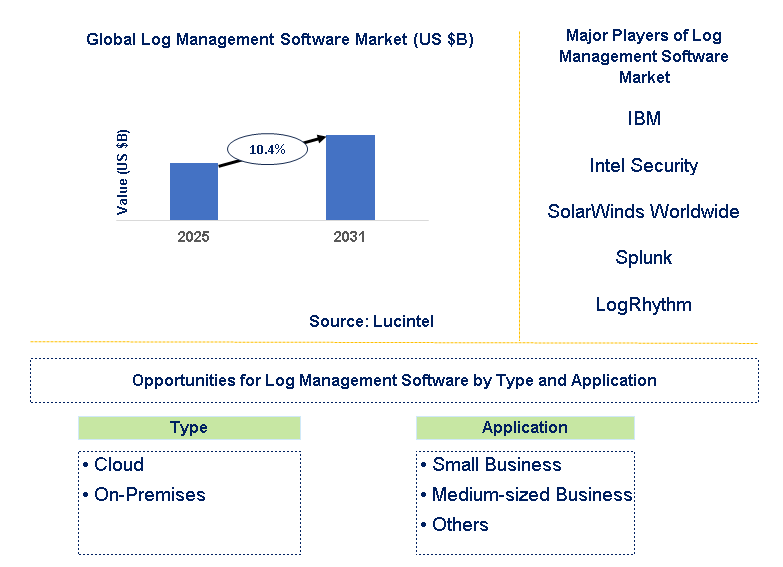
Key data points: The growth forecast = 10.4% annually for the next 7 years. Scroll below to get more insights. This market report covers trends, opportunities and forecasts in log management software market to 2031 by type (cloud and on-premises), application (small business, medium-sized business, and others), and region (North America, Europe, Asia Pacific, and the Rest of the World)
We'll send your sample report shortly.
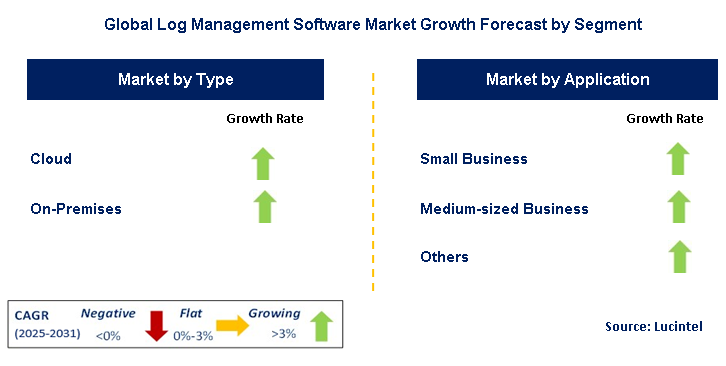
• Lucintel forecasts that, within the type category, cloud is expected to witness higher growth over the forecast period.
• Within the application category, medium-sized business is expected to witness higher growth.
• In terms of region, North America is expected to witness the highest growth over the forecast period. Gain valuable insights for your business decisions with our comprehensive 150+ page report. Sample figures with some insights are shown below.
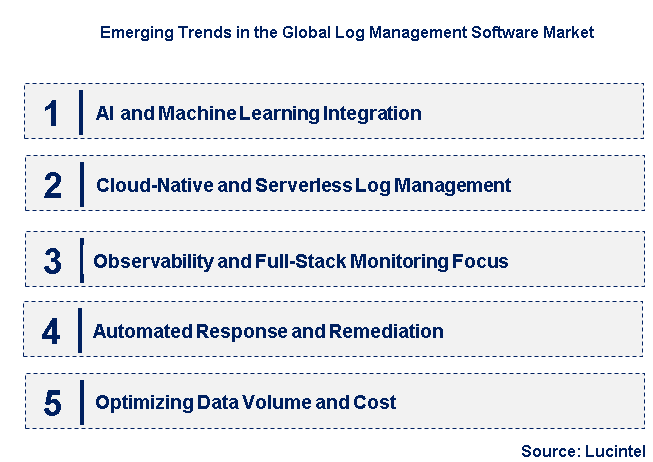
• AI and Machine Learning Integration: Artificial intelligence and machine learning integration is an overriding trend. AI algorithms process log data to spot anomalies, detect advanced threats, and anticipate probable system failures more accurately and quickly than conventional approaches. The effect is a major advance in proactive security and operations intelligence. AI-driven log management solutions can correlate events between different systems automatically, eliminate false positives, and enable security and operations teams to act on incidents more effectively and efficiently, transitioning from reactive to predictive analysis.
• Cloud-Native and Serverless Log Management: A strong move towards cloud-native and serverless-based log management is in the making. This trend takes advantage of the scalability, flexibility, and economic benefits of cloud platforms so that organizations can gather, store, and analyze huge amounts of log data without the need to manage underlying infrastructure. The effect is increased scalability and less operational overhead. Cloud-native solutions provide simpler deployment, reduced total cost of ownership, and native integration with other cloud services, making it easier to manage logs and make them accessible and manageable for organizations of all sizes, particularly those with distributed IT environments.
• Observability and Full-Stack Monitoring Focus: Log management is becoming a central part of more comprehensive observability strategies, going beyond data gathering to offer end-to-end visibility into system health and performance. This trend is about combining log data with telemetry, metrics, and traces to provide end-to-end visibility into an application or infrastructure. The effect is enhanced troubleshooting and root cause analysis. Through correlating logs against other data points, organizations are able to identify problems promptly, comprehend system behavior, and optimize performance in complex distributed environments, overall boosting the resilience of operations.
• Automated Response and Remediation: The progression of log management is headed in the direction of automated remediation and response features, with many being combined with SIEM and SOAR solutions. This trend capitalizes on the insights gained from analyzing logs to invoke automated responses to neutralize threats or fix operational problems. The effect is decreased response time and human touch. Automated actions may involve blocking malicious IP addresses, segregating infected systems, or launching remediation processes, greatly improving an organization's capability to counter rapid-paced cyberattacks and ensure service availability.
• Optimizing Data Volume and Cost: With the explosive rise in log data, storing and processing cost optimization is an important emerging trend. These include techniques such as policies for intelligent data retention, tiered storage, compression of data, and filtering or logging selective less important data at the source. The effect is better cost savings and scalability. Organizations need solutions that help them handle enormous volumes of logs without having to pay unreasonable costs, allowing them to preserve data that is important for compliance and analysis while logically discarding or archiving less useful information, making log management more cost-effective. These new trends are basically transforming the log management software Market from a reactive data storage platform to a proactive, smart, and integrated operation and security intelligence center. The intersection of AI, cloud-native designs, observability, automation, and cost optimization is building a future where log data is no longer simply gathered but actually utilized to better secure cyber, improve IT operations, and inform business decisions in a more data-driven world.
• Wider Use of AI and Machine Learning in Analytics: The significant new trend is the increased adoption of artificial intelligence and machine learning functionality within log management solutions. AI-based algorithms are now commonly applied to anomaly detection, predictive analytics, and automated event correlation across multiple log sources. The effect is a dramatic improvement in the speed and accuracy of threat identification, offloading significant work from the human analyst. This also allows organizations to recognize subtle signs of sophisticated attacks or imminent system failure more effectively, resulting in proactive, not reactive, security and operational management.
• Cloud-Native Log Management Platforms: A significant trend is toward cloud-native log management platforms and Software as a Service (SaaS) solutions. This evolution enables organizations to take advantage of the scalability, elasticity, and lower infrastructure management overhead of cloud environments for log ingestion, storage, and analysis. The effect is increased flexibility, decreased total cost of ownership, and simpler deployment. Cloud-native solutions provide companies with the ability to rapidly scale log management capacity to support large data volumes, deliver remote access to distributed teams, and provide high availability and disaster recovery for logs.
• Better Integration with Security Information and Event Management (SIEM) and Security Orchestration, Automation, and Response (SOAR): Current advances indicate closer integration of log management software with wider SIEM and SOAR systems. This provides an extended understanding of security posture and the ability to automate incident response processes. The result is an efficient SOC and better incident response. By integrating precise log data with threat intelligence and automated playbooks, organizations can identify, analyze, and respond to security incidents more quickly and accurately, shortening the attacker window of opportunity.
• Prioritize Real-Time Log Processing and Streaming Analytics: There is increasing focus on real-time log processing and streaming analytics, away from batch processing. This enables companies to derive real-time insights from their log data as events happen, allowing for instantaneous threat discovery and operational monitoring. The effect is enhanced responsiveness and proactive troubleshooting. Real-time features are essential for discovering quick-moving cyberattacks, seeing system performance hotspots as they arise, and allowing for instant compliance auditing, thus greatly increasing the agility and resilience of IT operations.
• Cost-Optimization Feature Development for Data Ingestion and Storage: Due to the exponential increases in log data volumes, a recent major advancement is the development of sophisticated features for cost optimization, such as smart data tiering, compression, and filtering at source. The effect is more cost-effective and long-lasting log management. These capabilities assist organizations in controlling the rising cost of storing and processing huge amounts of log data by enabling them to maintain important data for extended periods at reduced costs, as well as to manage less important logs more intelligently without sacrificing security or operational insights. These five seminal advancements are having a deep influence on the log management software Market by making it smarter, more responsive, and more economical. They are facilitating organizations to go beyond simple log gathering to advanced analysis, automation, and real-time intelligence, which is vital to deal with the intricacies of contemporary IT environments, strengthen cybersecurity measures, and maintain round-the-clock operational efficiency in the growing data-intensive and threat-filled environment.
• Cybersecurity and Threat Detection: One of the key strategic growth areas is using log management software for sophisticated cybersecurity and real-time threat detection. This use centers on aggregating and analyzing security event logs from firewalls, intrusion detection systems, endpoints, and applications to detect malicious behavior, insider threats, and advanced attacks. The effect is a dramatic increase in an organization's defensive posture. By giving complete visibility into security-related incidents, log management software facilitates quick incident response, forensic analysis, and threat hunting, and is invaluable for today's security operations centers.
• IT Operations and Performance Monitoring: Another big area of growth is IT operations and performance monitoring through log management software. This application entails gathering logs from servers, networks, applications, and cloud infrastructure for diagnosing performance problems, error troubleshooting, and optimizing system health. The effect is enhanced operational efficiency and system reliability. Through real-time visibility into system behavior, log management tools enable IT teams to rapidly detect root causes of outages or slowdowns, automate problem resolution, and maintain the consistent availability and maximum performance of critical business services.
• Compliance Auditing and Regulatory: The growing strictness of data security and privacy regulations (e.g., GDPR, HIPAA, PCI DSS) presents a significant growth prospect for log management software in compliance and auditing scenarios. This includes having log data gathered, stored, and available in a fashion that complies with certain regulatory standards for auditing and reporting. The effect is vital for prevention of legal fines and business reputation. Log management products deliver the audit trails, reporting functionality, and integrity features needed to show compliance with numerous industry and government mandates.
• Application Development and DevOps: The quick shift to DevOps practices and microservices architecture is fueling a strategic growth opportunity for log management for application development and troubleshooting. This application is centered on the integration of log management into CI/CD pipelines to track application performance, debug code, and analyze user behavior in real-time. The effect is quicker development cycles and enhanced software quality. The developers are able to identify and fix problems instantly, gain insight into application performance in production, and facilitate smooth deployments using rich log data.
• Business Intelligence and Analytics: A new opportunity for growth is using log data for purposes outside of typical IT uses as a source for business intelligence and analytics. By reviewing the user activity logs, website traffic logs, and application usage logs, companies can make informed decisions on customer behavior, product usage, and business trends. The result is data-driven business decisions and competitive advantage. This tool converts raw log data into actionable business intelligence so that organizations can maximize marketing efforts, enhance user experience, and discover new sources of revenue, taking the value of log management beyond the IT department. These strategic growth prospects are dramatically shaping the log management software Market by encouraging specialization and innovation. Vendors are creating customized solutions that cater to the unique requirements of cybersecurity, IT operations, compliance, DevOps, and business intelligence. This application-driven strategy is driving market growth, promoting deeper integration with other enterprise systems, and eventually turning log management into a strategic business asset for all types of organizations.
• IBM
• Intel Security
• SolarWinds Worldwide
• Splunk
• LogRhythm
• Alert Logic
• Loggly
• AlienVault
• Veriato
• Blackstratus
• Cloud
• On-Premises
• Small Business
• Medium-sized Business
• Others
• North America
• Europe
• Asia Pacific
• The Rest of the World
• United States: The United States log management software market is a dominant player, marked by steep adoption levels of cloud-based software and AI-based analytics. Current trends indicate a strong emphasis on real-time analysis of logs and AI and machine learning integration to enhance threat detection with a 40 percent increase in accuracy. Organizations are investing heavily in AI-powered solutions to automate processes and ease manual workloads. The market also indicates a steady trend towards cloud-based deployments, with a high percentage of companies now completely integrating these solutions for scalability and remote access.
• China: China's log management market is expected to grow strongly, spurred by the growing complexity of cyberattacks, regulatory requirements imposed by the government, and the growing availability of log data generated by computers. Large organizations are likely to provide greater growth as they generate large amounts of data every day from their IT infrastructure. The IT and Its segment continues to be the largest end-use category because of the growth in cybercrimes. Cloud-based deployments are gaining popularity, providing flexibility and cost savings for handling large volumes of log data.
• Germany: The log management market in Germany is seeing strong growth, fueled by the same drivers as China: growing sophistication in cyberattacks, regulatory compliance, and the rising availability of log data. The market projects strong growth, especially in the IT and Its, banking, financial services, and insurance, and healthcare industries. Large businesses are also key drivers given their high-volume data creation. The market is dominated by a strong need to combat growing cyber threats using sophisticated log management solutions.
• India: India's log management market is expected to grow strongly due to the pace of industrialization, urbanization, and high-demand for sophisticated security solutions. The market is spurred by growing awareness of cybersecurity exposures and ongoing evolution of affordable and feature-dense log management tools. Like in China and Germany, the rising level of cyberattack sophistication and stringent government regulations are primary drivers compelling companies to implement early threat detection solutions and regulatory compliance.
• Japan: Japan's log management market is expected to grow favorably with the rising sophistication of cyberattacks and the requirement for early threat identification. Tightly imposed government regulations and growing availability of computer-logged data also drive the market's growth. Opportunities exist within sectors such as IT and Its, banking, financial services, and insurance, and healthcare. Large organizations are likely to drive growth based on the enormity of daily IT system data, citing the importance of strong log management tools.


• IBM
• Intel Security
• SolarWinds Worldwide
• Splunk
• LogRhythm
• Alert Logic
• Loggly
• AlienVault
• Veriato
• Blackstratus Q5. Which log management software market segment will be the largest in future? Answer: Lucintel forecasts that, within the type category, cloud is expected to witness higher growth over the forecast period. Q6. In log management software market, which region is expected to be the largest in next 5 years? Answer: In terms of region, North America is expected to witness the highest growth over the forecast period. Q7. Do we receive customization in this report? Answer: Yes, Lucintel provides 10% customization without any additional cost.


Choose a license that fits your team. Instant PDF delivery.
Prices exclude taxes. Instant delivery. Custom licensing available on request.
Market Report · July 15, 2026
Market Report · June 26, 2026
Market Report · June 24, 2026
Trusted partner for strategic intelligence and business growth


Receive a complimentary market analysis tailored to your industry. Our analysts will identify key growth opportunities and competitive dynamics specific to your business.

Market size, growth rate, and key trend analysis for your specific sector.

Top competitor positioning and market share analysis.

Strategic recommendations backed by data-driven insights.
Get curated market intelligence and competitive moves straight to your inbox.
By subscribing, you agree to receive our monthly insights. Unsubscribe anytime.
Receive a complimentary market analysis tailored to your industry. Our analysts will identify key growth opportunities and competitive dynamics specific to your business.
Market size, growth rate, and key trend analysis for your specific sector.
Top competitor positioning and market share analysis.
Strategic recommendations backed by data-driven insights.
Get curated market intelligence, emerging trends, and competitive moves straight to your inbox each month.
By subscribing, you agree to receive our monthly insights. Unsubscribe anytime.
We'll send your sample report shortly.