
Market Report · July 15, 2026

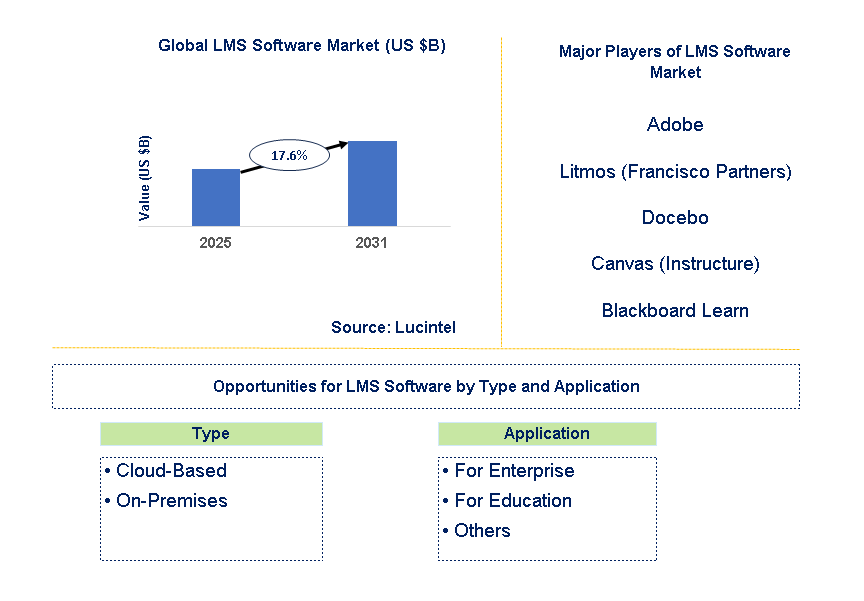
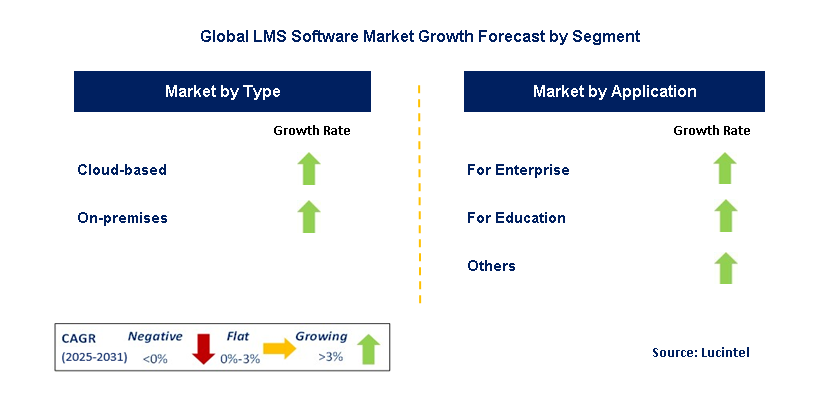
Key data points: The growth forecast = 17.6% annually for the next 7 years. Scroll below to get more insights. This market report covers Trends, opportunity and forecast in lms software market to 2031 by type (cloud-based and on-premises), application (for enterprise, for education, and others), and region (North America, Europe, Asia Pacific, and the Rest of the World)
We'll send your sample report shortly.
• Artificial Intelligence and Machine Learning: How LMS tools change the form of learning material and how personalization can occur by AI and machine learning incorporation. AI-driven analytics can track learner progress, identify areas of improvement, and recommend tailored content to enhance the learning experience. The machine learning algorithms help create adaptive learning pathways to ensure that every learner receives content that matches his or her skill level and learning style. This trend is making it possible for educators and businesses to deliver more effective, personalized training and education solutions.
• Mobile Learning and Accessibility: There is a trend of mobile learning that has become a key step forward because most of the learners nowadays access content by using smart phones and tablets. Therefore, the LMS platforms are becoming optimized for mobile devices to enable use on-the-go. A learner needs to be flexible and convenient in today's fast-moving environment. The rise of mobile learning is also encouraging the development of mobile-first LMS platforms that focus on delivering a seamless, user-friendly experience across different devices. The ability to learn anytime, anywhere is revolutionizing how people engage with educational content.
• Gamification in Learning: Gamification has emerged as a powerful trend in the LMS market, enhancing learner engagement and motivation. The game-like elements, such as badges, points, and leaderboards, make learning interactive and fun on LMS platforms. Gamified learning encourages friendly competition, which increases learner participation and achievement. Gamification is particularly popular in corporate training programs because it keeps employees engaged and retains information better. This trend is driving the development of more interactive and engaging LMS solutions.
• Cloud-based LMS: Cloud-based LMS solutions have gained popularity these days because they are scalable, flexible, and cost-effective. Cloud LMS solutions allow organizations and educational establishments to deploy and manage learning systems without the investment of heavy infrastructures upfront. This trend enables smaller institutions and businesses to enjoy high-quality learning management tools which were not otherwise accessible. Cloud-based LMS solutions also offer greater collaboration and accessibility, enabling users to access content from anywhere with an internet connection.
• Microlearning and Just-in-Time Training: Microlearning, or delivering content in small, digestible chunks, is increasingly popular in the LMS market. This allows learners to consume information in short bursts, making it easier to retain and apply knowledge. It is best for just-in-time training because a learner requires knowledge to do specific things quickly. Thus, microlearning popularity pushes LMS platform developers toward more focus on content that comes in bites, quizzes, and other interactive modules for learning.
Emerging trends in the LMS market, such as AI, mobile learning, gamification, cloud-based solutions, and microlearning, are now impacting the delivery of education and training. The future is driving LMS platforms toward more personalized, engaging, and flexible learning. LMS continues to evolve and increasingly will be the central component in changing how people learn and acquire new skill sets across industries.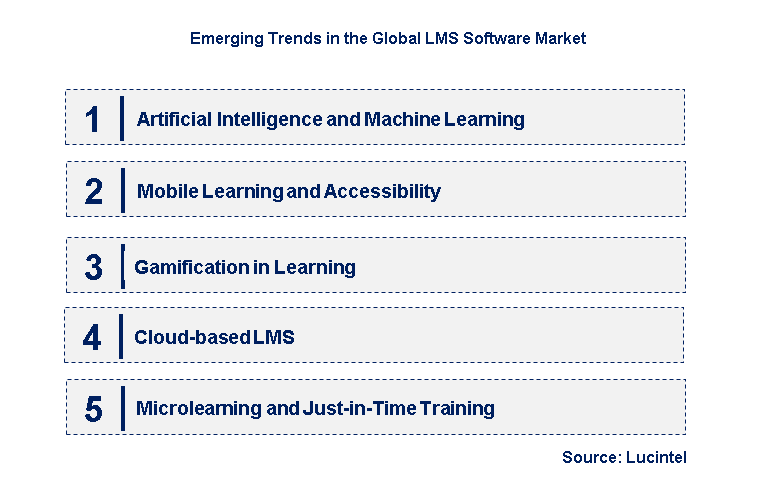
• Integration of AI and Machine Learning: One of the most significant developments in the LMS market is the integration of AI and machine learning. AI-driven features such as personalized learning pathways, automated assessments, and data-driven insights are improving the effectiveness of LMS platforms. Machine learning algorithms allow the system to continuously adapt to the learner’s needs, providing more tailored and effective training experiences. This development is particularly beneficial for organizations seeking to optimize training programs and improve learner outcomes.
• Mobile-First LMS Platforms: Mobile-first LMS platforms are increasingly being adopted because more and more learners access training content through smartphones and tablets. These platforms are designed to offer a seamless, responsive experience across a range of mobile devices, allowing users to learn anywhere, anytime. Mobile learning is fast becoming an integral part of corporate training, where employees need to access training materials on the move. The development of mobile-first LMS platforms is helping to increase learner engagement and accessibility.
• Gamification in Corporate Training: Gamification is fast becoming one of the major features of most LMS platforms, especially in corporate training. Generally, points, badges, and leaderboards make a corporate training session more innovative. These developments ensure higher engagement and retention among the learners as well as enhance motivation among them. The most effective kind of gamification in corporate training happens to be for soft skills such as leadership, communication, and teamwork.
• Cloud-Based LMS: Flexibility, scalability, and cost-effectiveness make cloud-based LMS solutions the most popular these days. It allows businesses and educational institutions to deploy learning systems without extensive IT infrastructure. Such development is allowing organizations to save on upfront costs while benefiting from continuous updates and enhanced collaboration features. The increased accessibility and convenience for users is also a driving factor for cloud-based LMS solutions.
• Microlearning and Modular Content: Focus on Microlearning and Modular Content is another major development in the LMS software market. The LMS platforms are increasingly providing bite-sized, focused learning modules that can be consumed in short bursts. This helps improve learner retention and enables just-in-time training, where learners can quickly acquire specific skills when needed. The increasing focus on microlearning is changing the way training content is delivered, making it more flexible and effective.
Recent developments in the LMS software market, such as AI integration, mobile-first platforms, gamification, cloud solutions, and microlearning, are reshaping how organizations deliver training and education. These developments are improving the effectiveness, accessibility, and engagement of learning experiences, driving growth in the LMS software market across industries.• Corporate Training and Development: This is one area of growth potential in the LMS software market. With increasing corporate investments in the upskilling and reskilling of their workforce, companies need efficient platforms to deliver this content through a Learning Management System. LMS solutions are currently sought after based on the principle of personal learning, tracking learners' progress, and integration into other HR applications. This leads to more powerful corporate LMS that can streamline workforces by boosting productivity and employee engagement.
• Institutions of K-12 and Higher Learning: LMS solutions are being integrated into educational institutions to ensure the best teaching practices in the classrooms. The development of digital learning and blended learning patterns is spurring the need for solid LMS systems in both types of educational setups. For schools and universities, personalized learning, collaboration, and multimedia delivery LMS solutions are penetrating the market because of scope expansion to enhance student engagement and give flexible learning options.
• Mobile Learning Solutions: As the use of mobile devices continues to grow, mobile learning solutions are one of the biggest growth opportunities for LMS providers. As more learners access content on smartphones and tablets, LMS platforms are optimized for mobile-first experiences. Providers that offer mobile-friendly LMS platforms will benefit from the increasing demand for learning solutions that enable learners to access content anytime, anywhere.
• E-Learning Market Growth: The e-learning market is growing globally, and this is a huge growth opportunity for LMS providers. With more learners seeking online education and training, the demand for scalable, flexible LMS platforms is increasing. Providers that offer cloud-based, user-friendly LMS solutions will be well-positioned to capture a share of this expanding market, particularly in emerging economies where access to traditional education is limited.
• Gamification and Interactive Learning: Gamification and interactive learning features are becoming key differentiators in the LMS software market. Providers that focus on enhancing learner engagement through game-like elements, interactive content, and social learning will have a competitive advantage. This opportunity is particularly strong in corporate training, where companies are searching for innovative means to keep their employees engaged and motivated.
The LMS software market is experiencing strategic growth opportunities, including corporate training, mobile learning, e-learning expansion, and gamification, which are pushing the development of more advanced, engaging, and flexible LMS solutions. This is reshaping the market and giving LMS providers an opportunity to expand their reach and improve the learning experience across different sectors.• Adobe
• Litmos (Francisco Partners)
• Docebo
• Canvas (Instructure)
• Blackboard Learn (Anthology)
• Schoology (Powerschool)
• Oracle
• Ispring Learn
• Epignosis
• Brightspace (D2L Corporation)
• Cloud-Based
• On-Premises
• For Enterprise
• For Education
• Others
• North America
• Europe
• Asia Pacific
• The Rest of the World
• United States: The adoption of e-learning has enhanced the LMS software market in the United States by increased usage in educational institutions and corporate environments. The COVID-19 pandemic accelerated the shift to remote learning, with institutions and businesses seeking robust LMS solutions for delivering training and education. Companies like Blackboard and Canvas are leading the charge in providing innovative LMS platforms, focusing on mobile compatibility, AI integration, and enhanced user experience. Corporate training programs are also on the rise, which increases the demand for more flexible and scalable LMS platforms that can cater to diverse learning needs.
• China: The LMS software market in China is growing rapidly due to the country's focus on digital transformation in education. The government's push to modernize the education system and increase access to online learning is fueling the demand for advanced LMS platforms. Companies such as Tencent and NetEase are developing LMS solutions targeting K-12 and higher education institutions as well as corporate training needs. Integration of AI, machine learning, and big data analytics into the LMS platform is assisting Chinese businesses and educational institutions in offering more personalized learning experiences. Increased popularity of online education platforms has fast-tracked the adoption of LMS in the country.
• Germany: Germany's LMS market is increasingly thriving due to the country's emphasis on digitalization and its innovative education solution. The demand for these LMS platforms has gone up due to Germany's advancements in blended models and more widespread online training among corporate agencies. Multiple providers, such as SAP Litmos and Moodle, are enriching their LMS with gamification, mobile access, and AI-based recommendations for content. German companies are using LMS solutions for the training and development of employees. Manufacturing and engineering are the leading sectors in the adoption of LMS solutions. Digital education initiatives from the government side are also promoting the growth of LMS software in the country.
• India: The Indian LMS software market is rapidly growing as educational institutions, corporate organizations, and government agencies opt for digital learning solutions. The huge and heterogeneous population of the country, combined with the growing trend of mobile internet usage, is driving up demand for LMS platforms. Companies like TCS and Wipro in India are using LMS software for training employees. In addition, colleges and schools are adopting the same systems for e-learning. Increased focus on skill development and vocational training also creates a significant opportunity for the use of LMS platforms in India. With the encouragement of digital education by the government, the LMS market will continue to expand.
• Japan: The LMS software market is changing in Japan as educational institutions and businesses shift their focus to digital learning solutions. The population of Japan is aging, and there is a need for lifelong learning, hence the adoption of LMS platforms for K-12 and corporate training. With companies like Fujitsu and NEC at the forefront in LMS solution developments, AI, mobile compatibility, and user engagement are taking front stage. Many Japanese corporations are well into employee trainings, and LMS has emerged as a prime tool for upgrade in workforce skills. The push by the government for digital education has also helped to foster rapid expansion in the LMS software market in Japan.


• Adobe
• Litmos (Francisco Partners)
• Docebo
• Canvas (Instructure)
• Blackboard Learn (Anthology)
• Schoology (Powerschool)
• Oracle
• Ispring Learn
• Epignosis
• Brightspace (D2L Corporation)
Q5. Which lms software market segment will be the largest in future?

Choose a license that fits your team. Instant PDF delivery.
Prices exclude taxes. Instant delivery. Custom licensing available on request.
Market Report · July 15, 2026
Market Report · June 26, 2026
Market Report · June 24, 2026
Trusted partner for strategic intelligence and business growth


Receive a complimentary market analysis tailored to your industry. Our analysts will identify key growth opportunities and competitive dynamics specific to your business.

Market size, growth rate, and key trend analysis for your specific sector.

Top competitor positioning and market share analysis.

Strategic recommendations backed by data-driven insights.
Get curated market intelligence and competitive moves straight to your inbox.
By subscribing, you agree to receive our monthly insights. Unsubscribe anytime.
Receive a complimentary market analysis tailored to your industry. Our analysts will identify key growth opportunities and competitive dynamics specific to your business.
Market size, growth rate, and key trend analysis for your specific sector.
Top competitor positioning and market share analysis.
Strategic recommendations backed by data-driven insights.
Get curated market intelligence, emerging trends, and competitive moves straight to your inbox each month.
By subscribing, you agree to receive our monthly insights. Unsubscribe anytime.
We'll send your sample report shortly.