
Market Report · July 29, 2026

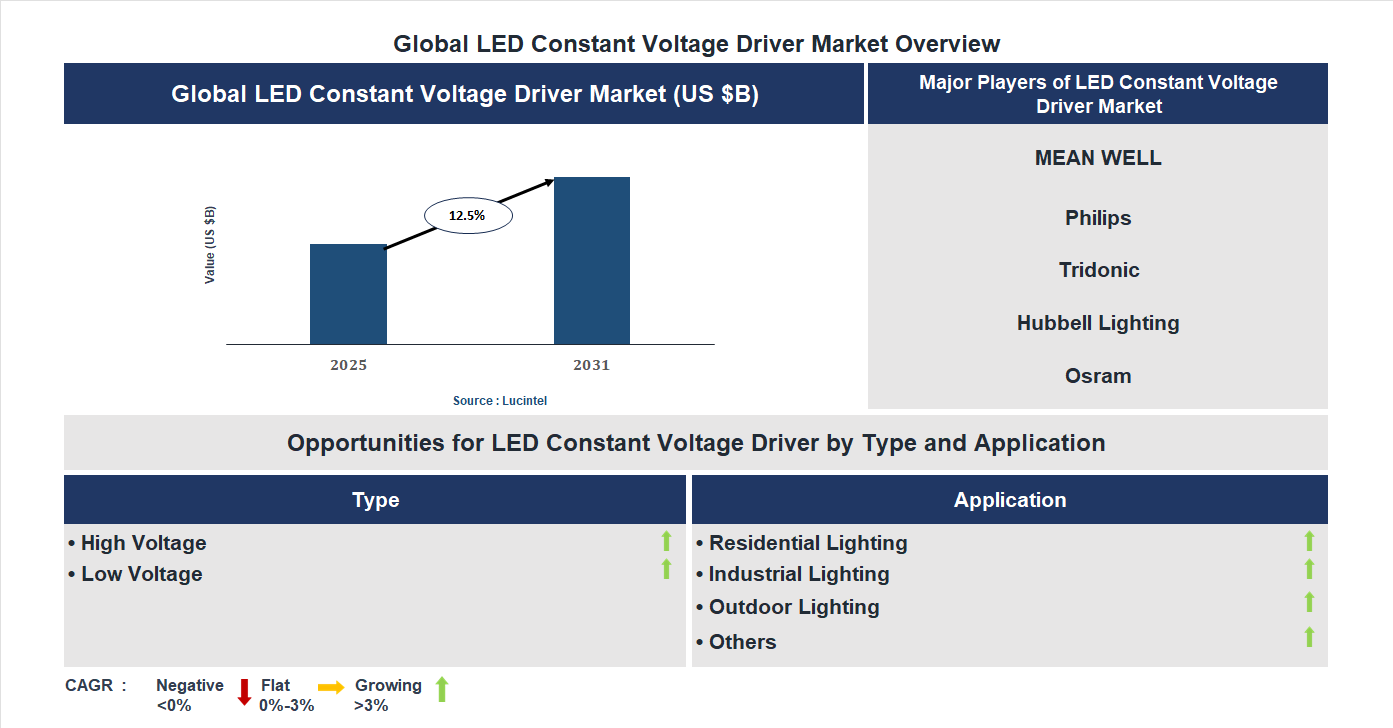
Key data points: The growth forecast = 12.5% annually for the next 6 years. Scroll below to get more insights. This market report covers trends, opportunities and forecasts in LED constant voltage driver market to 2031 by type (high voltage and low voltage), application (residential lighting, industrial lighting, outdoor lighting, and others), and region (North America, Europe, Asia Pacific, and the Rest of the World)
We'll send your sample report shortly.
• Lucintel forecasts that, within the type category, low voltage is expected to witness higher growth over the forecast period.
• Within the application category, outdoor lighting is expected to witness the highest growth.
• In terms of region, APAC is expected to witness the highest growth over the forecast period. Gain valuable insights for your business decisions with our comprehensive 150+ page report. Sample figures with some insights are shown below.
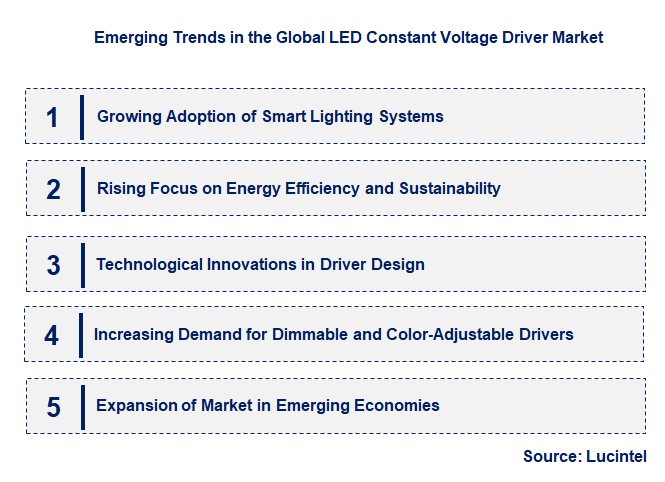
• Growing Adoption of Smart Lighting Systems: The integration of LED drivers with IoT technology is transforming lighting into intelligent systems. Smart LED drivers enable remote control, automation, and energy management, enhancing user convenience and operational efficiency. This trend is driven by the increasing demand for smart homes, commercial buildings, and industrial automation. As connectivity becomes a standard feature, manufacturers are developing drivers compatible with various smart platforms, which improves energy savings, reduces maintenance costs, and offers advanced features like dimming and scheduling. This shift is making LED lighting more adaptable and future-proof.
• Rising Focus on Energy Efficiency and Sustainability: Environmental concerns and regulatory pressures are pushing the market toward energy-efficient solutions. LED drivers with high power factor, low power consumption, and advanced thermal management are gaining popularity. Manufacturers are innovating to improve driver efficiency and lifespan, aligning with global sustainability goals. This trend is also driven by the increasing adoption of renewable energy sources and green building certifications. As a result, the market is witnessing a surge in demand for drivers that support energy conservation, reduce carbon footprint, and comply with strict environmental standards, thereby promoting sustainable development.
• Technological Innovations in Driver Design: Advances in electronics and materials are leading to more compact, reliable, and versatile LED drivers. Innovations include the development of driverless or minimal-component designs, improved thermal dissipation, and enhanced protection features against voltage fluctuations and surges. These technological improvements enable drivers to operate efficiently across a wider range of applications, including outdoor and industrial settings. The trend also involves the integration of smart features and compatibility with various dimming protocols. Such innovations are expanding the scope of LED driver applications and improving overall product performance and durability.
• Increasing Demand for Dimmable and Color-Adjustable Drivers: Consumers and businesses are seeking customizable lighting solutions to enhance ambiance and functionality. Dimmable LED drivers allow precise control over brightness levels, while color-adjustable drivers enable dynamic lighting effects. This trend is particularly prominent in hospitality, retail, and residential sectors, where lighting plays a crucial role in aesthetics and user experience. Manufacturers are developing drivers that support multiple dimming and color control protocols, facilitating seamless integration with lighting controls. This trend enhances user engagement, energy savings, and the versatility of LED lighting systems.
• Expansion of Market in Emerging Economies: Rapid urbanization, infrastructure development, and increasing disposable incomes are fueling LED driver demand in emerging markets. Governments are promoting energy-efficient lighting through policies and incentives, further boosting adoption. Local manufacturers are entering the market, offering cost-effective solutions tailored to regional needs. This expansion is creating new opportunities for global players to penetrate these markets, adapt products to local standards, and establish distribution channels. The growth in emerging economies is expected to significantly contribute to the overall market size, fostering innovation and competition in the LED constant voltage driver industry. In summary, these trends are collectively reshaping the LED Constant Voltage Driver Market by fostering innovation, enhancing product capabilities, and expanding market reach. The integration of smart technology, focus on sustainability, technological advancements, customizable lighting options, and market expansion in emerging economies are driving growth and setting new industry standards. These developments are making LED drivers more efficient, versatile, and aligned with future lighting needs, ultimately transforming the landscape of LED lighting solutions worldwide.
• Technological Innovation: Development of smart LED drivers with IoT integration has enhanced control, energy efficiency, and user convenience, boosting market appeal and enabling advanced lighting solutions.
• Regulatory Standards: Stricter energy efficiency and safety regulations worldwide have prompted manufacturers to upgrade products, ensuring compliance and fostering innovation in driver design.
• Market Expansion in Emerging Regions: Increased infrastructure development and urbanization in Asia-Pacific and Africa have opened new markets, driving demand for reliable LED drivers in these regions.
• Product Diversification: Companies are launching a variety of drivers with different wattages, dimming capabilities, and compatibility features, catering to diverse customer needs and applications.
• Strategic Collaborations and Mergers: Industry players are forming alliances and acquiring smaller firms to expand technological capabilities, enhance product portfolios, and strengthen market presence. These developments are collectively driving the LED constant voltage driver market towards greater innovation, regional growth, and regulatory compliance, ultimately leading to increased adoption of energy-efficient lighting solutions worldwide.
• Residential Lighting: Expansion in residential applications is driven by the rising demand for energy-efficient and smart lighting solutions. LED drivers tailored for home automation and aesthetic lighting are gaining popularity, offering consumers enhanced control and customization. This growth improves energy savings and user experience, making LED lighting more accessible and appealing for everyday use. As residential adoption increases, manufacturers benefit from higher sales volumes and brand loyalty, fostering long-term market stability.
• Commercial & Industrial Lighting: The commercial and industrial sectors are increasingly adopting LED lighting for its cost-effectiveness and durability. Constant voltage drivers designed for high-power and large-scale lighting installations improve operational efficiency and reduce maintenance costs. This application supports large-scale projects such as warehouses, offices, and retail spaces, driving market expansion. The focus on energy conservation and regulatory compliance further accelerates growth, positioning LED drivers as essential components in commercial infrastructure.
• Automotive Lighting: The automotive industry is integrating LED lighting for headlights, taillights, and interior illumination, demanding specialized constant voltage drivers. These drivers ensure consistent performance under varying voltage conditions, enhancing safety and aesthetic appeal. The growth in electric and autonomous vehicles amplifies this trend, opening new avenues for innovation. Automotive applications contribute significantly to market diversification, with high growth potential driven by technological advancements and increasing vehicle electrification.
• Architectural & Landscape Lighting: Architectural and landscape lighting applications require drivers that support dynamic lighting effects and long operational life. Constant voltage drivers enable creative lighting designs for buildings, monuments, and outdoor spaces, enhancing aesthetic appeal and safety. The demand for energy-efficient, weather-resistant drivers is rising, supporting sustainable urban development. This segment's growth boosts market revenue and encourages innovation in driver technology, catering to the evolving needs of urban planners and architects.
• Specialty & Custom Lighting: The niche market for specialty and custom lighting solutions benefits from tailored LED drivers that meet specific technical and aesthetic requirements. Applications include stage lighting, signage, and artistic installations, where precise control and reliability are critical. This growth opportunity fosters innovation in driver design, supporting creative industries and niche markets. It also allows manufacturers to differentiate their offerings, expanding market reach and driving revenue growth in specialized sectors. In summary, these key growth opportunities across applications are significantly impacting the LED constant voltage driver market by expanding its scope, increasing demand, and fostering technological innovation. As industries prioritize energy efficiency and smart solutions, the market is poised for sustained growth, driven by diverse application needs and evolving customer preferences.
• Technological Innovation: The continuous development of advanced LED driver technologies enhances efficiency, reliability, and compatibility with various lighting systems. Innovations such as smart drivers with dimming capabilities and improved thermal management attract manufacturers and consumers alike. These technological improvements reduce energy consumption and extend product lifespan, making LED drivers more appealing across commercial and residential sectors. As technology evolves, the market benefits from increased adoption of innovative solutions, fostering growth and competitive advantage.
• Rising Demand for Energy-Efficient Lighting: Growing awareness of energy conservation and environmental sustainability has led to increased adoption of LED lighting solutions. LED drivers are essential components that optimize LED performance and energy efficiency. Governments worldwide are promoting energy-efficient lighting through incentives and regulations, further boosting demand. The shift from traditional lighting to LED systems in commercial, industrial, and residential sectors significantly contributes to market expansion, driven by the need to reduce electricity costs and carbon footprints.
• Regulatory and Policy Support: Stringent government regulations and standards aimed at reducing energy consumption and greenhouse gas emissions significantly impact the market. Policies promoting the adoption of energy-efficient lighting solutions, such as subsidies and tax incentives, encourage manufacturers and consumers to invest in LED technology. Compliance with safety and performance standards also drives innovation and quality improvements in LED drivers. These regulatory frameworks create a favorable environment for market growth while ensuring product safety and environmental sustainability.
• Growing Infrastructure and Urbanization: Rapid urbanization and infrastructure development worldwide increase the demand for efficient lighting solutions. Commercial complexes, public infrastructure, and residential buildings require reliable lighting systems, which are increasingly powered by LED technology. The need for smart city initiatives and sustainable urban planning further accelerates the adoption of LED drivers. This infrastructural growth provides a substantial market opportunity for manufacturers to supply advanced LED driver solutions tailored to diverse applications.
• Cost Reduction and Market Penetration: The declining costs of LED drivers due to technological advancements and economies of scale make LED lighting more accessible and affordable. Cost-effective drivers enable wider adoption across various sectors, including residential, commercial, and industrial markets. As prices decrease, market penetration accelerates, leading to increased sales volume and revenue growth. This cost reduction also encourages retrofit projects and new installations, expanding the overall market footprint. The challenges facing this LED constant voltage driver market include:
• Technological Compatibility and Standardization: The rapid evolution of LED driver technology creates compatibility issues with existing lighting systems. Lack of standardized specifications can lead to interoperability problems, affecting performance and reliability. Manufacturers face difficulties in developing universally compatible drivers, which hampers widespread adoption. Ensuring compatibility across diverse applications and regions requires significant investment in research and development, posing a challenge to market growth.
• Regulatory Compliance Complexities: Navigating the complex landscape of safety, performance, and environmental regulations can be challenging for manufacturers. Different regions have varying standards, which complicate product development and certification processes. Non-compliance can result in legal penalties, product recalls, and loss of market access. Staying abreast of evolving regulations demands continuous updates and investments, increasing operational costs and potentially delaying product launches.
• Price Fluctuations and Supply Chain Disruptions: Volatility in raw material prices and disruptions in the supply chain can impact manufacturing costs and product pricing. Fluctuations in components like electronic parts and thermal management materials can lead to increased costs, affecting profit margins. Supply chain disruptions, caused by geopolitical issues or global crises, can delay production and delivery schedules. These factors pose risks to market stability and competitiveness, especially for smaller players with limited resources. In summary, the LED constant voltage driver market is driven by technological innovation, increasing demand for energy-efficient lighting, supportive regulatory policies, infrastructural growth, and declining costs. However, it faces challenges related to technological compatibility, regulatory complexities, and supply chain stability. These drivers and challenges collectively influence the market's trajectory, requiring stakeholders to adapt strategically. While growth prospects remain promising, addressing these challenges is crucial for sustained expansion and innovation in the industry.
• MEAN WELL
• Philips
• Tridonic
• Hubbell Lighting
• Osram
• eldoLED
• Sunricher
• Innovative Lighting
• Texas Instruments
• ROHM
• High Voltage
• Low Voltage
• Residential Lighting
• Industrial Lighting
• Outdoor Lighting
• Others
• North America
• Europe
• Asia Pacific
• The Rest of the World
• United States: The US market has seen rapid adoption of smart LED drivers with integrated IoT capabilities, driven by smart home and commercial building projects. Regulatory standards for energy efficiency and safety are becoming more stringent, encouraging innovation. Companies are investing in R&D to develop drivers with higher efficiency and longer lifespan, while government incentives promote sustainable lighting solutions. The market is also witnessing increased mergers and acquisitions to expand technological capabilities and market reach.
• China: China remains the largest market for LED drivers, with strong government support for energy-saving initiatives and urban infrastructure projects. Local manufacturers are focusing on cost-effective, high-performance drivers to meet domestic demand and export needs. The country is also advancing in the development of intelligent LED drivers compatible with smart city applications. Rapid urbanization and industrialization continue to drive market growth, with a focus on integrating drivers into broader IoT-enabled lighting systems.
• Germany: Germany's market emphasizes high-quality, energy-efficient LED drivers aligned with strict EU regulations on sustainability and safety. The country is a leader in integrating LED drivers with smart lighting systems for commercial and public infrastructure. Innovation in driver design, including dimming and color control features, is prominent. German manufacturers are also investing in eco-friendly production processes and recycling initiatives, reinforcing their position in the European market.
• India: The Indian market is experiencing rapid growth due to government initiatives like the UJALA and SLNP schemes promoting LED adoption. Manufacturers are focusing on affordable, reliable drivers suitable for rural and urban applications. There is a rising trend toward integrating drivers with smart controls to support energy conservation efforts. Local companies are expanding their product portfolios to include high-efficiency drivers, while foreign players are entering the market to capitalize on the expanding demand.
• Japan: Japan's market is characterized by advanced technological integration and high standards for energy efficiency and durability. The focus is on developing drivers that support smart lighting systems and IoT connectivity for commercial and industrial use. Japanese firms are investing in R&D to improve driver longevity and performance under extreme conditions. The market also emphasizes eco-friendly manufacturing practices and compliance with stringent environmental regulations, maintaining Japan's leadership in innovative lighting solutions.


• MEAN WELL
• Philips
• Tridonic
• Hubbell Lighting
• Osram
• eldoLED
• Sunricher
• Innovative Lighting
• Texas Instruments
• ROHM Q5. Which LED constant voltage driver market segment will be the largest in future? Answer: Lucintel forecasts that, within the type category, low voltage is expected to witness higher growth over the forecast period. Q6. In LED constant voltage driver market, which region is expected to be the largest in next 5 years? Answer: In terms of region, APAC is expected to witness the highest growth over the forecast period. Q7. Do we receive customization in this report? Answer: Yes, Lucintel provides 10% customization without any additional cost.


Choose a license that fits your team. Instant PDF delivery.
Prices exclude taxes. Instant delivery. Custom licensing available on request.
Market Report · July 29, 2026
Market Report · July 20, 2026
Market Report · July 20, 2026
Trusted partner for strategic intelligence and business growth


Receive a complimentary market analysis tailored to your industry. Our analysts will identify key growth opportunities and competitive dynamics specific to your business.

Market size, growth rate, and key trend analysis for your specific sector.

Top competitor positioning and market share analysis.

Strategic recommendations backed by data-driven insights.
Get curated market intelligence and competitive moves straight to your inbox.
By subscribing, you agree to receive our monthly insights. Unsubscribe anytime.
Receive a complimentary market analysis tailored to your industry. Our analysts will identify key growth opportunities and competitive dynamics specific to your business.
Market size, growth rate, and key trend analysis for your specific sector.
Top competitor positioning and market share analysis.
Strategic recommendations backed by data-driven insights.
Get curated market intelligence, emerging trends, and competitive moves straight to your inbox each month.
By subscribing, you agree to receive our monthly insights. Unsubscribe anytime.
We'll send your sample report shortly.