
Market Report · May 18, 2026

This market report covers trends, opportunities, and forecasts in the global laser direct structuring (lds) antenna market to 2031 by antenna technology (main antenna, bluetooth antenna, wifi antenna, gps antenna, and nfc antenna), application (smartphones, wearables, laptops/tablets, gaming consoles, and accessories), and region (North America, Europe, Asia Pacific, and the Rest of the World)
We'll send your sample report shortly.
![Laser Direct Structuring (LDS) Antenna Market Trend and Forecast by Application [Value from 2019 to 2031]:](https://lucintel.com/images/Laser-Direct-Structuring-Antenna-Technology-Market-Segment.png "Laser Direct Structuring (LDS) Antenna Market Trend and Forecast by Application [Value from 2019 to 2031]:")
• Integration with 5G and IoT Applications: The adoption of 5G technology and the expansion of the Internet of Things (IoT) are driving the demand for more compact and efficient antennas. LDS technology is essential for designing antennas that meet these requirements, providing high performance in small form factors suitable for smartphones, wearable devices, and smart home systems.
• Advancements in Multi-Band Antenna Design: LDS technology is allowing the development of multi-band antennas that can operate across different frequency ranges. This capability supports better connectivity and performance, especially in devices that require compatibility with various communication standards such as LTE, 5G, and Wi-Fi, without increasing size or power consumption.
• Improved Design Flexibility and Customization: Laser-based structuring allows for the creation of complex antenna shapes and structures on 3D surfaces. This innovation provides engineers with greater flexibility to design tailored solutions for specialized applications, contributing to the development of next-gen electronic devices with unique form factors and performance specifications.
• Enhanced Performance through Miniaturization: LDS technology helps miniaturize components of an antenna without any loss in performance. Manufacturers can directly pattern high-resolution patterns onto complex, three-dimensional surfaces and integrate relatively efficient antennas into smaller devices with the same or improved signal quality.
• Economical and Scalable Production: Recent developments in laser technology have made the production of LDS antennas less expensive and more scalable. Innovations in laser systems and processing techniques reduce manufacturing costs and improve efficiency, making it feasible for widespread use in consumer electronics and other industries. Overall, all these trends transform the way LDS antenna technology is fashioned, driving the industry toward better versatility and cost-effectiveness with efficiencies maximized at lower costs. With progress in integration capabilities, miniaturization of designs, and production, LDS will continue to spearhead advancements in connected devices and smart systems.
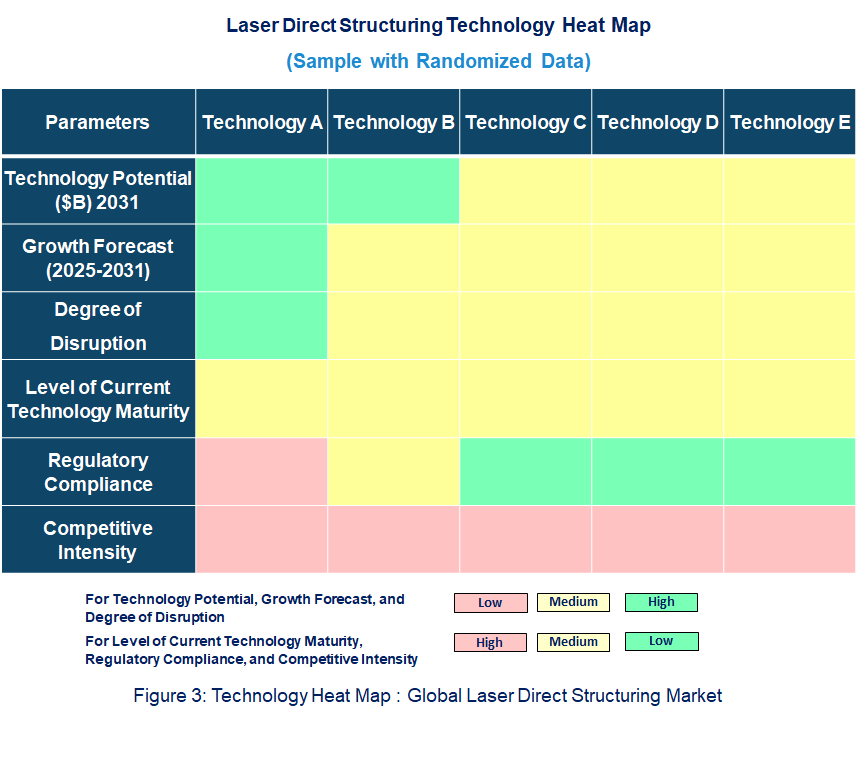
• Technology Potential: Laser Direct Structuring (LDS) Antenna technology is a significant transformation in the context of current electronics. This technology holds much promise as the creation of very thin, high-resolution 3D structures directly on plastics and other suitable substrates allows for compactness, efficiency, and customizable antenna solutions for various applications.
• Degree of Disruption: LDS antenna technology is highly disruptive as it allows for the miniaturization of antenna components without loss of performance. It enables the development of complex geometries and multi-band antennas that are impossible to produce using conventional methods. This disruption is evident in its ability to support next-generation communication systems, including 5G and IoT, where both space and performance are crucial.
• Current Technology Maturity Level: The current maturity level of LDS technology is relatively advanced, with widespread adoption in industries requiring high-performance antennas. It has been established in niche markets for years but is now moving into consumer electronics and smart systems due to improved laser processing and cost-effective solutions.
• Regulatory Compliance: LDS antenna technology is also highly regulated in terms of electromagnetic compatibility, safety, and environmental effects. The standards require antennas to meet performance criteria while ensuring minimal interference and health risks. This makes it challenging for manufacturers as new regulations become even more demanding, driving innovation and quality.
• Taoglas: Taoglas has focused on expanding its portfolio of LDS antennas for IoT and 5G applications. Recent developments include the integration of multi-band antennas, which enable devices to operate across numerous frequency bands without interruptions in connectivity and signal strength in dynamic environments.
• Molex: Molex has recently launched LDS-based antenna solutions focusing on miniaturization and high efficiency. The latest products are designed to ensure reliable performance for applications in smart devices and the automotive sectors while maintaining a compact size for integration into modern electronics.
• Multi-Dimension: Multi-Dimension has advanced the production of high-quality LDS antennas to support more sophisticated consumer electronics and industrial automation. The innovations include increased energy efficiency and adaptability for various devices.
• SelectConnect Technologies: SelectConnect Technologies has been fine-tuning its LDS manufacturing methods to provide custom solutions that meet the growing demand in IoT and wearables. Emphasis on bespoke designs optimizes antenna performance to meet the specific requirements of complex applications.
• TE Connectivity: TE Connectivity has significantly advanced LDS antenna technology by introducing solutions that focus on connectivity and reliability for next-generation devices. These advancements aim to increase data transmission speeds in connected systems.
• Pulse Electronics: Pulse Electronics has introduced new LDS antenna products that seamlessly complement 5G infrastructure. The new designs enhance performance in smaller form factors, making them suitable for modern smart devices and network equipment.
• Amphenol: Amphenol has been a leader in integrating LDS antenna technology with wearable and portable products. Recent technologies from Amphenol feature even more compact, efficient antennas that enhance wireless connectivity and IoT integration.
• Tongda Group Holdings: Tongda Group Holdings has focused on expanding the use of LDS antenna technology in the automotive and industrial markets. Their new solutions improve vehicle connectivity and industrial automation, promoting the growth of smart transportation and manufacturing systems.
• Shenzhen Sunway Communication: Shenzhen Sunway Communication has developed specialized LDS antennas that support the increasing demand for high-speed data transmission and smart connectivity. Their products aim to enhance the performance of devices in both consumer and enterprise markets.
• Luxshare Precision Industry: Luxshare Precision Industry has invested heavily in LDS technology, emphasizing high-volume production capabilities. Their advancements include more sophisticated laser processing techniques that enhance the quality and efficiency of antennas used in consumer electronics and IoT products.
• Development of Laser Processing Technologies: Improvements in laser processing techniques have allowed for increased precision and efficiency in LDS antenna production. Higher quality outputs can be produced at reduced costs, leading to more complex designs. This transition is making LDS technology more feasible for consumer and industrial applications.
• Integration with Wearable and Portable Devices: The wearable technology and portable electronic market is growing rapidly. This creates a demand for smaller, more efficient antennas. LDS technology facilitates the development of compact antenna solutions that can be seamlessly integrated into these devices, generating demand for more sophisticated designs in the market.
• Environmentally and Cost-Competitive Production: Advances in laser technologies are making LDS technology more cost-competitive and environmentally friendly. Improved energy efficiency and reduced production costs are increasing the appeal to manufacturers and end-users and encouraging broader adoption, supporting market growth.
• Customizable and Flexible Design Features: The ability to produce complex structures of tailored 3D antennas is a main growth driver for LDS technology. This feature allows for the development of unique solutions that meet specific needs for different applications. The adaptability of LDS technology supports innovations in the consumer electronics and industrial sectors as well. Challenges
• Material Limitations: LDS requires special plastics, limiting substrate choices and increasing production costs.
• High Initial Investment: Equipment and setup costs are significant, posing a barrier for small-scale manufacturers. Factors driving the LDS antenna technology market include advancements in laser processing, the proliferation of 5G and IoT, and the need for miniaturized, high-performance antennas. Regulatory compliance remains a key challenge, whereas cost-efficient, flexible, and efficient antenna solutions present significant market growth and innovation opportunities.
• Taoglas
• Molex
• Multiple Dimensions
• Selectconnect Technologies
• TE Connectivity
• Pulse Electronics
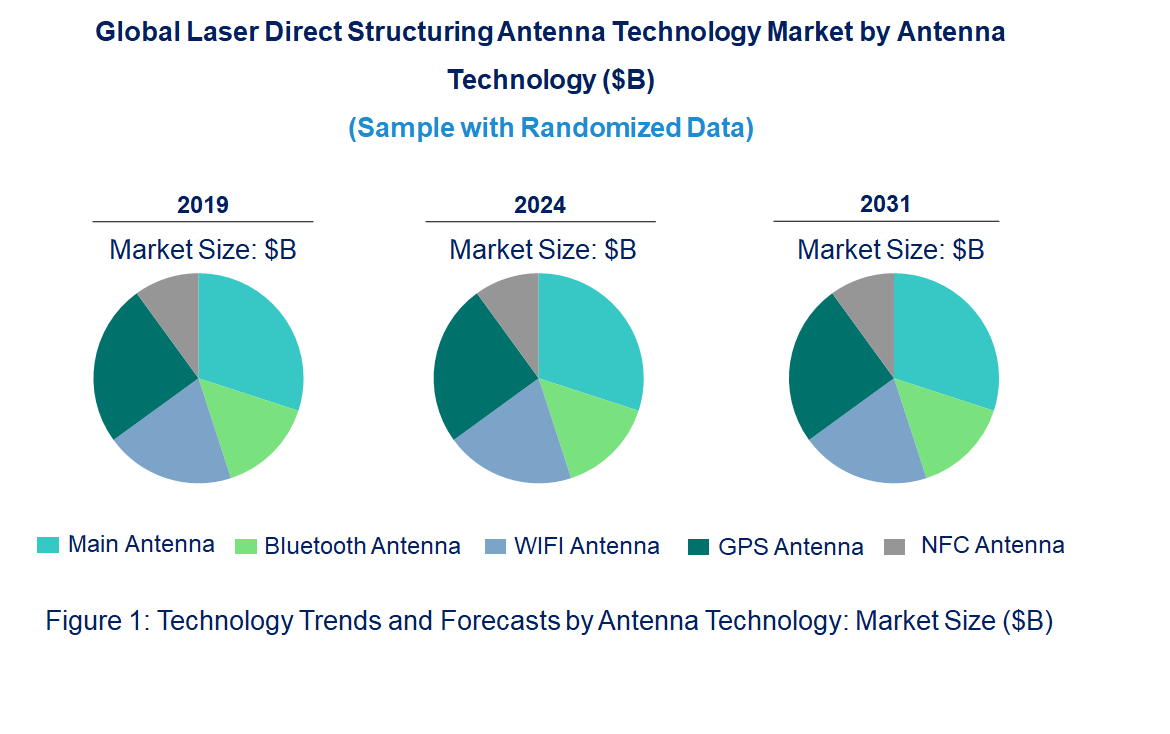
• Technology Readiness by Type and Key Applications: Highly mature main antennas are integral to smartphones, tablets, and other IoT devices, supporting high-speed connectivity. Bluetooth antennas are well-established and driving key applications such as wearables, health monitors, and smart home gadgets due to low energy usage. Wi-Fi antennas are widely used in routers, laptops, and smart devices for seamless, high-speed data transfer. GPS antennas are critical for navigation systems, autonomous vehicles, and logistics. They have well-established applications in mobile technology. NFC antennas are also well-developed and enable secure payment systems, ticketing, and access control applications. Each type of antenna technology is at a different stage of maturity, with strong applications that impact daily life and industries like automotive, health, retail, and smart technology.
• Competitive Intensity and Regulatory Compliance of Different Technologies: The competitive intensity in laser direct structuring antenna between the main antennas, Bluetooth antennas, Wi-Fi antennas, GPS antennas, and NFC antennas is different, with high competitive intensity between Wi-Fi and Bluetooth, because these two are in demand by most consumers and are updated fast. Main antennas have a fight both in consumer electronics and in specialized industries. The niche is more specialized with GPS antennas, which cater to markets like automotive and mobile devices. NFC antennas are under greater regulatory scrutiny in the finance industry, but competition is somewhat balanced. Regulatory compliance by such technologies ensures safety and minimal interference, electromagnetic compatibility. There are different standards across all of these, which motivate innovation from manufacturers to make and meet specific requirements for telecom and consumer electronics.
• Disruption Potential of Different Technologies: Main antennas interfere significantly with the environment because they make advanced connectivity in smartphones and smart devices possible, helping to smoothly communicate and integrate IoT. However, with Bluetooth antennas, short-range and low-power communication technology has emerged, which gave birth to wearables as well as smart home devices and transformed the internet accessibility in various homes and businesses. GPS antennas have made navigation and location-based services feasible, which has motivated the emergence of autonomous automobiles and mobile applications. NFC antennas are revolutionizing payments and access control through contactless technology, creating the growth of secure and fast transactions. Each antenna type has unique disruptive potential, adapting to consumer demands and industry advancements.
• Main Antenna
• Bluetooth Antenna
• WIFI Antenna
• GPS Antenna
• NFC Antenna
• Smartphones
• Wearables
• Laptops/Tablets
• Gaming Consoles and Accessories
• North America
• Europe
• Asia Pacific
• The Rest of the World
• Latest Developments and Innovations in the Laser Direct Structuring (LDS) Antenna Technologies
• Companies / Ecosystems
• Strategic Opportunities by Technology Type


Choose a license that fits your team. Instant PDF delivery.
Prices exclude taxes. Instant delivery. Custom licensing available on request.
Market Report · May 18, 2026
Market Report · May 18, 2026
Market Report · May 18, 2026
Trusted partner for strategic intelligence and business growth


Receive a complimentary market analysis tailored to your industry. Our analysts will identify key growth opportunities and competitive dynamics specific to your business.

Market size, growth rate, and key trend analysis for your specific sector.

Top competitor positioning and market share analysis.

Strategic recommendations backed by data-driven insights.
Get curated market intelligence and competitive moves straight to your inbox.
By subscribing, you agree to receive our monthly insights. Unsubscribe anytime.
Receive a complimentary market analysis tailored to your industry. Our analysts will identify key growth opportunities and competitive dynamics specific to your business.
Market size, growth rate, and key trend analysis for your specific sector.
Top competitor positioning and market share analysis.
Strategic recommendations backed by data-driven insights.
Get curated market intelligence, emerging trends, and competitive moves straight to your inbox each month.
By subscribing, you agree to receive our monthly insights. Unsubscribe anytime.
We'll send your sample report shortly.