
Market Report · May 18, 2026

This market report covers trends, opportunities, and forecasts in the global laser direct imaging (ldi) equipment market to 2031 by technology (light source: 350-375nm and light source: 375-410 nm), application (hdi pcb, ic substrate, multilayer pcb, and others), and region (North America, Europe, Asia Pacific, and the Rest of the World)
We'll send your sample report shortly.
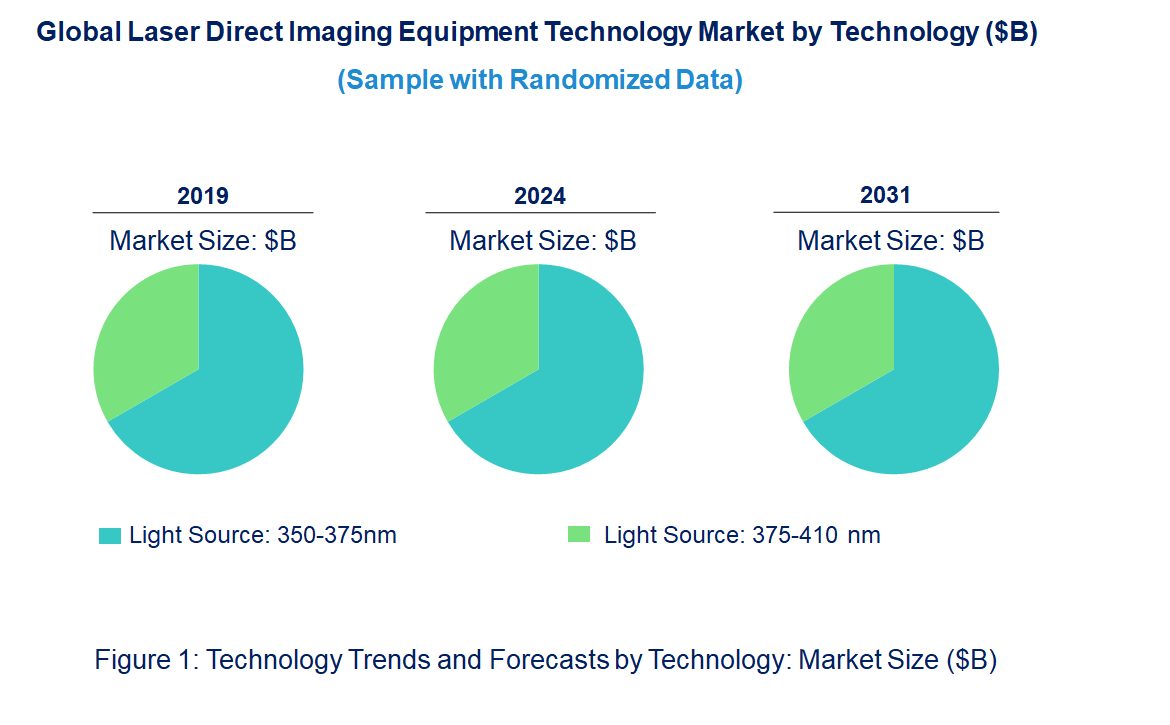
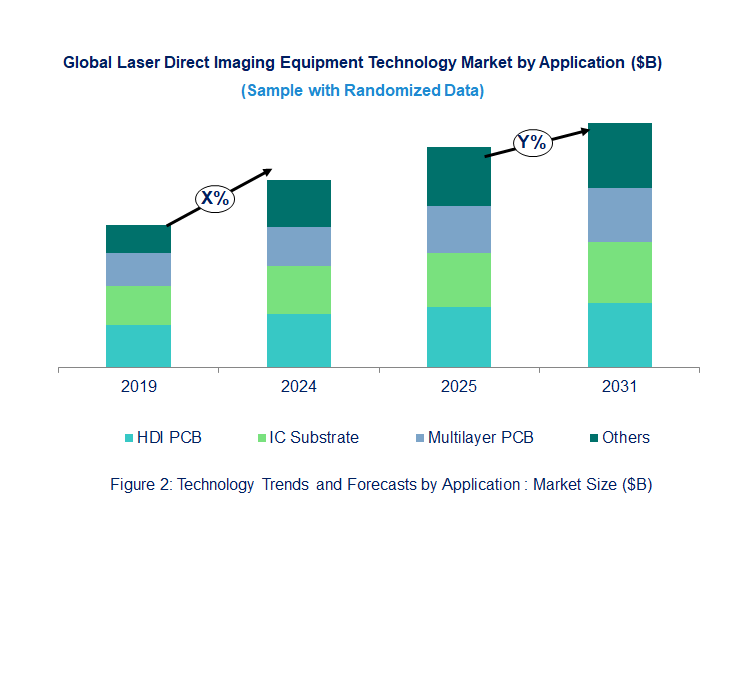
• Transition to Higher Wavelength Light Sources (375-410nm): The move towards 375-410nm light sources brings higher resolution and power efficiency, which helps manufacturers make smaller, more complex PCBs and IC substrates. This is essential for industries requiring high-density interconnections and precision in circuit designs.
• Increased Adoption in HDI PCB Production: High-density interconnect (HDI) PCBs require precise, high-resolution imaging for efficient multi-layered circuit designs. Laser direct imaging technology’s ability to provide fine resolution is driving its increased adoption in HDI PCB production, offering cost-effective and scalable solutions for complex electronic devices.
• Integration of Automation and AI in laser direct imaging Equipment: The integration of automation and AI-based technologies in laser direct imaging equipment makes the imaging process more accurate and efficient. AI-powered inspection systems maintain optimal alignment and quality while reducing human error, which, in turn, increases production throughput.
• Multilayer PCBs in Consumer Electronics: As consumer electronics, especially smartphones, wearable devices, and laptops, move towards higher functionality in smaller form factors, the demand for multilayer PCBs is on the rise. laser direct imaging technology is well-positioned to meet this market need, given its ability to handle intricate, multi-layer designs.
• Eco-Friendly and Energy-Efficient Equipment Shift: Environmental concerns and energy efficiency have become primary focuses for manufacturers today. New developments in laser direct imaging equipment emphasize lower energy consumption and reduced environmental harm, assisting companies in meeting sustainability goals without compromising high-performance production standards. Trends in the laser direct imaging (LDI) equipment market are reshaping the industry by enabling greater precision, supporting complex and high-density designs, and improving overall production efficiency. These advances are positioning laser direct imaging technology at the forefront of critical enablers for the future of electronics manufacturing.
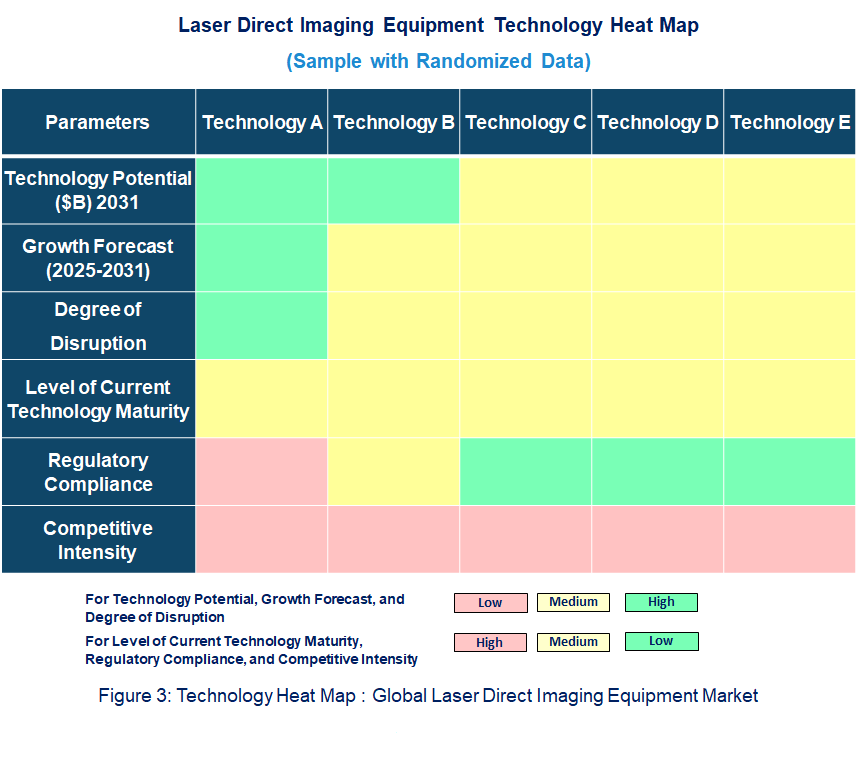
• Technology Potential: The potential of laser direct imaging technology lies in its ability to enhance the speed, resolution, and cost-effectiveness of PCB manufacturing. As electronic devices become smaller and more complex, the demand for fine-line imaging grows. Laser direct imaging systems can achieve finer patterning with higher accuracy, allowing for faster production cycles and better overall quality control. Additionally, the elimination of photomasks reduces material costs and setup times, providing both economic and operational advantages in mass production.
• Degree of Disruption: Laser direct imaging technology is moderately disruptive to PCB manufacturing as it enables manufacturers to keep pace with the miniaturization trend in electronics. It has the potential to transform circuit board production, particularly in advanced technologies like 5G, AI, and IoT, where high-density, complex PCB designs are essential.
• Technology Maturity: Laser direct imaging technology is relatively mature, with established solutions widely used in PCB production. However, the precision of lasers, imaging resolution, and process speed are still being improved due to ongoing developments.
• Regulatory Compliance: Laser direct imaging equipment, particularly in light of environmental changes, is subject to regulations under RoHS (Restriction of Hazardous Substances) and CE certification. They must be strictly environmentally friendly for use. Manufacturers must meet all safety regulations regarding the equipment used in manufacturing to ensure the safety of the final products.
• Orbotech: Orbotech, an laser direct imaging equipment provider, has developed advanced imaging systems with 375-410nm light sources. These offer more accuracy and throughput in PCB and IC substrate production. Their innovations allow manufacturers to meet the demands of HDI and multilayer PCB designs with increased efficiency.
• HANS Laser Technology: HANS Laser Technology has launched next-generation laser direct imaging systems that combine high-resolution light sources with enhanced software solutions. These systems focus on automating the imaging process to reduce human error and improve overall production efficiency, especially for HDI PCBs and multilayer circuit boards.
• ORC Manufacturing: ORC has been actively working to enhance the speed and accuracy of their laser direct imaging equipment by using high-wavelength light sources and automated systems for better alignment and imaging. Their solutions are designed to address the increasing need for miniaturized PCBs in consumer electronics and automotive applications.
• Fujifilm: Fujifilm has expanded its laser direct imaging product portfolio with advanced systems designed for low energy consumption and environmentally friendly products. The systems are optimized for high-resolution imaging and are increasingly used in the production of HDI PCBs and IC substrates.
• Hitachi: Hitachi unveiled new laser direct imaging equipment infused with AI. The system automatically inspects and performs real-time quality control checks. As a result, each board is strictly qualified, providing a valuable solution for high-demand markets such as telecommunications, automotive, and consumer electronics.
• CAIZ OPTRONICS CORP: CAIZ OPTRONICS has focused on making their laser direct imaging equipment more efficient and versatile by allowing their systems to accommodate complex multilayer PCB designs. Their products are well-suited for high-performance electronics applications, such as aerospace and defense.
• SCREEN Holdings: SCREEN Holdings has significantly improved its laser imaging systems by emphasizing automation, precision, and energy efficiency. These systems are commonly used in the production of multilayer PCBs and IC substrates, delivering fast production speeds with minimal waste. These developments demonstrate how industry leaders are innovating to meet demands for precision, efficiency, and sustainability in the marketplace. They are doing so through technological advancements and preparing to capture a share of the growing market for HDI PCBs, multilayer PCBs, and IC substrates.
• Increased Demand for HDI and Multilayer PCBs: As electronics become miniaturized and more complex, there is increasing demand for HDI and multilayer PCBs. LDI technology is in high demand because it ensures high precision and can accommodate complex designs.
• Advances in Light Source Technology: The transition to higher wavelength light sources (375-410nm) enables LDI equipment to produce finer features with more accuracy, improving production capabilities and satisfying the demand for small, complex circuit designs.
• Increased Automation in PCB Manufacturing: The integration of automation into LDI systems leads to higher efficiency and lower error rates in PCB production. Automated systems streamline manufacturing, enabling faster production times.
• Demand for Energy-Efficient and Sustainable Manufacturing: The demand for more sustainable and energy-efficient manufacturing processes is driving the development of LDI equipment that consumes less energy and produces fewer emissions. This is particularly relevant for industries striving to meet environmental standards and reduce operational costs. Challenges in the laser direct imaging (LDI) equipment market include:
• High Initial Investment: Installing LDI systems can be costly, particularly for small and medium-sized manufacturers. The high cost of entry may deter adoption, especially in price-sensitive markets.
• Complexity of Integrating New Technologies: Integrating advanced LDI systems into existing manufacturing lines can be a complex and costly process. Manufacturers need to train personnel and ensure compatibility with existing equipment, which can delay adoption and increase operational costs.
• Technological Obsolescence: With rapid advancements in technology, LDI systems can become obsolete quickly, forcing manufacturers to constantly update their equipment to remain competitive. This need for continuous upgrades and innovations can lead to higher costs and faster depreciation. The laser direct imaging equipment equipment market is driven by the increasing demand for high-precision PCBs and energy-efficient manufacturing solutions. However, challenges such as high initial investments, integration complexities, and technological obsolescence must be addressed to sustain growth. As companies adapt to these challenges, LDI technology is poised to remain a key enabler of innovation in the electronics manufacturing industry.
• Orbotech
• HANS Laser Technology
• ORC Manufacturing
• Fujifilm
• Hitachi
• CAIZ OPTRONICS CORP
• Technology Readiness of Light Sources: 350-375nm and 375-410nm for the Laser Direct Imaging (LDI) Equipment Market: The 350-375nm light source technology is mature and ready for high-precision use in sectors such as semiconductor manufacturing, PCB fabrication, and advanced optics, thanks to its ability to achieve finer patterns with exceptional accuracy. This technology has reached a high level of readiness and is proven to create the fine geometries required by modern electronics. The 375-410nm light source is slightly less mature in terms of resolution but is widely used in mid-range applications, balancing cost and performance for industries that do not require the highest precision. Competitive pressures are intense, with companies developing cutting-edge 350-375nm technology to maintain an advantage in high-resolution markets, while 375-410nm systems continue to dominate in more cost-sensitive sectors. Regulatory compliance ensures that safety and performance standards are met, particularly for the safe use of UV lasers and adherence to environmental regulations regarding energy consumption and emissions. As demand for more compact, precise, and energy-efficient solutions grows, both light sources will evolve to meet the needs of the rapidly changing market.
• Competitive Intensity and Regulatory Compliance of Light Source: 350-375nm and 375-410nm for the Laser Direct Imaging (LDI) Equipment Market: The competitive intensity in the LDI equipment market is increasing, with players competing to provide more efficient light sources with higher resolution. The 350-375nm light source technology is the new favorite for high-resolution imaging applications in the semiconductor and PCB industries, giving companies using this wavelength a competitive edge. However, 375-410nm light sources remain strong in markets focused on cost, energy efficiency, and speed. Regulatory compliance is critical for both technologies, particularly concerning safety standards for UV light emissions and their effects on workers and the environment. LDI systems must comply with international standards regarding environmental sustainability, energy efficiency, and worker safety, especially in controlling UV lasers in commercial applications. In the future, the adoption of these light sources across industries will be determined by adherence to these regulations as the technology continues to evolve.
• Potential Disruption by the Light Source: 350-375nm and 375-410nm in the Laser Direct Imaging (LDI) Equipment Market: The laser direct imaging (LDI) equipment market is being disrupted by the shift in light source technologies. Light sources operating in the 350-375nm range are becoming increasingly popular due to their better resolution and finer pattern capabilities. These are recommended for high-precision applications in electronics, PCB manufacturing, and microelectronics. Meanwhile, light sources in the 375-410nm range, with slightly lower resolution but better energy efficiency, are becoming popular for broader industrial applications where cost-effectiveness and speed are prioritized. The disruption arises from the increased adoption of shorter-wavelength (350-375nm) light sources that enable more precise imaging, pushing older and less efficient 375-410nm sources out of high-end markets. This shift is likely to change the landscape of LDI equipment as manufacturers adopt newer, higher-performance systems to meet the growing demand for miniaturization and high-resolution imaging.
• Light Source: 350-375nm
• Light Source: 375-410 nm
• HDI PCB
• IC Substrate
• Multilayer PCB
• Others
• North America
• Europe
• Asia Pacific
• The Rest of the World
• Latest Developments and Innovations in the Laser Direct Imaging (LDI) Equipment Technologies
• Companies / Ecosystems
• Strategic Opportunities by Technology Type


Choose a license that fits your team. Instant PDF delivery.
Prices exclude taxes. Instant delivery. Custom licensing available on request.
Market Report · May 18, 2026
Market Report · May 18, 2026
Market Report · May 18, 2026
Trusted partner for strategic intelligence and business growth


Receive a complimentary market analysis tailored to your industry. Our analysts will identify key growth opportunities and competitive dynamics specific to your business.

Market size, growth rate, and key trend analysis for your specific sector.

Top competitor positioning and market share analysis.

Strategic recommendations backed by data-driven insights.
Get curated market intelligence and competitive moves straight to your inbox.
By subscribing, you agree to receive our monthly insights. Unsubscribe anytime.
Receive a complimentary market analysis tailored to your industry. Our analysts will identify key growth opportunities and competitive dynamics specific to your business.
Market size, growth rate, and key trend analysis for your specific sector.
Top competitor positioning and market share analysis.
Strategic recommendations backed by data-driven insights.
Get curated market intelligence, emerging trends, and competitive moves straight to your inbox each month.
By subscribing, you agree to receive our monthly insights. Unsubscribe anytime.
We'll send your sample report shortly.