
Market Report · July 15, 2026

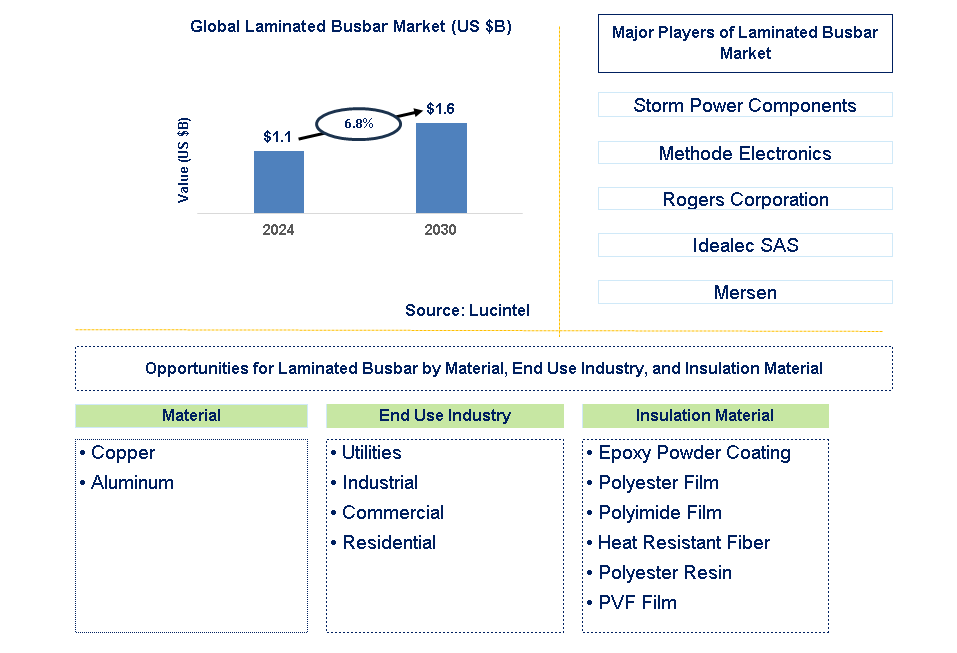
Key data points: The market size in 2030 = $1.6 billion, growth forecasts = 6.8% annually for the next 6 years. Scroll below to get more insights. This market report covers trends, opportunities, and forecasts in the global laminated busbar market to 2030 by material (copper and aluminum), end use industry (utilities, industrial, commercial, and residential), insulation material (epoxy powder coating, polyester film, polyimide film, heat resistant fiber, polyester resin, and PVF film), and region (North America, Europe, Asia Pacific, and the Rest of the World)
We'll send your sample report shortly.
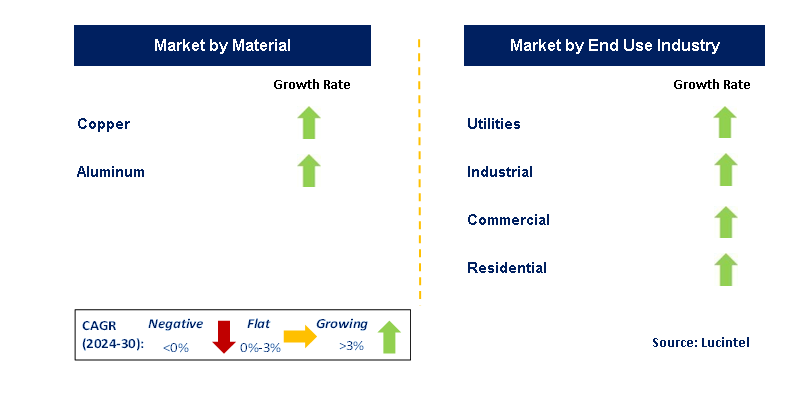
• Lucintel forecasts that, within the material category, copper is expected to witness higher growth over the forecast period because it has properties such as high conductivity and a lower coefficient of linear expansion.
• In terms of regions, APAC will remain the largest region over the forecast period because of fast industrialization, the burgeoning renewable energy industry, and the rising electronics and automobile industries in the region. Gain valuable insights for your business decisions with our comprehensive 150+ page report.
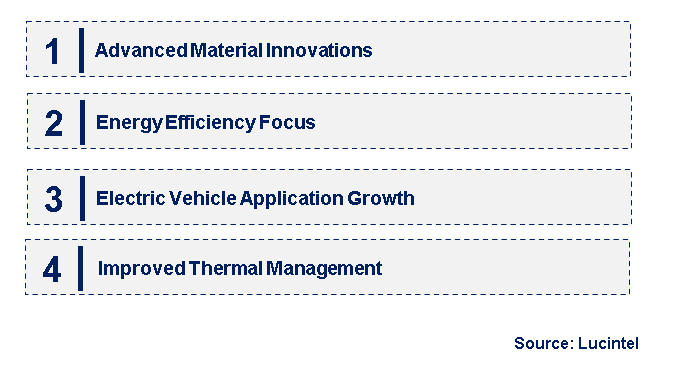
• Advanced Material Innovations: Materials development, such as high-temperature superconductors and better insulation, provide more efficient and durable Laminated Busbars. The innovations improve performance and reduce energy loss, hence contributing significantly to developing compact and reliable electrical systems that are quite necessary for high power applications.
• Energy Efficiency Focus: The design and manufacture of energy efficiency within Laminated Busbar have gained a growing interest. Several firms develop products that help reduce energy losses and improve overall system efficiencies. The trend is harnessed owing to the gaining interest in sustainable solutions for power distribution with more integration of renewable energy sources.
• Electric Vehicle Application Growth: Increased adoption of EVs is consequently increasing demand for high-performance Laminated Busbars. Inventions customized for EV applications, such as lightweight and high-current busbars, become imperative. This trend can be put into perspective with the general movement toward greener transportation solutions and greater emphasis on the power system of an EV with a view to optimization.
• Improved Thermal Management: The integration of improved thermal management technologies into Laminated Busbars will enable the handling of higher power densities safely. Advanced cooling techniques and advanced heat-dissipation materials will be integrated, finally conquering overheating-related challenges and giving a boost to the entire system's performance. These emerging trends change the look of the laminated busbar market for improved performance, efficiency, and flexibility. The focus on smart technologies, material innovations, and energy efficiency is driving growth and opening up newer opportunities in sectors like electric vehicles and renewable energy. These changes mark the future of the market landscape.
• Advanced Manufacturing Techniques: New manufacturing techniques involving advanced bonding and insulation processes improve performance and reliability in Laminated Busbars. These techniques further reduce production costs and improve the thermal and electrical conductivity of busbars, making them even more suitable for high-demand industrial and automotive applications.
• Material Innovations: New material development, such as high-temperature superconductors and advanced composites, continues to improve the capability of Laminated Busbar. These emerging materials have the potential to provide improved performance with higher durability and less energy loss, thus further driving demand for high-efficiency power systems in renewable energy and electric vehicle applications.
• Thermal Management Improvement: The recent developments in thermal management have enhanced the heat dissipating capability of laminated busbars. Advanced cooling technologies and materials that can handle heat more effectively are the solutions to overheating issues for long life and reliability in high-power, high-density applications.
• Sustainability Focus: Much emphasis is being laid on the development of Laminated Busbar in a sustainable way. Companies look for eco-friendly materials and means of manufacture with global sustainability objectives. This, in turn, helps in the adoption of Laminated Busbars in green energy projects, adding to the holistic lessening of environmental impact.
• Expanding into Emerging Markets: The laminated busbar market is expanding in emerging markets such as India and Southeast Asia. Further, increasing industrialization and infrastructure in these regions are increasing the demand for high-performance busbars. Companies are now identifying new opportunities in these markets by adapting to new products for local needs and regulatory requirements. These factors are hugely influencing the laminated busbar market in terms of performance, sustainability, and market reach. Innovations in manufacturing, materials, and thermal management are driving growth, opening up new opportunities-especially in emerging markets and high-demand applications.
• Renewable Energy Sector: The rise in renewable energy projects offers great potential for Laminated Busbars. In systems of solar and wind energies, there has been an increased need for higher power distribution and management, for which laminated busbars play their role with enhanced performance and reliability. This is a very vital application that makes integration with the grid effective.
• Electric Vehicle EV Industry: The highly growing electric vehicle market presents a strategic growth opportunity for Laminated Busbars. Specific innovations for EV applications are required, involving lightweight, high current busbars that must be optimized with power systems for electric and hybrid vehicles. In this respect, the growth in this sector is fueling demand for advanced Laminated Busbar solutions.
• Industrial Automation: One factor contributing to better growth prospects in the Laminated Busbars market is the rising growth of industrial automation and smart manufacturing processes. In modern automated factories and machinery, high performance and reliability become essential in power distribution systems. Laminated Busbars help solve the increasing power and connectivity needs in this sector.
• Data Centers: Growth in the industry of data centers is raising the demand bar for effective solutions for power distribution and management. Laminated Busbars provide increased thermal management and reliability, making them perfect for high-density and high-power data centers. Thus, this particular sector is a prosperous opportunity for the providers of Laminated Busbars.
• Urban Infrastructure Development: Opportunities open up for Laminated Busbars with increasing urbanization and infrastructure development in power-distribution systems needed for smart grids and mega projects for urbanization. The demand for competent and reliable electrical systems in burgeoning cities supports the implementation of advanced Laminated Busbars. These points of strategic growth opportunity pinpoint the potential for big Laminated Busbar impacts across a variety of applications. Thus, companies tap into modern technological developments in the interest of meeting the changing needs of these sectors, such as renewable energy, EVs, and industrial automation, to realize these trends as opportunities for market development.
• Growing demand for effective power distribution: The rapid electrification of infrastructure and industries requires efficient power distribution systems, fueling demand for laminated busbars due to their better conductivity and lower space requirements. This trend is most evident in data centers, industrial automation, and power generation.
• Emergence of renewable energy integration: The growth of renewable energy resources, such as solar and wind energy, demands strong transmission and distribution power infrastructure. Laminated busbars are crucial elements in these systems, ensuring effective energy transfer and increasing system dependability.
• Increasing use of electric vehicles: The rapid increase in electric vehicle manufacturing and charging infrastructure is one of the primary drivers. Laminated busbars play a crucial role in battery systems and power electronics in EVs, enhancing performance and efficiency.
• Technological development in manufacturing: Advances in manufacturing processes and material technologies are driving the performance and economics of laminated busbars. Innovations in copper and aluminum alloy technologies, along with new lamination processes, are enhancing conductivity while minimizing weight.
• Industrial automation expansion: The expanding use of automation in industry and manufacturing calls for efficient and fault-free power distribution. Laminated busbars enable the required power density and heat management for these applications. Challenges in the laminated bushbar market include:
• Material price volatility: Volatility in raw material prices, especially copper and aluminum, significantly affects production costs and profitability. This volatility creates uncertainty and impacts investment decisions.
• Stringent quality standards and regulations: The power distribution sector is regulated by stringent quality and safety standards. Compliance with these standards requires extensive testing and certification, which can increase production costs and lead times.
• Fierce competitive market: The laminated busbar industry is highly competitive, with intense rivalry from both new players and established companies. The competition pressures prices and requires constant innovation to remain competitive. The laminated busbar market is poised for expansion based on the growing demand for effective power distribution and the development of renewable energy and electric vehicles. However, manufacturers must overcome challenges related to material price fluctuations, strict standards, and stiff competition. Technological innovation, cost-effective production, and adaptation to changing market and regulatory demands will determine success.
• Storm Power Components
• Methode Electronics
• Rogers Corporation
• Idealec SAS
• Mersen
• Amphenol Corporation
• Electronic Systems Packaging
• Power Electronics Group
• Suzhou West Deane Machinery
• Shennan Circuits
• Copper
• Aluminum
• Utilities
• Industrial
• Commercial
• Residential
• Epoxy Powder Coating
• Polyester Film
• Polyimide Film
• Heat Resistant Fiber
• Polyester Resin
• PVF Film
• North America
• Europe
• Asia Pacific
• The Rest of the World
• United States: The U.S. laminated busbar market has been driven by smart grid integrations, among other energy-efficient solutions. Key developments in the region include enhanced thermal and electrical performance through improved manufacturing techniques to meet increased demand from data centers and renewable energy applications. At the same time, improving compliance with rigorous safety requirements and attaining sustainability continue to be regarded as major trends in the country.
• China: The laminated busbar market is also characterized in China by rapid technological development and huge investments in electric cars and renewable energy infrastructure. Innovative production processes cut costs and enhance performance. Favorable Chinese government policies toward green energy solutions hasten the pace of advanced laminated busbar technologies for various industrial usages.
• Germany: The laminated busbar market in Germany has recorded some key growth driven by the local market in the automotive and industrial automation sector. The market here is well characterized by developments in material science, leading to the development of high-performance, lightweight Laminated Busbars. Germany's emphasis on Industry 4.0 further influenced the adoption of smart manufacturing techniques in this area.
• India: Unprecedented growth in industrialization and urbanization continues to drive growth in the Indian laminated busbar market. Other key developments include energy-efficient technologies and infrastructural improvements, impelled by the Government of India's initiatives for electrical grid reliability and sustainability. The growth in renewable energy creation contributes to the heightened demand for high-performance laminated busbars.
• Japan: The growth of the laminated busbar market in Japan is taking place along with the development of electronic devices and improvement in the automotive sector. Thermal management and durability enhancements add more worthiness to the laminated busbars for the high standards that Japanese technology and manufacturing sectors uphold. Energy-efficient solutions with advanced material usage are the reasons behind such development impetus in Japan.


• Storm Power Components
• Methode Electronics
• Rogers Corporation
• Idealec SAS
• Mersen
• Amphenol Corporation
• Electronic Systems Packaging
• Power Electronics Group
• Suzhou West Deane Machinery
• Shennan Circuits Q6. Which laminated busbar market segment will be the largest in future? Answer: Lucintel forecasts that copper is expected to witness the higher growth over the forecast period because it has properties such as, high conductivity, and lower coefficient of linear expansion. Q7. In laminated busbar market, which region is expected to be the largest in next 5 years? Answer: APAC will remain the largest region over the forecast period because of fast industrialization, the burgeoning renewable energy industry, and the rising electronics and automobile industries in the region. Q.8 Do we receive customization in this report? Answer: Yes, Lucintel provides 10% customization without any additional cost.


Choose a license that fits your team. Instant PDF delivery.
Prices exclude taxes. Instant delivery. Custom licensing available on request.
Market Report · July 15, 2026
Market Report · May 18, 2026
Market Report · May 18, 2026
Trusted partner for strategic intelligence and business growth


Receive a complimentary market analysis tailored to your industry. Our analysts will identify key growth opportunities and competitive dynamics specific to your business.

Market size, growth rate, and key trend analysis for your specific sector.

Top competitor positioning and market share analysis.

Strategic recommendations backed by data-driven insights.
Get curated market intelligence and competitive moves straight to your inbox.
By subscribing, you agree to receive our monthly insights. Unsubscribe anytime.
Receive a complimentary market analysis tailored to your industry. Our analysts will identify key growth opportunities and competitive dynamics specific to your business.
Market size, growth rate, and key trend analysis for your specific sector.
Top competitor positioning and market share analysis.
Strategic recommendations backed by data-driven insights.
Get curated market intelligence, emerging trends, and competitive moves straight to your inbox each month.
By subscribing, you agree to receive our monthly insights. Unsubscribe anytime.
We'll send your sample report shortly.