
Market Report · May 18, 2026

This market report covers trends, opportunities, and forecasts in the global lab blenders market to 2031 by technology (high-speed rotors, homogenization technology, magnetic stirring systems, ultrasonic blending technology, and others), application (college, research institutions, biotechnology company, and others), and region (North America, Europe, Asia Pacific, and the Rest of the World)
We'll send your sample report shortly.
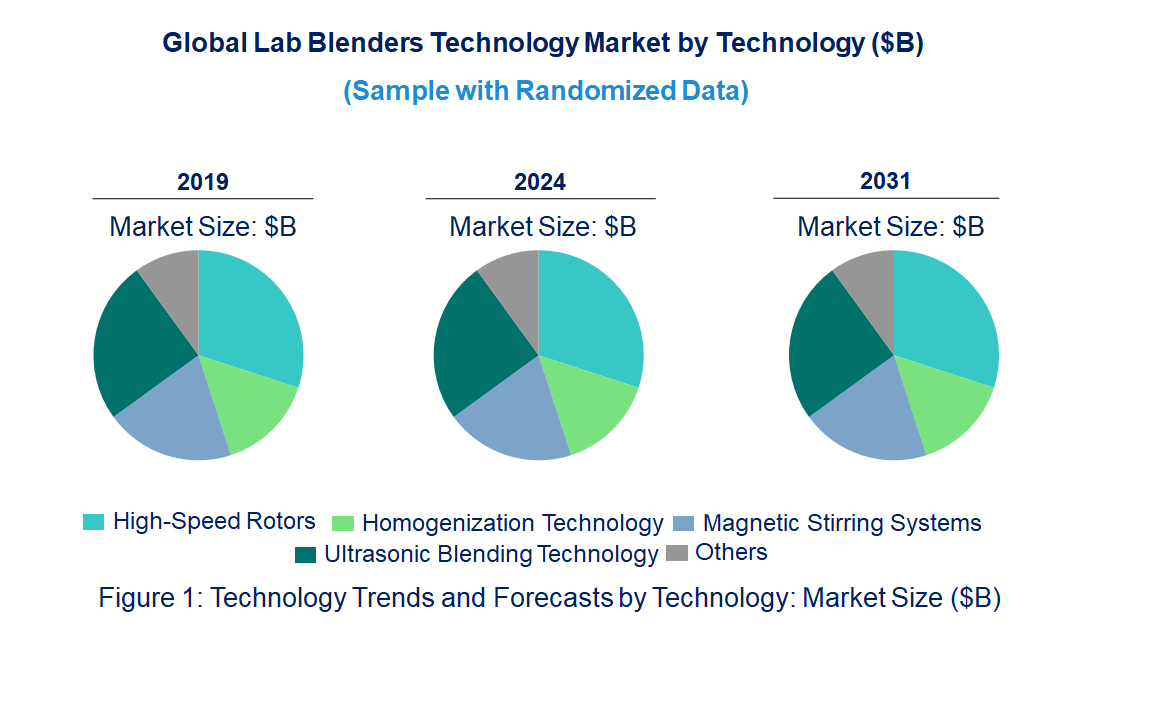
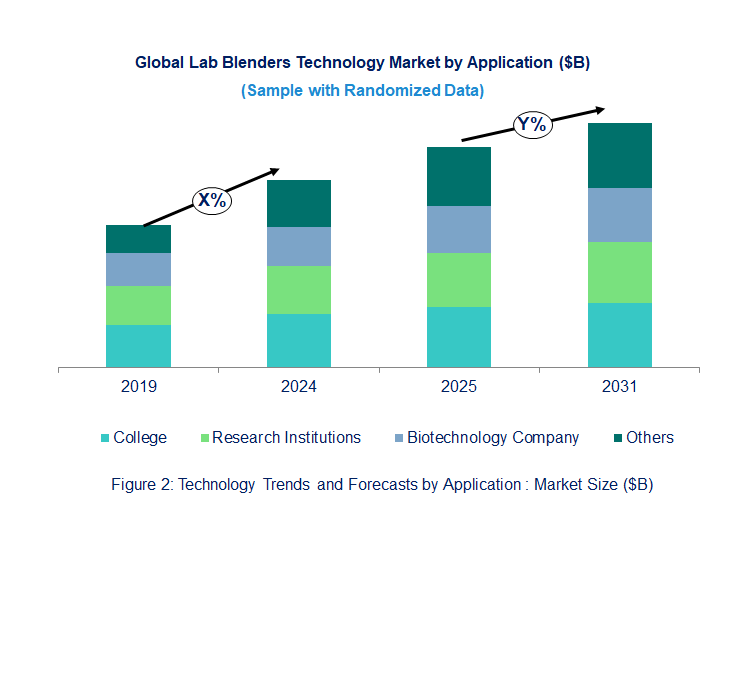
• Shift to Ultrasonic Blending: Ultrasonic blending technology is gaining traction due to its ability to provide faster and more uniform mixing, particularly in sensitive applications within biotechnology and research institutions.
• Homogenization Technology Advancements: Homogenization technology has evolved, offering improved precision in breaking down particles, which is particularly beneficial in biotechnology and pharmaceutical research.
• Integration of Digital and Automated Features: There is a growing trend of incorporating digital controls and automation in lab blenders, improving ease of use, reproducibility, and monitoring, particularly in research and biotechnology settings.
• Compact and Energy-Efficient Designs: Lab blenders are becoming more compact and energy-efficient, catering to smaller labs and institutions that require space-saving equipment without compromising on performance.
• Increased Focus on Customization: Customizable blending solutions are becoming more popular, allowing for tailored designs that suit specific applications, such as those in pharmaceuticals, biotechnology, and research institutions. These technology trends are transforming the lab blenders market by enhancing the efficiency, precision, and versatility of blending processes, making them more adaptable to various industries’ evolving needs.
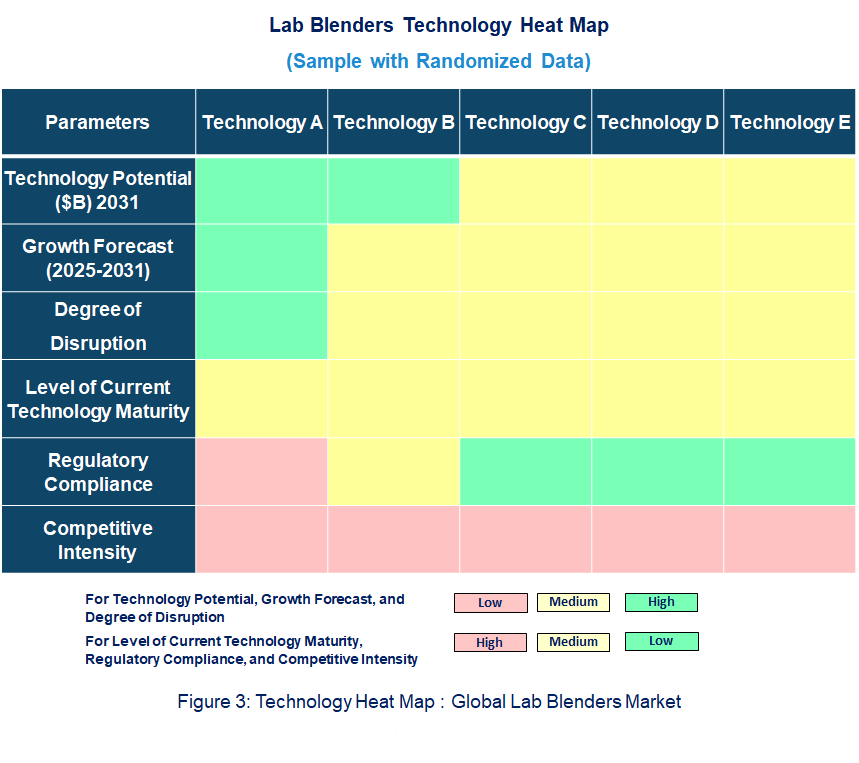
• Technology Potential: The technology potential in the lab blenders market is vast, driven by the increasing demand for efficient and precise blending in industries such as biotechnology, pharmaceuticals, and research. The shift from high-speed rotors to ultrasonic and homogenization technologies offers the potential for more efficient and consistent results, particularly in applications requiring high precision.
• Degree of Disruption: The degree of disruption is moderate, as ultrasonic and homogenization technologies are gradually replacing older, less precise methods like high-speed rotors. However, these advanced technologies are not yet ubiquitous and are likely to further evolve in the coming years.
• Level of Technology Maturity: The level of technology maturity is relatively high for homogenization and high-speed rotor technologies, which are widely used across many applications. Ultrasonic blending and automated systems are emerging technologies that are maturing quickly and gaining market acceptance.
• Regulatory compliance: Regulatory compliance is essential, especially in the biotechnology and pharmaceutical sectors, where standards like GMP (Good Manufacturing Practices) and ISO certifications are critical. These regulations ensure that lab blenders meet necessary quality and safety standards, which is vital for consistent, reliable, and reproducible results in research and production environments.
• Eberbach: Eberbach has introduced a new range of high-performance lab blenders featuring advanced digital controls and improved user interface. These blenders are designed to provide consistent blending results for sensitive materials, reducing errors in laboratory procedures and ensuring more accurate test results. This development improves laboratory efficiency and data reliability.
• FUCHS Maschinen: FUCHS Maschinen has launched a new modular lab blender model that offers customizable configurations, allowing for adjustments in blending speed, time, and other parameters. This flexibility allows users in industries such as pharmaceuticals and food processing to tailor the blender to their specific needs, enhancing process control and product quality.
• GlobePharma: GlobePharma introduced an innovative lab blender designed specifically for pharmaceutical applications, capable of handling high-viscosity materials. This new blender is optimized for producing uniform blends in small batches, ensuring the precision required in pharmaceutical formulations and improving the quality control process for drug production.
• Interscience: Interscience has upgraded its range of lab blenders with energy-efficient motors and noise-reduction features, offering quieter operations and reducing the environmental impact of laboratory equipment. This development appeals to environmentally conscious organizations and laboratories seeking to reduce their carbon footprint while maintaining high performance.
• METO Systems: METO Systems has introduced a line of lab blenders with advanced automation features, allowing for remote monitoring and control via mobile apps. This innovation is especially beneficial for laboratories that need to integrate blending processes into automated workflows, enhancing productivity and reducing manual errors.
• MRC: MRC has expanded its lab blender offerings with models designed for blending sensitive or hazardous materials. These new blenders feature enhanced safety features, such as explosion-proof mechanisms, and are optimized for use in laboratory settings where material integrity and safety are of utmost importance.
• Patterson Kelley: Patterson Kelley has developed a new lab blender that integrates seamlessly with other laboratory equipment, such as particle size analyzers and viscosity testers. This integration helps streamline workflows in research and development environments, ensuring faster and more accurate results in experiments and product testing.
• Advancements in Automation and Control Systems: The shift towards more automated, remote-controlled lab blenders is improving efficiency and reducing human errors. Automation in blending processes increases productivity by reducing manual intervention, ensuring higher throughput, and reducing operational costs. This trend is particularly evident in pharmaceutical and biotech labs.
• Rising Demand for Pharmaceutical and Biotech Research: As pharmaceutical companies increase investment in R&D and biotech research accelerates, the demand for precision blending equipment is rising. Lab blenders are essential in producing consistent blends for formulations, driving the demand for high-performance models that offer enhanced control and versatility in handling a wide range of materials.
• Increased Focus on Food Safety and Quality: The food industry’s focus on ensuring the highest standards of safety and product quality is driving demand for advanced lab blenders. These blenders are vital for research, quality testing, and developing new food products, where consistency and precision are essential for compliance with food safety regulations. Major Challenges in the lab blenders market are:
• High Initial Cost and Maintenance Requirements: The high initial cost of purchasing high-quality lab blenders can be a barrier for smaller laboratories or businesses. Additionally, the maintenance and servicing requirements of high-performance equipment can increase the overall operational costs, limiting the widespread adoption of such equipment.
• Regulatory Compliance and Certification: Compliance with stringent regulatory standards, such as those in pharmaceutical and food industries, can be a significant challenge. Lab blenders must meet specific certifications and safety requirements, which can lengthen the product development cycle and add to the cost of production. The Lab Blenders market is being driven by advancements in automation, increased demand from pharmaceutical, biotech, and food sectors, and a focus on improving product consistency and safety. However, challenges such as high initial investment and regulatory compliance requirements may pose barriers to growth. Addressing these issues while continuing to innovate will be key to sustaining long-term growth in the market.
• Eberbach
• Fuchs Maschinen
• Globepharma
• Interscience
• Meto Systems
• Mrc
• Technology Readiness by Technology Type: High-speed rotors are highly mature, with readiness across industries requiring fast, efficient blending, such as in research and production. Homogenization technology is also well-established, showing readiness in applications where uniformity and consistency are critical, such as in pharmaceuticals and food industries. Magnetic stirring systems are widely used in laboratories, offering excellent precision, but may lag behind in larger-scale applications. Ultrasonic blending technology is still evolving but is gaining traction in high-precision fields like biotechnology and material science. Each technology’s readiness is shaped by its application scope, regulatory requirements, and ongoing advancements to meet evolving industry demands for efficiency and quality.
• Competitive Intensity and Regulatory Compliance: The competitive intensity in the lab blenders market is high, with various technologies vying for dominance in different applications. High-speed rotors and homogenization technology are the most competitive, providing faster and more efficient blending for large-scale research. Magnetic stirring systems remain popular due to their precision, but they face competition from more advanced alternatives. Ultrasonic blending technology is emerging as a key player, offering enhanced performance in sensitive applications. Regulatory compliance is essential, particularly in the pharmaceutical, food, and chemical sectors where safety and process standards are stringent. Each technology must adhere to industry-specific regulations regarding safety, performance, and material compatibility.
• Disruption Potential of Different Technologies: High-speed rotors, homogenization technology, magnetic stirring systems, and ultrasonic blending technology are transforming the lab blenders market. High-speed rotors provide rapid mixing, enhancing efficiency in high-throughput environments. Homogenization technology disrupts traditional blending methods by offering superior uniformity for complex samples. Magnetic stirring systems offer precise control, ideal for chemical and pharmaceutical applications, but may face competition from newer technologies. Ultrasonic blending technology is disrupting the market by providing high levels of precision and reduced processing time for emulsions and suspensions. Emerging technologies continue to push boundaries in blending efficiency, accuracy, and versatility, reshaping the lab blender landscape.
• High-Speed Rotors
• Homogenization Technology
• Magnetic Stirring Systems
• Ultrasonic Blending Technology
• Others
• College
• Research Institutions
• Biotechnology Company
• Others
• North America
• Europe
• Asia Pacific
• The Rest of the World
• Latest Developments and Innovations in the Lab Blenders Technologies
• Companies / Ecosystems
• Strategic Opportunities by Technology Type


Choose a license that fits your team. Instant PDF delivery.
Prices exclude taxes. Instant delivery. Custom licensing available on request.
Market Report · May 18, 2026
Market Report · May 18, 2026
Market Report · May 18, 2026
Trusted partner for strategic intelligence and business growth


Receive a complimentary market analysis tailored to your industry. Our analysts will identify key growth opportunities and competitive dynamics specific to your business.

Market size, growth rate, and key trend analysis for your specific sector.

Top competitor positioning and market share analysis.

Strategic recommendations backed by data-driven insights.
Get curated market intelligence and competitive moves straight to your inbox.
By subscribing, you agree to receive our monthly insights. Unsubscribe anytime.
Receive a complimentary market analysis tailored to your industry. Our analysts will identify key growth opportunities and competitive dynamics specific to your business.
Market size, growth rate, and key trend analysis for your specific sector.
Top competitor positioning and market share analysis.
Strategic recommendations backed by data-driven insights.
Get curated market intelligence, emerging trends, and competitive moves straight to your inbox each month.
By subscribing, you agree to receive our monthly insights. Unsubscribe anytime.
We'll send your sample report shortly.