
Market Report · May 18, 2026

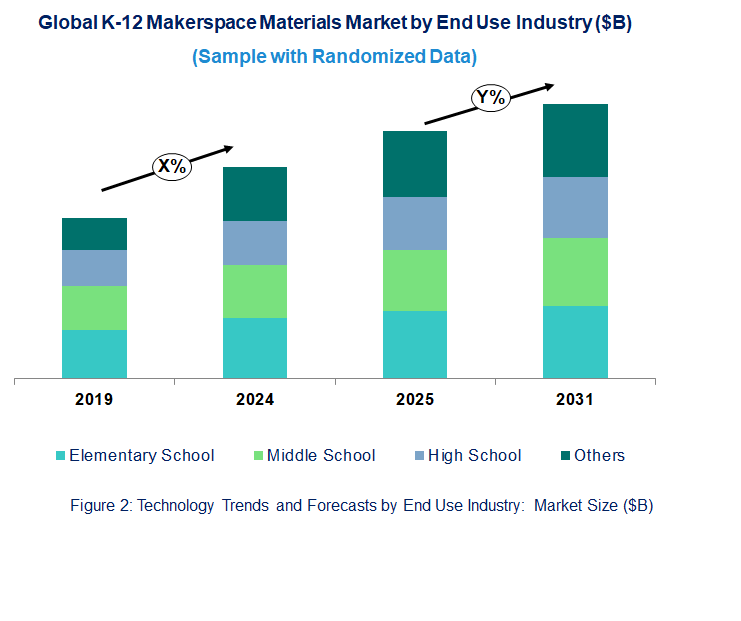
This market report covers trends, opportunities, and forecasts in the global k-12 makerspace materials market to 2031 by technology (robotic toolkit, construction materials, arts & crafts materials, and others), end use industry (elementary school, middle school, high school, and others), and region (North America, Europe, Asia Pacific, and the Rest of the World)
We'll send your sample report shortly.
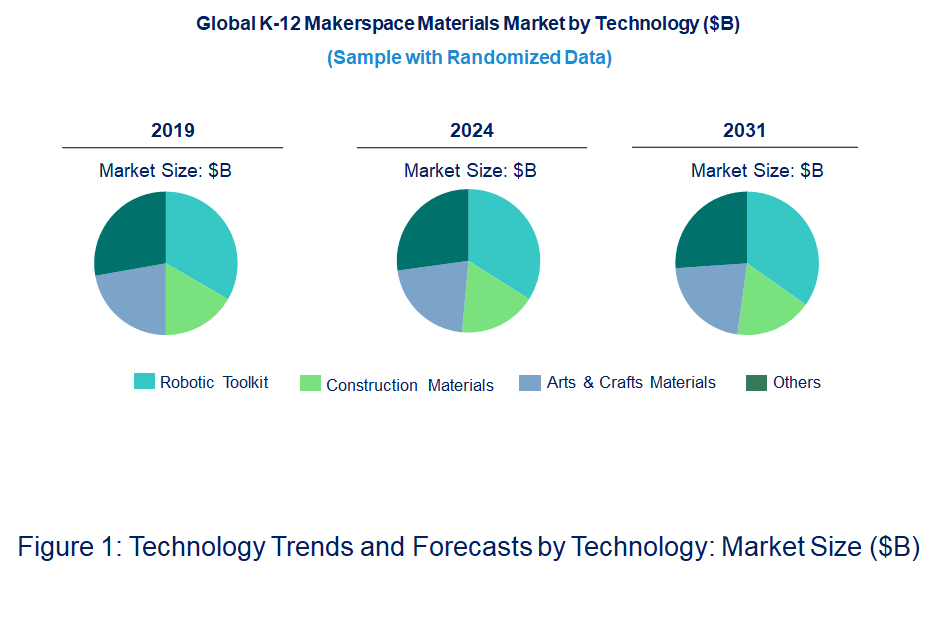
• Increased Focus on STEM Education: The growing emphasis on STEM (Science, Technology, Engineering, and Mathematics) education is driving demand for advanced materials such as robotics kits, engineering toolkits, and 3D printers that promote hands-on learning.
• Integration of Technology with Traditional Materials: Makerspaces are integrating digital technology with traditional arts and crafts materials, creating interactive learning environments that blend creativity with technology.
• Sustainability in Makerspace Materials: There is a rising demand for eco-friendly materials, as schools and educational institutions focus on sustainability. Recycled construction materials and biodegradable arts & crafts supplies are gaining popularity.
• DIY Robotics and Engineering Kits: The popularity of DIY robotic kits and engineering toolkits is increasing in K-12 schools, with a focus on building and programming robots, fostering critical thinking and problem-solving skills in students.
• Growth of Online Makerspace Resources: With the advancement of online platforms, schools are increasingly utilizing digital resources and remote collaboration tools to expand access to makerspace materials and educational content.
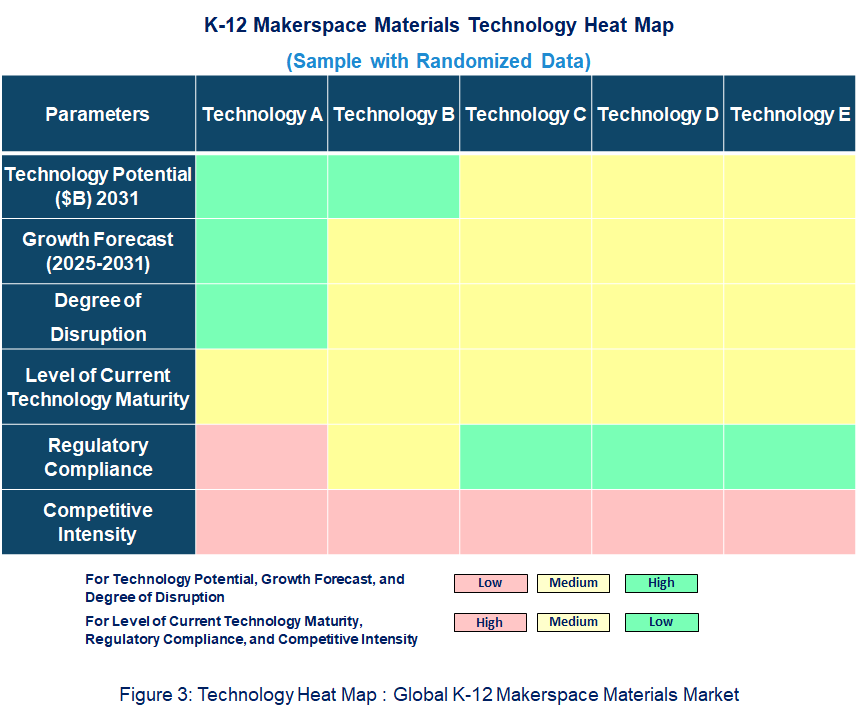
• Technology Potential:
The technology potential in the K-12 makerspace materials market is considerable, as it supports STEM learning, hands-on creativity, and problem-solving skills essential for the 21st century. Makerspaces incorporate a variety of tools and technologies, such as 3D printers, microcontrollers (like Arduino and Raspberry Pi), robotics kits, laser cutters, and coding platforms, to encourage experiential learning. These materials foster design thinking and computational literacy from an early age, helping students develop critical thinking and collaboration skills. As educational institutions increasingly shift toward interdisciplinary and project-based learning, the role of makerspace technology grows as a key driver of innovation, inclusivity, and real-world readiness in K-12 education systems.• Degree of Disruption:
Makerspace technologies are moderately disruptive to traditional classroom settings. They shift pedagogy from passive instruction to active, student-led exploration and design. This disruption promotes personalized learning, creativity, and peer collaboration, challenging rote learning models and teacher-centered approaches. Additionally, it encourages integration of subjects such as science, technology, engineering, arts, and math (STEAM). The introduction of makerspace materials requires changes in curriculum design, educator training, and classroom management, leading schools to rethink resource allocation, instructional goals, and the physical layout of learning environments.• Level of Current Technology Maturity:
K-12 makerspace technologies are at a mid to high level of maturity. Many core tools—like 3D printers, robotics kits, and programmable microcontrollers—are well-developed, affordable, and widely implemented. Open-source platforms and plug-and-play ecosystems make it easier for educators and students to integrate and use these technologies. However, challenges remain in ensuring curriculum alignment, equitable access, and seamless integration across grade levels. While more advanced AI or IoT-enabled makerspace tools are emerging, most K-12 implementations focus on robust, age-appropriate, and scalable solutions that support creativity and foundational technical skills development.• Regulatory Compliance:
Regulatory compliance in the K-12 makerspace materials market focuses primarily on safety, age-appropriateness, accessibility, and data privacy. Tools used in school settings must adhere to child safety standards (such as ASTM or CE certifications), and digital components must comply with COPPA (Children’s Online Privacy Protection Act) and FERPA (Family Educational Rights and Privacy Act) when collecting or managing student data. Accessibility standards, such as ADA or Section 508 compliance, must be considered to ensure all students, including those with disabilities, can participate fully. Schools and vendors must also implement appropriate risk management protocols, including teacher supervision, safety training, and secure internet connectivity to protect students and ensure responsible technology use.• ArcBotics: Specializes in educational robotics kits, which are increasingly used in K-12 makerspaces. Their kits help students learn coding and robotics, promoting problem-solving skills in STEM subjects.
• BASIC: Offers interactive educational tools that bridge the gap between traditional arts and crafts and modern technology, fostering creativity while introducing students to engineering concepts.
• Boxlight: Provides interactive and responsive classroom technology that enhances student engagement and collaboration, integrating makerspace principles into the classroom with ease.
• Chibitronics: Develops electronic stickers and circuits that are easy for students to use, combining art and engineering to create interactive projects in makerspaces.
• Eduscape: Offers comprehensive solutions for integrating makerspaces into K-12 education, providing tools and resources to educators for creating effective, technology-enhanced learning environments.
• Elenco Electronics: Known for their educational kits that promote hands-on learning in electronics and robotics, Elenco’s products are widely used in K-12 makerspaces to teach technical skills.
• Engino.net: Provides modular robotics and engineering kits that allow students to build functional models, fostering creativity and technical knowledge in STEM fields.
• Follett: Offers digital and physical resources for K-12 schools, including interactive books and maker materials that support the development of creative projects.
• Growing Emphasis on STEM Education: Educational policies and curriculum reforms increasingly stress the importance of science, technology, engineering, and math (STEM). Makerspaces support this trend by providing students with opportunities to apply STEM principles through experimentation, boosting problem-solving skills and future workforce readiness.
• Integration of 21st Century Learning Skills: Makerspaces encourage collaboration, communication, creativity, and critical thinking—core skills for 21st-century learners. These spaces align with educational goals to cultivate innovation and adaptability, making them vital components in K-12 institutions aiming to modernize teaching methodologies.
• Increasing Government and Institutional Support: Grants, funding programs, and policy initiatives from governments and educational bodies are driving makerspace adoption. Supportive infrastructure enables schools to invest in tools like 3D printers, robotics kits, and crafting supplies, fostering equitable access to experiential learning.
• Availability of Low-Cost, Open-Source Tools: Affordable microcontrollers, open-source software, and DIY kits have made it easier for schools to set up and expand makerspaces. These accessible tools lower the entry barrier, allowing broader participation and encouraging creative experimentation among students.
• Rise of Project-Based Learning Models: As education shifts from rote memorization to experiential and inquiry-based models, makerspaces become a key enabler. They allow students to work on real-world problems and tangible projects, deepening engagement and enhancing knowledge retention.
• Limited Funding and Resource Allocation: Despite increasing interest, many schools lack adequate budgets to establish and sustain makerspaces. High costs of tools, materials, and maintenance make it difficult for under-resourced institutions to provide comprehensive hands-on learning environments.
• Lack of Teacher Training and Support: Educators often lack the training required to effectively manage and integrate makerspaces into the curriculum. Without professional development or support resources, the potential of these spaces remains underutilized.
• Equity and Accessibility Gaps: Disparities in funding and infrastructure create unequal access to makerspaces, especially in rural or low-income areas. This gap limits opportunities for students who could benefit most from creative and experiential learning environments.
• Curriculum Integration Challenges: Incorporating makerspace activities into standardized curricula can be complex. Educators face challenges in aligning hands-on projects with learning standards, assessment models, and time constraints.
• Rapid Technological Obsolescence: The fast pace of innovation in educational technology means tools and materials can quickly become outdated. Schools must frequently upgrade equipment and retrain staff, placing strain on budgets and continuity of learning.
• Arcbotics
• Basic
• Boxlight
• Chibitronics
• Eduscape
• Elenco Electronics
• Technology Readiness: Robotic toolkits are moderately to highly mature, especially programmable kits like LEGO Education and arduino-based sets, though broader classroom integration still depends on teacher training and cost. Construction materials such as snap-fit kits and 3D printers are well-established and ready for scaled use, though cost and complexity can limit adoption in underserved schools. Arts & crafts materials are fully mature and universally adopted, with minimal barriers to use, making them the most ready for implementation. The other category shows varied readiness—electronics kits and wearables are evolving fast, but need support infrastructure and skilled facilitation. Overall, most categories are classroom-ready, but their effectiveness depends on educator support and integration into standards-based
• Competitive Intensity & Regulatory Compliance: The competitive intensity is highest in robotic toolkits, with numerous edtech players offering programmable, curriculum-aligned kits, driving innovation in coding and automation learning. Construction materials face moderate competition, largely among STEM-focused and 3D printing suppliers. Arts & crafts materials experience lower technological rivalry but see high brand-based competition among traditional craft suppliers. The other category is fragmented but competitive in niches like wearable tech and IoT kits. Regulatory compliance varies—robotics and electronics must meet child safety, data privacy (COPPA), and electromagnetic safety standards. Construction kits must pass material safety and durability regulations. Arts & crafts must comply with non-toxic labeling and child-safe design. Vendors are increasingly challenged to blend creativity with compliance.
• Disruption Potential: In the K-12 makerspace materials market, robotic toolkits hold the highest disruption potential by merging STEM learning with hands-on creativity, fostering coding, engineering, and problem-solving skills in an engaging way. Construction materials, including modular building kits and 3D printing components, enable structural design thinking and real-world application of physics and geometry, making them powerful tools for interdisciplinary learning. Arts & crafts materials remain essential for nurturing creativity and storytelling, though they are less tech-driven and disruptive. The other category—covering electronics, wearables, and mixed-media tools—adds cross-disciplinary depth, enabling hybrid learning experiences. The integration of digital tech and physical prototyping is reshaping how students learn by doing, driving pedagogical innovation in maker-based education.
• Robotic Toolkit
• Construction Materials
• Arts & Crafts Materials
• Others
• Elementary School
• Middle School
• High School
• Others
• North America
• Europe
• Asia Pacific
• The Rest of the World
• Latest Developments and Innovations in the K-12 Makerspace Materials Technologies
• Companies / Ecosystems
• Strategic Opportunities by Technology Type


Choose a license that fits your team. Instant PDF delivery.
Prices exclude taxes. Instant delivery. Custom licensing available on request.
Market Report · May 18, 2026
Market Report · May 18, 2026
Market Report · May 18, 2026
Trusted partner for strategic intelligence and business growth


Receive a complimentary market analysis tailored to your industry. Our analysts will identify key growth opportunities and competitive dynamics specific to your business.

Market size, growth rate, and key trend analysis for your specific sector.

Top competitor positioning and market share analysis.

Strategic recommendations backed by data-driven insights.
Get curated market intelligence and competitive moves straight to your inbox.
By subscribing, you agree to receive our monthly insights. Unsubscribe anytime.
Receive a complimentary market analysis tailored to your industry. Our analysts will identify key growth opportunities and competitive dynamics specific to your business.
Market size, growth rate, and key trend analysis for your specific sector.
Top competitor positioning and market share analysis.
Strategic recommendations backed by data-driven insights.
Get curated market intelligence, emerging trends, and competitive moves straight to your inbox each month.
By subscribing, you agree to receive our monthly insights. Unsubscribe anytime.
We'll send your sample report shortly.