
Market Report · May 18, 2026

This market report covers trends, opportunities, and forecasts in the global intercom devices market to 2031 by technology (analog and ip-based), end use industry (commercial, residential, industries, and government), and region (North America, Europe, Asia Pacific, and the Rest of the World)
We'll send your sample report shortly.
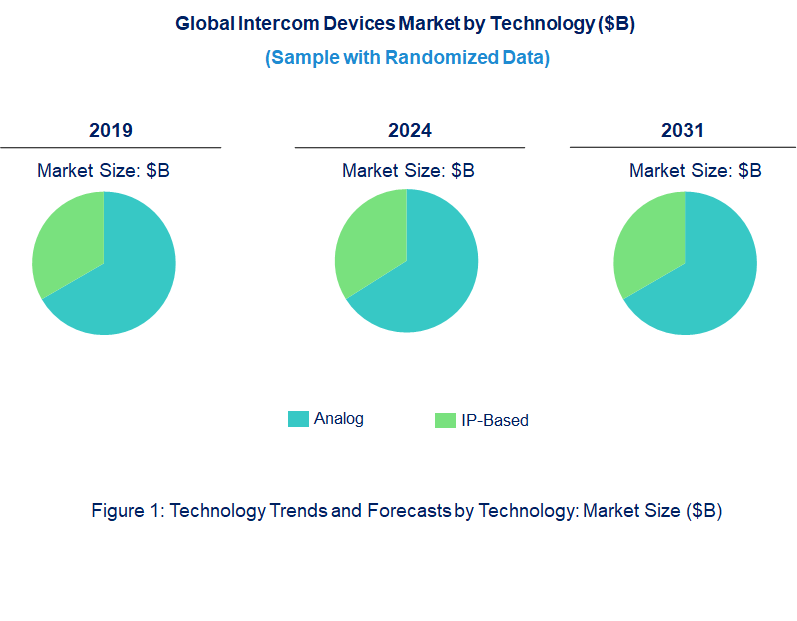
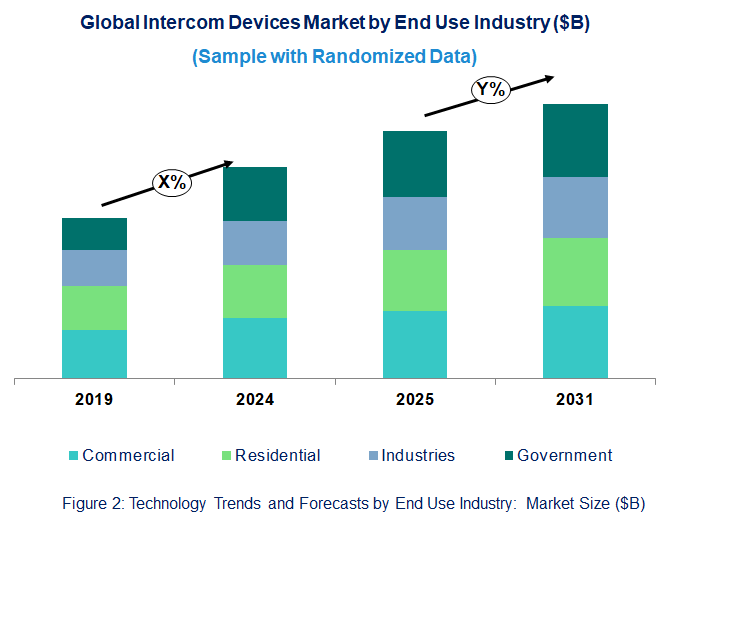
• Shift to IP-based Systems: The market is transitioning from traditional analog intercoms to IP-based systems, offering improved scalability, enhanced features like video, and better integration with other smart technologies.
• Integration with Smart Homes and IoT: Intercom devices are increasingly becoming integrated with smart home systems and the Internet of Things (IoT), allowing for greater control through smartphones, voice assistants, and other smart devices.
• Cloud-based Solutions: Cloud technology is enabling intercom devices to offer remote access, real-time updates, and easier maintenance, while also allowing users to monitor and control systems from anywhere.
• Enhanced Security Features: As security becomes a top priority for both residential and commercial applications, intercom devices are incorporating advanced security features such as facial recognition, secure video feeds, and encryption.
• Adoption in Commercial and Industrial Applications: Beyond residential use, IP-based intercoms are being widely adopted in commercial, industrial, and government sectors for enhanced communication, security, and operational efficiency. These technology trends are reshaping the intercom devices market by driving demand for more sophisticated, secure, and flexible systems that offer greater connectivity and integration with other technologies.
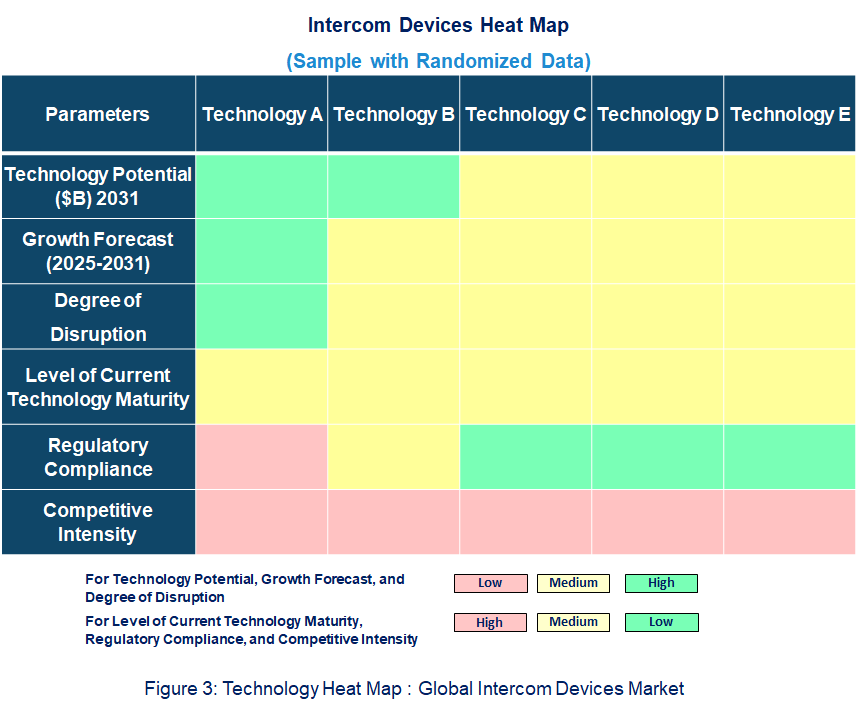
• Technology Potential: Intercom devices have evolved beyond simple voice communication tools into integrated systems offering audio, video, wireless, and IP-based connectivity. The potential lies in their application across residential, commercial, industrial, and institutional settings, where they contribute to security, automation, and convenience. Modern intercoms integrate with IoT, mobile apps, and smart home ecosystems, enabling remote access and cloud-based management. With AI and facial recognition, intercoms can authenticate users and analyze behavior patterns for better security. The advent of 5G, edge computing, and wireless mesh networks will further enhance their performance, reduce latency, and expand coverage. Future growth will come from expanding use cases in smart cities, healthcare, education, and industrial automation.
• Degree of Disruption: The intercom device market is experiencing moderate disruption due to the convergence of digital technologies and rising demand for integrated security systems. Legacy analog intercoms are being replaced by IP-based systems with enhanced functionality, mobility, and scalability. The integration with smartphones, AI-enabled analytics, and cloud storage is transforming traditional access control and communication workflows. While not as radically disruptive as other tech sectors, intercom technology is fundamentally reshaping security infrastructure and building management practices in sectors like real estate, education, and hospitality.
• Level of Current Technology Maturity: Intercom technologies are at a relatively mature stage, with IP-based systems widely adopted and deployed globally. Audio intercoms have long been standard, while video and smart intercoms are increasingly mainstream. Maturity is reflected in widespread standardization, vendor interoperability, and robust integration capabilities with other building automation systems. However, innovations continue in AI-powered features like voice recognition, video analytics, and remote diagnostics. Wireless and cloud-based models are growing rapidly, though full-scale adoption still depends on network infrastructure and user education. Overall, the technology is reliable, scalable, and evolving to meet new smart building demands.
• Regulatory Compliance: Intercom systems are subject to regulatory oversight concerning data privacy, security, and communication standards. For video intercoms, compliance with data protection laws such as the General Data Protection Regulation (GDPR) in Europe and the California Consumer Privacy Act (CCPA) is essential, especially where facial images and audio are recorded. Network-based intercoms must also comply with cybersecurity protocols to protect against breaches. Compliance with accessibility standards (e.g., ADA in the U.S.) is critical in public and commercial installations. Electrical safety (UL/IEC standards) and electromagnetic compatibility regulations also govern device manufacturing and installation. As intercoms become smarter, adherence to these regulations becomes increasingly critical to ensure secure and responsible deployment.
• Hangzhou Hikvision has expanded its range of IP-based intercom systems, focusing on video intercom solutions with advanced features like facial recognition, mobile access, and cloud storage integration, catering to both residential and commercial applications.
• Samsung Electronics has integrated its intercom systems with smart home technologies, offering seamless connectivity with other IoT devices. Their advanced security features have made them popular in residential, commercial, and government sectors.
• Panasonic has introduced new intercom systems with enhanced video quality, cloud connectivity, and mobile access, aimed at improving the user experience for both residential and commercial applications.
• Schneider Intercom GmbH has focused on the industrial and commercial markets, offering highly customizable IP-based intercom systems designed for large-scale operations, security, and communication.
• Siedle continues to innovate in the luxury residential segment, offering high-end video intercom systems with advanced user interfaces, cloud services, and integration with other home automation systems. These developments highlight a clear trend towards more secure, flexible, and scalable IP-based solutions, making intercoms an integral part of modern smart buildings and security systems.
• Rising Demand for Home and Building Security Systems: Growing security concerns and the surge in smart home installations have led to a higher adoption of intercom devices. Consumers prefer integrated solutions for surveillance and access control, boosting demand for video and IP-based intercoms.
• Adoption of Smart and Connected Devices: Intercom systems are increasingly being integrated into smart ecosystems. IoT-based intercoms enhance user convenience and control, making them attractive in modern homes, schools, hospitals, and corporate campuses.
• Expansion of Real Estate and Infrastructure Development: Urbanization and infrastructure development, especially in emerging economies, are creating strong demand for communication systems within residential complexes and commercial buildings, thus propelling market growth.
• Technological Advancements in Audio-Video and IP Intercoms: Advances in audio/video clarity, facial recognition, and remote monitoring via mobile apps are driving consumer preference toward advanced intercom solutions.
• Growth in Industrial and Commercial Deployments: Intercoms are essential in industries for communication in hazardous environments. They also support logistics and employee coordination in commercial establishments. Challenges
• High Installation and Maintenance Costs: Advanced intercom systems can be costly to install and maintain, especially in large facilities. This deters adoption among budget-conscious users or smaller businesses.
• Interoperability and Integration Complexities: Integrating intercoms with existing legacy systems or third-party platforms can be technically challenging and time-consuming, reducing scalability.
• Data Privacy and Cybersecurity Concerns: IP-based and cloud-connected intercoms can be vulnerable to hacking and data breaches, raising concerns among users about personal and property security.
• Limited Connectivity in Remote or Older Infrastructure: Poor network infrastructure in remote or old buildings hampers the functionality of IP and wireless intercoms, reducing their applicability.
• Fragmented Market and Lack of Standardization: The presence of numerous players offering varied technologies leads to compatibility issues and lack of uniformity, hindering widespread adoption. The intercom devices market is poised for growth driven by rising security demands, smart device integration, and technological innovations. However, high costs, integration issues, and security concerns pose notable challenges. Addressing these will unlock further growth opportunities and solidify intercoms as essential communication tools across sectors.
• Hangzhou Hikvision Digital Technology Co., Ltd
• Samsung Electronics Co., Ltd.
• Panasonic Holdings Corporation
• Schneider Intercom Gmbh (A Subsidiary Of Tkh Group)
• Siedle
• Technology Readiness & Applications: Analog intercoms are mature, cost-effective, and widely adopted in low-tech environments such as small residential buildings and warehouses. However, their limited features and lack of remote capabilities hinder modern use. IP-based systems, though newer, are technologically advanced, highly scalable, and rapidly gaining adoption in applications like smart homes, enterprise access control, public infrastructure, and healthcare facilities. These systems are integrated with mobile apps, video analytics, and cloud platforms, allowing remote monitoring, facial recognition, and interoperability with other smart systems, making them more suitable for dynamic, high-security environments.
• Competitive Intensity & Regulatory Compliance: The competitive intensity is growing rapidly, with traditional analog vendors competing against tech-focused firms offering IP-based systems with smart features. IP-based solutions face higher compliance needs, including cybersecurity regulations and data protection (GDPR, HIPAA, etc.), given their connectivity. Analog systems, being standalone, have minimal regulatory burden. However, vendors must comply with local safety, communication, and electromagnetic compatibility (EMC) standards. The competition is also fueled by rising demand for smart cities and intelligent security, increasing pressure on legacy analog players to modernize or consolidate.
• Disruption Potential (Analog vs. IP-Based Intercom Devices): The disruption potential in the intercom devices market is significant, particularly with IP-based systems. While analog systems are mature and widely used, they lack scalability and integration with modern digital ecosystems. IP-based intercoms offer enhanced flexibility, remote access, HD video/audio, and integration with smart systems, driving digital transformation in security and communication. Their compatibility with IoT, cloud infrastructure, and mobile apps makes them ideal for future-proof applications in residential, commercial, and industrial settings. This transition from analog to IP-based is disrupting legacy systems and driving innovation across sectors, especially in smart buildings and connected infrastructure.
• Analog
• IP-Based
• Commercial
• Residential
• Industries
• Government
• North America
• Europe
• Asia Pacific
• The Rest of the World
• Latest Developments and Innovations in the Intercom Devices Technologies
• Companies / Ecosystems
• Strategic Opportunities by Technology Type


Choose a license that fits your team. Instant PDF delivery.
Prices exclude taxes. Instant delivery. Custom licensing available on request.
Market Report · May 18, 2026
Market Report · May 18, 2026
Market Report · May 18, 2026
Trusted partner for strategic intelligence and business growth


Receive a complimentary market analysis tailored to your industry. Our analysts will identify key growth opportunities and competitive dynamics specific to your business.

Market size, growth rate, and key trend analysis for your specific sector.

Top competitor positioning and market share analysis.

Strategic recommendations backed by data-driven insights.
Get curated market intelligence and competitive moves straight to your inbox.
By subscribing, you agree to receive our monthly insights. Unsubscribe anytime.
Receive a complimentary market analysis tailored to your industry. Our analysts will identify key growth opportunities and competitive dynamics specific to your business.
Market size, growth rate, and key trend analysis for your specific sector.
Top competitor positioning and market share analysis.
Strategic recommendations backed by data-driven insights.
Get curated market intelligence, emerging trends, and competitive moves straight to your inbox each month.
By subscribing, you agree to receive our monthly insights. Unsubscribe anytime.
We'll send your sample report shortly.