
Market Report · May 18, 2026

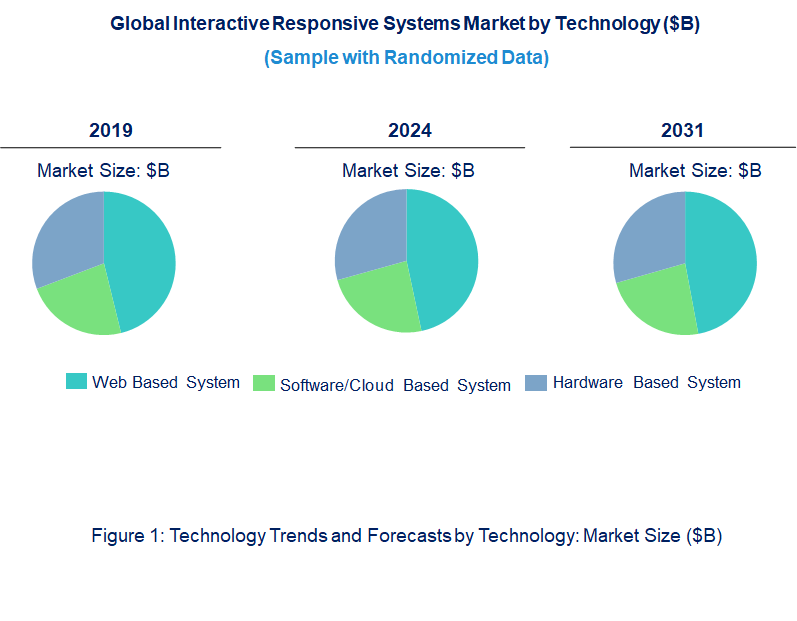
This market report covers trends, opportunities, and forecasts in the global interactive responsive systems market to 2031 by technology (web based system, software/cloud based system, and hardware based system), end use industry (k-12 education, high school, higher education, and others), and region (North America, Europe, Asia Pacific, and the Rest of the World)
We'll send your sample report shortly.
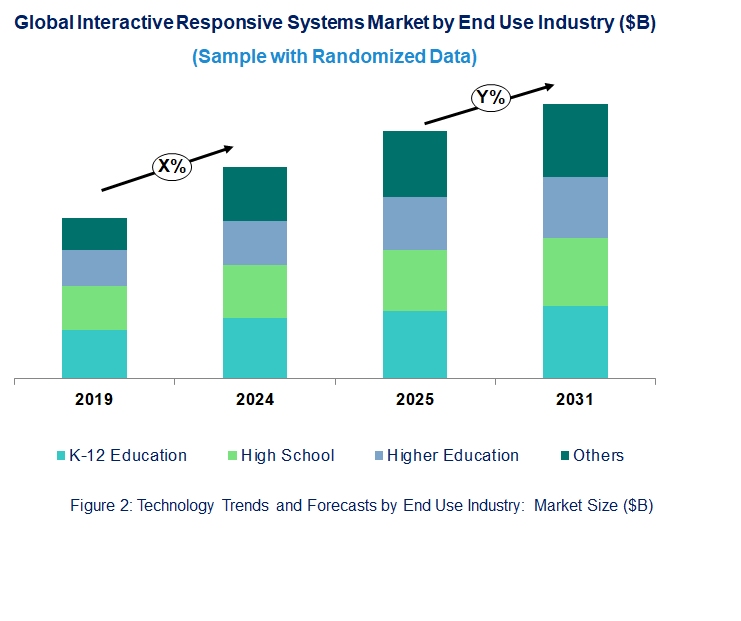
• Cloud-Based Solutions: Educational institutions are increasingly adopting cloud-based interactive systems for greater scalability, cost efficiency, and real-time data access, enabling more personalized learning experiences.
• Integration of AI and Machine Learning: AI-powered systems are being integrated into interactive learning platforms to provide personalized, adaptive learning experiences, improving student engagement and performance.
• Mobile Learning Platforms: With the increasing use of smartphones and tablets, educational systems are moving towards mobile-responsive platforms that allow students to access interactive content from anywhere at any time.
• Gamification in Education: The use of gamified elements in educational content is gaining popularity, enhancing student engagement through interactive, reward-based systems that make learning more enjoyable.
• Mixed Reality (MR) and Augmented Reality (AR) Applications: The adoption of AR and MR in interactive systems is expanding, providing immersive learning experiences that blend the digital and physical worlds, improving hands-on learning. These trends are reshaping the educational landscape, enabling more flexible, personalized, and engaging learning experiences.
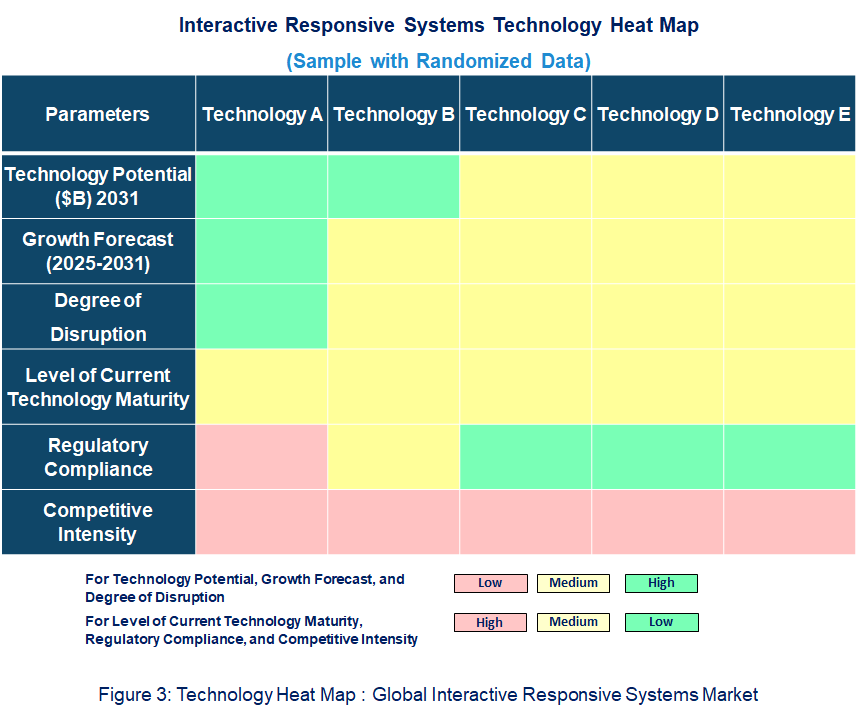
• Technology Potential: Interactive responsive systems (IRS) technology has high potential across various industries, including education, retail, healthcare, entertainment, and smart environments. These systems use sensors, AI, gesture recognition, voice commands, and real-time feedback mechanisms to create immersive, user-centric experiences. As digital transformation accelerates, IRS enhances how users interact with machines, data, and physical spaces—boosting engagement, productivity, and personalization. The technology is central to human-computer interaction (HCI) evolution and is expected to play a significant role in augmented reality (AR), Internet of Things (IoT), and smart city applications. Its ability to adapt to user behavior in real time makes it a core component of future ambient intelligence systems.
• Degree of Disruption: IRS technology is significantly disruptive, especially in sectors reliant on user interaction and customer engagement. In retail, for example, interactive displays and smart fitting rooms redefine the shopping experience, while in education, IRS-enabled learning tools transform static content into engaging modules. In healthcare, responsive interfaces support remote diagnostics and assistive technologies. The shift from passive systems to intuitive, dynamic interfaces challenges legacy systems and compels organizations to rethink UI/UX design, infrastructure, and user engagement strategies, thus prompting a paradigm shift in how services and experiences are delivered.
• Level of Current Technology Maturity: IRS technology is at a mid- to high-level of maturity, depending on the application domain. Touchscreens, voice interfaces, and basic sensor integrations are widely adopted and standardized. However, more advanced systems—incorporating AI-driven personalization, adaptive learning models, haptic feedback, or multi-modal interaction—are still developing. Machine learning models enabling contextual awareness and behavioral prediction are growing more robust, but cost, hardware integration, and user privacy concerns remain challenges. Continued progress in cloud computing, edge processing, and AI training data is pushing IRS towards greater responsiveness, scalability, and cross-platform functionality.
• Regulatory Compliance: Interactive responsive systems must adhere to various regulatory frameworks, particularly around data privacy, accessibility, and safety. For example, systems collecting biometric or behavioral data must comply with GDPR (EU), CCPA (California), or HIPAA (U.S.) depending on their use case. Accessibility standards such as WCAG 2.1 are crucial for ensuring equitable use by individuals with disabilities. Furthermore, in environments like healthcare or transportation, IRS must meet strict reliability and usability standards. Manufacturers and developers must also consider ethical guidelines regarding algorithmic transparency, bias mitigation, and consent-based interaction, ensuring that responsive systems remain both lawful and trustworthy.
• ArcBotics: Offers educational robotics kits, helping students engage with interactive systems through hands-on robotics experiences. This development fosters learning in STEM fields by making complex topics accessible and fun.
• BASIC: Focuses on providing easy-to-use interactive platforms for K-12 education, allowing students to engage in responsive learning through interactive exercises and activities that promote critical thinking and problem-solving.
• Boxlight: Known for its interactive whiteboards and classroom technology, Boxlight is enhancing interactive education by offering intuitive, responsive systems that allow for real-time collaboration and student engagement in classrooms.
• Chibitronics: Develops interactive circuits and educational kits, enabling students to create their responsive systems. This hands-on approach to learning fosters creativity and technical skills in young learners.
• Eduscape: Focuses on providing educational tools for teachers to incorporate responsive learning systems into their classrooms. They offer training and resources to help educators implement interactive technology effectively.
• Elenco Electronics: Known for its interactive STEM kits, Elenco Electronics provides responsive learning platforms that engage students in hands-on projects, encouraging practical application of theoretical knowledge. Specializes in robotics and educational kits that enable students to design and interact with responsive systems, fostering learning in robotics, engineering, and coding.
• Increasing Demand for Personalized User Experiences: Organizations are prioritizing systems that deliver tailored, context-aware content. Interactive responsive systems enhance customer engagement by adapting to individual preferences in real-time, driving higher satisfaction and conversion rates across sectors like retail, education, and entertainment.
• Growth in Smart Infrastructure and IoT Adoption: The expansion of smart cities, connected homes, and IoT-enabled environments fuels demand for responsive systems. These systems integrate with sensors and connected devices to offer dynamic responses, improving efficiency, safety, and user interaction in public and private spaces.
• Advancements in AI and Machine Learning: AI-driven analytics power intelligent decision-making in interactive systems. Real-time data processing allows these systems to learn from user behavior and refine responses, enhancing usability and enabling applications in fields like autonomous retail, healthcare diagnostics, and adaptive learning.
• Rising Popularity of Touchless and Gesture-Based Interfaces: Post-pandemic concerns and demand for seamless UX have driven the adoption of touchless technology. Gesture- and voice-controlled responsive systems are gaining traction in public interfaces, ensuring hygiene, accessibility, and convenience in sectors like banking, transportation, and hospitality.
• Adoption in E-Learning and Virtual Training: Interactive systems support immersive learning through simulations and feedback-driven platforms. In education and corporate training, these systems increase engagement, retention, and practical understanding, boosting their adoption across academic institutions and enterprise environments. Major Challenges:
• High Development and Implementation Costs: Custom interactive systems require significant investment in hardware, software, and design. These costs can be prohibitive for small businesses or institutions, limiting broader adoption and favoring large players with greater financial resources.
• Data Privacy and Security Concerns: As these systems collect and process real-time user data, concerns over data protection grow. Ensuring compliance with privacy laws and maintaining cybersecurity is essential to prevent breaches and preserve user trust.
• Complex Integration with Legacy Systems: Many organizations face difficulties integrating interactive systems with existing infrastructure. Compatibility issues, outdated technology, and a lack of skilled personnel often hinder seamless deployment and functionality.
• User Accessibility and Digital Literacy Gaps: Not all users have equal ability to interact with advanced responsive systems. Accessibility issues and digital literacy gaps, particularly among older adults or users in emerging economies, may reduce system effectiveness and inclusivity.
• Short Product Lifecycles and Rapid Technological Change: Interactive technologies evolve rapidly, making systems obsolete within short periods. Constant updates and replacements increase the total cost of ownership and challenge businesses to keep pace with innovation without overextending budgets. The interactive responsive systems market is expanding due to the growing demand for intelligent, real-time engagement across industries. While advancements in AI, IoT, and user-centric design drive innovation, cost, integration complexity, and privacy concerns remain key barriers. Addressing these challenges is essential to unlocking the market’s full potential and fostering inclusive, adaptive technology ecosystems.
• Dell
• Macmillan Learning
• Option Technologies
• Promethean World
• Turning Technologies
• Elmo
• Technology Readiness: Web-based systems are highly mature and widely adopted, offering responsive, device-independent interfaces with reliable frameworks (HTML5, JS, WebRTC). They are ready for mass deployment, but still depend on browser and connectivity limitations. Software/cloud-based systems are similarly mature, with advanced scalability, uptime, and AI/ML integration supporting dynamic interaction, though challenges remain in latency and real-time performance for complex applications. Hardware-Based Systems range from mature (interactive kiosks, smart panels) to evolving (AR/VR-integrated touch systems), with readiness influenced by deployment costs, maintenance, and physical design constraints. Overall, all three technologies show high readiness, but the adoption curve varies based on use case complexity and infrastructure support.
• Competitive Intensity & Regulatory Compliance: Competitive intensity is highest in software/cloud-based systems due to a saturated market of agile SaaS players and big tech providers, each pushing AI and analytics features. Web-based systems face moderate competition, mostly in UX innovation and real-time interaction capabilities. Hardware-based systems experience lower but steady competition due to higher capital investment and physical infrastructure demands. Regulatory compliance is critical across all cloud and web systems must adhere to GDPR, CCPA, and cybersecurity standards, especially for user data handling. Hardware systems must comply with safety, accessibility (ADA, CE), and environmental regulations like RoHS. Interoperability and cross-platform standards are increasingly shaping the regulatory landscape for these technologies.
• Disruption Potential: In the interactive responsive systems market, web-based systems are disrupting traditional models by offering accessible, platform-agnostic user interfaces that enable real-time interaction across devices without installation, ideal for education, retail, and customer service. Software/cloud-based systems amplify this disruption by enabling scalable, AI-integrated, and data-driven responsiveness, with real-time updates and machine learning capabilities revolutionizing engagement experiences. Hardware-based systems, though more static, bring disruption through tactile interfaces like kiosks, smartboards, and IoT-connected devices, offering immersive, physical interactivity. While software and web-based solutions disrupt through speed, flexibility, and cost-efficiency, hardware systems continue to push physical-digital boundaries in areas like healthcare, museums, and industrial automation.
• Web Based System
• Software/Cloud Based System
• Hardware Based System
• K-12 Education
• High School
• Higher Education
• Others
• North America
• Europe
• Asia Pacific
• The Rest of the World
• Latest Developments and Innovations in the Interactive Responsive Systems Technologies
• Companies / Ecosystems
• Strategic Opportunities by Technology Type


Choose a license that fits your team. Instant PDF delivery.
Prices exclude taxes. Instant delivery. Custom licensing available on request.
Market Report · May 18, 2026
Market Report · May 18, 2026
Market Report · May 18, 2026
Trusted partner for strategic intelligence and business growth


Receive a complimentary market analysis tailored to your industry. Our analysts will identify key growth opportunities and competitive dynamics specific to your business.

Market size, growth rate, and key trend analysis for your specific sector.

Top competitor positioning and market share analysis.

Strategic recommendations backed by data-driven insights.
Get curated market intelligence and competitive moves straight to your inbox.
By subscribing, you agree to receive our monthly insights. Unsubscribe anytime.
Receive a complimentary market analysis tailored to your industry. Our analysts will identify key growth opportunities and competitive dynamics specific to your business.
Market size, growth rate, and key trend analysis for your specific sector.
Top competitor positioning and market share analysis.
Strategic recommendations backed by data-driven insights.
Get curated market intelligence, emerging trends, and competitive moves straight to your inbox each month.
By subscribing, you agree to receive our monthly insights. Unsubscribe anytime.
We'll send your sample report shortly.