
Market Report · July 24, 2026

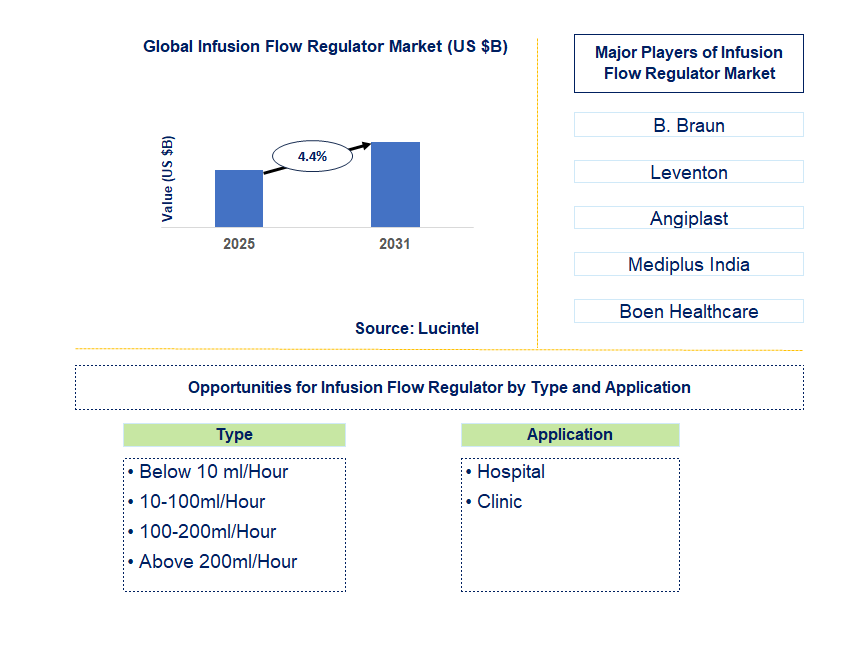
Key data points: The growth forecast = 4.4% annually for the next 7 years. Scroll below to get more insights. This market report covers Trends, opportunity and forecast in infusion flow regulator market to 2031 by type (below 10ml/hour, 10-100ml/hour, 100-200ml/hour, and above 200ml/hour), application (hospital and clinic), and region (North America, Europe, Asia Pacific, and the Rest of the World)
We'll send your sample report shortly.
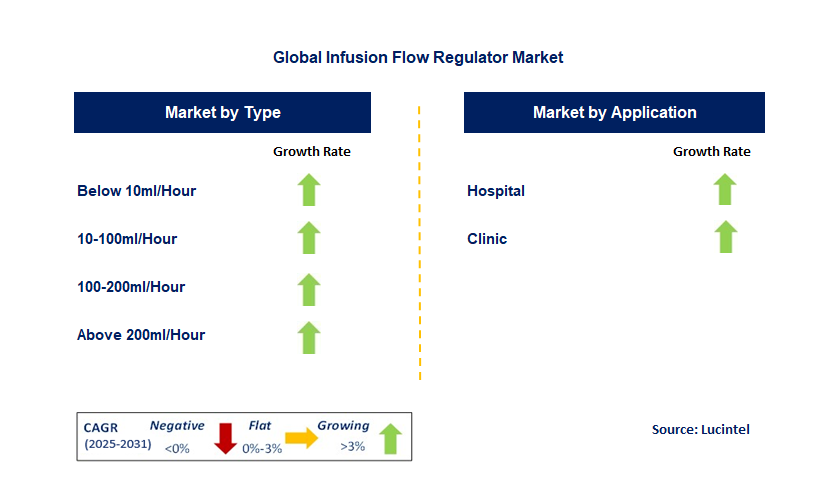
• Lucintel forecasts that, within the type category, 10-100ml/hour is expected to witness the highest growth over the forecast period due to wide applicability in infusion therapies, cost-effectiveness, and the versatility.
• Within the application category, hospital is expected to witness the higher growth due to the high volume of treatments administered in hospitals,.
• In terms of region, North America is expected to witness the highest growth over the forecast period due to its advanced healthcare infrastructure, high prevalence of chronic diseases. Gain valuable insights for your business decisions with our comprehensive 150+ page report. Sample figures with some insights are shown below.
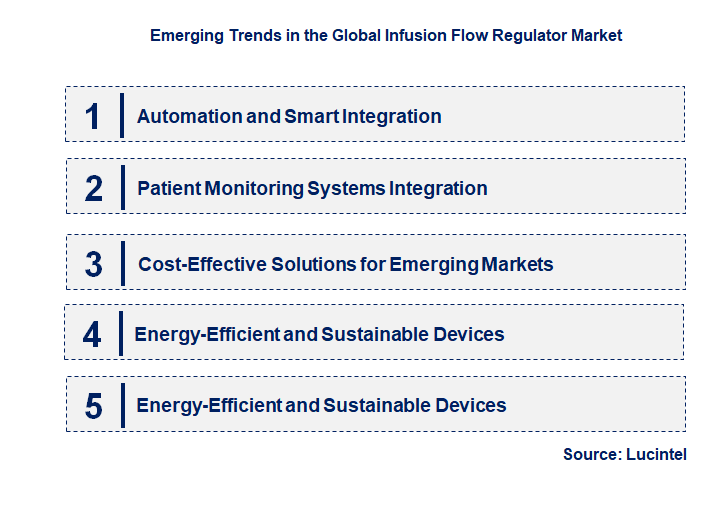
• Automation and Smart Integration: Automation in infusion therapy is a key trend reshaping the market. Smart infusion pumps and regulators are increasingly integrated with automated monitoring systems, allowing real-time adjustments and enhanced precision. These innovations reduce human error, optimize medication delivery, and ensure patient safety, especially in critical care environments. The trend is particularly important for improving treatment outcomes and reducing labor costs in hospitals.
• Patient Monitoring Systems Integration: Infusion Flow Regulators are increasingly being paired with patient monitoring systems that provide real-time data on vital signs. This integration ensures that the flow rate is adjusted based on the patient’s condition, making infusion therapy more personalized and responsive. The trend is driving the development of hybrid systems that allow for better tracking of both infusion and patient parameters, improving overall care quality and safety.
• Cost-Effective Solutions for Emerging Markets: In emerging markets such as India and China, cost-effective Infusion Flow Regulators are becoming more prevalent. Manufacturers are focusing on providing affordable, reliable devices to cater to the needs of large patient populations. This trend is supported by advancements in local manufacturing and government healthcare initiatives aimed at improving access to medical devices in underserved areas.
• Energy-Efficient and Sustainable Devices: Environmental sustainability is becoming a key consideration in the development of medical devices, including infusion flow regulators. Manufacturers are designing devices that consume less energy and have a longer lifespan. The focus on sustainability also extends to the packaging and disposal processes, as regulations increasingly demand eco-friendly solutions across the healthcare sector.
• Regulatory Compliance and Safety Enhancements: With stricter regulatory frameworks being enforced worldwide, Infusion Flow Regulators are evolving to meet new standards. Safety features such as alarms, real-time monitoring, and automatic shut-off mechanisms are being integrated to comply with both regional and international regulations. These enhancements ensure that devices meet the highest safety standards and improve patient outcomes. The emerging trends in the infusion flow regulator market reflect a growing focus on automation, integration with patient monitoring systems, and affordability for emerging markets, sustainability, and regulatory compliance. These developments are helping to improve healthcare delivery, particularly in critical care, and are positioning the industry for significant growth.
• Smart and Connected Infusion Pumps: The introduction of smart infusion pumps, which are connected to hospital IT systems, has revolutionized the infusion therapy process. These devices can automatically adjust flow rates based on real-time data, improving accuracy and reducing human error. Hospitals are increasingly adopting these devices to enhance patient safety.
• Regulatory Advancements and Safety Features: Regulatory bodies, such as the FDA, have strengthened safety regulations for infusion devices, promoting the development of more secure systems. Features like tamper-proof mechanisms, real-time alerts, and automated shut-off functions are being added to devices to meet these stringent standards and ensure patient safety.
• Affordable Infusion Flow Regulators for Emerging Markets: Manufacturers are focusing on creating affordable Infusion Flow Regulators to cater to the needs of developing countries. These devices maintain accuracy and reliability but are designed with lower production costs, making them accessible to hospitals in emerging markets where budget constraints are significant.
• Integration with Electronic Health Records (EHR): Modern Infusion Flow Regulators are increasingly being integrated with Electronic Health Records (EHR) systems, enabling seamless data sharing across platforms. This integration improves the management of patient care and enhances the traceability of treatments, contributing to better clinical outcomes.
• Focus on Sustainability: Manufacturers are developing more energy-efficient and environmentally friendly infusion devices. These innovations align with global sustainability goals and help reduce the carbon footprint of medical devices, addressing growing concerns over environmental impacts in the healthcare sector. These developments are enhancing the functionality, safety, and accessibility of Infusion Flow Regulators, positioning them as a crucial element of modern healthcare delivery across both developed and emerging markets.
• Critical Care and Hospital Systems: The critical care sector, particularly in intensive care units (ICUs), presents a large opportunity for growth. Infusion Flow Regulators that integrate with patient monitoring systems and smart devices can improve treatment outcomes and efficiency in this high-stakes environment, where precision is critical.
• Home Healthcare: As healthcare shifts towards home-based care, the demand for portable and easy-to-use infusion flow regulators is growing. Devices that are compact, user-friendly, and capable of providing remote monitoring through IoT connectivity are creating opportunities in home healthcare, particularly for chronic conditions like diabetes.
• Emerging Market Expansion: In emerging markets such as India and China, there is a significant opportunity to meet the growing demand for affordable infusion devices. With expanding healthcare infrastructure and an increasing focus on improving care quality, these regions present a vast market for cost-effective Infusion Flow Regulators.
• Cancer and Chemotherapy Treatments: Infusion Flow Regulators are essential in oncology treatments, especially chemotherapy. The growing demand for cancer treatment worldwide is driving the need for highly reliable infusion devices that ensure precise control over drug delivery, contributing to the market’s expansion in this specialized sector.
• Technological Integration in Precision Medicine: Precision medicine, which tailors treatments based on individual patient needs, is creating opportunities for Infusion Flow Regulators with enhanced adaptability and accuracy. These devices can play a critical role in the personalized delivery of intravenous medications, driving growth in the field of targeted therapies. Strategic growth opportunities lie in critical care, home healthcare, emerging markets, cancer treatments, and the integration of precision medicine. These areas present significant potential for the expansion of the infusion flow regulator market, particularly with the ongoing advancement of healthcare technology.
• B. Braun
• Leventon
• Angiplast
• Mediplus India
• Boen Healthcare
• Progressive Medical
• Millpledge Pharmaceuticals
• Dynamed Pharmaceuticals
• Mais Medical
• Amsino International
• Below 10Ml/Hour
• 10-100Ml/Hour
• 100-200Ml/Hour
• Above 200Ml/Hour
• Hospital
• Clinic
• North America
• Europe
• Asia Pacific
• The Rest of the World
• United States: In the United States, the infusion flow regulator market has seen rapid innovation in response to increasing demand for precision healthcare. The adoption of smart infusion pumps and electronic flow regulators is on the rise, driven by advancements in IoT (Internet of Things) and connected healthcare solutions. Regulations like the FDA’s continuous push for safety and efficacy improvements in medical devices have spurred developments in automated and accurate infusion systems. This is particularly evident in hospital settings, where infusion systems are integrated with patient monitoring technologies, allowing for real-time adjustments and enhancing patient safety.
• China: China’s infusion flow regulator market is expanding rapidly due to significant improvements in medical device manufacturing and increased government investments in healthcare infrastructure. The country’s growing healthcare needs, especially in rural and aging populations, have accelerated the adoption of more affordable and effective infusion devices. Additionally, China is focusing on local manufacturing, which has helped reduce costs and improved the availability of infusion products in the market. Healthcare reform and stronger regulatory frameworks are promoting safer and more reliable IFR devices, making China one of the largest and most promising markets in the sector.
• Germany: Germany remains at the forefront of the infusion flow regulator market in Europe, where stringent medical regulations ensure high-quality, safe devices. The country’s commitment to cutting-edge healthcare technology has spurred the development of highly accurate, automated infusion devices that are compatible with electronic health records (EHR). As Germany continues to integrate more advanced technologies such as artificial intelligence and machine learning in healthcare, the market for smart infusion regulators is expected to grow, allowing for even greater precision and monitoring in patient care, particularly in hospitals and specialized clinics.
• India: In India, the demand for Infusion Flow Regulators is surging due to increased healthcare awareness and a growing middle class. India’s healthcare system, while still developing, has seen large-scale adoption of infusion devices in hospitals, particularly in urban areas. Innovations in cost-effective, user-friendly infusion devices are critical for meeting the needs of the country’s diverse population. With a large number of medical procedures requiring intravenous infusions, the demand for precise and affordable IFR systems is expected to continue rising, driven by both public and private sector investments in healthcare infrastructure.
• Japan: Japan’s infusion flow regulator market is characterized by a high degree of technological sophistication. The country is adopting advanced medical technologies such as AI-driven infusion pumps and smart flow regulators that are integrated with robotic surgery systems and precision medical treatments. Japan’s aging population and the increasing demand for elderly care are key factors driving the demand for automated infusion systems. Additionally, Japan is seeing a strong push towards improving healthcare efficiency and reducing human error in clinical settings, prompting healthcare providers to adopt more automated and intelligent IFR solutions.


• B. Braun
• Leventon
• Angiplast
• Mediplus India
• Boen Healthcare
• Progressive Medical
• Millpledge Pharmaceuticals
• Dynamed Pharmaceuticals
• Mais Medical
• Amsino International Q5. Which infusion flow regulator market segment will be the largest in future? Answer: Lucintel forecasts that 10-100ml/hour is expected to witness the highest growth over the forecast period due to wide applicability in infusion therapies, cost-effectiveness, and the versatility. Q6. In infusion flow regulator market, which region is expected to be the largest in next 5 years? Answer: North America is expected to witness the highest growth over the forecast period due to its advanced healthcare infrastructure, high prevalence of chronic diseases. Q7. Do we receive customization in this report? Answer: Yes, Lucintel provides 10% customization without any additional cost.


Choose a license that fits your team. Instant PDF delivery.
Prices exclude taxes. Instant delivery. Custom licensing available on request.
Market Report · July 24, 2026
Market Report · July 20, 2026
Market Report · July 20, 2026
Trusted partner for strategic intelligence and business growth


Receive a complimentary market analysis tailored to your industry. Our analysts will identify key growth opportunities and competitive dynamics specific to your business.

Market size, growth rate, and key trend analysis for your specific sector.

Top competitor positioning and market share analysis.

Strategic recommendations backed by data-driven insights.
Get curated market intelligence and competitive moves straight to your inbox.
By subscribing, you agree to receive our monthly insights. Unsubscribe anytime.
Receive a complimentary market analysis tailored to your industry. Our analysts will identify key growth opportunities and competitive dynamics specific to your business.
Market size, growth rate, and key trend analysis for your specific sector.
Top competitor positioning and market share analysis.
Strategic recommendations backed by data-driven insights.
Get curated market intelligence, emerging trends, and competitive moves straight to your inbox each month.
By subscribing, you agree to receive our monthly insights. Unsubscribe anytime.
We'll send your sample report shortly.