
Market Report · July 16, 2026

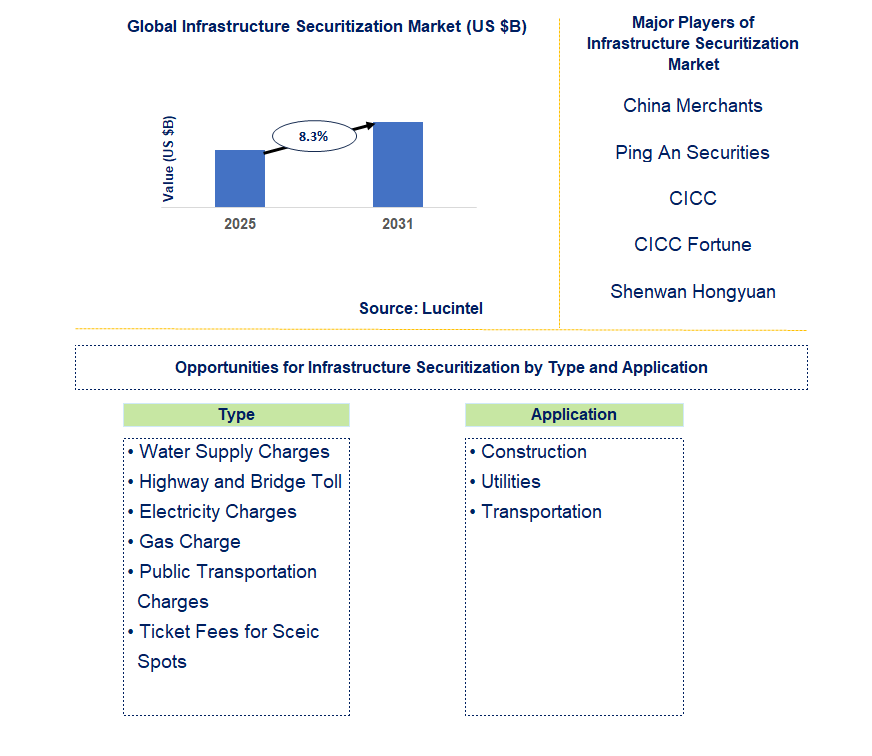
Key data points: The growth forecast = 8.3% annually for the next 7 years. Scroll below to get more insights. This market report covers Trends, opportunity and forecast in infrastructure securitization market to 2031 by type (water supply charges, highway and bridge toll, electricity charges, gas charge, public transportation charges, and ticket fees for sceic spots), application (construction, utilities, and transportation), and region (North America, Europe, Asia Pacific, and the Rest of the World)
We'll send your sample report shortly.
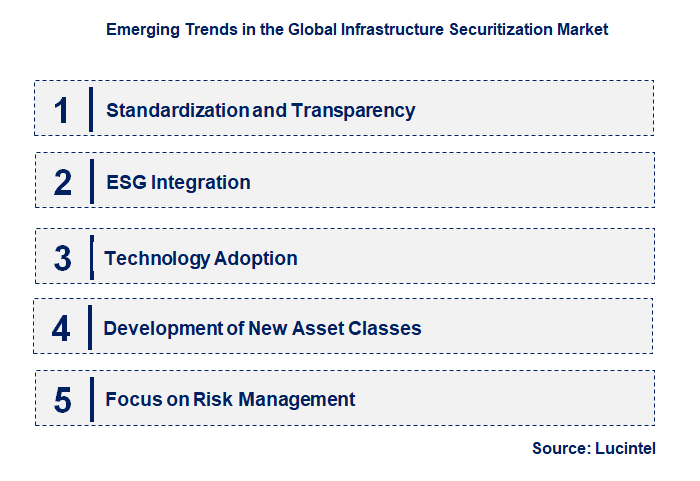
• Standardization and Transparency: Efforts are underway to standardize securitization processes and improve transparency in infrastructure asset-backed securities (ABS). Standardized documentation, reporting, and rating methodologies can enhance investor confidence and attract a wider range of participants. Increased transparency reduces information asymmetry and facilitates price discovery, making the market more efficient.
• ESG Integration: Environmental, Social, and Governance (ESG) factors are becoming increasingly important in infrastructure investments. Investors are seeking projects that meet sustainability criteria and contribute to positive social impact. ESG integration is driving the development of green bonds and other sustainable infrastructure finance instruments. This trend is promoting responsible investment and supporting the transition to a low-carbon economy.
• Technology Adoption: Technology is transforming the infrastructure securitization market by adopting digital platforms for data management, deal execution, and investor communication. Blockchain technology has the potential to streamline securitization processes and improve transparency. Fintech solutions enhance efficiency and reduce transaction costs in infrastructure finance.
• Development of New Asset Classes: The infrastructure securitization market is expanding to include new asset classes, such as digital infrastructure (e.g., data centers and fiber optic networks) and social infrastructure (e.g., hospitals and schools). These new asset classes offer investors diversification benefits and access to a wider range of infrastructure investments. Expanding the scope of securitization increases market depth and liquidity.
• Focus on Risk Management: Effective risk management is crucial in infrastructure securitization, given the long-term nature of these investments. Investors are increasingly demanding robust risk assessment frameworks and credit enhancement mechanisms. Sophisticated risk modeling and data analytics are being used to evaluate the creditworthiness of infrastructure assets. A strong focus on risk management enhances investor confidence and promotes market stability. These emerging trends are reshaping the infrastructure securitization market by driving greater standardization, transparency, sustainability, and efficiency. ESG integration promotes responsible investment, while technology adoption streamlines processes and reduces costs. The development of new asset classes is expanding market opportunities, and a strong focus on risk management is enhancing investor confidence. These developments are making infrastructure securitization a more attractive and accessible financing mechanism for infrastructure projects globally.
• Increased ESG Integration: Environmental, Social, and Governance (ESG) factors are increasingly important in infrastructure investment decisions. Investors seek projects meeting sustainability criteria and contributing to positive social impact. This focus on ESG is driving the issuance of green bonds and other sustainable infrastructure finance instruments, promoting responsible investment, and supporting the transition to a low-carbon economy.
• Standardization of Documentation: Efforts are underway to standardize documentation and reporting requirements for infrastructure asset-backed securities (ABS). Standardized documentation can reduce transaction costs, improve transparency, and enhance investor confidence. This makes it easier for investors to understand the risks and rewards associated with infrastructure investments, attracting a wider range of participants to the market.
• Adoption of Fintech Solutions: Financial technology (Fintech) solutions are being adopted to streamline various aspects of infrastructure securitization, from data management and due diligence to deal execution and investor communication. These technologies can improve efficiency, reduce costs, and enhance transparency in infrastructure finance, making the market more accessible and efficient.
• Diversification of Asset Classes: The range of infrastructure assets being securitized is expanding to include new asset classes, such as digital infrastructure (e.g., data centers and fiber optic networks), social infrastructure (e.g., hospitals and schools), and renewable energy projects. This diversification offers investors a broader range of investment opportunities and helps to spread risk.
• Enhanced Credit Risk Management: Sophisticated credit risk management techniques are being employed to assess the creditworthiness of infrastructure assets and mitigate potential losses. Investors are increasingly demanding robust risk assessment frameworks and credit enhancement mechanisms. This focus on risk management is enhancing investor confidence and promoting market stability. These recent developments are significantly impacting the infrastructure securitization market by making it more transparent, efficient, sustainable, and accessible. The increased integration of ESG factors, standardization of documentation, adoption of Fintech solutions, diversification of asset classes, and enhanced credit risk management are attracting a wider range of investors and facilitating the financing of critical infrastructure projects globally. These advancements are helping to bridge the infrastructure gap and support sustainable economic growth.
• Renewable Energy Projects: The growing focus on sustainable energy is driving significant investment in renewable energy projects, such as solar and wind farms. Securitization can be used to finance these projects, attracting investors who are interested in both financial returns and environmental impact. This creates a significant growth opportunity, supporting the transition to a low-carbon economy.
• Transportation Infrastructure: Transportation infrastructure, including toll roads, bridges, and airports, represents a large and established market for securitization. These assets generate stable and predictable cash flows, making them attractive to investors seeking long-term returns. Securitization can help finance new transportation projects and improve existing infrastructure.
• Digital Infrastructure: The rapid growth of the digital economy is driving demand for digital infrastructure, such as data centers, fiber optic networks, and cell towers. These assets generate stable cash flows and are well-suited for securitization. This creates a significant growth opportunity, supporting the expansion of broadband access and the development of the digital economy.
• Social Infrastructure: Social infrastructure projects, such as hospitals, schools, and public housing, can also be financed through securitization. These projects provide essential services to communities and can generate stable, long-term cash flows. Securitization can help fund the development of much-needed social infrastructure.
• Water and Wastewater Infrastructure: Water and wastewater infrastructure projects, such as treatment plants and pipelines, represent another significant growth opportunity. These assets are essential for public health and economic development and can generate stable, long-term cash flows. Securitization can help finance the modernization and expansion of water infrastructure. These growth opportunities are significantly impacting the infrastructure securitization market by attracting new investors, expanding the range of investable assets, and facilitating the financing of critical infrastructure projects. The increasing focus on renewable energy, digital infrastructure, and social infrastructure is driving innovation and creating new market segments. These developments are helping to bridge the infrastructure gap and support sustainable economic growth globally. The market is becoming more diverse, accessible, and impactful.
• China Merchants Securities
• Ping An Securities
• CICC
• CICC Fortune
• Shenwan Hongyuan Securities
• Everbright Securities
• Hengtai Securities
• Minsheng Securities
• Open source securities
• Guorong Securities
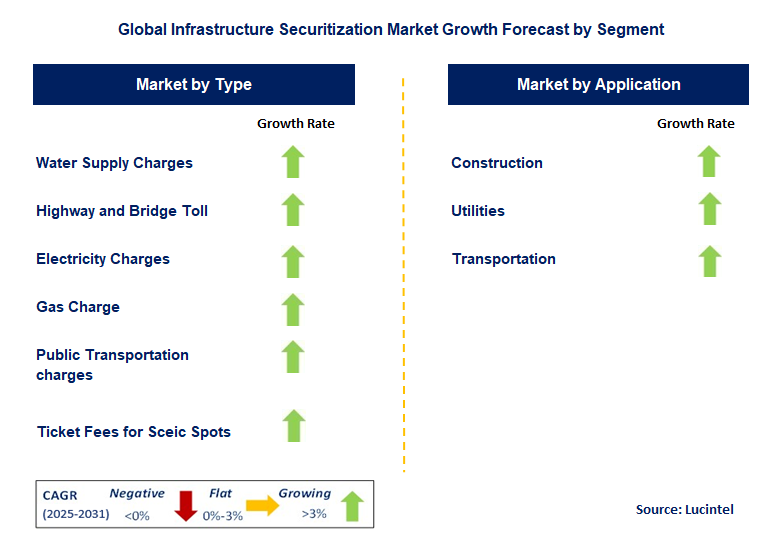
• Water Supply Charges
• Highway and Bridge Toll
• Electricity Charges
• Gas Charge
• Public Transportation charges
• Ticket Fees for Sceic Spots
• Construction
• Utilities
• Transportation
• North America
• Europe
• Asia Pacific
• The Rest of the World
• United States: The US has a well-established securitization market, including infrastructure assets. Recent developments include the use of private activity bonds (PABs) for infrastructure financing and the development of innovative securitization structures for projects like toll roads and bridges. There is also a growing focus on ESG (Environmental, Social, and Governance) factors in infrastructure investments, with investors seeking projects that meet sustainability criteria.
• China: China is a rapidly growing market for infrastructure securitization, driven by massive infrastructure development and government support. Chinese local governments are increasingly using securitization to finance infrastructure projects, such as subways and highways. The market is characterized by a mix of government-backed and privately issued securities. There is a growing focus on risk management and transparency in infrastructure securitization.
• Germany: Germany has a relatively developed infrastructure securitization market, with a focus on financing renewable energy projects and transportation infrastructure. German investors are increasingly interested in infrastructure debt as an alternative to traditional fixed-income investments. The market is characterized by a strong regulatory framework and a focus on long-term investments.
• India: India is an emerging market for infrastructure securitization, with the government promoting innovative financing mechanisms to address the country's infrastructure deficit. The market is witnessing increasing use of InvITs (Infrastructure Investment Trusts) as a securitization tool. There is a growing focus on developing a robust regulatory framework for infrastructure securitization in India.
• Japan: Japan has a mature infrastructure securitization market, with a focus on financing public-private partnerships (PPPs) for infrastructure projects. Japanese investors are attracted to the stable and long-term cash flows generated by infrastructure assets. The market is characterized by a high level of sophistication and a focus on risk management.


• China Merchants Securities
• Ping An Securities
• CICC
• CICC Fortune
• Shenwan Hongyuan Securities
• Everbright Securities
• Hengtai Securities
• Minsheng Securities
• Open source securities
• Guorong Securities Q5. Which infrastructure securitization market segment will be the largest in future? Answer: Lucintel forecasts that the water supply charge is expected to witness the highest growth over the forecast period. Q6. In infrastructure securitization market, which region is expected to be the largest in next 5 years? Answer: APAC is expected to witness the highest growth over the forecast period. Q7. Do we receive customization in this report? Answer: Yes, Lucintel provides 10% customization without any additional cost.


Choose a license that fits your team. Instant PDF delivery.
Prices exclude taxes. Instant delivery. Custom licensing available on request.
Market Report · July 16, 2026
Market Report · May 18, 2026
Market Report · May 18, 2026
Trusted partner for strategic intelligence and business growth


Receive a complimentary market analysis tailored to your industry. Our analysts will identify key growth opportunities and competitive dynamics specific to your business.

Market size, growth rate, and key trend analysis for your specific sector.

Top competitor positioning and market share analysis.

Strategic recommendations backed by data-driven insights.
Get curated market intelligence and competitive moves straight to your inbox.
By subscribing, you agree to receive our monthly insights. Unsubscribe anytime.
Receive a complimentary market analysis tailored to your industry. Our analysts will identify key growth opportunities and competitive dynamics specific to your business.
Market size, growth rate, and key trend analysis for your specific sector.
Top competitor positioning and market share analysis.
Strategic recommendations backed by data-driven insights.
Get curated market intelligence, emerging trends, and competitive moves straight to your inbox each month.
By subscribing, you agree to receive our monthly insights. Unsubscribe anytime.
We'll send your sample report shortly.