
Market Report · July 16, 2026

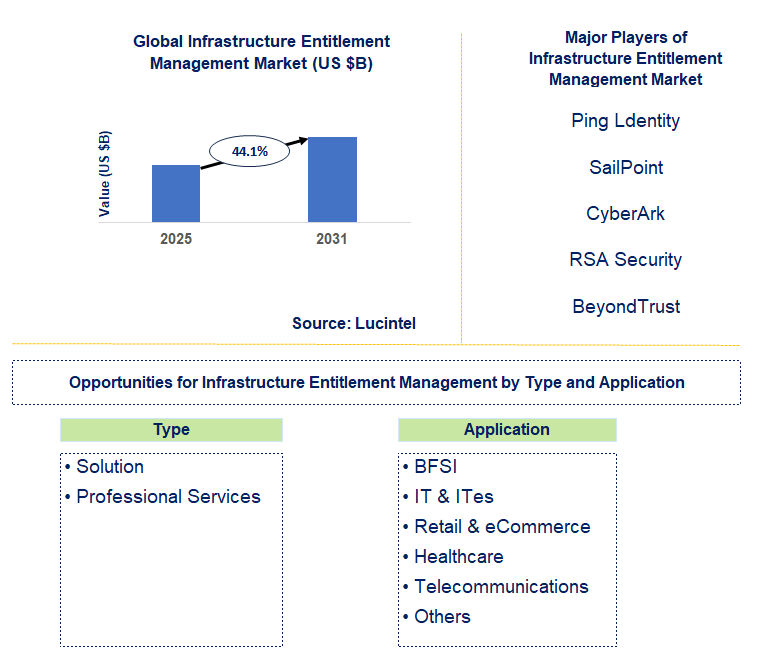
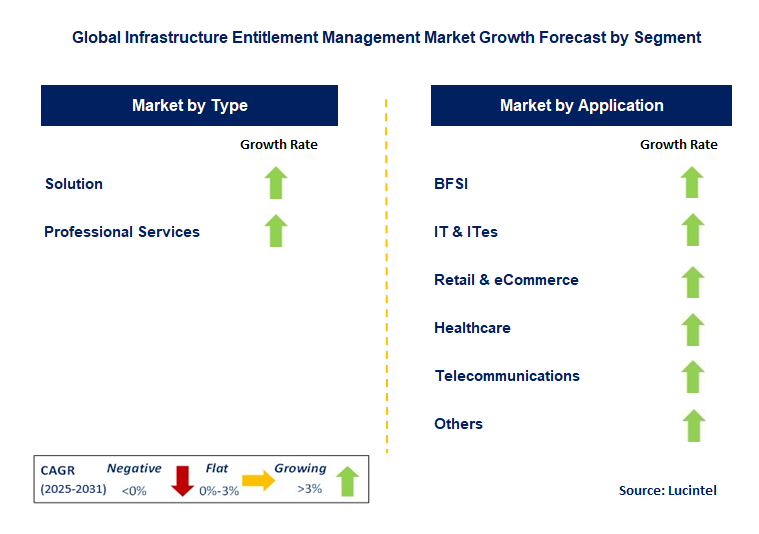
Key data points: The growth forecast = 44.1% annually for the next 7 years. Scroll below to get more insights. This market report covers Trends, opportunity and forecast in infrastructure entitlement management market to 2031 by type (solution and professional services), application (BFSI, IT & ITes, retail & ecommerce, healthcare, telecommunications, and others), and region (North America, Europe, Asia Pacific, and the Rest of the World)
We'll send your sample report shortly.
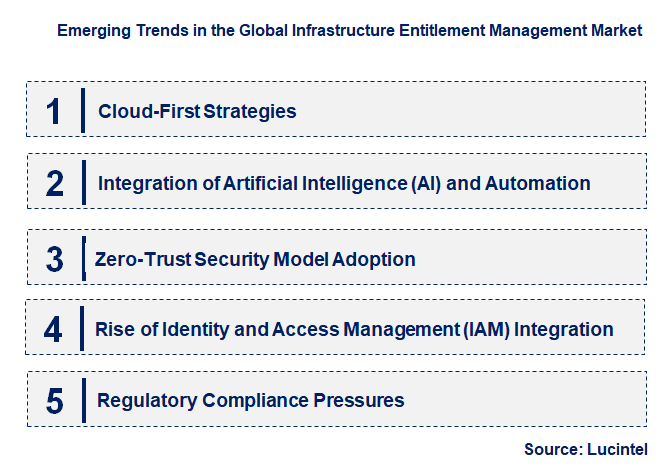
• Cloud-First Strategies: As organizations continue to migrate to the cloud, IEM solutions are increasingly being designed to support multi-cloud environments. Cloud-first strategies are driving the need for solutions that can seamlessly manage entitlement across public, private, and hybrid clouds. The ability to centralize entitlement management for complex cloud infrastructures is becoming a major focus for IEM solution providers.
• Integration of Artificial Intelligence (AI) and Automation: AI and machine learning are being integrated into IEM solutions to automate access control decisions and predict potential security threats. This technology allows for faster, more accurate decision-making in managing entitlements. AI-driven systems can identify anomalies in user behavior and flag risks, thereby improving overall security and efficiency in access management.
• Zero-Trust Security Model Adoption: The zero-trust security model is becoming more widely adopted in IEM. This approach, which assumes no user or system is trustworthy by default, is driving the need for continuous verification of identity and access permissions. IEM platforms are aligning with zero-trust strategies to ensure that all access to systems is authenticated and authorized, regardless of the user’s location.
• Rise of Identity and Access Management (IAM) Integration: IEM solutions are increasingly being integrated with broader IAM platforms. By combining entitlement management with identity management, organizations can achieve a unified view of access control. This integration ensures more granular control over who can access which resources and strengthens security posture across an organization’s IT infrastructure.
• Regulatory Compliance Pressures: The growing regulatory landscape is creating strong demand for IEM solutions that can ensure compliance with data protection and privacy laws. Regulations such as GDPR in Europe and various industry-specific compliance standards are pushing organizations to adopt IEM systems to ensure that they meet legal requirements and protect sensitive information from unauthorized access. These emerging trends are significantly reshaping the IEM market by pushing for more secure, automated, and integrated solutions. Cloud-first strategies, AI integration, and a focus on zero-trust security are improving access control and reducing security risks. Meanwhile, regulatory compliance pressures are driving organizations to adopt more sophisticated IEM tools to ensure data protection and legal compliance.
• Adoption of Blockchain for Entitlement Management: Some companies are exploring the use of blockchain technology in IEM to ensure secure, transparent management of access rights. Blockchain offers an immutable record of entitlement changes, reducing the risk of fraud and unauthorized access. This technology is gaining traction in industries such as finance and healthcare, where security and auditability are critical.
• Enhanced Integration with DevOps and CI/CD Pipelines: As organizations adopt DevOps practices and continuous integration/continuous deployment (CI/CD) pipelines, IEM solutions are being integrated into these workflows to ensure that access permissions are granted in real-time during the software development lifecycle. This integration improves security by automating entitlement management as code is deployed, reducing manual errors and delays.
• Increased Focus on Endpoint Security: With the rise of remote work and Bring Your Own Device (BYOD) policies, securing endpoints has become a key focus for IEM solutions. New tools are emerging that allow organizations to manage access rights to both corporate and personal devices. This ensures that employees’ devices, whether in-office or remote, are securely managed in line with organizational policies.
• Expansion of Role-Based Access Control (RBAC) Capabilities: Many IEM solutions are expanding their RBAC capabilities to provide more granular control over user access based on job roles. This expansion is especially important in large organizations with diverse user needs. Enhanced RBAC systems allow organizations to manage entitlements more effectively and ensure that employees only have access to the resources necessary for their roles.
• Globalization of IEM Solutions: As businesses expand globally, the demand for IEM solutions that support multiple regions and regulatory environments is growing. Providers are developing solutions that can manage entitlements across different jurisdictions, ensuring compliance with regional data privacy laws. This globalization of IEM solutions allows organizations to operate seamlessly across borders without compromising security or compliance. These recent developments are enhancing the IEM market by making solutions more integrated, automated, and scalable. The adoption of blockchain, advanced RBAC, and endpoint security features are improving access control, while globalization efforts ensure that businesses can operate securely across multiple regions. These developments are making IEM systems more effective in addressing modern security and compliance challenges.
• Cloud Access Control and Identity Management: With more businesses relying on cloud infrastructures, the demand for secure cloud access control and identity management solutions is increasing. Growth in IEM providers includes offering solutions that protect cloud environments and centrally manage entitlements across all multi-cloud platforms while remaining compliant and lowering security risks.
• SaaS and Remote Work Security: The shift to remote work and the adoption of Software as a Service (SaaS) applications present a growth opportunity for IEM solutions. Organizations need to ensure secure access to SaaS platforms and manage entitlements for remote workers effectively. This growing need for remote access security offers IEM vendors an opportunity to expand their offerings.
• Industry-Specific IEM Solutions: There is growing demand for industry-specific IEM solutions tailored to sectors like finance, healthcare, and government, which have stricter regulatory requirements. IEM providers can focus on developing customized solutions that cater to the unique needs of these industries, ensuring compliance and enhancing security for their critical infrastructures.
• Integration with Cybersecurity Platforms: IEM solutions can be integrated with broader cybersecurity platforms to provide a unified approach to managing access and protecting against security threats. By combining IEM with other security tools such as threat detection and response systems, vendors can offer more comprehensive solutions to businesses, creating an opportunity for growth.
• AI-Driven Entitlement Management: The integration of artificial intelligence in entitlement management systems offers a significant growth opportunity. AI can help automate access decisions, detect unusual behavior, and improve security. As businesses increasingly adopt AI technologies, there is a growing demand for intelligent IEM solutions that leverage machine learning to enhance security and operational efficiency. These growth opportunities are driving innovation and expanding the IEM market by addressing the need for secure, automated, and industry-specific solutions. Cloud security, remote work, AI integration, and industry-focused offerings are helping IEM providers meet the evolving demands of modern enterprises. These trends ensure that IEM systems remain essential in maintaining security and compliance in diverse industries.
• Ping Ldentity
• SailPoint
• CyberArk
• RSA Security
• BeyondTrust
• Broadcom
• IBM
• Solution
• Professional Services
• BFSI
• IT & ITes
• Retail & eCommerce
• Healthcare
• Telecommunications
• Others
• North America
• Europe
• Asia Pacific
• The Rest of the World
• United States: In the United States, the IEM market has seen significant investment from both government and private sectors. Cloud service providers like Amazon Web Services (AWS) and Microsoft Azure are incorporating advanced entitlement management solutions to secure their vast cloud infrastructures. This includes more robust identity and access management (IAM) tools that provide fine-grained control over resources, improving compliance with regulatory standards.
• China: China’s government has been increasingly emphasizing cybersecurity and data protection, which has driven growth in the IEM market. Local tech giants like Alibaba and Huawei are integrating IEM solutions to secure their cloud and enterprise infrastructure. As China’s regulatory landscape becomes more stringent, the need for robust access management and identity control systems is growing, boosting demand for IEM technology in the region.
• Germany: Germany’s strict data privacy laws, such as the General Data Protection Regulation (GDPR), are propelling the demand for IEM solutions in the country. Many German enterprises are adopting IEM tools to ensure compliance and protect sensitive data. Additionally, large enterprises in sectors such as automotive, banking, and manufacturing are deploying IEM to secure their infrastructures and manage access to critical resources.
• India: In India, the rise of digital transformation in industries such as banking, IT services, and telecommunications has fueled the demand for IEM solutions. As India’s technology ecosystem matures, organizations are increasingly adopting IEM platforms to streamline access control, improve security, and comply with international data protection standards. The growing reliance on cloud-based infrastructure also contributes to the IEM market growth.
• Japan: Japan is focusing on strengthening its cybersecurity frameworks, and the IEM market is benefiting from this initiative. Large corporations and government entities are prioritizing the implementation of access management systems to protect critical infrastructure. Japan’s investment in advanced identity management and entitlement control systems is evident, with sectors such as finance and manufacturing adopting these solutions to ensure both security and operational efficiency.


• Ping Ldentity
• SailPoint
• CyberArk
• RSA Security
• BeyondTrust
• Broadcom
• IBM Q5. Which infrastructure entitlement management market segment will be the largest in future? Answer: Lucintel forecasts that solution is expected to witness higher growth over the forecast period. Q6. In infrastructure entitlement management market, which region is expected to be the largest in next 5 years? Answer: APAC is expected to witness the highest growth over the forecast period. Q7. Do we receive customization in this report? Answer: Yes, Lucintel provides 10% customization without any additional cost.


Choose a license that fits your team. Instant PDF delivery.
Prices exclude taxes. Instant delivery. Custom licensing available on request.
Market Report · July 16, 2026
Market Report · May 18, 2026
Market Report · May 18, 2026
Trusted partner for strategic intelligence and business growth


Receive a complimentary market analysis tailored to your industry. Our analysts will identify key growth opportunities and competitive dynamics specific to your business.

Market size, growth rate, and key trend analysis for your specific sector.

Top competitor positioning and market share analysis.

Strategic recommendations backed by data-driven insights.
Get curated market intelligence and competitive moves straight to your inbox.
By subscribing, you agree to receive our monthly insights. Unsubscribe anytime.
Receive a complimentary market analysis tailored to your industry. Our analysts will identify key growth opportunities and competitive dynamics specific to your business.
Market size, growth rate, and key trend analysis for your specific sector.
Top competitor positioning and market share analysis.
Strategic recommendations backed by data-driven insights.
Get curated market intelligence, emerging trends, and competitive moves straight to your inbox each month.
By subscribing, you agree to receive our monthly insights. Unsubscribe anytime.
We'll send your sample report shortly.