
Market Report · July 22, 2026

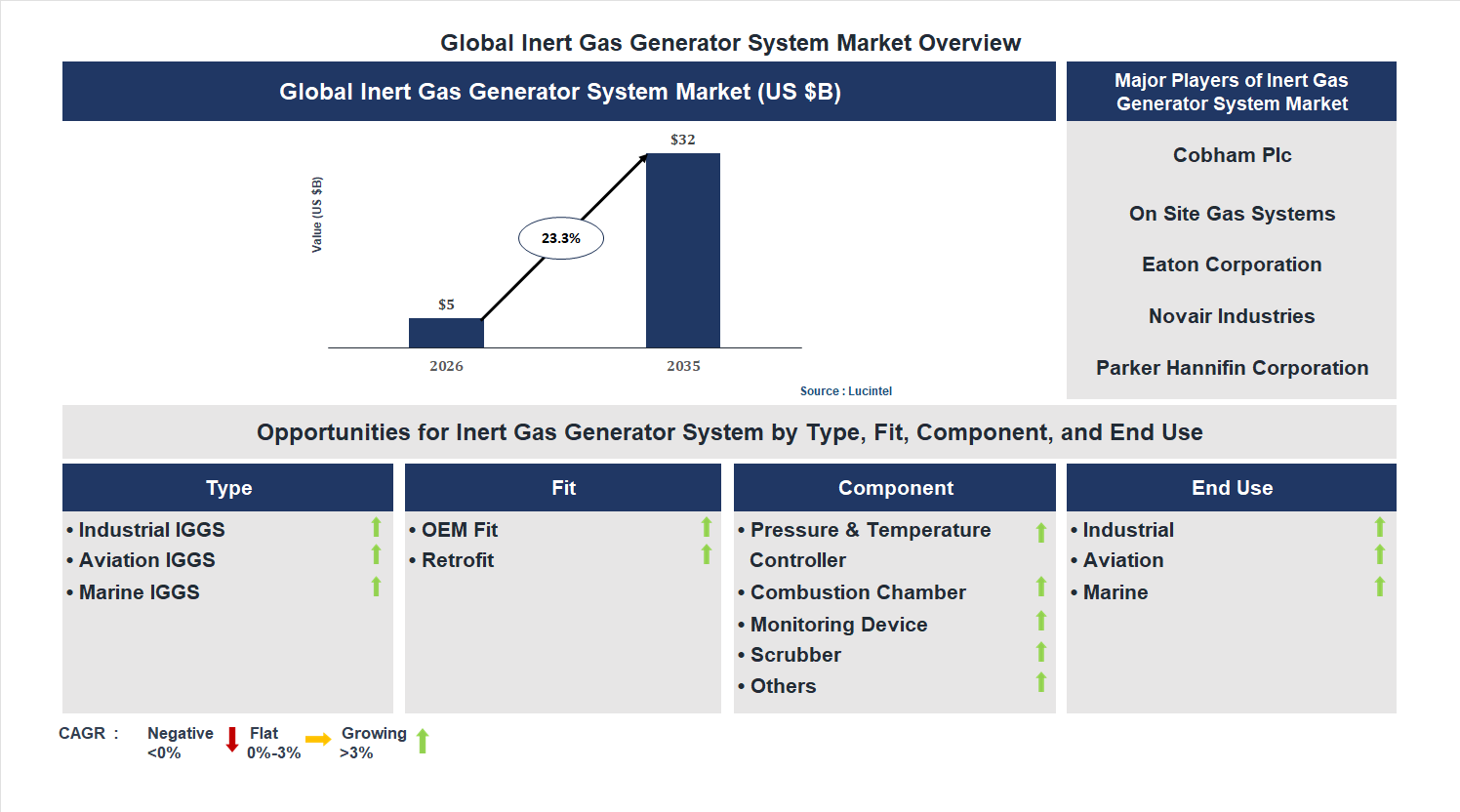
Key data points: The market size in 2035 = $32 billion, growth forecast = 23.3% annually for the next 8 years. Scroll below to get more insights. This market report covers trends, opportunities and forecasts in inert gas generator system market to 2035 by type (industrial IGGS, aviation IGGS, and marine IGGS), fit (OEM fit and retrofit), component (pressure & temperature controller, combustion chamber, monitoring device, scrubber, and others), end use (industrial, aviation, and marine), and region (North America, Europe, Asia Pacific, and the Rest of the World)
We'll send your sample report shortly.
• Lucintel forecasts that, within the type category, aviation IGGS is expected to witness higher growth over the forecast period.
• Within the end use category, aviation is expected to witness the highest growth.
• In terms of region, APAC is expected to witness the highest growth over the forecast period. Gain valuable insights for your business decisions with our comprehensive 150+ page report. Sample figures with some insights are shown below.
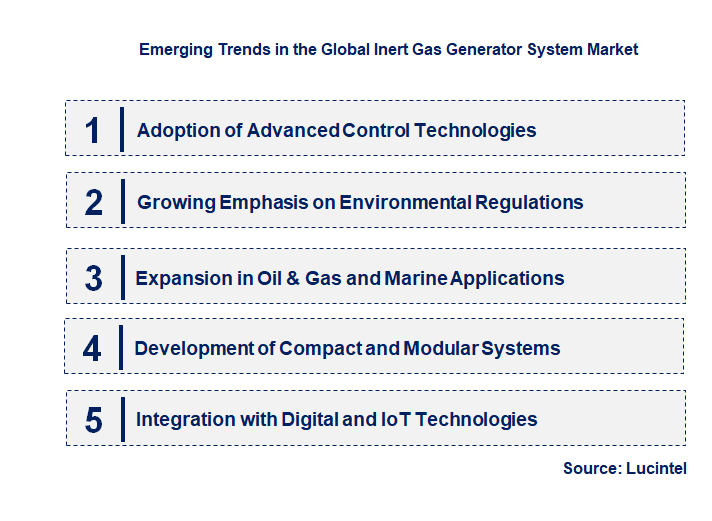
• Adoption of Advanced Control Technologies: Integration of smart control systems and automation is enhancing operational efficiency and safety. These systems enable real-time monitoring, predictive maintenance, and remote operation, reducing downtime and operational costs. The use of IoT and AI-driven analytics allows for better system management and early fault detection, which is critical in high-stakes environments like offshore platforms and shipping vessels. This trend is making inert gas generator systems more reliable, user-friendly, and cost-effective, thereby broadening their application scope.
• Growing Emphasis on Environmental Regulations: Stricter environmental standards are pushing industries to adopt cleaner and more sustainable inert gas solutions. Manufacturers are developing systems that produce lower emissions and utilize eco-friendly gases, aligning with global efforts to reduce carbon footprints. This trend is driving innovation in gas purification and generation processes, ensuring compliance with international regulations such as IMO MARPOL and EPA standards. As a result, the market is witnessing increased demand for environmentally compliant inert gas generators, especially in shipping and offshore sectors.
• Expansion in Oil & Gas and Marine Applications: The oil and gas industry continues to be a major driver, with inert gas systems used for tank blanketing, fire prevention, and safety measures. Similarly, the shipping industry relies on inert gas generators for cargo hold safety and ballast tank inerting. The expansion of offshore exploration and deep-sea drilling activities further boosts demand. These sectors are adopting more sophisticated systems to meet safety standards and operational efficiency, leading to increased market penetration and technological innovation tailored to these demanding environments.
• Development of Compact and Modular Systems: The trend toward miniaturization and modular design is making inert gas generators more adaptable and easier to install in confined spaces. Compact systems are ideal for small-scale applications and retrofit projects, while modular units allow scalability and customization. This flexibility reduces installation costs and downtime, making inert gas systems accessible to a broader range of industries, including manufacturing and small shipping vessels. The innovation in design is also facilitating easier maintenance and upgrades, contributing to overall system longevity and performance.
• Integration with Digital and IoT Technologies: The incorporation of digital interfaces and IoT connectivity is transforming inert gas generator systems into intelligent solutions. These integrations enable remote diagnostics, data analytics, and predictive maintenance, significantly improving system reliability and reducing operational risks. Digital twin technology and cloud-based monitoring are becoming standard features, providing operators with comprehensive insights into system performance. This trend enhances decision-making, optimizes maintenance schedules, and minimizes downtime, ultimately leading to more efficient and safer operations across all sectors utilizing inert gas systems. These emerging trends are fundamentally reshaping the inert gas generator system market by enhancing safety, environmental compliance, and operational efficiency. The integration of advanced technologies and the expansion into new applications are driving innovation and market growth, positioning inert gas systems as critical components in industrial safety and environmental sustainability efforts.
• Growing Industrial Safety Standards: The implementation of stricter safety regulations across industries such as oil & gas, chemicals, and manufacturing is boosting demand for inert gas generator systems. These systems provide a safe atmosphere by displacing oxygen, preventing explosions and fires. As safety concerns intensify, companies are investing in advanced inert gas solutions to comply with legal requirements and protect personnel and assets. This trend is expected to continue, driving sustained market growth and encouraging innovation in system design and capacity.
• Expansion in Oil & Gas Sector: The oil and gas industry is a major consumer of inert gas generators for applications like well drilling, pipeline maintenance, and storage tank blanketing. The increasing exploration activities and the need for safe, efficient gas blanketing are fueling demand. Additionally, the shift towards offshore and deepwater projects necessitates reliable inert gas systems. This expansion enhances safety protocols, reduces risks of explosions, and supports environmental compliance, thereby significantly contributing to market growth and technological development in inert gas generation.
• Technological Advancements in System Efficiency: Innovations in inert gas generator technology, such as energy-efficient designs and automation, are transforming the market. These advancements improve system performance, reduce operational costs, and minimize environmental impact. Enhanced control systems and remote monitoring capabilities enable better management and maintenance, increasing reliability. As industries prioritize sustainability and cost-effectiveness, these technological improvements are attracting new customers and expanding applications, ultimately boosting market competitiveness and growth prospects.
• Increasing Use in Food and Beverage Industry: The food and beverage sector is adopting inert gas systems for packaging, storage, and preservation to extend shelf life and prevent spoilage. Inert gases like nitrogen are used to displace oxygen, maintaining product freshness and safety. The demand for high-quality, long-lasting products is driving market growth in this segment. Additionally, strict regulations on food safety and packaging standards are encouraging industry players to invest in inert gas solutions, opening new avenues for market expansion and innovation.
• Rising Adoption in Healthcare and Pharmaceutical Sectors: The healthcare and pharmaceutical industries are increasingly utilizing inert gas generator systems for sterilization, controlled environments, and storage of sensitive materials. These systems ensure contamination-free atmospheres, essential for manufacturing sterile drugs and medical devices. The growing focus on patient safety, regulatory compliance, and the need for contamination control are propelling market demand. This trend is fostering technological improvements and expanding the application scope, thereby positively impacting overall market growth. The recent developments in inert gas generator systems are significantly impacting the market by enhancing safety, efficiency, and application diversity. Growing industrial safety standards, sector-specific expansions, technological innovations, and new industry applications are collectively driving market growth. These opportunities are encouraging manufacturers to innovate and expand their offerings, resulting in a more competitive and resilient market landscape. Overall, these developments are poised to sustain long-term growth and meet evolving industry demands effectively.
• Growing Demand in Oil & Gas Industry: The oil and gas sector increasingly relies on inert gas generators for well control, pipeline purging, and safety measures. As offshore drilling and exploration activities expand, the need for reliable inert gas sources rises. Enhanced safety standards and environmental regulations further drive adoption. The development of portable and high-capacity systems caters to diverse operational needs, creating opportunities for market players to supply customized solutions and expand into emerging markets with growing energy demands.
• Advancements in Inert Gas Generation Technology: Innovations such as membrane separation, pressure swing adsorption, and cryogenic methods improve efficiency and reduce operational costs. These technological advancements enable the production of high-purity inert gases with lower energy consumption. Companies investing in R&D can develop compact, scalable systems suitable for various applications, including food packaging and electronics manufacturing. The integration of IoT and automation further enhances system monitoring and maintenance, opening avenues for smart inert gas generator solutions.
• Expansion of Metal Fabrication and Welding Applications: The metal manufacturing sector increasingly adopts inert gas systems for welding, cutting, and heat treatment processes to prevent oxidation and improve product quality. The demand for high-purity inert gases like argon and nitrogen is rising in automotive, aerospace, and construction industries. The development of portable and high-capacity generators allows for on-site use, reducing logistics costs. This trend offers growth opportunities for manufacturers to cater to diverse industrial needs with tailored, efficient solutions.
• Rising Adoption in Food Packaging and Preservation: Inert gas systems are vital in modified atmosphere packaging (MAP) to extend shelf life and maintain freshness of perishable goods. The food industry’s focus on safety and quality standards boosts demand for nitrogen and other inert gases. Innovations in generator design enable on-demand, cost-effective gas supply for packaging lines. The increasing consumer preference for fresh, minimally processed foods supports market growth, encouraging manufacturers to develop specialized systems for various food products and packaging formats.
• Increasing Use in Electronics and Semiconductor Manufacturing: The electronics industry requires ultra-pure inert gases for manufacturing semiconductors, displays, and other sensitive components. The demand for high-purity gases and reliable supply chains drives the adoption of advanced inert gas generator systems. Miniaturization and integration of systems with cleanroom environments are key trends. Market players can capitalize on this by offering customized, high-purity solutions that meet stringent industry standards, supporting the growth of electronics manufacturing hubs worldwide. These growth opportunities are poised to significantly influence the inert gas generator system market by fostering innovation, expanding application scopes, and enabling manufacturers to meet evolving industry demands. The market’s future will be shaped by technological advancements, industry-specific needs, and increasing safety and quality standards across sectors. This dynamic landscape offers substantial potential for strategic investments and technological development to capture emerging opportunities globally.
• Growing Safety Regulations and Standards: Stringent safety regulations across industries such as shipping, oil & gas, and chemical manufacturing mandate the use of inert gas systems to prevent explosions and ensure compliance. These regulations are continuously evolving, encouraging companies to upgrade or install new systems. The demand for compliant inert gas generators is rising, especially in regions with strict maritime and industrial safety laws. This regulatory push not only enhances safety but also opens new market opportunities for manufacturers, fostering innovation and increased adoption.
• Expansion of Offshore and Marine Industries: The offshore oil and gas exploration and production activities are expanding globally, especially in deepwater and ultra-deepwater zones. These operations require reliable inert gas systems to prevent flammable atmospheres in tanks and pipelines. The growth of the shipping industry, driven by international trade, also boosts demand for inert gas generators onboard vessels to meet international safety standards. This expansion directly correlates with increased investments in inert gas systems, making them a critical component in maritime safety infrastructure.
• Technological Advancements in System Efficiency: Innovations in inert gas generator technology, such as improved combustion processes, automation, and energy efficiency, are making these systems more reliable and cost-effective. Enhanced control systems allow for better regulation of inert gas quality and flow, reducing operational costs and maintenance requirements. These technological improvements attract industries seeking safer, more efficient solutions, thereby expanding market penetration. Continuous R&D efforts are expected to further optimize system performance, supporting long-term market growth.
• Rising Environmental Concerns and Emission Regulations: Increasing awareness of environmental impacts and stricter emission standards are driving industries to adopt inert gas systems that help reduce flammable emissions and prevent pollution. Inert gas generators contribute to safer and cleaner operations, aligning with global sustainability goals. Governments and regulatory bodies are incentivizing the adoption of environmentally friendly safety systems, which propels market growth. This trend encourages manufacturers to develop eco-friendly inert gas solutions, fostering innovation and expanding market reach.
• Increasing Investment in Maritime and Industrial Infrastructure: Governments and private sectors are investing heavily in upgrading port facilities, shipbuilding, and industrial infrastructure to support global trade and energy needs. These investments often include the installation of inert gas systems to meet safety and environmental standards. The rise in new vessel construction and industrial plant setups directly correlates with increased demand for inert gas generators. This infrastructure development acts as a catalyst for market expansion, providing numerous opportunities for manufacturers and service providers. The challenges facing the inert gas generator system market include:
• High Initial Investment and Operational Costs: The installation and maintenance of inert gas generator systems involve significant capital expenditure, which can be a deterrent for small and medium-sized enterprises. The costs associated with system procurement, installation, and ongoing operation are substantial, impacting overall profitability. Additionally, the need for specialized personnel to operate and maintain these systems adds to operational expenses. These financial barriers can slow down adoption, especially in regions with limited budgets or where cost sensitivity is high.
• Stringent Regulatory Compliance and Certification Processes: While regulations drive market growth, they also pose challenges due to complex compliance procedures. Obtaining necessary certifications and adhering to evolving safety standards require time, expertise, and financial resources. Non-compliance can lead to penalties, operational delays, or even shutdowns, making regulatory navigation a critical concern. Companies must continuously update their systems to meet new standards, which can be resource-intensive and hinder rapid deployment.
• Technological Complexity and Integration Issues: The sophisticated nature of inert gas generator systems demands advanced technical knowledge for installation, operation, and troubleshooting. Integration with existing safety and control systems can be complex, requiring specialized skills and training. Any technological failure or incompatibility can compromise safety and operational efficiency. This complexity may also limit the adoption of newer, more advanced systems in regions lacking technical expertise, thereby constraining market growth. The inert gas generator system market is poised for significant growth driven by safety regulations, technological innovations, and expanding industrial activities. However, high costs, regulatory hurdles, and technological complexities present notable challenges. Addressing these issues through cost-effective solutions, streamlined compliance processes, and technical training will be crucial for sustained market expansion. Overall, the markets future depends on balancing these drivers and challenges to foster safer, more efficient, and environmentally friendly inert gas systems worldwide.
• Cobham Plc
• On Site Gas Systems
• Eaton Corporation
• Novair Industries
• Parker Hannifin Corporation
• Air Liquide
• Wartsila.
• Honeywell International
• Coldharbour Marine
• Alfa Laval
• Industrial IGGS
• Aviation IGGS
• Marine IGGS
• OEM Fit
• Retrofit
• Pressure & Temperature Controller
• Combustion Chamber
• Monitoring Device
• Scrubber
• Others
• Industrial
• Aviation
• Marine
• North America
• Europe
• Asia Pacific
• The Rest of the World
• United States: The US market has seen rapid adoption of advanced inert gas generator systems, driven by stringent safety regulations in the oil and gas industry and shipping sectors. Innovations in automation and control systems have improved operational efficiency and safety standards. Major players are investing in R&D to develop eco-friendly and energy-efficient solutions, aligning with environmental regulations. The US also emphasizes integrating inert gas systems with digital monitoring and IoT technologies, enhancing real-time safety management and predictive maintenance capabilities.
• China: China is experiencing robust growth in the inert gas generator market, fueled by expanding offshore oil exploration, shipping activities, and industrialization. The country is focusing on upgrading safety standards and adopting advanced inert gas systems to meet international regulations. Domestic manufacturers are increasing their R&D efforts to produce cost-effective and reliable systems, boosting local market competitiveness. Additionally, China’s emphasis on sustainable development is encouraging the adoption of environmentally friendly inert gas solutions, with government policies supporting technological innovation and infrastructure development.
• Germany: Germanys market is characterized by high-quality, technologically advanced inert gas generator systems, primarily serving the shipping and chemical industries. The country’s strict environmental regulations and focus on safety have driven demand for efficient, low-emission systems. German companies are leading in innovation, integrating inert gas generators with automation and digital control systems to optimize performance. The emphasis on sustainability and compliance with European Union standards has further propelled market growth, with a focus on reducing carbon footprints and enhancing operational safety.
• India: India is witnessing increasing demand for inert gas generator systems across its expanding oil and gas, shipping, and manufacturing sectors. The growth is supported by government initiatives promoting safety and environmental standards. Local manufacturers are expanding their product portfolios to include cost-effective and reliable solutions suitable for diverse applications. The market is also benefiting from technological advancements and rising awareness about safety protocols. Additionally, India’s focus on infrastructure development and industrial growth is expected to further boost the adoption of inert gas systems in the coming years.
• Japan: Japan’s inert gas generator market is driven by its advanced shipping industry and stringent safety regulations. The country emphasizes high-quality, reliable systems with integrated automation features. Japanese manufacturers are investing in R&D to develop eco-friendly and energy-efficient inert gas solutions, aligning with national sustainability goals. The market also benefits from technological innovation, including IoT integration for real-time monitoring and maintenance. Japan’s focus on safety, environmental compliance, and technological excellence continues to position it as a key player in the global inert gas generator market.


• Cobham Plc
• On Site Gas Systems
• Eaton Corporation
• Novair Industries
• Parker Hannifin Corporation
• Air Liquide
• Wartsila.
• Honeywell International
• Coldharbour Marine
• Alfa Laval Q6. Which inert gas generator system market segment will be the largest in future? Answer: Lucintel forecasts that, within the type category, aviation IGGS is expected to witness higher growth over the forecast period. Q7. In inert gas generator system market, which region is expected to be the largest in next 8 years? Answer: In terms of region, APAC is expected to witness the highest growth over the forecast period. Q8. Do we receive customization in this report? Answer: Yes, Lucintel provides 10% customization without any additional cost.


Choose a license that fits your team. Instant PDF delivery.
Prices exclude taxes. Instant delivery. Custom licensing available on request.
Market Report · July 22, 2026
Market Report · July 22, 2026
Market Report · July 17, 2026
Trusted partner for strategic intelligence and business growth


Receive a complimentary market analysis tailored to your industry. Our analysts will identify key growth opportunities and competitive dynamics specific to your business.

Market size, growth rate, and key trend analysis for your specific sector.

Top competitor positioning and market share analysis.

Strategic recommendations backed by data-driven insights.
Get curated market intelligence and competitive moves straight to your inbox.
By subscribing, you agree to receive our monthly insights. Unsubscribe anytime.
Receive a complimentary market analysis tailored to your industry. Our analysts will identify key growth opportunities and competitive dynamics specific to your business.
Market size, growth rate, and key trend analysis for your specific sector.
Top competitor positioning and market share analysis.
Strategic recommendations backed by data-driven insights.
Get curated market intelligence, emerging trends, and competitive moves straight to your inbox each month.
By subscribing, you agree to receive our monthly insights. Unsubscribe anytime.
We'll send your sample report shortly.