
Market Report · July 31, 2026

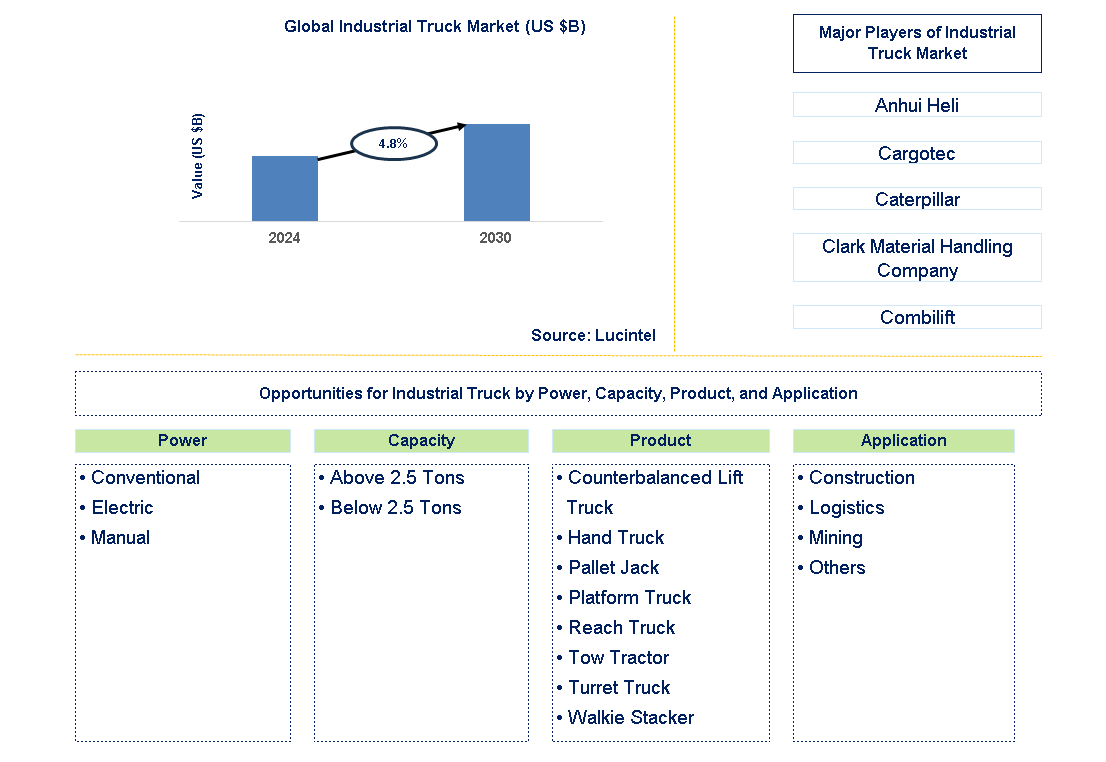
Key data points: The growth forecast = 4.8% annually for the next 6 years. Scroll below to get more insights. This market report covers trends, opportunities, and forecasts in the global industrial truck market to 2030 by power (conventional, electric, and manual), capacity (above 2.5 tons and below 2.5 tons), product (counterbalanced lift truck, hand truck, pallet jack, platform truck, reach truck, tow tractor, turret truck, and walkie stacker), application (construction, logistics, mining, and others), and region (North America, Europe, Asia Pacific, and the Rest of the World)
We'll send your sample report shortly.
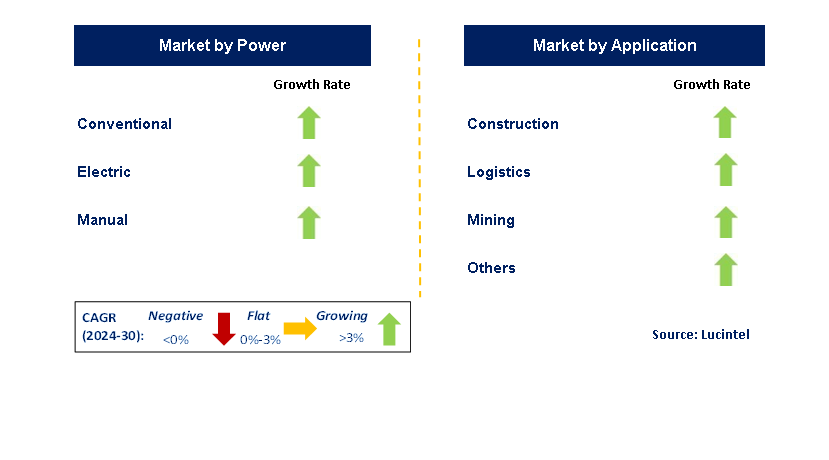
• Lucintel forecasts that, within the power category, electric is expected to witness largest growth over the forecast period due to their projected efficiency, reduced environmental impact, and advancements in electric vehicle technologies.
• Within the application category, construction will remain the largest segment due to increased demand for material handling in building projects, driving the market share in industrial trucks.
• In terms of regions, North America is expected to witness largest growth over the forecast period due to large market size, established industrial infrastructure, and increased demand for industrial trucks. Gain valuable insights for your business decisions with our comprehensive 150+ page report.
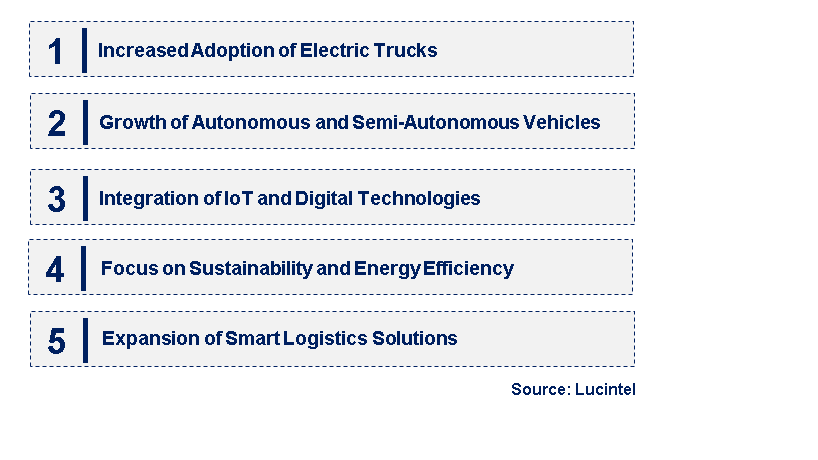
• Increased Adoption of Electric Trucks: Electric trucks are becoming more popular. The move towards electric industrial trucks is gaining pace as companies strive to achieve a low center of gravity for both emissions and costs by operating electric vehicles. Compared to their traditionally used counterparts, internal combustion engines, electric trucks are more energy efficient and have much lower maintenance costs, all of which are compliant with the global trend towards sustainability.
• Growth of Autonomous and Semi-Autonomous Vehicles: The emergence of autonomous and semi-autonomous industrial trucks is on the rise, thanks to the increase in robotic applications and artificial intelligence. These vehicles make operations more effective and safer by reducing human errors and improving material handling efficiency, thus making labor less expensive.
• Integration of IoT and Digital Technologies: The integration of IoT and digital technologies is changing the face of the industrial truck market as we know it. Real-time data collection and analytics help with better fleet management, predictive maintenance, and therefore better visibility of operations, which increases efficiency and reduces downtime.
• Focus on Sustainability and Energy Efficiency: Environmental responsibility is a key trend, accompanied by improvements in industrial trucks regarding energy efficiency and ecological safety. This involves achievements in electric and hybrid technologies, along with higher fuel efficiency and lower pollution levels.
• Expansion of Smart Logistics Solutions: The demand for smart logistics solutions is increasing and includes novel technologies, pick-and-pack systems, and smart inventory management systems. These solutions improve overall quality and efficiency in operations, hence reducing costs and the chances of errors during the handling and distribution of materials. These emerging trends are reforming the industrial truck industry by advancing technological progress, increasing sustainability, and enhancing efficiency in operations. The increasing use of electric and autonomous vehicles and the further integration of IoT and smart logistics are changing the handling of materials and logistic processes. As these trends evolve, their impact on the market will be more apparent than ever, especially in the industrial trucking sector.
• Rise of Electric Industrial Trucks: It is noteworthy that the rapid introduction and rising market penetration of electric industrial trucks are currently unprecedented. The expansion in the adoption of electric industrial trucks is driven by advancements in electric battery technology and environmental regulations. Electric trucks are non-polluting, easy to operate, affordable in maintenance, and ergonomic in all operations, thereby improving organizational performance in material handling.
• Progress in the Field of Driverless Vehicles: Sophisticated features such as built-in sensors and artificial intelligence enhance industrial automated trucks and forklifts. This progress optimizes productivity, reduces labor costs, and ensures safety by performing simple, repetitive tasks, thereby decreasing errors in material handling procedures.
• Integration of IoT and Fleet Management Systems: The use of IoT technology in industrial trucks enhances fleet management in ways that were not previously possible. Data collection and analytics allow for understanding how vehicles function, recognizing when maintenance is needed, and gauging vehicle utilization, thus reducing operational costs and downtime.
• Growth in Hybrid Truck Technologies: Hybrid industrial trucks, which utilize both electricity and an engine, are gaining popularity. They are more efficient in fuel consumption and emissions and offer more power, making them suitable for multiple purposes across industries while complying with regulations without compromising performance.
• Enhanced Safety Features and Standards: Safety features and compliance with new safety regulations are two main areas of development within the industrial truck market. Improvements in operator safety include collision prevention systems, driving support systems including ADAS, and better ergonomic design, which reduce accidents in the industry. These recent developments significantly affect the industrial truck market by driving technological change, fostering operational optimizations, and improving safety aspects. The trends in electric and autonomous vehicles, IoT integration, and hybrid systems development emphasize better performance and eco-friendliness. Progress in these areas provides new benchmarks and a new vision for the industrial truck sector.
• Electric Truck Expansion: The growth of electric trucks offers a significant opportunity for businesses as companies aim to go green and reduce operational costs. Electric trucks meet low-emission and high-efficiency requirements, making these vehicles crucial in a business sector focused on sustainable development and green strategies.
• Adoption of Autonomous Vehicles in Logistics: The integration of autonomous vehicles into materials handling and logistics presents substantial potential opportunities. These vehicles can maximize warehouse activities, save on labor costs, and enhance safety through proper handling of goods, benefiting businesses that seek to improve operational efficiency and productivity.
• Development of Smart Logistics Technologies: The development of smart logistics technologies, such as automated storage systems and transport elements of warehouse management, offers growth possibilities for the industrial truck market. These solutions enhance process accuracy and reduce costs, consequently increasing the demand for modern industrial trucks and corresponding technology.
• Hybrid Truck Technologies: The development and introduction of hybrid truck technologies that utilize both electric motors and internal combustion engines represent growth in industries where effective and flexible solutions are needed. Hybrid trucks improve fuel economy and lower emissions, making them suitable for various industrial processes and environmental policies.
• Growth in the Industrial Truck Market Driven by Sustainability Campaigns: The industrial truck market is expanding due to sustainability campaigns as companies strive to comply with environmental policies and external stakeholder demands. Electric and hybrid trucks are seen as positive investments as they align with current global demands for a cleaner environment and open new markets. The strategic growth opportunities in the industrial truck market should transform the industry by emphasizing sustainability, increasing automation, and developing smart logistics. The growing penetration of electric and autonomous trucks, along with hybrid technologies and smart solutions, is causing significant shifts in material handling and logistics operations. These opportunities are improving efficiencies, lowering costs, and preparing the market for future expansion.
• Technological Advancements: The combination of electric and autonomous trucks is a key technological driver in the industrial truck market. This improves operational efficiency, lowers costs, and enhances safety, thus spurring greater acceptance and funding of advanced industrial truck technologies.
• Increase in Automation: The rise in the movement of materials and logistics through automated trucks is propelling the industrial market. Automated trucks and forklifts leverage new trends in the industry, reducing costs, increasing productivity, and improving safety.
• Environmental Regulation: Due to the desire to meet sustainable development goals, there is rapid growth in the use of electric and hybrid industrial trucks. Organizations are adopting greener models to comply with legal frameworks and reduce greenhouse gas emissions, thereby enhancing the market for electric and hybrid trucks.
• Economic Growth and Expansion: The growth in the economy and industrial sectors, including manufacturing and logistics, is creating a surge in the industrial trucks market. Increased production and distribution activities require efficient material movement, leading to a higher demand for industrial trucks.
• The Role of the Internet of Things and Fleet Management Integration: The integration of IoT and fleet management systems is a notable driving force in the industrial truck market. Real-time data collection and analysis enhance fleet operations, management, and maintenance routines, promoting the adoption of optimally connected and intelligent industrial trucks. Challenges in the industrial truck market are:
• High Initial Costs: A major challenge for companies adopting electric or autonomous industrial trucks is their high price, as these models are still advanced. Firms may lack the capacity to invest in additional technologies, which affects market growth.
• Infrastructure Limitations: Other limitations affecting the adoption of new technologies include infrastructure challenges, such as the lack of charging systems for electric trucks and the need for specialized tools or garages for maintenance. Addressing these design and infrastructure challenges is essential for the effective use of advanced industrial trucks.
• Regulatory and Safety Compliance: Adhering to health and safety policies and ever-changing regulations can be difficult for manufacturers and users of industrial trucks. The challenge is to comply with high standards without compromising the safety and reliability of newer technologies, which can often be complicated and costly. Other factors considered drivers and challenges in the industrial truck market demonstrate the volatility of circumstances in this industry. Barriers include management principles such as efficiency and lean management systems, modernization through technology, and external factors including policies and market dynamics. Adopting political, legal, and environmental considerations will assist stakeholders in maximizing opportunities while managing threats in the changing industrial truck market.
• Anhui Heli
• Cargotec
• Caterpillar
• Clark Material Handling Company
• Combilift
• Crown Equipment
• Doosan
• EP Equipment
• Flexi Narrow Aisle
• Godrej & Boyce
• Conventional
• Electric
• Manual
• Above 2.5 Tons
• Below 2.5 Tons
• Counterbalanced Lift Truck
• Hand Truck
• Pallet Jack
• Platform Truck
• Reach Truck
• Tow Tractor
• Walkie Stacker
• Construction
• Logistics
• Mining
• Others
• North America
• Europe
• Asia Pacific
• The Rest of the World
• United States: In the U.S., the industrial truck market is shifting towards the adoption of electric and autonomous trucks at an impressive rate. Companies like Tesla and Amazon are at the forefront of promoting electric-powered forklifts and trucks, motivated by legal requirements for environmental protection and efficiency. Additionally, intensive IoT integration is being pursued for operational enhancement and safety through controlled fleet movement and tracking.
• China: China is making significant strides in industrial truck sales through electric vehicles and smart logistics systems. Leading manufacturers like BYD and Hangcha are developing electric-powered lift trucks and AGVs. The Chinese government's active policies promoting green technology and intelligent manufacturing are facilitating rapid adoption of these technologies to improve industrial processes.
• Germany: Germany leads in harnessing automation alongside digital trends within the industrial truck sector. Companies like KION Group and Jungheinrich AG integrate advanced warehouse control technologies with industrial trucks. With its strong position in Industry 4.0 and focus on energy issues, Germany is well-suited for advanced industrial truck manufacturing.
• India: The Indian industrial truck market is broadening with a growing demand for affordable and robust products. Indian manufacturers are producing moderately priced industrial trucks suitable for various industries. Furthermore, electric and hybrid variants are increasingly attractive as the country seeks energy-efficient and low-emission technologies.
• Japan: Japan is modernizing and focusing on innovations in the industrial truck market, particularly in automation and energy efficiency. Toyota Industries Company is leading this trend with automated forklifts and fuel cell electric trucks. Emphasizing high-tech approaches and environmentally friendly practices encourages the adoption of new technologies in manufacturing processes.


• Anhui Heli
• Cargotec
• Caterpillar
• Clark Material Handling Company
• Combilift
• Crown Equipment
• Doosan
• EP Equipment
• Flexi Narrow Aisle
• Godrej & Boyce Q5. Which industrial truck market segment will be the largest in future? Answer: Lucintel forecasts that electric is expected to witness largest growth over the forecast period due to their projected efficiency, reduced environmental impact, and advancements in electric vehicle technologies. Q6. In industrial truck market, which region is expected to be the largest in next 5 years? Answer: North America is expected to witness largest growth over the forecast period due to large market size, established industrial infrastructure, and increased demand for industrial trucks. Q7. Do we receive customization in this report? Answer: Yes, Lucintel provides 10% customization without any additional cost.


Choose a license that fits your team. Instant PDF delivery.
Prices exclude taxes. Instant delivery. Custom licensing available on request.
Market Report · July 31, 2026
Market Report · July 17, 2026
Market Report · May 18, 2026
Trusted partner for strategic intelligence and business growth


Receive a complimentary market analysis tailored to your industry. Our analysts will identify key growth opportunities and competitive dynamics specific to your business.

Market size, growth rate, and key trend analysis for your specific sector.

Top competitor positioning and market share analysis.

Strategic recommendations backed by data-driven insights.
Get curated market intelligence and competitive moves straight to your inbox.
By subscribing, you agree to receive our monthly insights. Unsubscribe anytime.
Receive a complimentary market analysis tailored to your industry. Our analysts will identify key growth opportunities and competitive dynamics specific to your business.
Market size, growth rate, and key trend analysis for your specific sector.
Top competitor positioning and market share analysis.
Strategic recommendations backed by data-driven insights.
Get curated market intelligence, emerging trends, and competitive moves straight to your inbox each month.
By subscribing, you agree to receive our monthly insights. Unsubscribe anytime.
We'll send your sample report shortly.