
Market Report · July 16, 2026

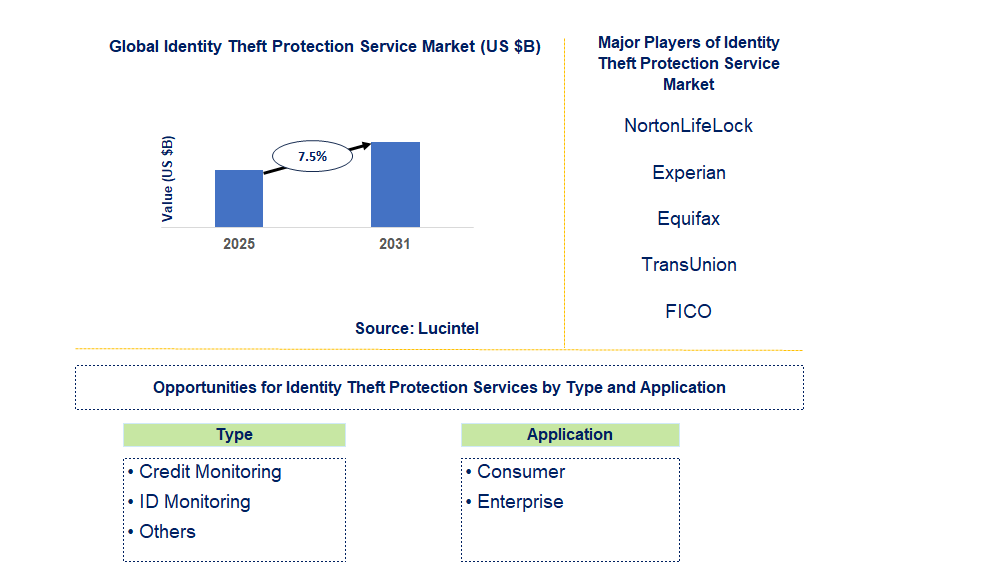
Key data points: The growth forecast = 7.5% annually for the next 7 years. Scroll below to get more insights. This market report covers trends, opportunities and forecasts in identity theft protection service market to 2031 by type (credit monitoring, ID monitoring, and others), application (consumer and enterprise), and region (North America, Europe, Asia Pacific, and the Rest of the World)
We'll send your sample report shortly.
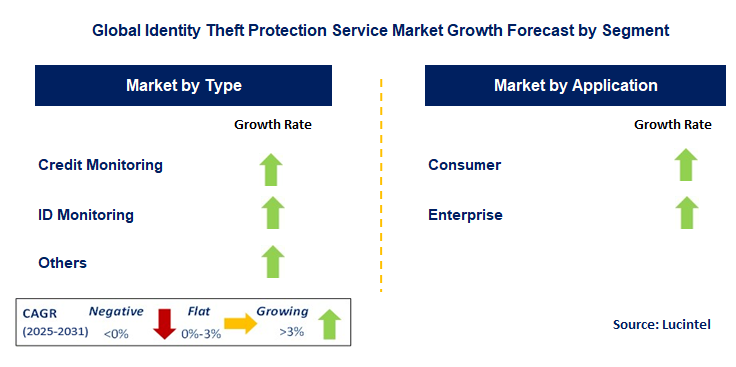
• Lucintel forecasts that, within the type category, ID monitoring is expected to witness higher growth over the forecast period.
• Within the application category, enterprise is expected to witness higher growth.
• In terms of region, APAC is expected to witness the highest growth over the forecast period. Gain valuable insights for your business decisions with our comprehensive 150+ page report. Sample figures with some insights are shown below.
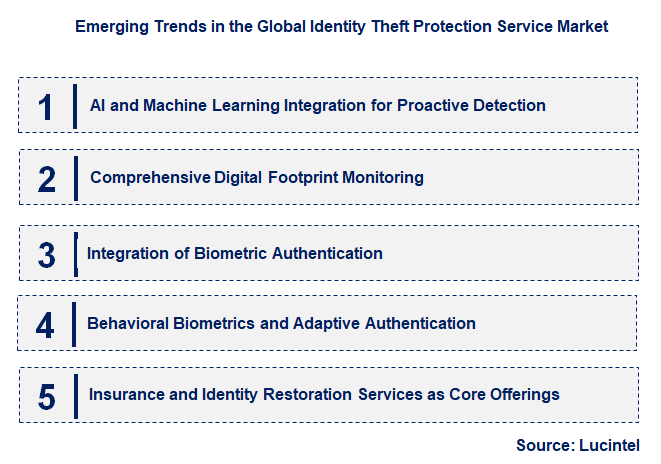
• AI and Machine Learning Integration for Proactive Detection: This direction entails the widespread application of artificial intelligence and machine learning algorithms to scan multiple enormous datasets in real time. AI and ML allow services to detect subtle patterns, anomalies, and suspicious behavior that are characteristic of identity theft that may be overlooked by traditional methods. The effect is a move away from reactive watchfulness to proactive threat detection so that services can notify users or even trigger automated protective measures much more quickly. This closes the window of opportunity much faster for fraudsters and lessens potential harm from identity compromise.
• Comprehensive Digital Footprint Monitoring: Identity theft protection services are now broadening the scope to track a user’s entire online presence, and not only credit reports. It involves scanning the dark web for stolen credentials, tracking social media profiles for impersonation attempts, and tracking public records for misuse of personal data. The impact is a more comprehensive protection against the multi-faceted reality of contemporary identity theft, offering users a longer perspective of their online exposure and allowing them to deal with threats beyond financial accounts.
• Integration of Biometric Authentication: The use of biometric authentication technologies, including facial recognition, fingerprint scanning, and voice biometrics, is on the rise as an identity theft prevention measure. These technologies add another, very secure layer of verification for sensitive account and transaction access. The effect is a huge boost in security, with it being much more difficult for unauthorized parties to gain entry even if passwords are compromised. This trend supports a frictionless but safe user experience, enhancing trust in digital interactions.
• Behavioral Biometrics and Adaptive Authentication: This trend concerns examining how users behave with their devices and applications—typical typing speed, mouse movement, and navigation behavior—to constantly confirm their identity in the background. As opposed to depending on a single authentication, behavioral biometrics offer continuous authentication. The result is an active security layer that adjusts to user action, rendering it very hard to impersonate genuine users. This decreases friction while increasing security, offering a smooth yet strong protection against account takeovers.
• Insurance and Identity Restoration Services as Core Offerings: Identity theft protection services go beyond simple monitoring, with more of them now including strong identity theft insurance and full restoration services as core offerings. These features offer monetary reimbursement for losses associated with identity theft and include special support to assist victims in restoring their identity and credit. The effect is total peace of mind for consumers, since not only are they notified of dangers but also guided through the frequently complicated and stressful process of recovery, which makes such services more desirable and valuable. These new trends are actually revolutionizing the market for identity theft protection services by extending the limits of what is achievable in online security. The convergence of advanced AI, end-to-end digital footprint monitoring, multi-layered biometric verification, and advanced restoration mechanisms is developing a smarter, more proactive, and user-focused defense environment. This transformation is essential for tackling sophisticated cyberattacks, establishing consumer confidence, and guaranteeing the security of personal and business digital identities in a highly connected world.
• Dark Web Surveillance Capabilities Expanded: One major recent trend is the substantial improvement in dark web surveillance capabilities. Identity theft protection companies are now using more advanced algorithms and broader scanning capacities to identify stolen personal data, including passwords, social security numbers, and credit card numbers, being sold on dark web criminal forums. The effect is a proactive notification to users, which allows them to act right away to update compromised credentials before there is financial or reputational loss. This has become a key part of total protection strategies.
• Artificial Intelligence and Machine Learning Integration: Widespread adoption of AI and machine learning in identity theft protection services is a revolutionary change. These technologies provide real-time examination of huge data flows to detect anomalous patterns and questionable activity that suggests attempted identity theft. For example, AI can identify unusual login or credit inquiry attempts. The effect is a sharp reduction in the speed and accuracy of fraud detection, minimizing false positives and sending timely alerts for real threats, thereby enhancing the overall security stance.
• Focus on Identity Recovery and Restoration Services: In addition to prevention and surveillance, newer developments reflect an added focus on strong identity restoration and recovery programs. Service providers now include special case managers who help victims navigate the frequently complicated process of reclaiming identity, contesting unauthorized use, and restoring credit ratings. The effect is holistic after-theft assistance for individuals, removing the burden and hassle from the outcome. Such complete lifecycle value from prevention to recovery contributes greatly to protection packages.
• Synthetic Identity Fraud Detection Development: One of the most important new developments is the presence of specially designed solutions for synthetic identity fraud detection, wherein fraudsters marry actual and made-up personal data to invent new, fictional identities. Composed identities evade traditional identity verification. Sophisticated analytics and cross-referencing abilities are used by new services to detect discrepancies that indicate synthetic fraud. The effect is the capability to fight an increasingly prevalent and financially costly type of fraud, which is especially useful for financial institutions and lending firms.
• Enhanced Mobile App Functionality and User Experience: Identity protection services are now more and more emphasizing the development of their mobile apps, providing easier-to-use interfaces, real-time notifications, and direct links to different protection tools. This encompasses instant alerts about suspicious behavior, single-touch credit freeze, and secure messaging with customer support agents. The result is higher user interaction and ease, enabling people to actively control their identity protection from their phones. This convenience provides quick responses to threats and allows for more peace of mind. These new developments together are collectively influencing the identity theft protection service market in making their defense against progressive cyber-attacks more intelligent, stronger, and more user-friendly. Shifting towards proactive detection, end-to-end monitoring, expert-level fraud detection, and easy mobile access, along with robust restoration support, is further strengthening the value proposition of these services. It is making individuals and businesses more capable of defending their digital identities in a more complex and connected world.
• Real-Time Transaction Monitoring and Fraud Prevention: An important growth potential lies within the financial services sector, where it targets real-time transaction monitoring and sophisticated fraud prevention. These involve AI-driven analytics to identify suspicious spending patterns, attempts to access accounts, and loan application fraud in real-time. The effect is a sizeable decrease in the financial losses for banks, credit unions, and payment processors, as well as increased trust for consumers. Services that smoothly work with existing banking infrastructure and provide real-time notifications of suspect financial activity are of enormous potential.
• Medical Identity Theft and Data Breach Protection: The healthcare industry presents a significant growth prospect because of the sensitive information of patients and a high prevalence of medical identity theft. Strategic services involve tracking medical claims for fraud, safeguarding electronic health records against breaches, and offering strong identity restoration, particularly for medical fraud. The effect is guarding patient privacy, preventing fraudulent billing of medical services, and ensuring health data integrity. Solutions that are HIPAA-compliant and healthcare-specific risk-focused are most desired.
• Synthetic Identity Fraud Detection and Account Takeover: The swift growth of e-commerce presents a fertile growth opportunity for ATO and synthetic identity fraud services. It entails adopting innovative authentication practices, real-time behavioral analysis throughout the online session, and complex algorithms to identify the process of opening spurious customer accounts. The effect is lowering financial losses for merchants through spurious purchases and chargebacks, enhancing customer confidence in online stores, and enhancing safety for consumers through a secure shopping experience.
• Employee Benefits and Human Resources: An emerging growth market is offering full identity theft protection as an employee benefit for business customers. This means offering customized plans that track employee information, include breach response, and provide identity restoration services. The effect is increased employee health, less productivity loss from identity theft issues, and enhanced corporate image as a socially responsible employer. This B2B market opens up scalable solutions and recurring revenue streams for service providers.
• Secure Digital Identity and Citizen Services: Public sector presents strategic growth prospects in making citizens’ digital identities secure and safeguarding sensitive government databases against identity theft. This involves creating solutions for secure online citizen services, digital ID authentication of government benefits, and vigilant monitoring of public records against fraud. The effect is enhanced public confidence in government digital initiatives, less fraud in government services, and improved national cybersecurity. Those services that can interoperate with governmental identity systems and meet strict data security requirements are much sought after. These strategic expansion opportunities by sector highlight the shifting landscape of identity theft protection services. With the creation of customized solutions that meet the specific challenges and exposures in financial services, healthcare, e-commerce, human resources, and government, providers have tremendous market expansion opportunities, can further improve their value proposition, and help bring about a more secure online environment for individuals and entities alike.
• NortonLifeLock
• Experian
• Equifax
• TransUnion
• FICO
• cxLoyalty
• LexisNexis
• Aura
• Allstate
• McAfee
• Credit Monitoring
• ID Monitoring
• Others
• Consumer
• Enterprise
• North America
• Europe
• Asia Pacific
• The Rest of the World
• United States: The US market for identity theft protection services remains the biggest, driven by ongoing data breaches and high consumer visibility of identity fraud threats. Recent trends are the universal acceptance of full-service packages with credit monitoring, dark web monitoring, and identity restoration. There is a new trend of employer-sponsored protection plans as well. The market is very competitive, with global players incorporating AI and machine learning for more proactive threat detection and providing identity theft insurance with financial compensation for victims.
• China: The identity theft protection market in China is growing very rapidly, fueled mainly by the enormous growth in online shopping and digital payments. Although government monitoring is common, consumers and businesses’ concerns are about safeguarding financial and personal information in a more digital economy. Recent trends have seen more robust regulatory focus on data privacy, like the Personal Information Protection Law (PIPL), which forces companies to beef up their data security controls. This creates demand for identity verification and fraud prevention solutions that comply with local regulations and user patterns.
• Germany: In Germany, the market for identity theft protection is dominated by a high regard for data privacy as well as adherence to strict regulations such as the GDPR (General Data Protection Regulation). Current trends revolve around solutions that offer complete data monitoring, secure authentication techniques, and strong data breach response capabilities for both consumers and companies. German consumers value services that provide transparency and control over their personal data, which has created demand for advanced privacy management tools with identity protection.
• India: The market for identity theft protection is witnessing tremendous growth, which is largely driven by the fast pace of financial service digitization as well as rising internet penetration. The Digital Personal Data Protection Act (DPDP Act) is a major force, requiring legitimate processing and safe storage of personal data. Recent innovation involves the use of AI and machine learning in fraud prevention, specifically for mobile banking and e-commerce transactions. Increasing awareness of online threats among consumers is driving demand for low-cost and accessible protection services.
• Japan: The Japanese identity theft protection market is very advanced, with considerable emphasis on biometric authentication and advanced anti-fraud technology. Some of the recent advancements include gait and palm-vein biometrics scaling in banking transactions and ATMs, adding layers of security. The market is also witnessing growing demand for solutions against sophisticated cyber-attacks like deepfake and voice cloning scams, especially in industries such as finance and healthcare. Japan focuses on secure technology solutions that provide high data security and user confidence.


• NortonLifeLock
• Experian
• Equifax
• TransUnion
• FICO
• cxLoyalty
• LexisNexis
• Aura
• Allstate
• McAfee Q5. Which identity theft protection service market segment will be the largest in future? Answer: Lucintel forecasts that, within the type category, ID monitoring is expected to witness higher growth over the forecast period. Q6. In identity theft protection service market, which region is expected to be the largest in next 5 years? Answer: In terms of region, APAC is expected to witness the highest growth over the forecast period. Q7. Do we receive customization in this report? Answer: Yes, Lucintel provides 10% customization without any additional cost.


Choose a license that fits your team. Instant PDF delivery.
Prices exclude taxes. Instant delivery. Custom licensing available on request.
Market Report · July 16, 2026
Market Report · May 18, 2026
Market Report · May 18, 2026
Trusted partner for strategic intelligence and business growth


Receive a complimentary market analysis tailored to your industry. Our analysts will identify key growth opportunities and competitive dynamics specific to your business.

Market size, growth rate, and key trend analysis for your specific sector.

Top competitor positioning and market share analysis.

Strategic recommendations backed by data-driven insights.
Get curated market intelligence and competitive moves straight to your inbox.
By subscribing, you agree to receive our monthly insights. Unsubscribe anytime.
Receive a complimentary market analysis tailored to your industry. Our analysts will identify key growth opportunities and competitive dynamics specific to your business.
Market size, growth rate, and key trend analysis for your specific sector.
Top competitor positioning and market share analysis.
Strategic recommendations backed by data-driven insights.
Get curated market intelligence, emerging trends, and competitive moves straight to your inbox each month.
By subscribing, you agree to receive our monthly insights. Unsubscribe anytime.
We'll send your sample report shortly.