
Market Report · July 15, 2026

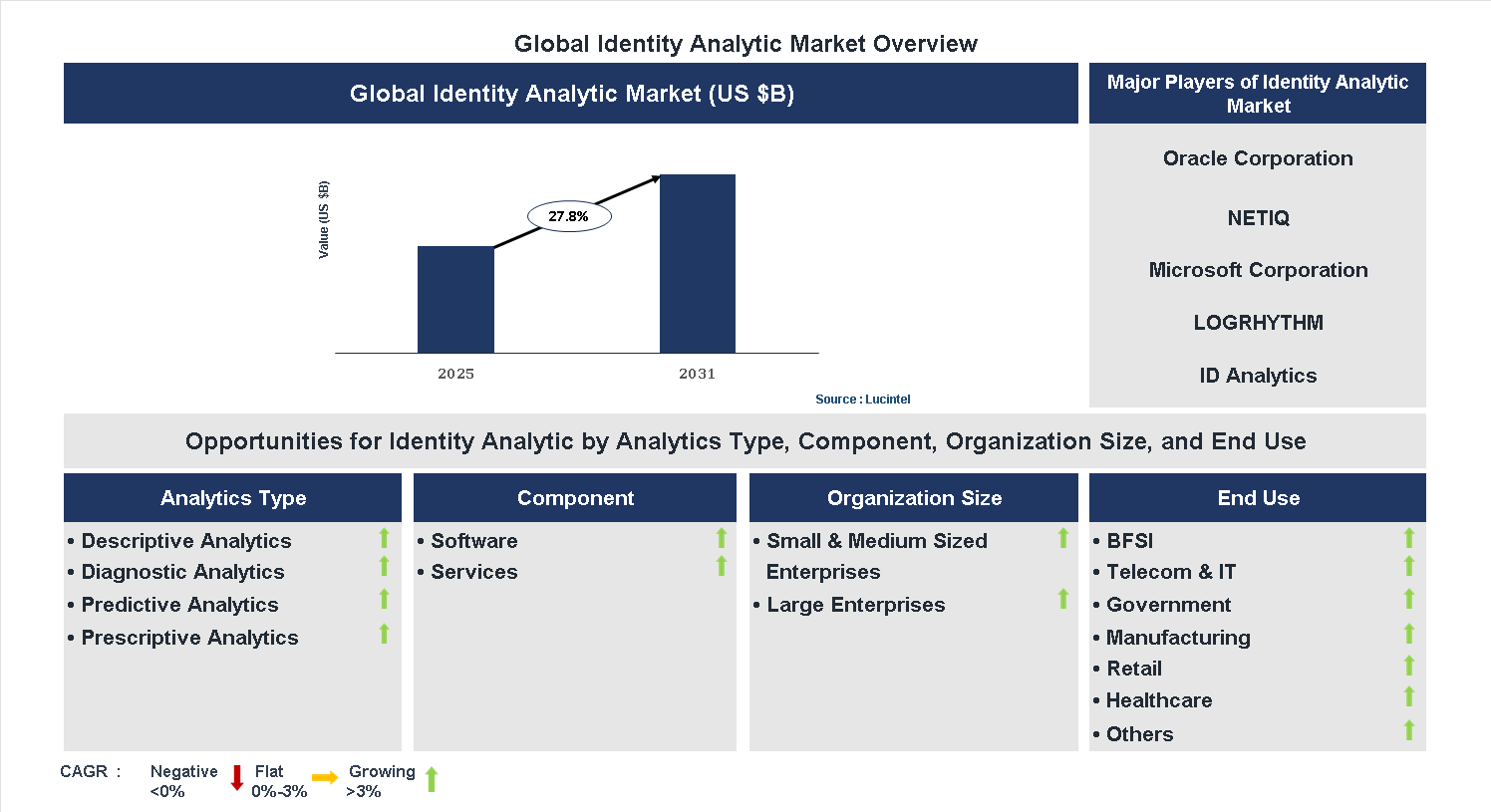
Key data points: The growth forecast = 27.8% annually for the next 7 years. Scroll below to get more insights. This market report covers trends, opportunities and forecasts in identity analytic market to 2031 by analytics type (descriptive analytics, diagnostic analytics, predictive analytics, and prescriptive analytics), component (software and services), organization size (small & medium sized enterprises and large enterprises), end use (BFSI, telecom & IT, government, manufacturing, retail, healthcare, and others), and region (North America, Europe, Asia Pacific, and the Rest of the World)
We'll send your sample report shortly.
• Lucintel forecasts that, within the analytics type category, predictive analytic is expected to witness the highest growth over the forecast period.
• Within the end use category, retail is expected to witness the highest growth.
• In terms of region, North America is expected to witness the highest growth over the forecast period. Gain valuable insights for your business decisions with our comprehensive 150+ page report. Sample figures with some insights are shown below.
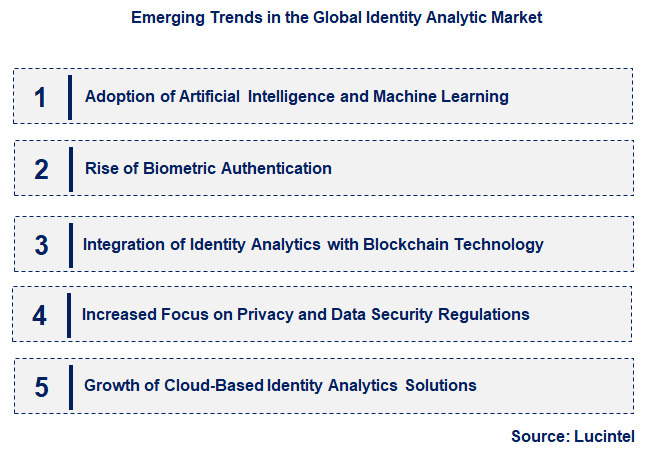
• Adoption of Artificial Intelligence and Machine Learning: AI and ML are increasingly integrated into identity analytics to improve accuracy and speed. These technologies enable real-time analysis of vast data sets, detecting anomalies and potential fraud more effectively. They facilitate predictive analytics, helping organizations anticipate risks before they materialize. As a result, AI-driven identity solutions are becoming more sophisticated, reducing false positives and enhancing user experience. This trend is transforming identity verification from a reactive process to a proactive security measure, significantly boosting efficiency and security.
• Rise of Biometric Authentication: Biometric methods such as fingerprint, facial recognition, and iris scans are gaining prominence in identity analytics. These methods offer higher security and convenience compared to traditional passwords or PINs. The increasing adoption of smartphones and biometric sensors has accelerated this trend, enabling seamless and contactless authentication. Biometric authentication reduces identity theft risks and enhances user trust. Its integration into various sectors, including banking, healthcare, and travel, is driving market growth and setting new standards for secure identity verification.
• Integration of Identity Analytics with Blockchain Technology: Blockchain provides a decentralized and tamper-proof ledger, making it ideal for secure identity management. Combining blockchain with identity analytics enhances data integrity, privacy, and control over personal information. This integration supports self-sovereign identity models, empowering users to manage their identities securely without relying on centralized authorities. It also facilitates secure sharing of identity data across platforms, reducing fraud and identity theft. This trend is paving the way for more transparent, secure, and user-centric identity ecosystems.
• Increased Focus on Privacy and Data Security Regulations: With the implementation of regulations like GDPR and CCPA, organizations are prioritizing data privacy and security in identity analytics. Compliance requirements are driving the adoption of privacy-preserving technologies such as anonymization, encryption, and consent management. Companies are investing in solutions that ensure data is collected, stored, and processed ethically and legally. This trend emphasizes building trust with users and avoiding legal penalties, influencing product development and operational strategies within the market.
• Growth of Cloud-Based Identity Analytics Solutions: Cloud technology offers scalability, flexibility, and cost-efficiency, making it attractive for identity analytics deployment. Cloud-based solutions enable organizations to access advanced analytics tools without significant infrastructure investments. They support remote and distributed workforces, facilitating real-time identity verification across geographies. The shift to cloud also allows for easier integration with other digital services and platforms. As security protocols improve, cloud solutions are becoming the preferred choice for many organizations seeking agility and innovation in identity management. In summary, these trends are collectively transforming the identity analytic market by enhancing security, improving user experience, and ensuring compliance. The integration of AI, biometrics, blockchain, and cloud technologies is creating more robust, transparent, and user-centric identity solutions. As these developments continue, the market is poised for significant growth, driven by the increasing demand for secure, efficient, and privacy-compliant identity verification systems across industries.
• Adoption of AI and Machine Learning: The integration of AI and machine learning algorithms has significantly enhanced identity analytics capabilities. These technologies enable real-time data analysis, anomaly detection, and predictive insights, improving accuracy and reducing false positives. Organizations benefit from faster, more reliable identity verification processes, which bolster security and user experience. This development has also facilitated the automation of complex identity management tasks, making solutions more scalable and efficient. Overall, AI-driven analytics are becoming central to advanced identity verification strategies, driving market growth.
• Increased Focus on Privacy and Data Security Regulations: Stricter privacy laws such as GDPR and CCPA have prompted vendors to prioritize data security and compliance features within their solutions. Companies are investing in privacy-preserving analytics, encryption, and consent management tools to meet regulatory requirements. This focus ensures that identity data is handled responsibly, reducing legal risks and building customer trust. The regulatory landscape has also spurred innovation in anonymized and pseudonymized data analytics, shaping product development. As a result, compliance-driven features are becoming a key differentiator in the market.
• Expansion of Biometric Authentication Technologies: Biometric methods, including fingerprint, facial recognition, and voice authentication, are increasingly integrated into identity analytics solutions. These technologies offer high accuracy and convenience, reducing reliance on traditional passwords and PINs. The proliferation of smartphones and IoT devices has further accelerated biometric adoption. Enhanced biometric analytics improve fraud detection and user verification, especially in remote and contactless environments. This trend is expanding market reach across banking, healthcare, and retail sectors, making biometric authentication a cornerstone of modern identity solutions.
• Strategic Partnerships and Acquisitions: Major players are forming alliances and acquiring startups to expand their technological capabilities and market presence. Collaborations between identity analytics providers and cybersecurity firms enhance integrated security offerings. Acquisitions enable access to innovative technologies and customer bases, fostering rapid product development. These strategic moves also help companies address diverse industry needs and regional markets more effectively. The trend underscores a competitive landscape where collaboration and consolidation are key to maintaining market leadership and driving innovation.
• Growing Adoption of Cloud-Based Identity Analytics: Cloud deployment models are gaining popularity due to their scalability, flexibility, and cost-effectiveness. Cloud-based solutions facilitate easier integration with existing IT infrastructure and support remote access, which is vital in a hybrid work environment. They also enable real-time analytics and rapid updates, enhancing security responsiveness. Vendors are offering SaaS-based identity analytics platforms to cater to small and medium-sized enterprises seeking affordable, scalable options. This shift to cloud solutions is expanding market reach and accelerating adoption across various industries, making identity analytics more accessible and versatile. In summary, these developments are collectively transforming the identity analytic market by enhancing technological capabilities, ensuring regulatory compliance, expanding application areas, fostering strategic collaborations, and increasing accessibility through cloud solutions. These trends are driving market growth, improving security and user experience, and positioning the industry for sustained innovation and competitiveness.
• Enhanced Fraud Detection: Identity analytics enable real-time fraud detection, reducing financial losses and increasing customer trust. This application improves transaction security and supports compliance with anti-money laundering regulations, fostering a safer banking environment.
• Patient Identity Verification: Advanced analytics improve patient data accuracy, streamline onboarding, and prevent identity theft. This enhances patient safety, reduces administrative costs, and ensures regulatory compliance in healthcare delivery.
• Customer Personalization and Security: Retailers leverage identity analytics for personalized marketing and secure checkout processes. This boosts customer engagement, reduces fraud, and enhances overall shopping experience.
• Identity Verification and Security: Governments utilize analytics for secure citizen identification, fraud prevention, and efficient service delivery. This strengthens national security and streamlines public service operations.
• Subscriber Authentication: Telecom providers use identity analytics to authenticate users, prevent fraud, and manage subscriber data efficiently. This ensures network security and improves customer onboarding processes. In summary, these growth opportunities are transforming the identity analytic market by enabling more secure, efficient, and personalized services across key industries. They foster innovation, improve operational efficiency, and help organizations meet evolving regulatory and security demands, thereby driving sustained market growth and competitive advantage.
• Technological Innovation: The rapid evolution of AI, machine learning, and big data analytics enhances the ability to accurately verify identities, detect fraud, and analyze identity data in real-time. These advancements enable organizations to improve security measures, streamline onboarding processes, and personalize customer experiences. As technology becomes more sophisticated, the market sees increased adoption of automated and intelligent identity solutions, fostering growth and innovation.
• Rising Cybersecurity Threats: The increasing frequency and sophistication of cyberattacks, data breaches, and identity theft compel organizations to adopt advanced identity analytics solutions. These tools help in early detection of anomalies, fraud prevention, and ensuring compliance with security standards. The heightened awareness of cybersecurity risks drives demand for comprehensive identity management systems that can adapt to evolving threats.
• Regulatory Compliance and Data Privacy: Stringent regulations such as GDPR, CCPA, and other data privacy laws require organizations to implement robust identity verification and data protection measures. Compliance mandates push companies to invest in identity analytics solutions that ensure secure handling of personal data, reduce legal risks, and maintain customer trust. This regulatory landscape significantly influences market growth and product development.
• Increasing Adoption of Digital Services: The surge in digital banking, e-commerce, healthcare, and government services necessitates reliable identity verification to prevent fraud and ensure seamless user experiences. As digital interactions grow, so does the need for sophisticated identity analytics to authenticate users securely and efficiently, thereby expanding market opportunities across various sectors.
• Growing Demand for Customer Insights: Organizations leverage identity analytics to gain deeper insights into customer behavior, preferences, and risk profiles. This data-driven approach enhances targeted marketing, improves customer engagement, and supports personalized services. The demand for actionable insights from identity data fuels innovation and expansion within the market. The challenges facing identity analytic market include:
• Technological Complexity and Integration Issues: Implementing advanced identity analytics solutions often involves complex integration with existing IT infrastructure. Organizations face difficulties in ensuring compatibility, scalability, and seamless operation across diverse systems. The technical expertise required can be a barrier, leading to delays and increased costs, which may hinder market growth.
• Data Privacy and Ethical Concerns: While identity analytics offers security benefits, it also raises significant privacy issues. Collecting, storing, and analyzing vast amounts of personal data can lead to misuse or unauthorized access, risking legal penalties and reputational damage. Balancing data utility with privacy rights remains a critical challenge for market participants.
• High Implementation and Maintenance Costs: Deploying sophisticated identity analytics systems requires substantial investment in technology, infrastructure, and skilled personnel. Small and medium-sized enterprises may find these costs prohibitive, limiting market penetration. Ongoing maintenance, updates, and compliance requirements further add to the financial burden, constraining growth in certain segments. In summary, the identity analytic market is driven by technological innovation, increasing cybersecurity threats, regulatory pressures, digital service adoption, and the need for customer insights. However, challenges such as technological complexity, privacy concerns, and high costs pose significant barriers. These factors collectively shape the market landscape, influencing the pace of growth and the strategic directions of industry players. Overall, the market is poised for substantial expansion, provided that solutions can address these hurdles effectively.
• Oracle Corporation
• NETIQ
• Microsoft Corporation
• LOGRHYTHM
• ID Analytics
• Verint
• Hitachi Id Systems
• EVIDIAN
• GURUCUL
• Happiest Minds
• Descriptive Analytics
• Diagnostic Analytics
• Predictive Analytics
• Prescriptive Analytics
• Software
• Services
• Small & Medium Sized Enterprises
• Large Enterprises
• BFSI
• Telecom & IT
• Government
• Manufacturing
• Retail
• Healthcare
• Others
• North America
• Europe
• Asia Pacific
• The Rest of the World
• United States: The US market has seen rapid adoption of AI-powered identity verification tools, driven by increased cybersecurity threats and regulatory requirements like CCPA. Major tech firms are integrating biometric solutions into financial services, healthcare, and government sectors. The rise of remote onboarding and digital identity solutions has accelerated growth, with a focus on privacy and data security. Regulatory frameworks are evolving to address emerging challenges, fostering innovation and competition among providers.
• China: China’s identity analytic market is expanding rapidly, supported by government initiatives like the Digital China strategy. The country emphasizes biometric authentication, facial recognition, and AI-driven identity verification for smart city projects, banking, and e-commerce. Domestic companies dominate the landscape, leveraging large-scale data collection and AI capabilities. The government’s focus on security and surveillance has further propelled the adoption of advanced identity solutions, with a strong emphasis on integrating these technologies into everyday life.
• Germany: Germany’s market is characterized by a focus on data privacy and compliance with GDPR regulations. Companies are adopting secure biometric authentication and multi-factor verification to meet stringent privacy standards. The market is witnessing increased use of blockchain for identity management and digital signatures. There is a growing emphasis on trust and transparency, with collaborations between tech firms and financial institutions to develop secure, user-centric identity solutions that respect privacy rights.
• India: India’s identity analytic market is rapidly evolving, driven by government initiatives like Aadhaar and digital payment systems. The country is investing in biometric authentication, mobile identity solutions, and AI to improve financial inclusion and reduce fraud. Startups and tech giants are developing innovative solutions for rural and urban populations, focusing on affordability and accessibility. The government’s push for digital governance and financial services is fueling market growth, with a strong emphasis on scalable, secure identity verification systems.
• Japan: Japan’s market is advancing through the integration of biometric technologies such as facial recognition and fingerprint scanning, especially in banking, transportation, and government services. The focus is on enhancing security while maintaining user convenience. Regulatory standards are being updated to support secure digital identities, and collaborations between tech firms and financial institutions are increasing. Japan emphasizes reliability and privacy, with innovations aimed at supporting aging populations and ensuring secure access to digital services across sectors.


• Oracle Corporation
• NETIQ
• Microsoft Corporation
• LOGRHYTHM
• ID Analytics
• Verint
• Hitachi Id Systems
• EVIDIAN
• GURUCUL
• Happiest Minds Q5. Which identity analytic market segment will be the largest in future? Answer: Lucintel forecasts that, within the analytics type category, predictive analytic is expected to witness the highest growth over the forecast period. Q6. In identity analytic market, which region is expected to be the largest in next 5 years? Answer: In terms of region, North America is expected to witness the highest growth over the forecast period. Q7. Do we receive customization in this report? Answer: Yes, Lucintel provides 10% customization without any additional cost.


Choose a license that fits your team. Instant PDF delivery.
Prices exclude taxes. Instant delivery. Custom licensing available on request.
Market Report · July 15, 2026
Market Report · June 26, 2026
Market Report · June 24, 2026
Trusted partner for strategic intelligence and business growth


Receive a complimentary market analysis tailored to your industry. Our analysts will identify key growth opportunities and competitive dynamics specific to your business.

Market size, growth rate, and key trend analysis for your specific sector.

Top competitor positioning and market share analysis.

Strategic recommendations backed by data-driven insights.
Get curated market intelligence and competitive moves straight to your inbox.
By subscribing, you agree to receive our monthly insights. Unsubscribe anytime.
Receive a complimentary market analysis tailored to your industry. Our analysts will identify key growth opportunities and competitive dynamics specific to your business.
Market size, growth rate, and key trend analysis for your specific sector.
Top competitor positioning and market share analysis.
Strategic recommendations backed by data-driven insights.
Get curated market intelligence, emerging trends, and competitive moves straight to your inbox each month.
By subscribing, you agree to receive our monthly insights. Unsubscribe anytime.
We'll send your sample report shortly.