
Market Report · July 15, 2026

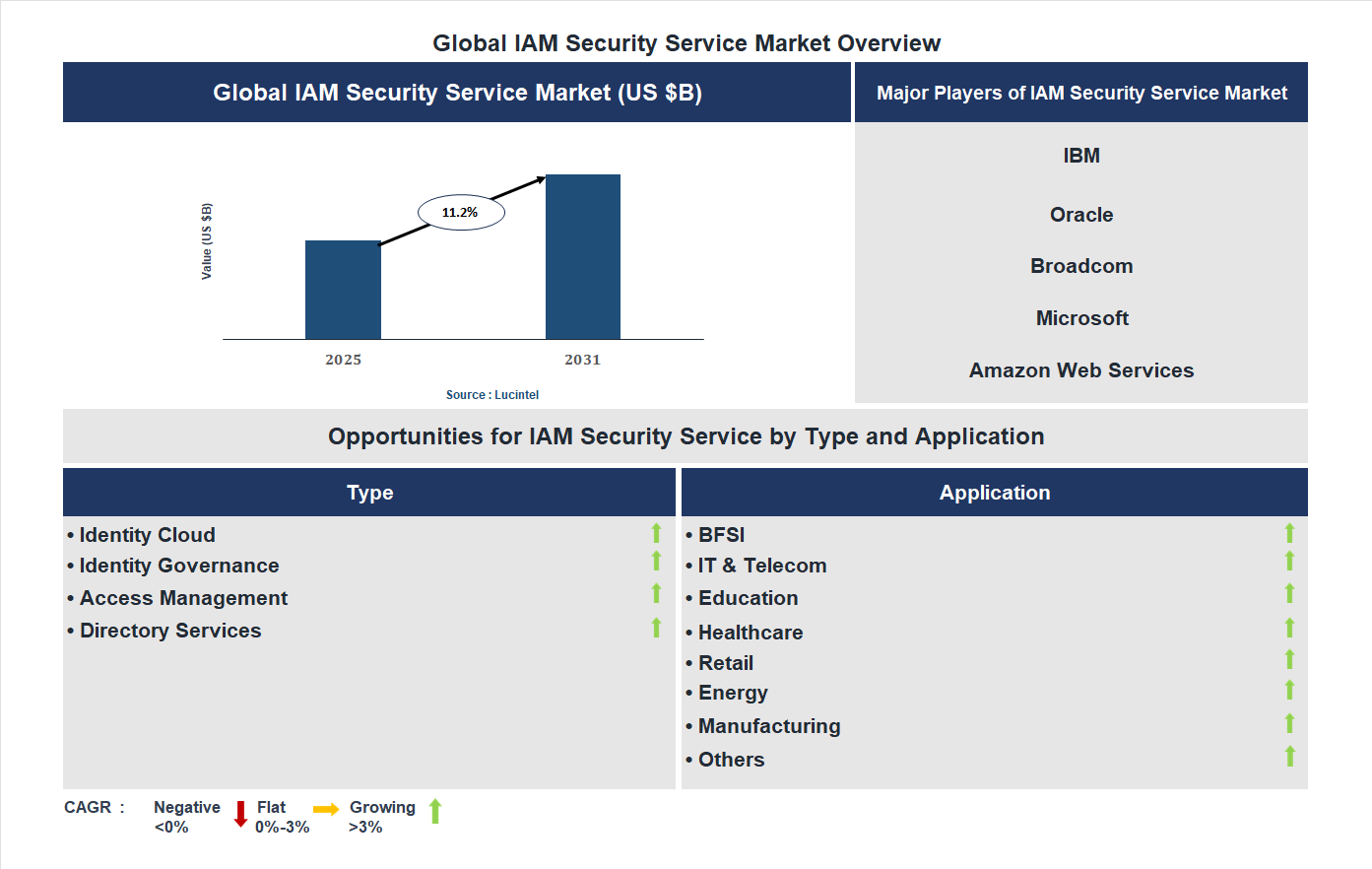
Key data points: The growth forecast = 11.2% annually for the next 7 years. Scroll below to get more insights. This market report covers trends, opportunities and forecasts in IAM security service market to 2031 by type (identity cloud, identity governance, access management, and directory services), application (BFSI, IT & telecom, education, healthcare, retail, energy, manufacturing, and others), and region (North America, Europe, Asia Pacific, and the Rest of the World)
We'll send your sample report shortly.
• Lucintel forecasts that, within the type category, identity cloud is expected to witness the highest growth over the forecast period.
• Within the application category, BFSI is expected to witness the highest growth.
• In terms of region, APAC is expected to witness the highest growth over the forecast period. Gain valuable insights for your business decisions with our comprehensive 150+ page report. Sample figures with some insights are shown below.
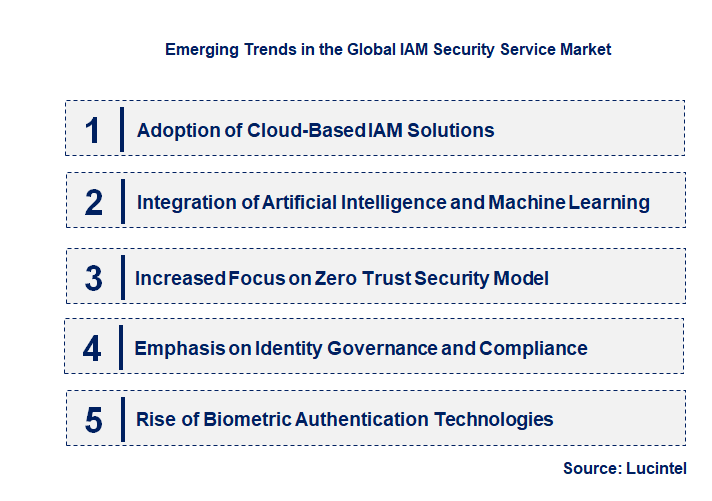
• Adoption of Cloud-Based IAM Solutions: The shift from traditional on-premises systems to cloud-based IAM services is accelerating. Cloud solutions offer scalability, flexibility, and cost-effectiveness, enabling organizations to manage identities across multiple platforms seamlessly. This trend is driven by the increasing adoption of remote work, digital transformation initiatives, and the need for real-time access management. Cloud IAM services also facilitate faster deployment and easier updates, reducing operational overhead. As security concerns around data privacy and compliance grow, cloud providers are enhancing their offerings with advanced security features, making cloud IAM a preferred choice for enterprises worldwide.
• Integration of Artificial Intelligence and Machine Learning: AI and ML are transforming IAM by enabling predictive analytics, anomaly detection, and automated decision-making. These technologies help identify suspicious activities and potential security breaches in real-time, significantly reducing response times. AI-driven IAM solutions can adapt to evolving threats by continuously learning from new data, improving overall security posture. Additionally, automation streamlines user provisioning, access reviews, and password management, reducing human error and operational costs. The integration of AI and ML is making IAM systems smarter, more proactive, and capable of handling complex security scenarios efficiently.
• Increased Focus on Zero Trust Security Model: The Zero Trust approach, which assumes no user or device is inherently trusted, is gaining prominence in IAM strategies. This model emphasizes continuous verification, least privilege access, and strict authentication protocols. Implementing Zero Trust reduces the risk of insider threats and lateral movement within networks. IAM solutions are evolving to support Zero Trust principles by incorporating multi-factor authentication, device verification, and contextual access controls. As cyber threats become more sophisticated, organizations are adopting Zero Trust frameworks to enhance security, compliance, and resilience against breaches.
• Emphasis on Identity Governance and Compliance: Regulatory requirements such as GDPR, HIPAA, and CCPA are driving the need for comprehensive identity governance. Modern IAM solutions now include features for detailed access audits, policy enforcement, and automated compliance reporting. This trend ensures organizations can demonstrate adherence to legal standards while minimizing risks associated with unauthorized access. Enhanced governance capabilities also facilitate role-based access control (RBAC) and segregation of duties, which are critical for sensitive industries. As data privacy concerns grow, identity governance is becoming a core component of IAM strategies, helping organizations maintain trust and avoid penalties.
• Rise of Biometric Authentication Technologies: Biometric methods such as fingerprint, facial recognition, and voice authentication are increasingly integrated into IAM systems. These technologies offer higher security levels and improved user convenience compared to traditional passwords. The proliferation of smartphones and biometric sensors has accelerated adoption across banking, healthcare, and enterprise sectors. Biometric authentication reduces the risk of credential theft and phishing attacks, providing a more secure and seamless user experience. As biometric technology advances and costs decrease, its integration into IAM solutions is expected to expand, further strengthening security frameworks. In summary, these emerging trends are fundamentally reshaping the IAM security service market by making security systems more agile, intelligent, and user-centric. Cloud adoption, AI integration, Zero Trust models, enhanced governance, and biometric authentication are collectively driving a more secure, compliant, and efficient digital environment. These developments are enabling organizations to better protect their assets while supporting digital innovation and growth.
• Adoption of AI and Machine Learning: Integration of AI and ML in IAM solutions enhances threat detection, automates user provisioning, and improves authentication processes. This development increases security efficiency, reduces manual errors, and enables real-time response to cyber threats, thereby boosting customer confidence and compliance.
• Cloud-Based IAM Solutions: The shift towards cloud deployment offers scalability, flexibility, and cost-effectiveness. Cloud IAM services facilitate remote access, support hybrid environments, and enable rapid deployment, which appeals to organizations seeking agility and reduced infrastructure costs.
• Strategic Partnerships and Acquisitions: Major players are forming alliances and acquiring smaller firms to expand their service offerings and technological capabilities. These collaborations accelerate innovation, broaden market reach, and enable comprehensive security solutions tailored to diverse industry needs.
• Focus on Zero Trust Architecture: The adoption of Zero Trust models emphasizes strict access controls and continuous verification, reducing insider threats and lateral movement of cyberattacks. This approach aligns with evolving security standards and regulatory requirements, strengthening overall security posture.
• Regulatory Compliance and Data Privacy: Increasing regulations like GDPR, CCPA, and others drive demand for compliant IAM solutions. Vendors are enhancing features to ensure data privacy, auditability, and compliance reporting, which helps organizations avoid penalties and build customer trust. In summary, these developments are transforming the IAM security service market by fostering innovation, enhancing security capabilities, and enabling organizations to meet complex regulatory and operational demands. The market is becoming more dynamic, competitive, and aligned with emerging technological trends, ensuring sustained growth and evolving customer expectations.
• Cloud Security Integration: Expanding IAM services into cloud environments enhances security for remote and hybrid workforces. This integration allows seamless identity management across multiple platforms, reducing vulnerabilities and ensuring compliance. As cloud adoption accelerates, the demand for scalable, cloud-native IAM solutions grows, driving market expansion and offering organizations flexible, secure access controls.
• Zero Trust Architecture Adoption: Implementing Zero Trust models emphasizes strict identity verification for every user and device. This approach minimizes insider threats and lateral movement within networks. The adoption of Zero Trust principles is boosting demand for advanced IAM solutions capable of continuous authentication, thereby strengthening overall cybersecurity posture and reducing breach risks.
• AI and Machine Learning Enhancements: Incorporating AI and ML into IAM services enables real-time threat detection, anomaly identification, and automated access management. These intelligent features improve security accuracy and operational efficiency. As cyber threats become more sophisticated, AI-driven IAM solutions are becoming essential, significantly impacting market growth and innovation.
• Regulatory Compliance and Data Privacy: Increasing regulations such as GDPR and CCPA require organizations to implement stringent identity management practices. IAM services tailored to meet compliance standards help organizations avoid penalties and build customer trust. This focus on compliance is creating a substantial market for specialized IAM solutions that address legal and privacy concerns.
• Identity as a Service (IDaaS) Expansion: The shift towards cloud-based, subscription-based IAM solutions offers scalability and cost-effectiveness for businesses of all sizes. IDaaS facilitates rapid deployment and management of identities across diverse environments. The growing preference for flexible, cloud-native IAM services is driving market growth and enabling organizations to enhance security without significant infrastructure investments. In summary, these growth opportunities are significantly impacting the IAM security service market by fostering innovation, improving security postures, and enabling organizations to meet evolving regulatory and operational demands. The market is poised for sustained expansion as these applications continue to evolve and address emerging cybersecurity challenges.
• Increasing Cybersecurity Threats: The rise in cyberattacks, data breaches, and identity thefts compels organizations to adopt advanced IAM solutions. As cyber threats become more sophisticated, businesses recognize the need for comprehensive identity management to protect sensitive data and maintain customer trust. This growing threat landscape accelerates demand for IAM services that offer multi-factor authentication, single sign-on, and real-time monitoring, thereby fueling market growth.
• Growing Adoption of Cloud and SaaS Solutions: The shift towards cloud computing and Software-as-a-Service (SaaS) models necessitates scalable and flexible IAM services. Cloud-based IAM solutions enable organizations to manage user identities across multiple platforms efficiently, reduce infrastructure costs, and improve accessibility. This trend is driven by the increasing adoption of remote work and digital transformation initiatives, which expand the market for cloud IAM services.
• Stringent Regulatory Compliance: Governments and industry bodies are implementing strict data protection and privacy regulations such as GDPR, HIPAA, and CCPA. These regulations require organizations to implement robust identity management and access controls to ensure compliance. The need to adhere to these standards drives investments in IAM solutions that facilitate audit trails, access controls, and data security, thereby propelling market growth.
• Technological Advancements in AI and Biometrics: Innovations in artificial intelligence, machine learning, and biometric authentication enhance the effectiveness of IAM systems. AI-driven analytics enable real-time threat detection and adaptive access controls, while biometric methods improve user verification processes. These technological advancements increase the efficiency, security, and user experience of IAM services, encouraging wider adoption across industries.
• Increasing Remote Work and Digital Transformation: The COVID-19 pandemic accelerated the shift to remote work, emphasizing the importance of secure digital access. Organizations are investing in IAM solutions to manage remote user identities, ensure secure access to corporate resources, and support digital transformation strategies. This trend expands the market for flexible, cloud-based IAM services capable of supporting a distributed workforce. The challenges in the IAM security service market are:
• Integration Complexities and Legacy Systems: Many organizations operate with legacy IT infrastructure that is incompatible with modern IAM solutions. Integrating new IAM systems with existing legacy systems can be complex, costly, and time-consuming. This challenge hampers seamless deployment and may lead to security gaps if not managed properly, thereby limiting market expansion and adoption.
• Ensuring Regulatory Compliance Across Jurisdictions: Navigating diverse and evolving regulatory landscapes remains a significant challenge. Organizations operating in multiple regions must ensure compliance with varying data privacy laws and security standards, which can be complex and resource-intensive. Failure to comply can result in hefty fines and reputational damage, making compliance a critical concern for IAM service providers.
• Evolving Cyber Threats and Attack Vectors: The constantly changing nature of cyber threats requires IAM solutions to adapt rapidly. Attackers develop sophisticated methods such as social engineering, credential stuffing, and zero-day exploits, which can bypass traditional security measures. Staying ahead of these threats demands continuous innovation and investment, posing ongoing challenges for providers and users alike. In summary, the IAM security service market is driven by technological innovations, increasing cyber threats, regulatory pressures, and the shift towards digital and cloud-based solutions. However, integration issues, compliance complexities, and evolving cyber threats present significant hurdles. These drivers and challenges collectively influence the market's growth trajectory, requiring stakeholders to innovate and adapt continuously. The market's future will depend on how effectively organizations can leverage technological advancements while managing associated risks and complexities.
• IBM
• Oracle
• Broadcom
• Microsoft
• Amazon Web Services
• Centrify
• Okta
• SailPoint Technologies
• HID Global
• NetIQ
• Identity Cloud
• Identity Governance
• Access Management
• Directory Services
• BFSI
• IT & Telecom
• Education
• Healthcare
• Retail
• Energy
• Manufacturing
• Others
• North America
• Europe
• Asia Pacific
• The Rest of the World
• United States: The US market has seen significant adoption of AI-powered IAM solutions, with major companies investing in zero-trust security frameworks. Cloud-based IAM services are gaining popularity, driven by remote work trends and digital transformation initiatives. Regulatory compliance, especially with GDPR and CCPA, is prompting organizations to enhance their identity management systems. Additionally, mergers and acquisitions are consolidating the market, fostering innovation and expanding service offerings.
• China: China’s IAM market is rapidly expanding, fueled by government initiatives to strengthen cybersecurity and digital infrastructure. Local vendors are developing AI-driven identity verification tools to combat fraud and improve user authentication. The government’s focus on smart city projects and digital payments is boosting demand for robust IAM solutions. Moreover, regulatory policies are encouraging domestic development and deployment of secure identity management systems, with a focus on data localization and privacy.
• Germany: The German IAM market is characterized by a strong emphasis on data privacy and compliance with GDPR. Companies are adopting advanced authentication methods, including biometric and multi-factor authentication, to meet strict regulatory standards. There is a growing trend toward integrating IAM with broader cybersecurity frameworks and enterprise resource planning systems. The market also benefits from increased investments in digital transformation across industries such as manufacturing and automotive.
• India: India’s IAM market is witnessing rapid growth due to increasing digital adoption, government initiatives like Digital India, and rising cybersecurity concerns. Local vendors are offering cost-effective, scalable IAM solutions tailored for small and medium-sized enterprises. The adoption of biometric authentication, especially Aadhaar-based verification, is widespread. The government’s push for digital payments and e-governance is further driving demand for secure identity management systems, with a focus on enhancing user convenience and security.
• Japan: Japan’s IAM market is evolving with a focus on integrating AI and biometrics for enhanced security. The country’s aging population and workforce are prompting organizations to adopt automated and user-friendly authentication methods. There is a notable increase in investments in cloud-based IAM solutions to support remote work and digital services. Regulatory compliance with privacy laws and cybersecurity standards remains a priority, encouraging innovation in secure identity verification technologies. The market is also seeing collaborations between technology providers and financial institutions to develop advanced identity solutions.


• IBM
• Oracle
• Broadcom
• Microsoft
• Amazon Web Services
• Centrify
• Okta
• SailPoint Technologies
• HID Global
• NetIQ Q5. Which IAM security service market segment will be the largest in future? Answer: Lucintel forecasts that, within the type category, identity cloud is expected to witness the highest growth over the forecast period. Q6. In IAM security service market, which region is expected to be the largest in next 5 years? Answer: In terms of region, APAC is expected to witness the highest growth over the forecast period. Q7. Do we receive customization in this report? Answer: Yes, Lucintel provides 10% customization without any additional cost.


Choose a license that fits your team. Instant PDF delivery.
Prices exclude taxes. Instant delivery. Custom licensing available on request.
Market Report · July 15, 2026
Market Report · June 26, 2026
Market Report · June 24, 2026
Trusted partner for strategic intelligence and business growth


Receive a complimentary market analysis tailored to your industry. Our analysts will identify key growth opportunities and competitive dynamics specific to your business.

Market size, growth rate, and key trend analysis for your specific sector.

Top competitor positioning and market share analysis.

Strategic recommendations backed by data-driven insights.
Get curated market intelligence and competitive moves straight to your inbox.
By subscribing, you agree to receive our monthly insights. Unsubscribe anytime.
Receive a complimentary market analysis tailored to your industry. Our analysts will identify key growth opportunities and competitive dynamics specific to your business.
Market size, growth rate, and key trend analysis for your specific sector.
Top competitor positioning and market share analysis.
Strategic recommendations backed by data-driven insights.
Get curated market intelligence, emerging trends, and competitive moves straight to your inbox each month.
By subscribing, you agree to receive our monthly insights. Unsubscribe anytime.
We'll send your sample report shortly.