
Market Report · May 18, 2026

This market report covers trends, opportunities, and forecasts in the global hyperconnectivity market to 2031 by technology (software and services), end use (bfsi, healthcare & life sciences, it & telecommunications, government, and others), and region (North America, Europe, Asia Pacific, and the Rest of the World)
We'll send your sample report shortly.
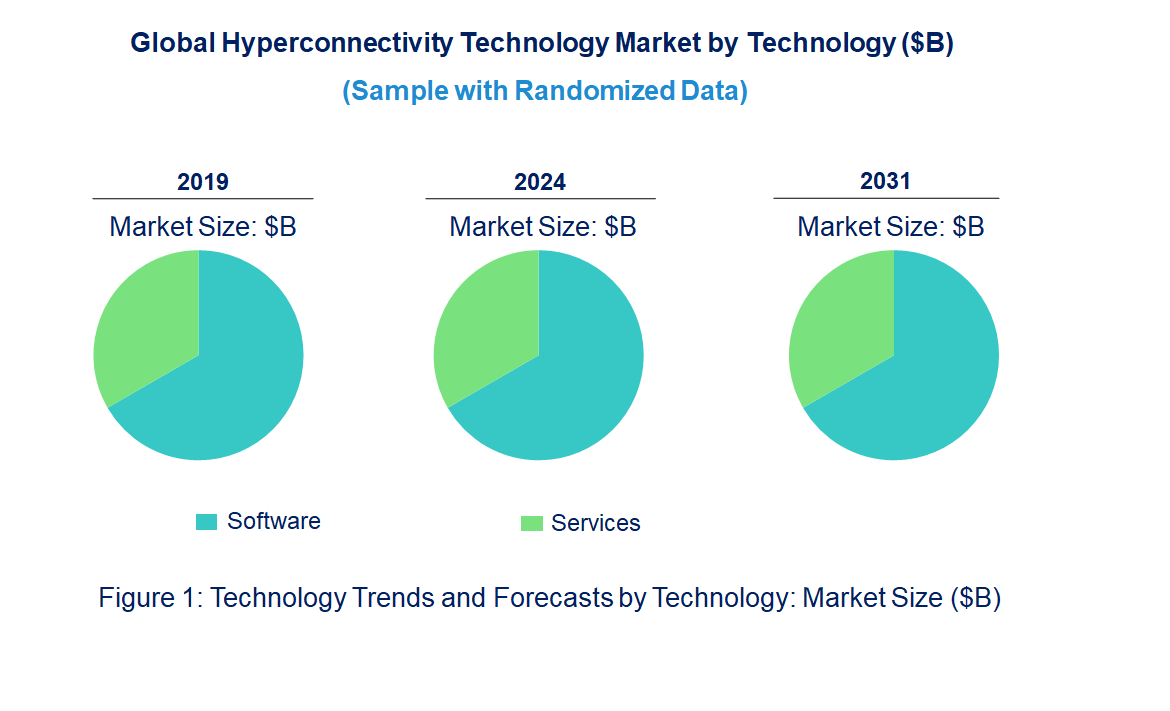
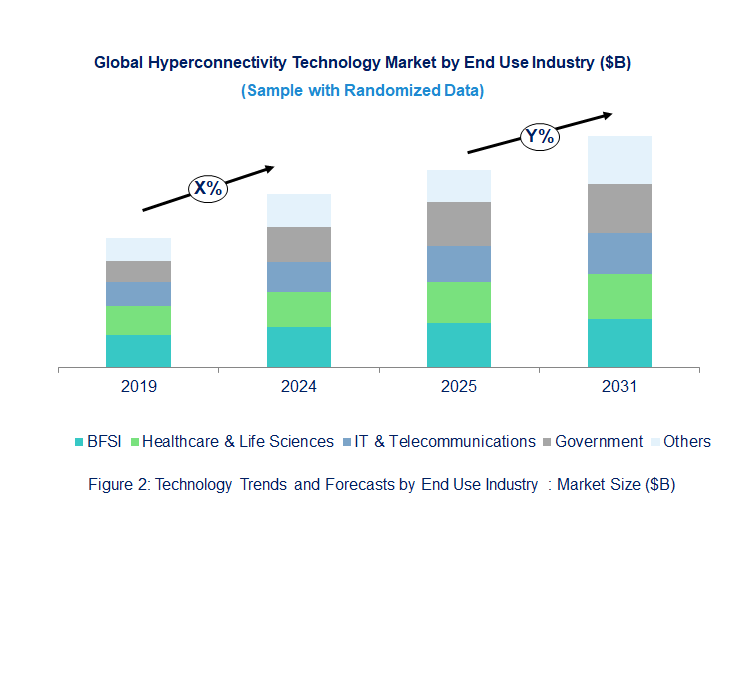
• 5G Adoption Across Industries: The move from 4G to 5G networks is enabling faster, more reliable connectivity, revolutionizing industries such as healthcare, BFSI, and government with real-time communication and data transfer capabilities.
• AI Integration in Connectivity Solutions: Artificial Intelligence is being integrated into connectivity systems to optimize network performance, automate processes, and offer predictive analytics, driving efficiency and reducing downtime.
• IoT-Driven Connectivity Growth: The proliferation of IoT devices is fueling the demand for seamless connectivity solutions, particularly in smart homes, healthcare, and manufacturing.
• Edge Computing for Low Latency: Edge computing is emerging as a solution to address latency issues, processing data closer to the source and enabling real-time applications in areas such as autonomous vehicles and industrial automation.
• Increased Focus on Cybersecurity: With the rise in hyperconnected devices, cybersecurity measures are being bolstered to protect sensitive data and ensure secure communication across networks. These trends demonstrate how hyperconnectivity is transforming industries by enabling faster, smarter, and more secure communication and data management.
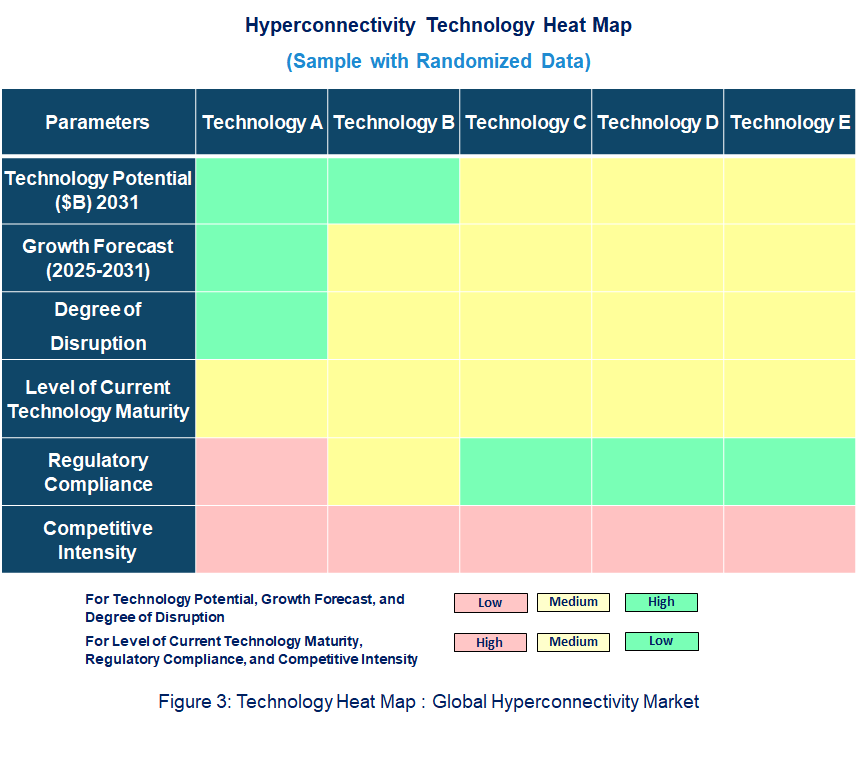
• Technology potential: The technology potential in the hyperconnectivity market is vast, driven by the rapid growth of 5G, IoT, AI, and edge computing. These technologies enable real-time, seamless communication and data management across industries, presenting enormous opportunities for innovation.
• Degree of Disruption: The degree of disruption is high, as these advancements challenge traditional network infrastructures and business models, particularly in sectors like BFSI, healthcare, and telecommunications. The shift to 5G and the rise of IoT are reshaping how businesses operate, requiring companies to adapt quickly to maintain competitiveness.
• Current Technology Maturity: The current technology maturity is at an advanced stage in areas like 5G, AI, and IoT, with widespread adoption in key markets. However, edge computing and fully integrated AI-driven solutions are still in the developmental phase, with more innovation expected shortly.
• Regulatory Compliance: Regulatory compliance plays a critical role in shaping the market, especially as hyperconnectivity drives increased data exchange and storage. Governments and regulatory bodies are focusing on frameworks for data privacy, security, and network neutrality to ensure fair access and protection of sensitive information.
• Avaya: Avaya introduced a new cloud-based communication and collaboration platform designed to enhance real-time interactions across multiple devices and locations. This development supports the growing demand for flexible and scalable communication systems in enterprises, improving operational efficiency and customer experience.
• Extreme Networks: Extreme Networks launched an AI-powered networking solution that enables hyperconnectivity by automating network management and improving real-time decision-making. This innovation helps businesses optimize their network infrastructure, reduce downtime, and ensure seamless connectivity in increasingly complex environments.
• Fujitsu Limited: Fujitsu expanded its portfolio with advanced 5G solutions to facilitate hyperconnectivity across various industries, including manufacturing, healthcare, and smart cities. This development accelerates the adoption of next-generation connectivity technologies, enabling faster data transmission and more efficient network management.
• Iberdrola SA: Iberdrola is leveraging hyperconnectivity to enhance its smart grid infrastructure, improving energy distribution and management. By integrating IoT devices and real-time data analytics, the company aims to improve energy efficiency, optimize grid operations, and provide more reliable energy services to customers.
• IBM Corporation: IBM launched its hybrid cloud platform integrated with AI and edge computing capabilities to support hyperconnected ecosystems. This solution enables enterprises to seamlessly manage and analyze vast amounts of data generated by connected devices, driving operational efficiency and accelerating digital transformation across industries.
• Growing IoT Adoption: The increasing use of IoT devices across industries drives the need for hyperconnectivity, enabling real-time data exchange and improved operational performance. This trend is fostering new business models and facilitating more connected and efficient systems.
• Advancements in 5G and AI: The development of 5G networks and AI technologies is accelerating hyperconnectivity, providing faster data transfer speeds, reduced latency, and enhanced decision-making capabilities. These advancements enable businesses to unlock new opportunities in automation, real-time analytics, and predictive maintenance.
• Demand for Seamless Communication: As businesses and individuals seek more flexible and scalable communication solutions, the market for hyperconnectivity is expanding. Companies are investing in advanced collaboration tools and unified communication platforms to improve productivity and customer satisfaction. Challenges in the hyperconnectivity market are:
• Data Security and Privacy: With increased connectivity comes the challenge of securing sensitive data. Hyperconnected systems are more vulnerable to cyberattacks, and ensuring robust security measures is critical to prevent breaches and maintain trust.
• Infrastructure Limitations: The expansion of hyperconnectivity requires significant infrastructure upgrades, including 5G networks, data centers, and cloud systems. Many regions and organizations face challenges in keeping up with these demands, which can slow down market growth.
• Integration Complexities: Integrating new hyperconnected systems with existing legacy technologies can be complex and costly. Organizations may face difficulties in ensuring smooth transitions and compatibility across their digital infrastructure, impacting their ability to leverage hyperconnectivity fully. The hyperconnectivity market is being shaped by the increasing adoption of IoT devices, advancements in 5G and AI, and the growing demand for seamless communication solutions. However, challenges such as data security, infrastructure constraints, and integration issues need to be addressed. By overcoming these barriers, businesses can capitalize on the vast opportunities for growth and innovation that hyperconnectivity provides.
• Avaya
• Extreme Networks
• Fujitsu Limited
• Iberdrola Sa
• Ibm Corporation
• Technology Readiness by Technology Type: Software technologies, such as AI, 5G, and cloud solutions, are highly ready for widespread adoption, with competitive maturity in most applications. 5G networks, while still being rolled out globally, have gained significant traction, offering faster and more reliable communication. AI software has become integral to optimizing network performance and enabling automation in hyperconnected systems. Services like managed networks, edge computing, and IoT platforms are rapidly evolving to support the growing need for real-time data processing and low-latency communication. These services are highly competitive as companies strive to enhance security, scalability, and efficiency. Regulatory compliance is crucial for both software and services, with heavy emphasis on data protection, cybersecurity, and network integrity, ensuring that the technologies can be deployed globally while adhering to strict legal requirements.
• Disruption Potential of Technologies: In the hyperconnectivity market, software and services are driving significant disruption. Software technologies such as 5G, cloud computing, and AI are enhancing the ability to connect devices and networks seamlessly, enabling real-time data transfer and decision-making across industries. These innovations support the Internet of Things (IoT) and smart cities, allowing for more integrated and intelligent systems. Services, including managed networks, data analytics, and edge computing, are also playing a critical role by offering the infrastructure and support needed for these complex hyperconnected ecosystems. As the demand for faster, more efficient communication grows, these technologies are rapidly evolving to meet emerging challenges and create new opportunities for global connectivity, transforming industries such as healthcare, transportation, and retail.
• Competitive Intensity and Regulatory Compliance: The competitive intensity in the hyperconnectivity market is extremely high, driven by the rapid advancements in software and services. Companies in software, like those developing AI and 5G technologies, face intense rivalry as they push to offer faster and more efficient connectivity solutions. Service providers, such as those offering network management, cloud services, and data security, are competing for market share through innovation and scalability. Regulatory compliance is a significant factor, with governments setting standards for data privacy, cybersecurity, and telecommunications infrastructure. Both software and service providers must navigate these regulations to ensure that their technologies meet global security and privacy standards while fostering innovation and growth.
• Software
• Services
• BFSI
• Healthcare & Life Sciences
• IT & Telecommunications
• Government
• Others
• North America
• Europe
• Asia Pacific
• The Rest of the World
• Latest Developments and Innovations in the Hyperconnectivity Technologies
• Companies / Ecosystems
• Strategic Opportunities by Technology Type


Choose a license that fits your team. Instant PDF delivery.
Prices exclude taxes. Instant delivery. Custom licensing available on request.
Market Report · May 18, 2026
Market Report · May 18, 2026
Market Report · May 18, 2026
Trusted partner for strategic intelligence and business growth


Receive a complimentary market analysis tailored to your industry. Our analysts will identify key growth opportunities and competitive dynamics specific to your business.

Market size, growth rate, and key trend analysis for your specific sector.

Top competitor positioning and market share analysis.

Strategic recommendations backed by data-driven insights.
Get curated market intelligence and competitive moves straight to your inbox.
By subscribing, you agree to receive our monthly insights. Unsubscribe anytime.
Receive a complimentary market analysis tailored to your industry. Our analysts will identify key growth opportunities and competitive dynamics specific to your business.
Market size, growth rate, and key trend analysis for your specific sector.
Top competitor positioning and market share analysis.
Strategic recommendations backed by data-driven insights.
Get curated market intelligence, emerging trends, and competitive moves straight to your inbox each month.
By subscribing, you agree to receive our monthly insights. Unsubscribe anytime.
We'll send your sample report shortly.