
Market Report · May 18, 2026

This market report covers trends, opportunities, and forecasts in the global hydrogen market to 2031 by technology (steam methane reforming, partial oxidation of oil, coal gasification, and electrolysis of water), end use industry (chemical, petroleum refining , metal processing, automotive fuel, glass industry, edible fats and oils, energy, and others ), and region (North America, Europe, Asia Pacific, and the Rest of the World)
We'll send your sample report shortly.
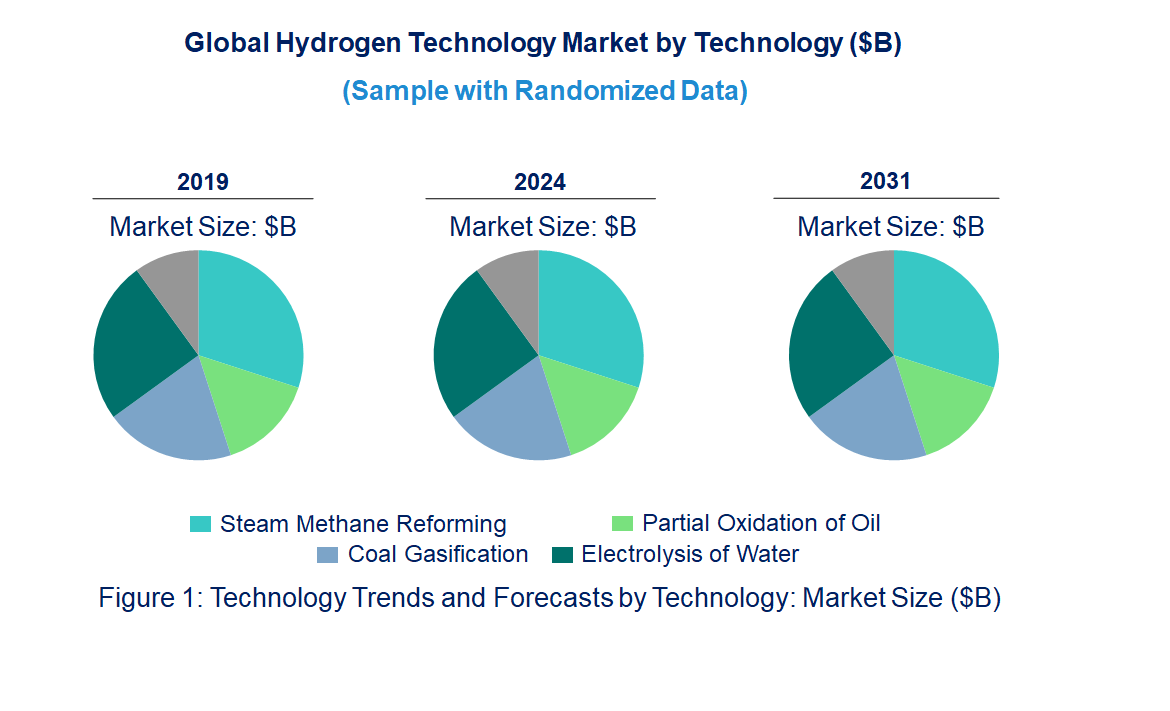
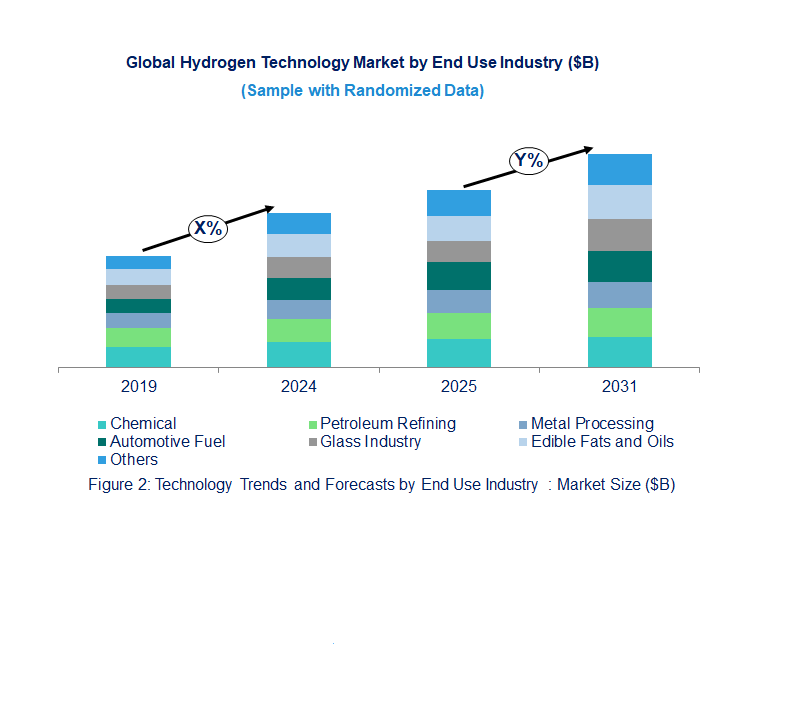
• Expansion of Green Hydrogen Production: There's a significant push towards producing hydrogen via electrolysis using renewable energy sources, aiming to reduce carbon footprints and meet climate goals.
• Declining Costs of Electrolyzers: Technological advancements and economies of scale have led to a 60% reduction in electrolyzer costs over the past decade, making green hydrogen more economically viable.
• Integration with Renewable Energy Projects: Electrolysis systems are increasingly being integrated with solar and wind projects, facilitating efficient storage and utilization of excess renewable energy.
• Development of Hydrogen Infrastructure: Investments are being made in hydrogen refueling stations and pipeline networks to support the growing hydrogen economy.
• Policy Support and Incentives: Governments worldwide are introducing subsidies, tax credits, and funding programs to accelerate the adoption of hydrogen technologies. These trends collectively signify a transformative phase in the hydrogen market, steering it towards a more sustainable and integrated energy future.
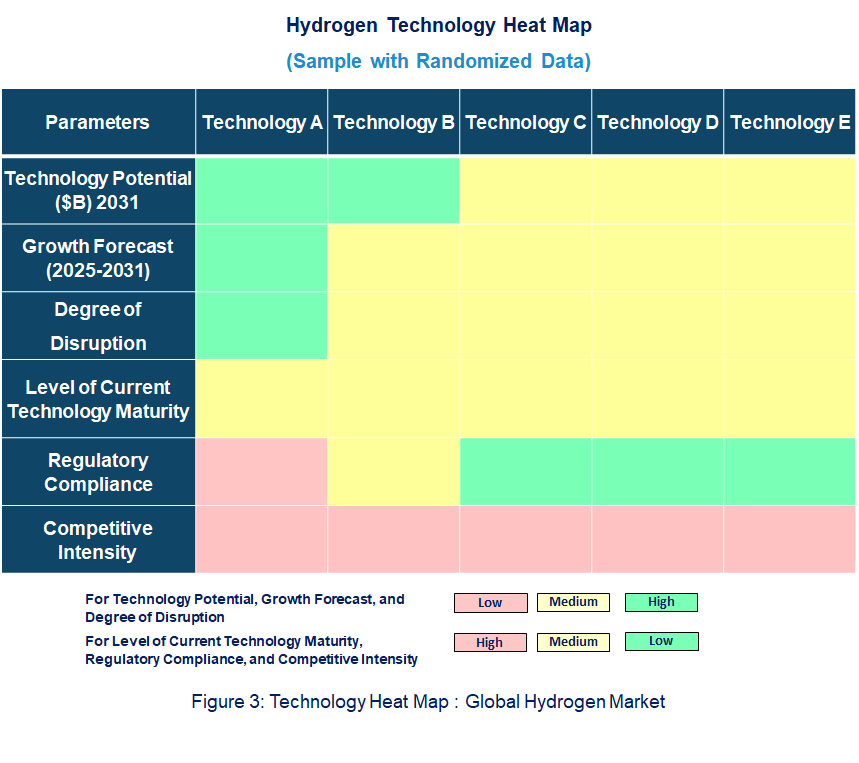
• Technology Potential: These technologies offer high efficiency and can be powered by renewable energy, aligning with global decarbonization goals. While electrolysis technologies are maturing, challenges like high capital costs and material constraints (e.g., iridium for PEM) persist.
• Degree of Disruption: Steam Methane Reforming (SMR) remains the dominant hydrogen production method but faces disruption due to its high carbon emissions. In contrast, electrolysis of water, especially when powered by renewables, has high disruption potential as a zero-emission alternative, while partial oxidation of oil and coal gasification are declining due to environmental concerns.
• Level of Current Technology Maturity: Steam Methane Reforming (SMR) is a highly mature technology widely used in chemical manufacturing and petroleum refining, while partial oxidation of oil and coal gasification are mature but declining or region-specific. Electrolysis of water is rapidly advancing, with PEM and SOEC technologies approaching commercial scale and expanding applications in energy storage, transportation, and industry.
• Regulatory Compliance: Regulatory frameworks are increasingly supportive, with policies favoring green hydrogen through incentives and infrastructure development. However, consistent global standards and long-term policy commitments are essential to sustain growth and encourage investment in these technologies.
• Decarbonization Goals: Global initiatives to reduce carbon emissions are propelling the demand for green hydrogen as a clean energy source.
• Technological Advancements: Innovations in electrolysis and fuel cell technologies are enhancing efficiency and reducing costs, making hydrogen more competitive.
• Policy Support: Government incentives, subsidies, and regulatory frameworks are fostering the growth of hydrogen infrastructure and adoption. Challenges in the hydrogen market are:
• High Production Costs: Despite cost reductions, green hydrogen production remains more expensive than traditional methods, hindering widespread adoption.
• Infrastructure Limitations: The lack of comprehensive hydrogen distribution and refueling infrastructure poses a barrier to market expansion.
• Regulatory Uncertainty: Inconsistent policies and standards across regions create uncertainty, affecting investment and development in the hydrogen sector. While the hydrogen market faces challenges, the convergence of technological innovation, policy support, and environmental imperatives positions it for significant growth and transformation in the coming years.
• Air Liquide
• Air Products & Chemicals
• Cummins
• Iwatani
• Messer Group
• Showa Denko K.K.
• Technology Readiness by Technology Type: Steam methane reforming is at, highly competitive stage, with broad industrial use but under strict CO₂ regulations. Partial oxidation of oil is used in refineries and petrochemicals, with moderate compliance burdens. Coal gasification is moderately competitive in the power and fertilizer sectors, but is challenged by environmental restrictions. Electrolysis of water (alkaline and PEM) is with rapidly rising competition in transportation, industrial energy, and grid storage applications, supported by strong regulatory incentives for green hydrogen. Emerging technologies like solid oxide electrolysis and methane pyrolysis are facing growing interest due to potential efficiency and carbon advantages.
• Disruption Potential of Hydrogen Production Technologies: Steam methane reforming (SMR) remains the dominant hydrogen production method but faces disruption from cleaner technologies due to its high CO₂ emissions. Partial oxidation of oil, while efficient for heavy hydrocarbons, is also carbon-intensive and offers limited long-term disruption potential in a decarbonizing world. Coal gasification has a low disruption value because of its environmental footprint, though it remains relevant in coal-rich regions. Electrolysis of water, particularly when powered by renewable energy, has the highest disruption potential as it enables green hydrogen production and aligns with global decarbonization goals. As governments push for net-zero targets, the shift from fossil-fuel-based to renewable-based hydrogen is accelerating, positioning electrolysis as the most transformative technology. Emerging methods like methane pyrolysis and photoelectrochemical water splitting also signal future disruption. Ultimately, the industry is moving toward sustainable, scalable, and low-carbon hydrogen solutions.
• Competitive Intensity and Regulatory Compliance of Hydrogen Production Technologies: Steam methane reforming and partial oxidation of oil are highly competitive due to their established infrastructure and low costs, but are increasingly pressured by carbon regulations. Coal Gasification has moderate competition, primarily in Asia, but faces growing scrutiny under emissions and environmental regulations. Electrolysis is attracting intense global competition driven by policy incentives, green hydrogen targets, and technological innovation. It is also favored in regulatory frameworks that promote decarbonization. SMR and coal gasification must comply with increasingly stringent emissions and carbon capture mandates. Partial oxidation faces similar pressures around lifecycle emissions. Electrolysis, especially green hydrogen, benefits from subsidies and support, but must meet energy efficiency and grid integration standards. Compliance is shaping market competitiveness, with cleaner technologies gaining a regulatory edge.
• Steam Methane Reforming
• Partial Oxidation of Oil
• Coal Gasification
• Electrolysis of Water
• Chemical
• Petroleum Refining
• Metal Processing
• Automotive Fuel
• Glass Industry
• Edible Fats and Oils
• Energy
• Others
• North America
• Europe
• Asia Pacific
• The Rest of the World
• Latest Developments and Innovations in the Hydrogen Technologies
• Companies / Ecosystems
• Strategic Opportunities by Technology Type


Choose a license that fits your team. Instant PDF delivery.
Prices exclude taxes. Instant delivery. Custom licensing available on request.
Market Report · May 18, 2026
Market Report · May 18, 2026
Market Report · May 18, 2026
Trusted partner for strategic intelligence and business growth


Receive a complimentary market analysis tailored to your industry. Our analysts will identify key growth opportunities and competitive dynamics specific to your business.

Market size, growth rate, and key trend analysis for your specific sector.

Top competitor positioning and market share analysis.

Strategic recommendations backed by data-driven insights.
Get curated market intelligence and competitive moves straight to your inbox.
By subscribing, you agree to receive our monthly insights. Unsubscribe anytime.
Receive a complimentary market analysis tailored to your industry. Our analysts will identify key growth opportunities and competitive dynamics specific to your business.
Market size, growth rate, and key trend analysis for your specific sector.
Top competitor positioning and market share analysis.
Strategic recommendations backed by data-driven insights.
Get curated market intelligence, emerging trends, and competitive moves straight to your inbox each month.
By subscribing, you agree to receive our monthly insights. Unsubscribe anytime.
We'll send your sample report shortly.